If you’re shopping for accessories or planning a road trip, you’re probably wondering about the Ford F-150 Lightning roof rack weight limit. Because the Lightning is an electric truck with a heavy battery pack and a tall ride height, how and where you carry gear matters for both safety and driving range. Let’s walk through what the numbers really mean, how much you can safely put overhead, and when it’s smarter to use the bed or hitch instead.
Start with your owner’s manual
Ford F-150 Lightning roof rack weight limit overview
The key thing to understand is that the F-150 Lightning doesn’t have a single universal roof rack weight limit. Capacity depends on three things: the cab style (all Lightnings are SuperCrew, which helps), the rack system you use (factory vs. aftermarket), and whether you’re talking about dynamic or static load.
- Most mainstream pickup roof systems are rated around 100–165 lb of dynamic load for crossbars and accessories combined.
- Static limits are substantially higher, but they are rarely advertised and still constrained by the truck’s sheet metal and mounting points.
- You must stay below the lowest-rated component: the cab structure, the rack/feet, or the crossbars, whichever number is smallest.
Important safety note
F-150 Lightning load basics at a glance
Factory vs. aftermarket roof racks on the Lightning
Unlike some SUVs, the F-150 Lightning doesn’t ship with big, raised side rails. Instead, owners typically rely on door-jamb clamp systems or track-based systems that mount near the roof edge. The details matter, because they control your usable roof rack weight limit.
Common roof rack setups for the F-150 Lightning
Each has its own weight rating and pros/cons
Door-clamp crossbar systems
These racks clamp to the door jambs or roof edge without drilling.
- Typical dynamic rating: 100–165 lb total.
- Easy to remove when not needed.
- Good for cargo boxes, skis, light kayaks, or bikes.
Because they rely on sheet metal and door openings, stay conservative on weight and check fit notes for the Lightning’s SuperCrew cab.
Track or gutter-style systems
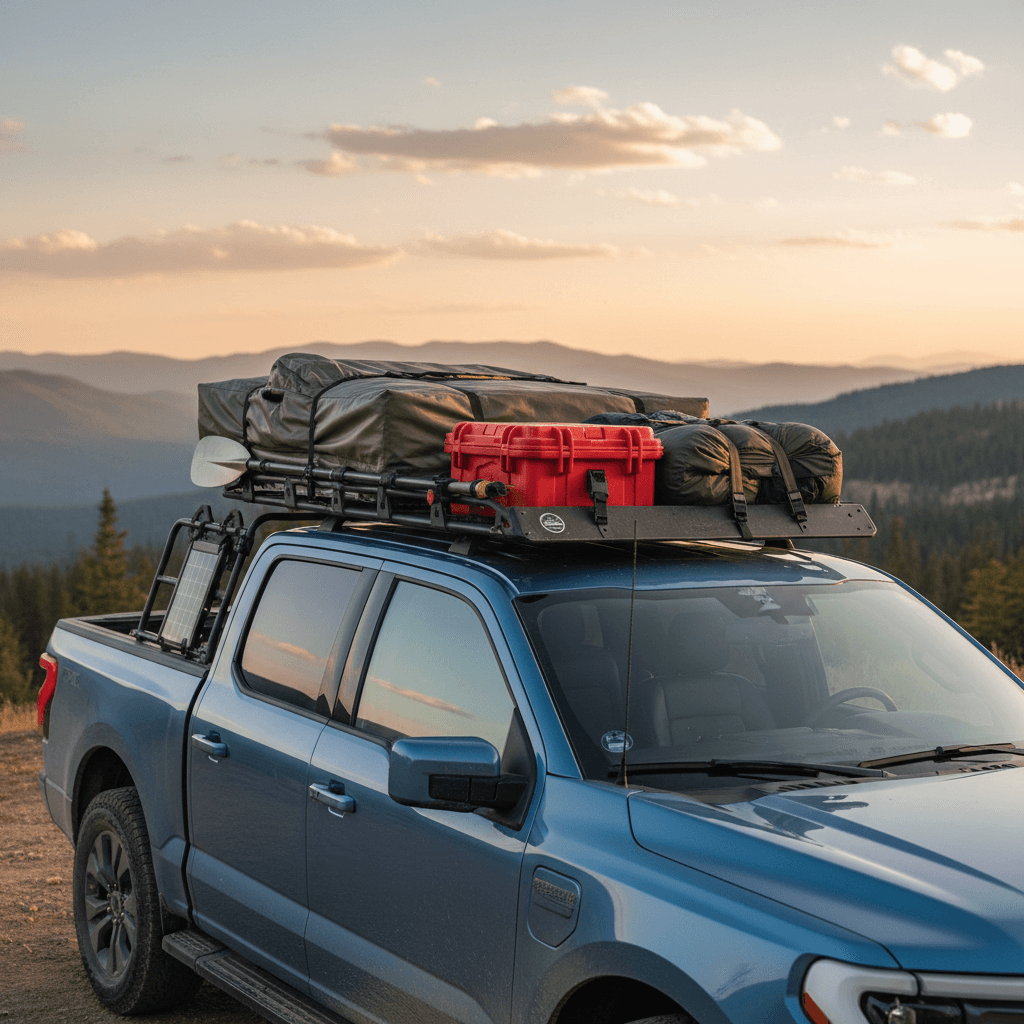
Some owners install track systems or use camper shells with integrated racks.
- Dynamic ratings can be higher, often up to 220 lb or more depending on brand.
- Better for heavier adventure gear, rooftop tents, or work equipment.
- Installation complexity and cost are higher.
With these systems, the limiting factor may shift from the rack to the roof structure itself.
Follow the most conservative number
Dynamic vs. static roof load on the F-150 Lightning
Roof rack marketing often highlights impressive static load numbers that sound perfect for rooftop tents. But the number that matters most when you’re driving your F-150 Lightning is the dynamic load rating.
Dynamic load (while driving)
- Definition: The maximum weight the rack and roof should carry while the truck is moving.
- Includes: Crossbars, mounts, box or basket, plus all cargo.
- Typical range: About 100–165 lb for many full-size truck racks.
- Why it matters: Higher forces from bumps, emergency maneuvers, and wind loads act on the roof while you’re on the road.
Static load (parked)
- Definition: Maximum allowable weight on the rack when the truck is stationary.
- Use case: Rooftop tents and camping gear while parked.
- Often higher: Brands may quote 2–3x the dynamic rating for static load.
- Caution: Static ratings don’t give you permission to overload the roof at highway speeds.
Don’t drive at static-load numbers
How roof rack weight affects Lightning range and efficiency
On a gas F-150, a loaded roof rack mainly costs you fuel. On an electric F-150 Lightning, extra drag and weight directly cut into your usable range. That doesn’t mean you shouldn’t carry gear, it just means you need to plan for it.
What roof racks do to your Lightning’s range
Three main ways overhead cargo changes how your truck drives
More aerodynamic drag
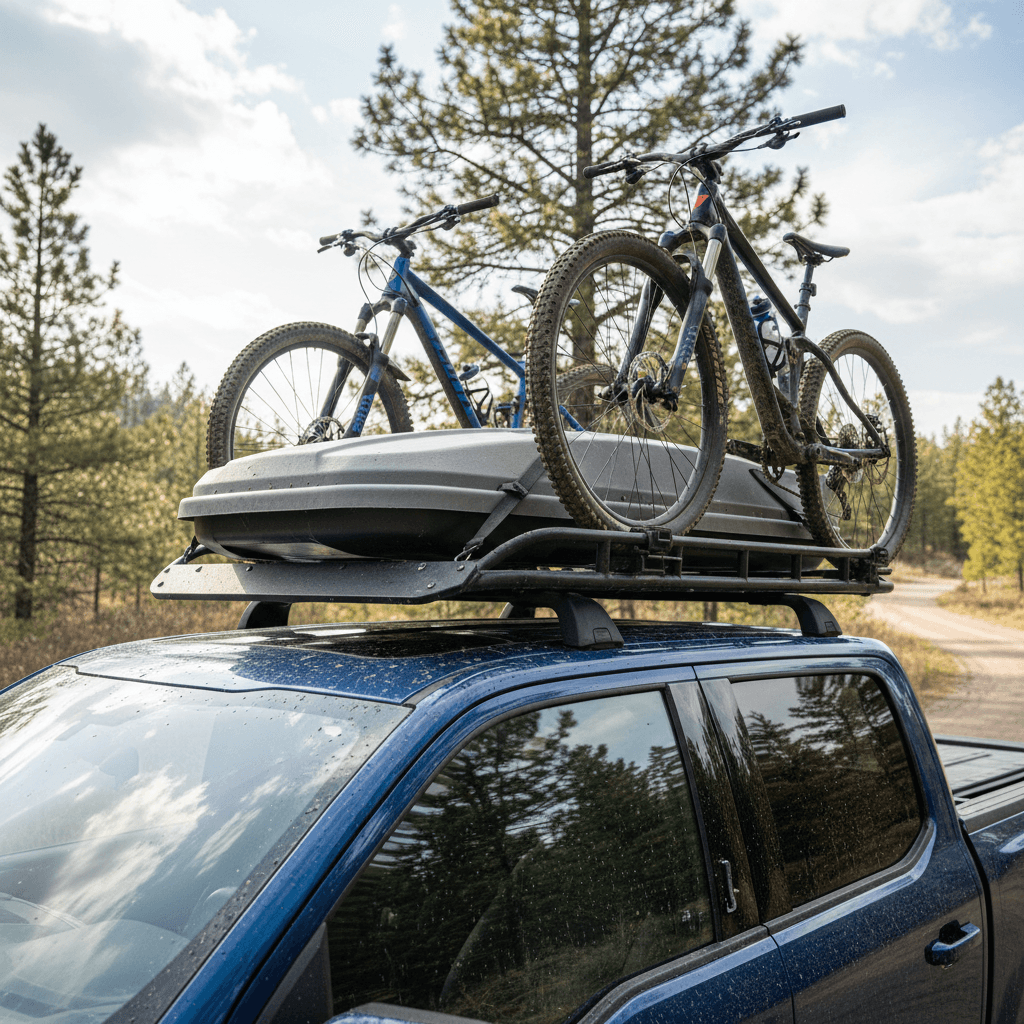
Bikes, boxes, and kayaks punch a bigger hole in the air than a bare roof.
- At 65–75 mph, aero drag dominates energy use.
- A large, loaded roof box can trim 10–20% off your highway range.
Higher center of gravity
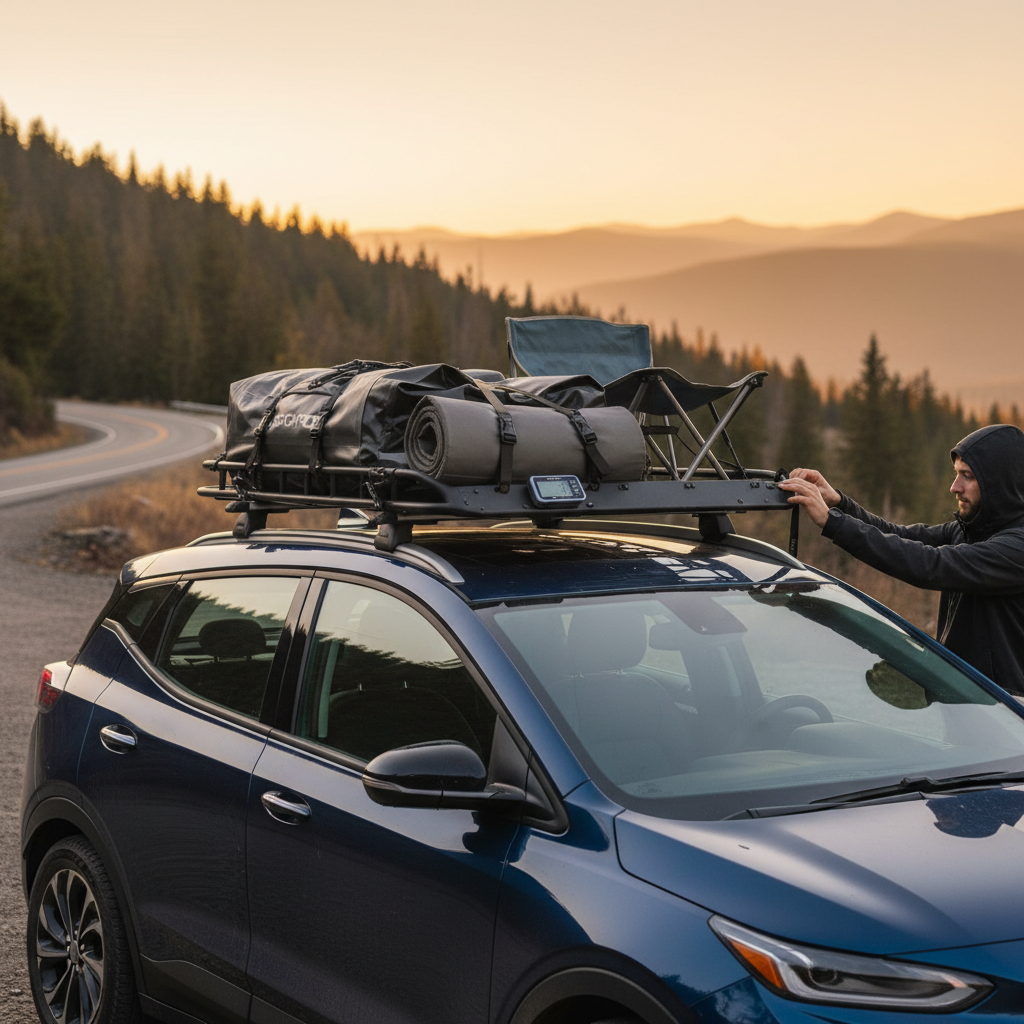
Putting 100–150 lb on the roof may not sound like much on a full-size truck, but it sits far from the ground.
- Can increase body roll.
- Makes emergency maneuvers less forgiving.
- Be extra cautious on rough trails or high crosswinds.
Less efficient energy use
The Lightning’s battery is already working hard to move 6,000+ lb of truck.
- Roof loads add weight where it hurts handling most.
- Expect more frequent charging on road trips.
Simple way to protect your range
Safer ways to carry gear on an F-150 Lightning
The Lightning gives you unique storage options, front trunk, lockable bed, under-floor compartments, that many gas trucks don’t. Before you max out the roof, think about how to put the truck’s layout to work for you.
1. Use the Mega Power Frunk
- Ideal for heavy, dense items like tools, chargers, and recovery gear.
- Keeps weight low and close to the front axle.
- Weather-sealed and lockable, reducing the temptation to overload the roof.
2. Optimize the bed first
- Use bed racks, tonneau covers, or bed boxes for bulky equipment.
- Bed-mounted systems can typically handle far more weight than any roof solution.
- Better aerodynamics than tall roof loads, especially with a low-profile cover.
3. Reserve roof space for light, bulky gear
- Skis, snowboards, and lightweight kayaks are better roof candidates than generators or water jugs.
- Keep total dynamic roof load under your system’s published limit, ideally with a 10–20% buffer.
- Remove bars and boxes when you’re not using them to restore range.
Plan your charging stops
Roof rack weight planning checklist
Before you bolt a rack to your F-150 Lightning and stack it with gear, work through this simple checklist. It’ll keep you on the right side of both Ford’s engineering and your own comfort zone.
Step-by-step roof load planning for your Lightning
1. Confirm your truck’s specs
Verify your model year, trim, and cab configuration in the owner’s manual or FordPass app. Look up any references to roof-mounted accessories, racks, or maximum roof load.
2. Check the rack manufacturer’s Lightning fit guide
Rack makers usually publish specific <strong>fit kits and load ratings</strong> by vehicle. Make sure the system you’re considering is explicitly approved for the F-150 Lightning SuperCrew, and note the dynamic limit.
3. Add up all rooftop weight
Include the <strong>crossbars, towers/feet, mounting hardware, boxes or baskets, and every piece of cargo</strong>. Many owners forget that a large cargo box alone can weigh 40–60 lb before you load anything into it.
4. Compare to the lowest rating
List the dynamic rating for: (1) Ford’s roof/cab guidance, if available, (2) the rack system, and (3) the accessories. Your working roof rack weight limit is the <strong>smallest of those three</strong> numbers.
5. Leave a safety margin
Aim to use <strong>no more than 80–90% of the rated dynamic load</strong>, especially if you regularly drive on rough roads or at highway speeds in high winds.
6. Consider range and handling
Estimate how much cargo you really need on top versus in the bed or frunk. If a roof box forces you into extra fast-charging stops, you might be better off packing differently.
Quick reference: roof rack weight limits by configuration
Because published numbers vary by rack brand and Ford’s guidance can change over model years, you should always verify current specs. But here’s a practical snapshot of how roof rack weight limits typically shake out for an F-150 Lightning owner choosing between common setups:
Typical roof rack load ranges for F-150 Lightning
Illustrative ranges only, always verify your exact rack and model year.
| Setup type | Example use | Typical dynamic limit* | Best for | Notes |
|---|---|---|---|---|
| No rack / bare roof | None | 0 lb | – | Don’t strap cargo directly to the roof sheet metal. |
| Door-clamp crossbars (2-bar system) | Cargo box + skis | 100–165 lb | Light boxes, skis, boards, a couple of bikes | Most common choice; check fit kit rating for Lightning specifically. |
| Heavy-duty track or gutter system | Rooftop tent (driving mode) | Up to ~165–220 lb | Heavier gear, larger boxes, some tent bases | Static (parked) load may be 2–3x higher but doesn’t change driving limit. |
| Camper shell with integrated rack | Long kayaks, ladders | Often 150–220+ lb | Work gear, long boats, overlanding | Shell manufacturer ratings and install quality are critical. |
Use these ranges as a planning guide, not as a substitute for Ford and rack maker specifications.
Why we use ranges, not a single number
Common mistakes to avoid with Lightning roof loads
Most problems with roof racks on electric trucks don’t come from bad intentions, they come from misunderstanding how the system works. Here are a few pitfalls you can easily sidestep.
- Ignoring the weight of the rack itself. A stout set of crossbars and a cargo box can eat up half your dynamic allowance before you load a single duffel bag.
- Stacking heavy items up high. Water, tools, spare parts, and recovery gear belong in the bed or frunk where they won’t upset handling.
- Driving like the roof is empty. With gear overhead, you should leave more stopping distance, take corners more gently, and slow down for crosswinds.
- Leaving racks on all the time. Even empty bars add drag. Removing them when you’re not using them can give you free range back, especially on highway-heavy commutes.
Watch your emergency maneuvers
Buying a used F-150 Lightning? How roof use matters
If you’re looking at a used F-150 Lightning, whether through a private seller, a dealer, or a marketplace like Recharged, it’s smart to ask how the previous owner used the truck, including any heavy roof rack duty.
Signs the roof has done heavy work
- Visible dents, ripples, or creases in the roof panel near rack mounting points.
- Paint wear or rust where towers or tracks were installed.
- Evidence of a removed rooftop tent system or camper shell.
- Wind noise complaints or water leaks around the doors and seals.
How Recharged helps used EV shoppers
- Every vehicle on Recharged gets a Recharged Score Report with transparent battery health diagnostics and usage insights.
- EV-specialist advisors can help you weigh the impact of accessories and previous use, whether that’s towing, hauling, or roof racks.
- Because the experience is fully digital with optional in-person visits to our Richmond, VA Experience Center, you can shop nationwide and still get expert guidance.
Questions to ask the seller
FAQ: Ford F-150 Lightning roof rack weight limits
Frequently asked questions about Lightning roof racks
Key takeaways on F-150 Lightning roof racks
A Ford F-150 Lightning is a remarkably capable electric truck, but its roof rack weight limit is much lower than its payload rating might lead you to believe. Plan for roughly 100–165 lb of dynamic roof load with common rack systems, always respect the lowest published rating between Ford and your accessories, and keep the heaviest gear in the bed or frunk whenever you can. Do that, and you’ll protect both your safety and your real-world range.
If you’re exploring a Lightning for the first time, or comparing it to other used EV trucks, Recharged can help you find a truck that fits how you actually haul and travel. With battery health verified by the Recharged Score Report, flexible financing, trade-in options, and nationwide delivery, you can focus less on guesswork and more on enjoying the capability of your next electric pickup.