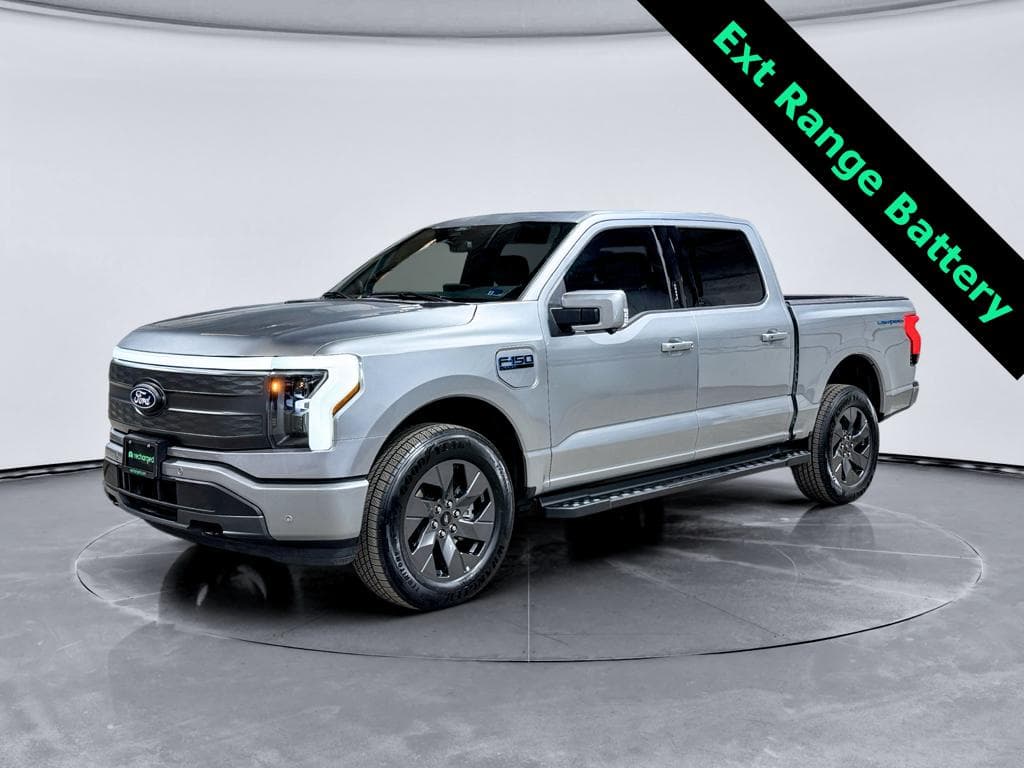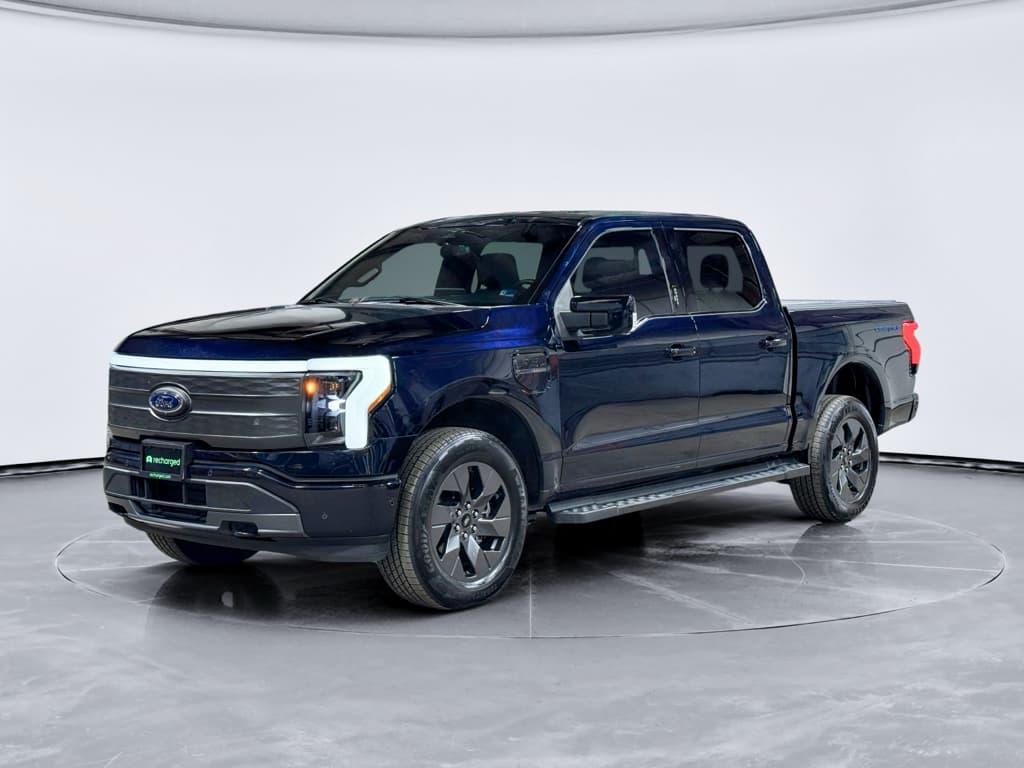
If you’re considering a Ford F-150 Lightning and you road-trip regularly, you’re probably asking one big question: can this electric pickup comfortably handle long-distance travel, or is it better left to local duty? This F-150 Lightning road trip review walks through real-world range, charging times, towing impact, cold-weather behavior, and comfort so you know what you’re signing up for, especially if you’re eyeing a used Lightning on a platform like Recharged.
Context: Where the Lightning stands today
Overview: Road-tripping in a F-150 Lightning
What the Lightning does well on road trips
- Quiet, comfortable highway ride that feels more premium than most gas F-150s.
- Strong acceleration for passing and on-ramps, even when loaded.
- Large frunk and bed make packing for families and gear-heavy trips simple.
- Bi-directional power (Pro Power Onboard, home backup) can be a genuine advantage when camping or at worksites.
Where you need to plan ahead
- Highway range drops vs. EPA ratings, and more again when towing.
- Charging stops add real time on 500–800 mile days.
- Fast-charger quality is inconsistent away from major corridors.
- Cold weather and big trailers can cut range dramatically, sometimes by half or more.
Key F-150 Lightning road-trip numbers (first generation)
Range and efficiency: what you’ll really see on the highway
On paper, early F-150 Lightning models offered EPA-estimated range of 230–240 miles with the standard battery and up to 300–320 miles with the extended-range pack, depending on trim and year. In 2024–2025, that still holds broadly true, with extended-range Lariat and Flash trims at the high end and heavier Platinum models a bit lower.
Out on the open road, though, you should budget for less. Independent road tests on 2023–2024 Lightnings have shown that at typical U.S. highway speeds (70–75 mph), it’s realistic to expect roughly 65–80% of the EPA rating, depending on temperature, elevation, and how much gear you’re hauling. In warm weather on fairly flat terrain, many owners see around 2.1–2.4 miles per kWh at 70 mph, which translates to roughly 260–290 miles of usable highway range on the big pack when you’re not towing.
Watch your buffer
- On an extended-range Lightning, expect 170–220 real-world highway miles between fast charges when leaving a safety buffer.
- Standard-range trucks are better for regional trips and work routes than long interstate runs.
- Later-model trucks with heat pumps and software updates tend to do slightly better in marginal conditions than early 2022 builds.
Charging on the road: how much time to budget
The Lightning can charge on most major DC fast-charging networks through Ford’s BlueOval Charge Network access (and, via adapters in some cases, on others). Ford’s own guidance for 2024–2025 models is that the truck can charge from 15–80% in roughly 32–38 minutes on a high-powered DC fast charger, depending on battery size and trim. In practice, that’s pretty close, when the charger itself is delivering its advertised power and you’re starting around a low state of charge.
Typical F-150 Lightning charging times on road trips
Approximate charging times for common road-trip scenarios. Actual times depend heavily on charger quality, temperature, and starting state of charge.
| Scenario | Battery pack | Start → End | Charger type | Approx. time |
|---|---|---|---|---|
| Overnight at a hotel or home | Standard or extended | 15% → 100% | Level 2 (11 kW) | 10–13 hours |
| Quick highway stop | Standard range | 15% → 80% | DC fast (up to 150 kW) | ~32 minutes |
| Quick highway stop | Extended range | 15% → 80% | DC fast (up to 150 kW) | ~35–40 minutes |
| Top-up before remote stretch | Extended range | 40% → 90% | DC fast (tapering) | ~40–55 minutes |
Charging beyond 80–90% at DC fast chargers slows dramatically, so it’s usually quicker to stop more often and charge less each time.
Plan like a pro
Ford also recommends setting a 90% charge limit for everyday use and only charging to 100% when you need the full range for a trip. On DC fast chargers, the Lightning is programmed with a default 90% limit Any EV will lose range when towing; the F-150 Lightning is no exception. Where it differs from a gas truck is in how visible and predictable that penalty is. The truck’s Intelligent Range system factors in payload, trailer weight (via available onboard scales), route, and past driving behavior to adjust your range estimate in real time. That’s helpful, but physics still wins. Very rough guidance based on owner reports and early tests, your numbers will vary by trailer, speed, and terrain. Load: Small open trailer, lawn equipment, bikes, kayaks. Highway impact: Roughly 20–30% range loss if you keep speeds reasonable and avoid massive frontal area. Load: 18–22 ft travel trailer. Highway impact: Often 40–50% range loss at 65–70 mph, more in strong headwinds or hills. Load: Enclosed car hauler or tall toy hauler. Highway impact: Can exceed 50% range loss, turning a 300‑mile EPA rating into closer to 120–150 usable highway miles per leg. For lighter-duty towing, utility trailers, small campers, snowmobiles, the Lightning is much more comfortable. You’ll still stop more often than in a diesel F‑250, but the quiet powertrain, instant torque, and in‑cab comfort help offset the longer travel time. Cold weather is the other big swing factor in Lightning road-trip behavior. In independent winter tests of extended‑range Platinum models, fully charged trucks starting in subfreezing conditions showed real‑world range at around 70–80% of EPA expectations over mixed highway and suburban driving. Where a warm‑weather trip might net nearly 350 miles from a full pack (as some testers saw with earlier trucks), winter highway runs dropped that to roughly 225–250 miles, including energy used while parked. Pull away from the charging graphs, and the F‑150 Lightning is one of the most relaxed long-distance trucks you can drive. Dual‑motor all‑wheel drive delivers instant, smooth acceleration, and the independent rear suspension helps the truck ride more like a big crossover than a traditional leaf‑spring pickup. Many reviewers have called out how composed the truck feels at speed, even on rough pavement. Use apps like Ford’s connected navigation, PlugShare, Chargeway, or network‑specific apps to confirm charger locations, power levels, and recent check‑ins. Favor <strong>multiple‑stall sites</strong> near food and restrooms. Plan legs so you typically arrive with 10–20% and leave around 70–80%. This keeps you in the fastest part of the charging curve and reduces time parked at DC fast chargers. If you’re hauling a full‑height camper, assume you’ll need to <strong>cut your EPA range in half</strong> for planning purposes, then build in extra margin for hills, wind, or cold. Strong headwinds, high speeds, big climbs, and low temperatures all eat into range. When in doubt, plan shorter legs between chargers and be open to an extra stop. If you can plug in overnight, you’ll start each day with a full or nearly full battery. That can turn a complicated DC‑fast‑only route into something much more relaxed. When possible, set the truck to precondition the battery before a DC fast‑charge stop. A warm pack charges faster and more consistently, especially in cold weather. "Treat the Lightning like a powerful, comfortable electric SUV that happens to have a bed, and you’ll be happier than if you expect it to behave exactly like a diesel ¾‑ton truck on cross‑country hauls." With the first‑generation Lightning winding down and a range‑extended successor on the way, more trucks are headed to the used market. If road trips are part of your plan, you’ll want to look closely at battery health, charging behavior, and trim‑level features before you sign anything. These are the areas Recharged focuses on when evaluating road‑trip‑ready used EVs. Confirm whether the truck has the standard or extended‑range battery and review any available battery health data. Platforms like Recharged include a Recharged Score that summarizes pack condition so you’re not guessing about long‑term range. Ask how often the truck fast‑charged, whether it stored outside in extreme climates, and verify the included charging equipment. A healthy onboard charger and intact charge ports matter if you’re relying on public and home Level 2 charging. For frequent highway use, prioritize trims with better seats, adaptive cruise, and BlueCruise capability where available. Those features can matter more on a 600‑mile weekend than another 0.2 seconds to 60 mph. The first-generation Ford F-150 Lightning isn’t a copy‑and‑paste replacement for a diesel long‑haul truck, and it doesn’t pretend to be. But as a quiet, incredibly quick, and surprisingly refined electric pickup that can absolutely handle well‑planned road trips, especially in the 200–400 mile range, it makes a strong case for itself. If you’re considering a used Lightning, lean on detailed battery health data, real‑world range expectations, and expert EV guidance from services like Recharged so your next electric truck fits both your daily life and your favorite long‑distance routes.Towing and hauling: how much range you lose
Typical towing impact on Lightning road trips
Light utility trailer
Mid-size camper
Tall, boxy trailers
Know your use case
Cold-weather performance: lessons from winter road tests
Cold + towing compounds things
Comfort and driving experience on long trips
Cabin comfort
Tech & driver assistance
Where the Lightning shines
Planning a smooth F-150 Lightning road trip
F-150 Lightning road-trip planning checklist
1. Map reliable fast chargers first
2. Aim for 10–80% charging windows
3. Adjust expectations when towing
4. Watch weather and elevation
5. Use hotels with Level 2 charging
6. Precondition before fast charging
Keep backup options in your pocket
Is the F-150 Lightning a good road trip truck?
Best for these kinds of trips
Challenging use cases
Buying a used F-150 Lightning for road trips
Key questions when shopping a used Lightning for road trips
Battery health & pack size
Charging history & hardware
Trim, comfort & driver aids
How Recharged can help
Ford F-150 Lightning road trip FAQ
Frequently asked questions about F-150 Lightning road trips