If you’re cross‑shopping a Ford F‑150 Lightning against a gas F‑150, maintenance cost is one of the big question marks. You’ve heard EVs are cheaper to maintain, but this is still a 6,000‑plus‑pound truck with serious hardware. Let’s unpack what Lightning owners are actually spending on maintenance, how it compares to a gas F‑150, and what to budget, especially if you’re considering a used truck.
Quick takeaway
Overview: F‑150 Lightning maintenance costs in context
F‑150 Lightning maintenance at a glance
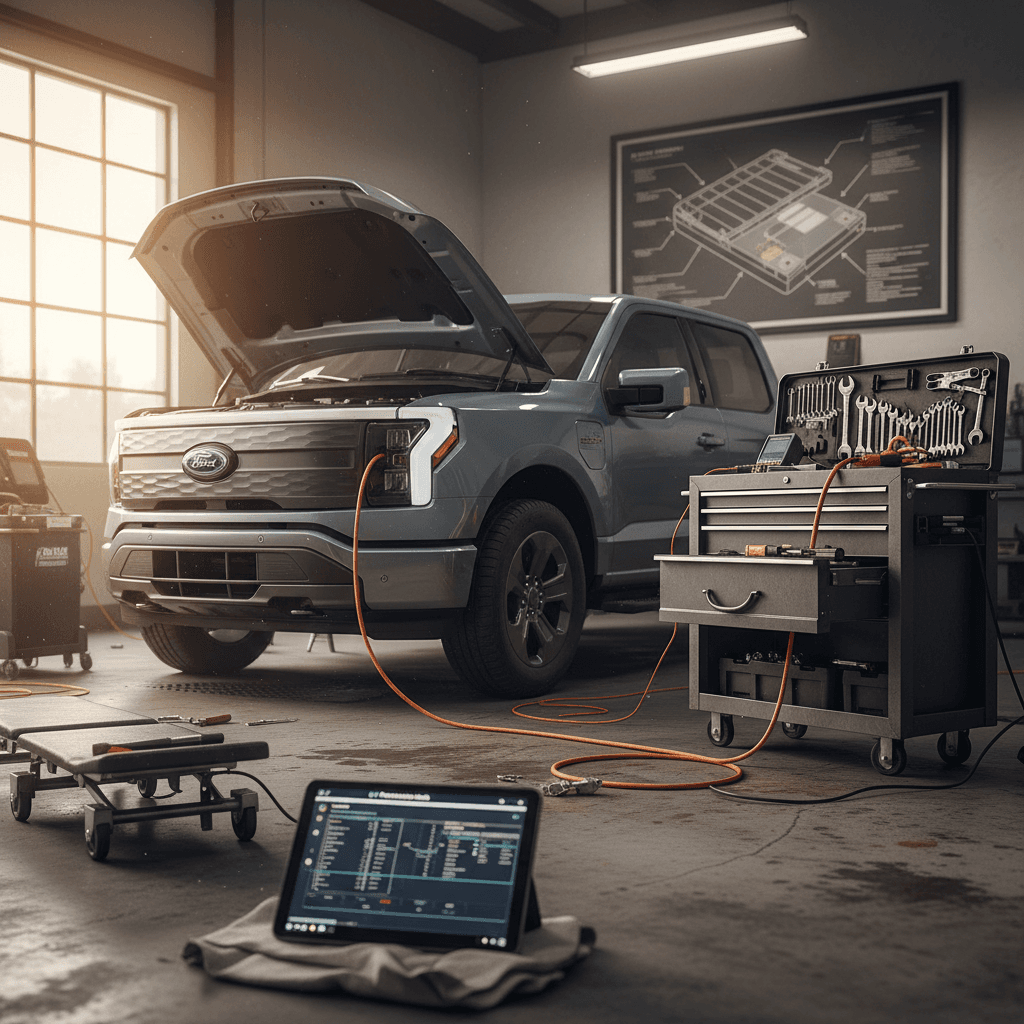
Traditional F‑150 owners live with regular oil changes, transmission service, spark plugs, exhaust repairs, and more. With the Ford F‑150 Lightning, all of that goes away. The truck still has coolant, brake fluid, and a lot of suspension hardware, but the electric powertrain is far simpler and has far fewer wear items.
- No engine oil or oil filters
- No transmission fluid flushes for a multi‑speed automatic
- No spark plugs, coils, or exhaust system
- Regenerative braking that reduces brake wear
- Long‑life battery pack with separate warranty from the rest of the truck
Think in years, not visits
Scheduled service: What Ford actually requires
Ford publishes a maintenance schedule for the F‑150 Lightning that looks much lighter than a gas F‑150’s. While the exact intervals can vary by model year and usage, the broad pattern is consistent: frequent inspections and tire rotations, infrequent fluid changes.
Typical Ford F‑150 Lightning maintenance intervals
Always confirm the exact schedule in your owner’s manual, but this table reflects common intervals many owners see at U.S. Ford dealers.
| Mileage/Time | Key Items | Notes |
|---|---|---|
| Every 10,000 mi or 1 yr | Tire rotation, multipoint inspection | Many owners follow a 7,500–10,000‑mile rotation cadence depending on tire wear. |
| Every 20,000–30,000 mi | Cabin air filter inspection/replacement | More often if you drive in dusty conditions. |
| Every 3 yrs | Brake fluid change (time‑based) | EVs are easy on pads, but brake fluid still absorbs moisture over time. |
| 100,000–150,000 mi (or as needed) | Coolant system service | The battery and drive units are liquid‑cooled; interval is far longer than engine coolant on gas trucks. |
| As needed | Wiper blades, key fob battery, software updates | Many software updates are over‑the‑air and don’t require a shop visit. |
Basic service intervals focus on inspections, tire rotations, and occasional fluid service.
Dealer schedules vs. minimum requirements
Common F‑150 Lightning maintenance items and typical costs
Let’s look at what real‑world Ford F‑150 Lightning owners are actually paying for routine maintenance at out‑of‑warranty prices. These are ballpark numbers from U.S. dealer and independent shop pricing as of early 2026; local labor rates and taxes will move your actual bill up or down.
Common Ford F‑150 Lightning maintenance services & price ranges
Approximate out‑of‑warranty pricing in the U.S. for typical maintenance items (parts + labor).
| Service | Typical Interval | Approx. Cost (USD) | Notes |
|---|---|---|---|
| Tire rotation & inspection | Every 7,500–10,000 mi | $40–$80 | Sometimes included with other service; some shops bundle it into a multipoint check. |
| Cabin air filter | 20,000–30,000 mi | $60–$140 | DIY replacements can be under $40 with OEM‑quality parts. |
| Brake fluid flush | Every 3 yrs | $120–$220 | Time‑based; more critical in humid climates. |
| Coolant system service | 100,000–150,000+ mi | $250–$500 | Rare service; exact interval depends on model year and driving conditions. |
| Wheel alignment | As needed; often with new tires | $120–$220 | Important for even tire wear on a heavy EV truck. |
| Wiper blades | 1–2 yrs | $30–$80 | Simple DIY item for most owners. |
| 12‑volt battery replacement | 5–7 yrs typical | $200–$350 | This small battery powers accessories and control systems; separate from the main traction battery. |
Use these as planning numbers, not as quotes. Always request an estimate from your service shop.
Where you really save vs. gas
Ford Lightning vs gas F‑150: Maintenance cost comparison
The most useful way to think about Ford F‑150 Lightning maintenance cost is to compare it with a similar gas F‑150 driven the same miles. Every truck is different, but certain patterns show up consistently when you look at owner reports and shop invoices.
Typical gas F‑150 maintenance (5 years/75,000 mi)
- Oil & filter changes every 5,000–7,500 mi
- Engine air filter and spark plugs on schedule
- Automatic transmission fluid service
- Exhaust and emissions‑system repairs as the truck ages
- Cooling system and accessory belt service
On a modern gas F‑150, it’s not unusual to spend $3,000–$4,500 on maintenance over the first 5 years if you follow the book, especially at dealer labor rates.
Typical F‑150 Lightning maintenance (5 years/75,000 mi)
- Tire rotations and inspections every 10,000 mi
- One or two brake‑fluid changes (time‑based)
- Cabin air filter replacement
- Possibly one set of tires depending on driving style
- Software updates (mostly over‑the‑air)
Over the same period, many Lightning owners report $1,500–$3,000 in maintenance, with tire costs being the biggest swing factor.
Maintenance vs. tires and energy
Brakes, tires, and suspension: Where EV trucks really spend money
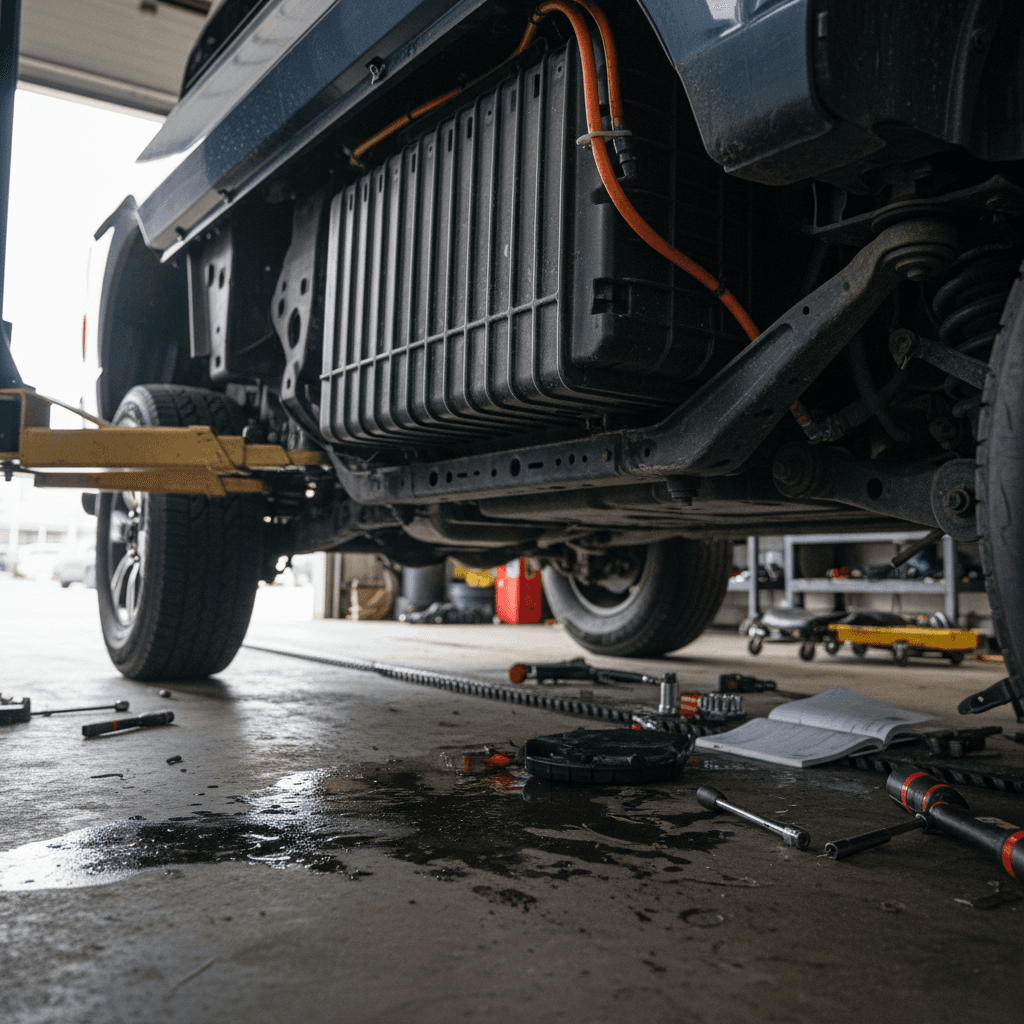
Electric trucks like the F‑150 Lightning are brutally quick and very heavy. That combination is part of the appeal, but it also influences where your maintenance dollars go.
Key wear items on a Ford F‑150 Lightning
Where to focus your maintenance budget
Tires
A Lightning on factory all‑season tires can easily weigh 6,500–7,000 pounds with passengers and cargo. Aggressive acceleration, towing, and off‑road use all shorten tire life.
Budget: $1,200–$2,000 for a full set of quality truck tires, often every 25,000–40,000 miles.
Brakes
Regenerative braking dramatically reduces pad and rotor wear. Many EV owners see 60,000+ miles on original pads, sometimes much more.
Corrosion from lack of use can still be an issue in salty climates, so periodic inspections matter.
Suspension & steering
The Lightning’s weight and instant torque can stress ball joints, bushings, and steering components over high mileage, especially on rough roads or with heavy towing.
These parts are not unique to EVs, but plan for some replacement work as you cross 100,000 miles.
Watch your driving style
Battery health, warranty coverage, and long‑term costs
On any EV, the traction battery is the most expensive component in the vehicle. The good news is that Lightning packs are designed for long service life, and they’re covered by a separate, long‑term warranty from Ford.
- Most F‑150 Lightnings carry an EV battery warranty of roughly 8 years or 100,000 miles (check your specific truck for exact terms).
- The warranty typically protects against severe capacity loss or outright failure, not minor range reductions over time.
- Real‑world owners generally see modest battery degradation in the first several years if they avoid chronic fast charging and extreme heat exposure.
- Out‑of‑warranty battery replacement is expensive, but it’s still rare on relatively new Lightning models.
How to protect your Lightning’s battery
At Recharged, every vehicle we sell comes with a Recharged Score Report that includes verified battery health diagnostics. If you’re shopping for a used F‑150 Lightning, that kind of third‑party data can give you confidence that the pack is performing as it should, and help you avoid unexpected long‑term costs.
How buying a used F‑150 Lightning changes the cost picture
A new Ford F‑150 Lightning can carry a steep sticker price. Buying used doesn’t just lower your monthly payment, it also reshapes your maintenance and risk profile.
Buying new
- Full factory warranty coverage for years to come
- Minimal maintenance at first: mostly tire rotations and inspections
- Higher depreciation in the early years
- You’re likely the first to tow heavy or off‑road the truck
Buying used
- Lower purchase price and slower depreciation
- Maintenance history may be mixed, important to verify
- Portions of the factory warranty (especially battery) may still apply
- Higher odds of upcoming wear items: tires, brakes, suspension
Where Recharged fits in
Practical ways to lower your Lightning’s maintenance costs
7 smart habits to keep F‑150 Lightning maintenance costs in check
1. Rotate tires on time
Stick to a 7,500–10,000‑mile rotation schedule and request an alignment check if you see uneven wear. On a heavy EV truck, well‑maintained tires are your biggest lever on long‑term cost.
2. Use the right tire for your use case
If you rarely tow or off‑road, a quieter, lower‑rolling‑resistance tire can last longer and improve efficiency. If you do tow often, choose a tire with the appropriate load rating and maintain proper pressure.
3. Take advantage of regenerative braking
Drive in one‑pedal or strong regen modes when safe. This transfers a lot of the deceleration work from the friction brakes to the motors, extending pad and rotor life.
4. Follow the factory schedule, not just dealer menus
Keep your owner’s manual handy and compare any recommended services against Ford’s actual maintenance schedule so you’re not paying for early or unnecessary fluid replacements.
5. Protect the battery with smart charging
Daily charge limits around 80%, shaded parking when possible, and moderate use of DC fast charging all help preserve long‑term battery health and reduce the odds of big out‑of‑warranty expenses.
6. Address small issues early
Noises, vibrations, or steering play can indicate early suspension or alignment problems. Catching them early is almost always cheaper than waiting until they cause secondary damage.
7. Shop around for EV‑savvy service
Some independent shops now specialize in EVs and may offer competitive pricing versus dealerships. Whether you go dealer or independent, look for technicians with EV training and experience.
Ford F‑150 Lightning maintenance cost FAQ
Frequently asked questions about F‑150 Lightning maintenance costs
Bottom line: What to budget, and how Recharged can help
Put simply, a Ford F‑150 Lightning usually costs less to maintain than a comparable gas F‑150, especially if you drive enough miles to take full advantage of the EV powertrain’s simplicity. The tradeoff is that you’ll want to budget realistically for tires and, over the long haul, some suspension work on a very heavy, very capable truck.
If you’re considering a Lightning, especially a used one, the smartest move is to look beyond just the purchase price. Factor in maintenance history, tire condition, and verified battery health so you understand your true cost of ownership.
That’s exactly what Recharged is built for. Every vehicle we sell, including the F‑150 Lightning, comes with a detailed Recharged Score Report, transparent pricing, access to EV‑savvy specialists, flexible financing, and nationwide delivery. That way, you’re not guessing about future maintenance costs, you’re making a confident, informed decision about the electric truck that fits your life and your budget.