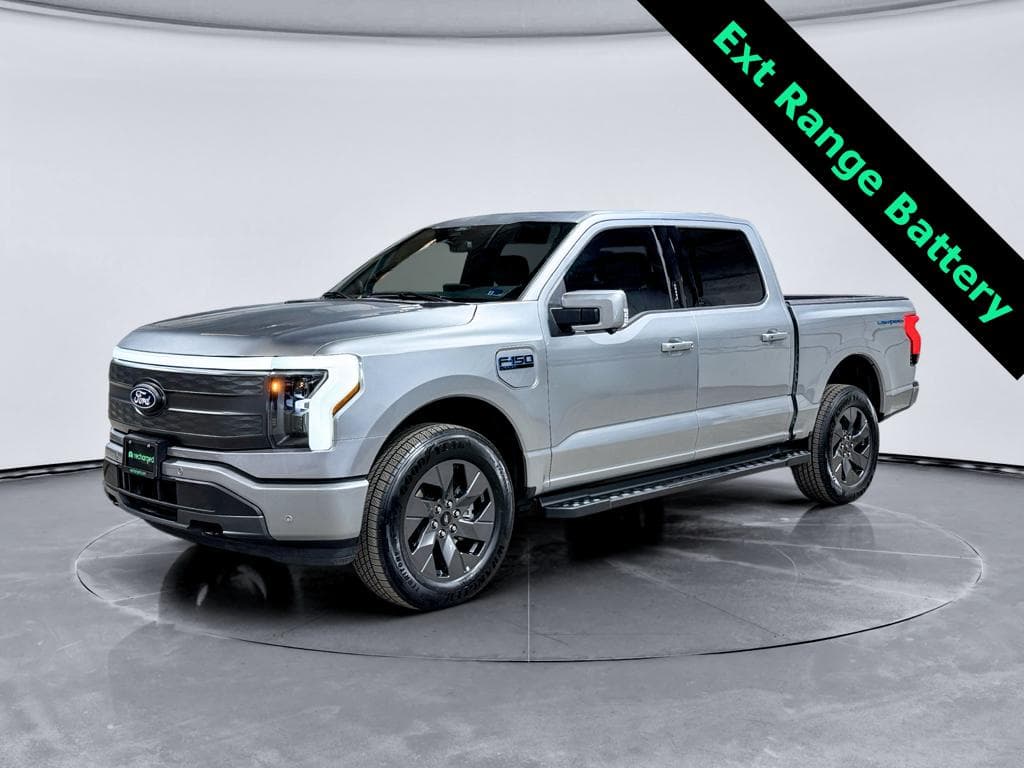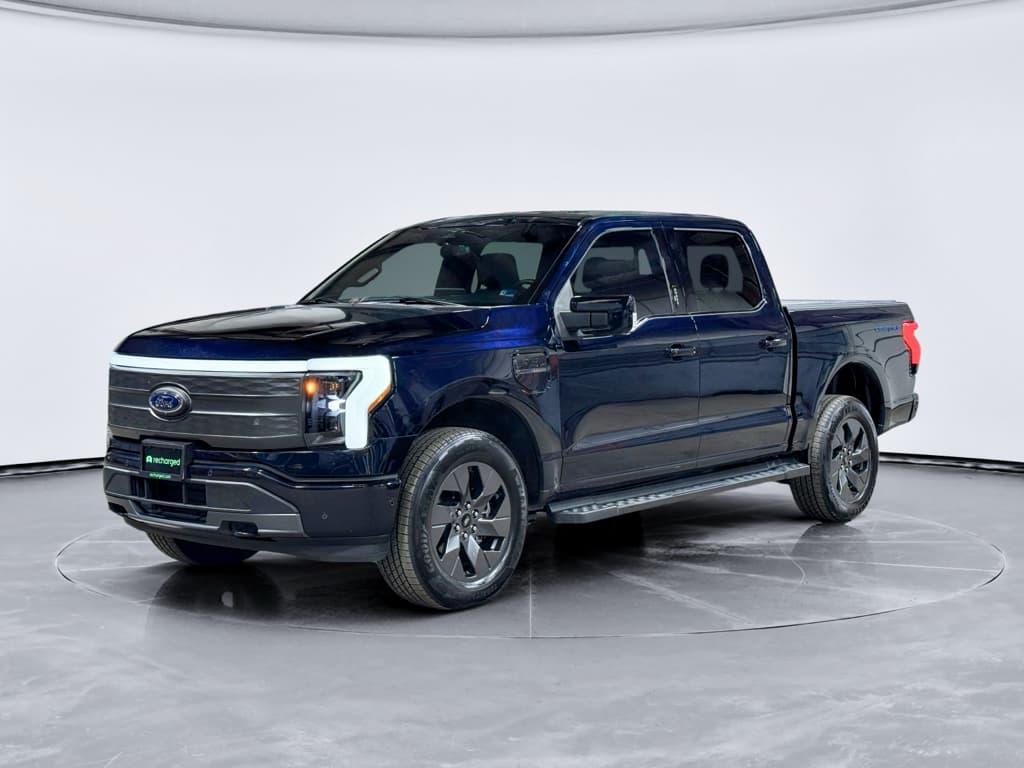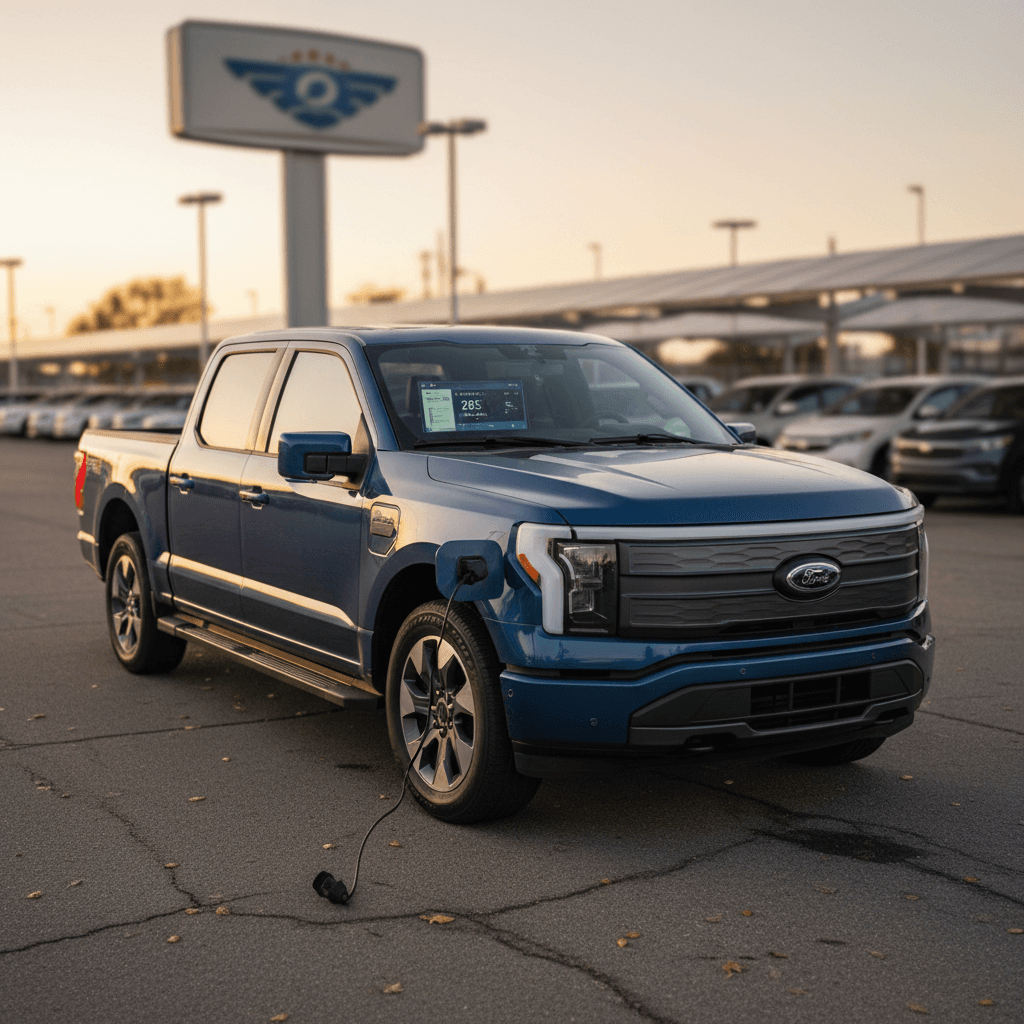
By 2026, the oldest Ford F-150 Lightning pickups have three to four years and tens of thousands of real-world miles behind them. That makes this the right moment for a true Ford F-150 Lightning long term review 2026, not a first-drive impression, but an honest look at range, towing, reliability, and whether this now-discontinued electric pickup still makes sense, especially as a used buy.
Quick context: production and model years
What You’re Actually Getting in a 2022–2026 F-150 Lightning
Key Lightning Model-Year Highlights (2022–2026)
What changed over the short, but busy, production run
2022–2023: Launch Trucks
These are the first Lightnings on the road.
- Standard- and Extended-Range batteries
- Up to 320 miles EPA-rated range depending on trim
- First generation of Ford’s BlueCruise hands-free system (where equipped)
2024: Cold-Weather Upgrade
Ford added a heat pump for improved winter efficiency, plus ongoing software updates and small feature tweaks.
If you live in a cold climate, 2024+ trucks are noticeably easier on winter range.
2025–2026: Final Form
Ford refined trims and equipment and, for 2026, made the larger ~123 kWh usable Extended-Range battery standard on more trims.
These late trucks tend to have the best feature mix and software from the factory.
Across the run, every Lightning is a crew-cab, short-bed truck with dual motors and full-time all-wheel drive. Power ranges from roughly 450 to 580 horsepower depending on battery and trim, with 0–60 mph times in the mid‑4‑second range, sports-sedan quick in a full-size pickup. EPA range runs from the mid‑200s to roughly 320 miles when new, but as you’ll see, long-term range is more complex than a single window-sticker number.
Real-World Range After Years of Use
Typical Real‑World Range in 2026
If we zoom out across owner reports, independent tests, and Recharged’s own range work, a pattern emerges. In a healthy Extended‑Range Lightning, you should plan on about 210–250 real‑world highway miles at U.S. freeway speeds in mild weather, and more in slower city use. That’s true even three to four years in, assuming the battery has been treated reasonably well.
A simple rule of thumb
Long-term testing backs this up. One early 2022 Lightning with roughly 38,000 miles re‑tested in 2025 essentially matched its original range in controlled conditions, suggesting that the battery management system is doing its job buffering capacity over time. At the same time, plenty of owners in cold states report winter highway efficiency dropping to the 1.7–2.0 mi/kWh range at interstate speeds with heat running, enough to drag a 320‑mile EPA truck into the low‑200s or below between charges.
Don’t confuse winter losses with battery wear
Towing, Hauling, and Using It Like a Truck
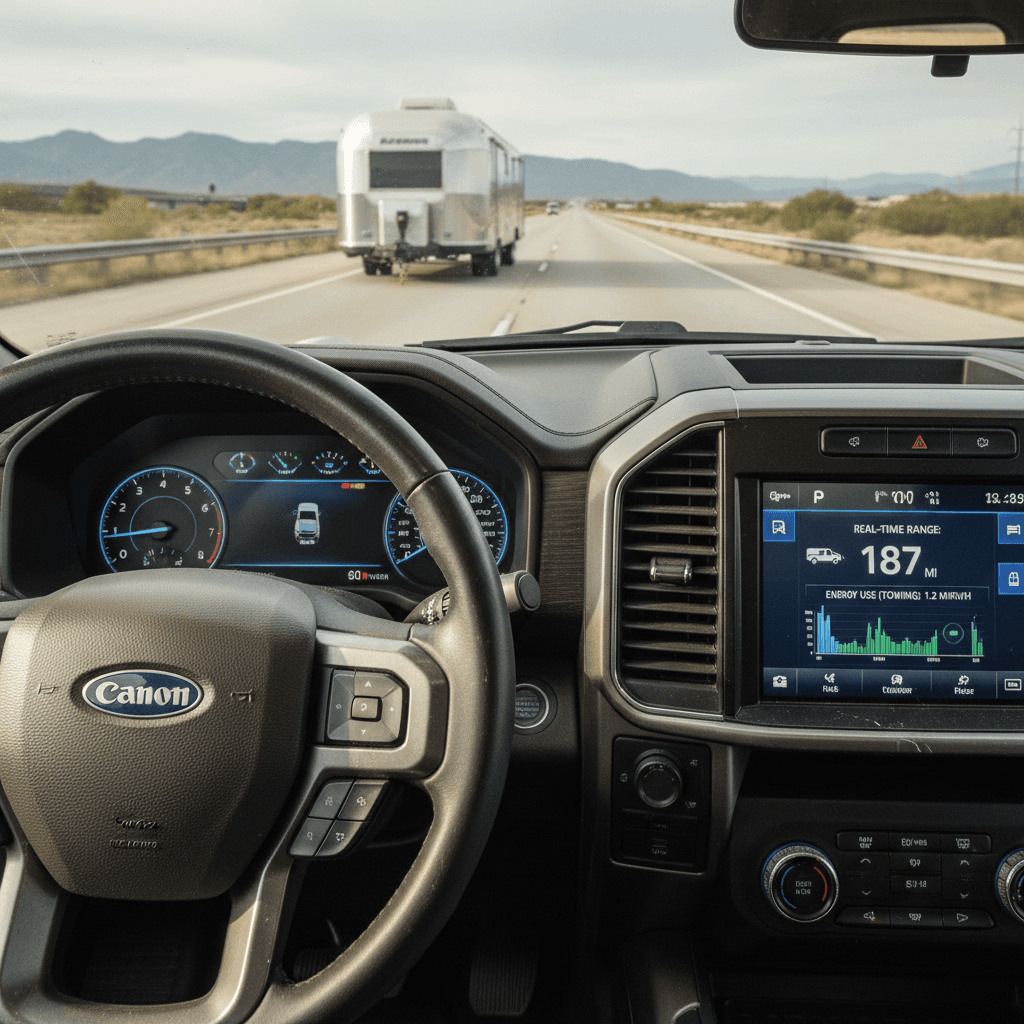
Ford built the Lightning to be a real truck, and on paper it delivers: up to 10,000 pounds of towing capacity with the right Extended‑Range configuration and 7,700 pounds on some others, plus the instant torque we’ve all come to expect from EVs. In practice, towing and heavy payloads are where the long-term realities of ownership really show up.
Realistic Range Expectations When Towing
Approximate planning numbers owners report after a few years of mixed use. Your results will vary with speed, terrain, and weather.
| Use Case | Truck Setup | Weather & Speed | Typical Usable Range |
|---|---|---|---|
| Light utility trailer (~3,500 lbs) | Extended-Range, unloaded bed | 50–60 mph, mild weather | 130–170 miles |
| Mid-size camper (5,000–6,000 lbs) | Extended-Range, some gear in bed | 60–65 mph, mild weather | 100–140 miles |
| Big, boxy camper (7,000–8,000 lbs) | Extended-Range, lots of frontal area | 65–70 mph, mild weather | 80–120 miles |
| Any trailer in real cold | Any battery, heat on, 65–70 mph, below 20°F | 50–90 miles |
These are conservative rules of thumb for trip planning, not promises.
Why towing hits EVs so hard
From a long-term standpoint, the good news is that moderate towing, boats, enclosed utility trailers, landscape rigs, on occasional weekends hasn’t shown clear evidence of accelerating battery wear by 2026. What it does do is force you to rethink trip planning and charging locations. If your use case is mostly local towing under 100 miles a day with reliable home charging, a used Lightning can work brilliantly. If you’re dreaming of cross‑country fifth‑wheel adventures, this is the wrong truck.
Battery Degradation: What We Know by 2026
The data we have
By early 2026, we finally have a usable sample of real trucks in the wild: early 2022 models with three to four years of service and 30,000–60,000 miles, plus plenty of 2023–2024 trucks with 10,000–40,000 miles.
- Most owners who track state of health report 5–10% capacity loss over that span.
- Some outliers show almost no measured degradation after ~40,000 miles, likely thanks to Ford’s conservative buffers.
- A small number of trucks have had pack replacements tied to cell manufacturing issues, handled under warranty.
How Ford backs the pack
Every Lightning left the factory with an 8‑year / 100,000‑mile battery warranty that promises at least 70% capacity retention. Ford has also run EV confidence programs that sweeten the deal on newer trucks purchased from dealers.
For a used buyer in 2026, that means even an early 2022 truck still has several years of battery coverage left, assuming mileage is reasonable.
Daily charging habits that help
In other words, by 2026, the Lightning’s battery story is quietly encouraging. We don’t have 10‑ or 15‑year data yet, but the combination of modest observed degradation, conservative software, and that 70% capacity guarantee makes a strong case that a well‑cared‑for Lightning should deliver usable range for the typical life of a pickup. The bigger long-term question is how you plan to use that range, not whether the pack will instantly fall on its face at year nine.
Reliability, Recalls, and Software Gotchas
Ford pushed hard to be first with a mainstream electric pickup, and that ambition shows in the Lightning’s reliability record. Broadly, the truck drives with a level of refinement that rivals luxury EVs, but it’s also lived through a steady stream of recalls and over‑the‑air fixes that shoppers in 2026 need to understand.
- Multiple software‑related recalls and quality holds, including issues around charging behavior and various warning systems.
- A 2025–2026 recall campaign addressing a park‑system fault that could, in rare cases, allow vehicles (including certain 2022–2026 Lightnings) to roll away until a module is reprogrammed.
- Ongoing battery‑cell manufacturing campaigns affecting specific 2022–2024 trucks, where Ford pre‑emptively replaces packs that show signs of an internal defect.
- The usual early‑production nuisances, rattles, trim alignment, infotainment freezes, that Ford has been gradually chasing down.
Non‑negotiable step for used buyers
Day to day, long‑term owners report that the truck itself feels solid once early software gremlins are ironed out. BlueCruise and other driver‑assist features continue to evolve via updates, but you should budget time to keep the truck current, especially if previous owners ignored update prompts. A Lightning that’s been kept on the latest software, had recalls done promptly, and serviced at reasonable intervals is a very different proposition than one that’s been neglected.
Ownership Costs: Charging Versus Fuel and Maintenance
Where the Lightning Saves You Money, and Where It Doesn’t
Looking beyond the monthly payment
Charging vs. gasoline
On home electricity at roughly $0.14/kWh, an Extended‑Range Lightning that averages 2.2–2.5 mi/kWh costs somewhere around 5–6 cents per mile in energy.
A comparable gas F‑150 that averages 18–20 mpg at $3.50/gal will land closer to 17–19 cents per mile. If you rack up miles and mostly charge at home, the savings add up quickly.
Maintenance and repairs
No oil changes, fewer moving parts, and regenerative braking all work in your favor. Over the first 3–5 years, most Lightning owners see significantly lower routine maintenance costs than they would with a gas F‑150.
You’ll still buy tires (heavy EVs are hard on rubber) and cabin filters, and out‑of‑warranty repairs on complex features can sting, but the basic drivetrain has fewer wear items.
Where costs can creep up
Insurance is a mixed bag: some carriers still price EV pickups cautiously due to expensive bodywork, aluminum construction, and high‑voltage components. As 2022–2024 trucks age and more used‑market data comes in, that gap should narrow, but it’s worth getting real quotes on a specific VIN before you fall in love with a truck.
Living With a Lightning: Daily Driving, Work, and Road Trips
As a daily driver
The Lightning is quiet, instantly quick, and comfortable. The front trunk (frunk) turns what used to be engine bay into lockable, weather‑proof storage. If your routine is commuting and errands within 50–80 miles a day and you can charge at home, it’s hard to beat.
As a work truck
Contractors and tradespeople love the Pro Power Onboard system. Being able to run tools, lights, or a small job‑site from the truck without a separate generator is a genuine long‑term advantage. Just remember that heavy payloads and idling with power export engaged eat into range.
As a road‑trip rig
This is where you have to be honest with yourself. For regional trips with good DC fast‑charging coverage and a bit of planning, the Lightning can work. For spontaneous cross‑country towing with tight schedules, a hybrid or gas F‑150 is still the easier choice in 2026.
Where the Lightning truly shines long‑term
Is the F-150 Lightning a Good Used Buy in 2026?
Ford’s decision to stop building the all‑electric Lightning after 2025 has spooked some shoppers, but it also creates opportunity. The basic hardware is strong, the battery story so far is reassuring, and the early depreciation on big EV trucks means you can often buy far more capability used than you could afford new just a few years ago.
Long‑Term Pros and Cons in 2026
A clear‑eyed look before you write a check
Long‑term positives
- Serious performance: 0–60 mph in the mid‑4s in a full‑size truck never stops being entertaining.
- Low running costs if you charge at home and drive a lot.
- Frunk and Pro Power Onboard genuinely change how you use a truck.
- Battery degradation so far is modest, with warranty coverage into the 2030s on many trucks.
Long‑term trade‑offs
- Range under load remains the Achilles’ heel; towing and winter driving demand planning.
- Complex software and electronics mean recall and update visits are part of life.
- Discontinued status raises questions about long‑term parts and feature support, though Ford is obligated to support safety‑critical components.
If your expectations are aligned, this is an incredibly capable electric truck with limits around range under load, not a one‑for‑one replacement for a long‑distance diesel, the Lightning can be a smart, even savvy, used buy. The trick is choosing the right truck and verifying its history, especially around battery health and recall completion.
How to Shop a Used F-150 Lightning With Confidence
Used F-150 Lightning Buyer Checklist
1. Verify battery health, not just mileage
Ask for a documented <strong>battery health report</strong>, not just a guess from the range estimate on the dash. At Recharged, every Lightning gets a Recharged Score with objective battery diagnostics so you can see how much usable capacity remains.
2. Confirm recall and software status
Run the VIN through Ford’s recall tools and ask for service records. You want evidence that <strong>major recalls and field service campaigns</strong>, especially battery and park‑system fixes, have been performed.
3. Understand prior use
A lightly used commuter truck that lived in a temperate climate is very different from a workhorse that towed at max weight in harsh winters. Ask how the truck was used, where it lived, and how often it DC fast charged.
4. Inspect tires, brakes, and suspension
Heavy EVs are tough on consumables. Uneven tire wear, tired shocks, or noisy suspension components on a three‑ or four‑year‑old truck may point to hard use or neglect.
5. Test DC fast charging before you buy
If possible, take the truck to a public DC fast charger and <strong>observe charge speeds and behavior</strong>. Sudden disconnects, unusually low power, or error messages are red flags that need diagnosis before you sign.
6. Match the battery to your life
Extended‑Range trucks command a premium, but for many buyers they’re worth it. Be honest about your routes, towing plans, and local climate before deciding a Standard‑Range truck will do.
How Recharged can help
FAQ: Ford F-150 Lightning Long-Term Questions
Ford F-150 Lightning Long-Term FAQ
Bottom Line: Should You Buy One Now?
From the driver’s seat, the Ford F-150 Lightning still feels like the future: silent, brutally quick, and packed with clever features that make work and family life easier. From the ownership chair, our 2026 long-term review shows a more nuanced picture, one where battery health is holding up, recalls and software demand a bit of diligence, and range under load is the main compromise.
If you need a long-distance tow rig or live far from fast chargers, this may not be your truck. But if your world is daily commuting, local jobs, and regional towing with reliable home charging, a well‑vetted used Lightning can be an outstanding value in 2026. Take the time to find a truck with clean history and a solid battery report, lean on specialists like Recharged for diagnostics and guidance, and you can enjoy everything this groundbreaking electric pickup does well, long after the assembly lines have gone quiet.