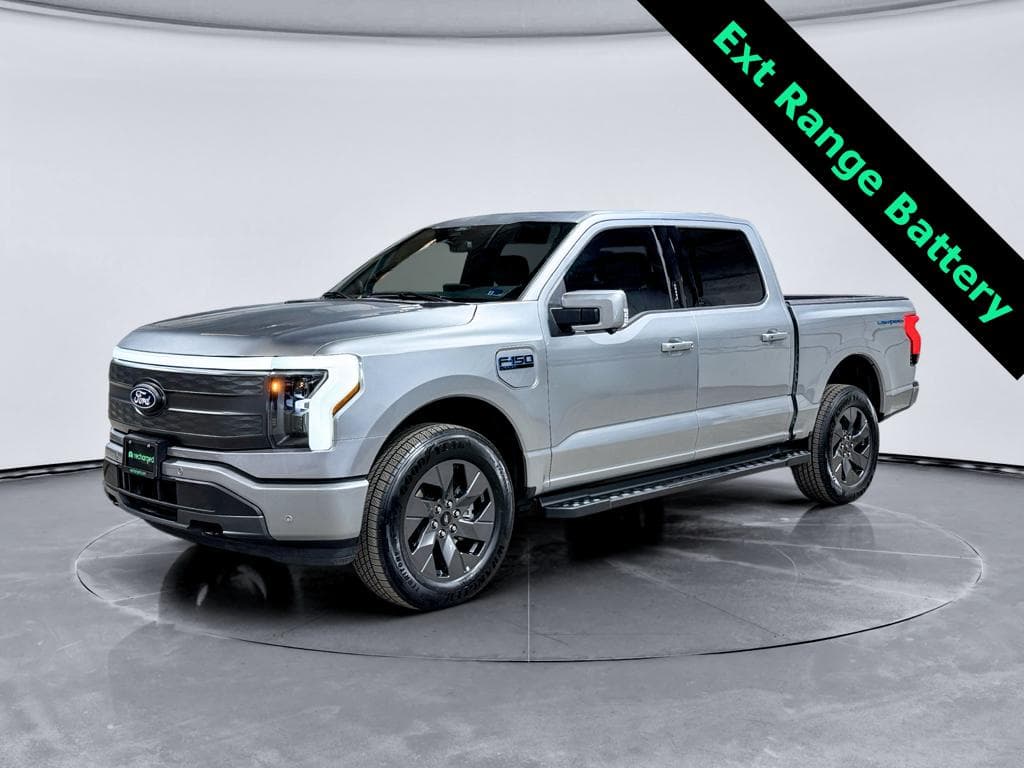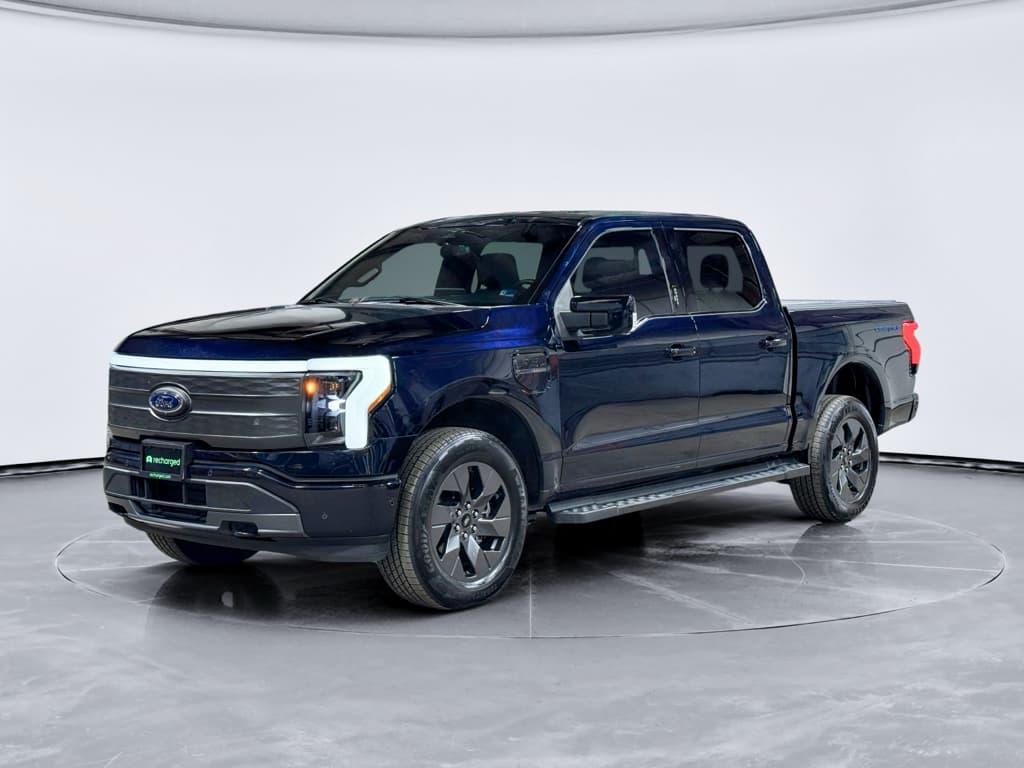
If you own, or are thinking about buying, a Ford F-150 Lightning, you’ve probably heard the horror stories: steep price cuts, big rebates, and talk that the F-150 Lightning depreciation rate is among the worst in the truck world. Some of that is overblown, but a lot of it is rooted in real market data. Let’s walk through what’s actually happening to Lightning values and what it means for you.
Quick take
Why the F-150 Lightning’s Depreciation Matters
Depreciation is the silent line item that can make an EV a bargain, or an expensive experiment. For most vehicles, depreciation is the single biggest cost of ownership, often beating out fuel, insurance, maintenance, and financing combined over the first five years. For early Ford F-150 Lightning buyers, that’s been especially true.
- If you already own a Lightning, depreciation affects when it makes sense to sell or trade in.
- If you’re shopping used, heavy depreciation can turn a once-$80,000 truck into a realistic option.
- If you’re comparing the Lightning to a gas F-150 or Rivian R1T, knowing resale trends helps you estimate true cost of ownership.
Context matters
How Fast Does the Ford F-150 Lightning Depreciate?
Let’s start with numbers. Multiple valuation sources and remarketing analyses show the F-150 Lightning losing value far faster than the average truck, especially in its first three years on the road.
Ford F-150 Lightning Depreciation Snapshot
Independent depreciation tools tracking the F-150 Lightning show roughly half the truck’s value gone by year three, with depreciation slowing somewhat after that. That’s steeper than most gas pickups and steeper than many mainstream EVs like the Tesla Model 3 or Hyundai Kona Electric.
What this means for shoppers
Ford F-150 Lightning vs Gas F-150 Depreciation
To understand whether the Lightning is a problem child or just an EV doing EV things, you have to compare it directly with its gas sibling, the F-150.
Ford F-150 Lightning vs Gas F-150: 3‑Year Depreciation Snapshot
Approximate three‑year depreciation and value retention based on market analyses and industry data.
| Model | Powertrain | Approx. 3‑Year Value Loss | Approx. Value Retained | Notes |
|---|---|---|---|---|
| F-150 Lightning | EV | ≈48% | ≈52% | Early EV truck, technology and pricing changed quickly. |
| F-150 (Gas) | ICE | ≈22% | ≈78% | Full‑size pickups typically hold value very well. |
| Typical EV (overall) | EV | ≈38–42% | ≈58–62% | Average EV market depreciation over 3 years. |
| Typical Gas Vehicle | ICE | ≈35–40% | ≈60–65% | Average across body styles, not just trucks. |
The Lightning loses value roughly twice as fast as a comparable gas F-150 over the first three years.
In plain English: the F-150 Lightning depreciated faster than both the average EV and the average gas vehicle, and dramatically faster than a conventional F-150. That doesn’t make it a bad truck; it does mean your money works very differently depending on whether you buy it new or used.
For first owners, it stung
Why Did F-150 Lightning Values Drop So Hard?
No single factor explains the Lightning’s depreciation story; it’s a dogpile of timing, pricing, and shifting EV sentiment. Here are the big levers.
Key Drivers Behind F-150 Lightning Depreciation
It’s not just “EVs depreciate more”, it’s these specifics.
Aggressive early pricing & incentives
Market whiplash for EV trucks
Fast technology turnover
Ford’s strategic pivot
By late 2025 and into 2026, Ford publicly shifted away from a pure‑EV pickup strategy and toward hybrids and extended‑range solutions. That announcement alone sends a signal to the market: this specific all‑electric configuration may not be the center of Ford’s truck future. Buyers price that risk into used values.
Broader EV headwinds
At the same time, EVs in general faced higher depreciation than gas models, thanks to rapid model turnover, shifting incentives, and questions about long‑term battery replacement costs. The Lightning, as a high‑priced, first‑wave EV pickup, sat right in the crosshairs of those concerns.
Remember the flip side
What Today’s Used F-150 Lightning Prices Look Like
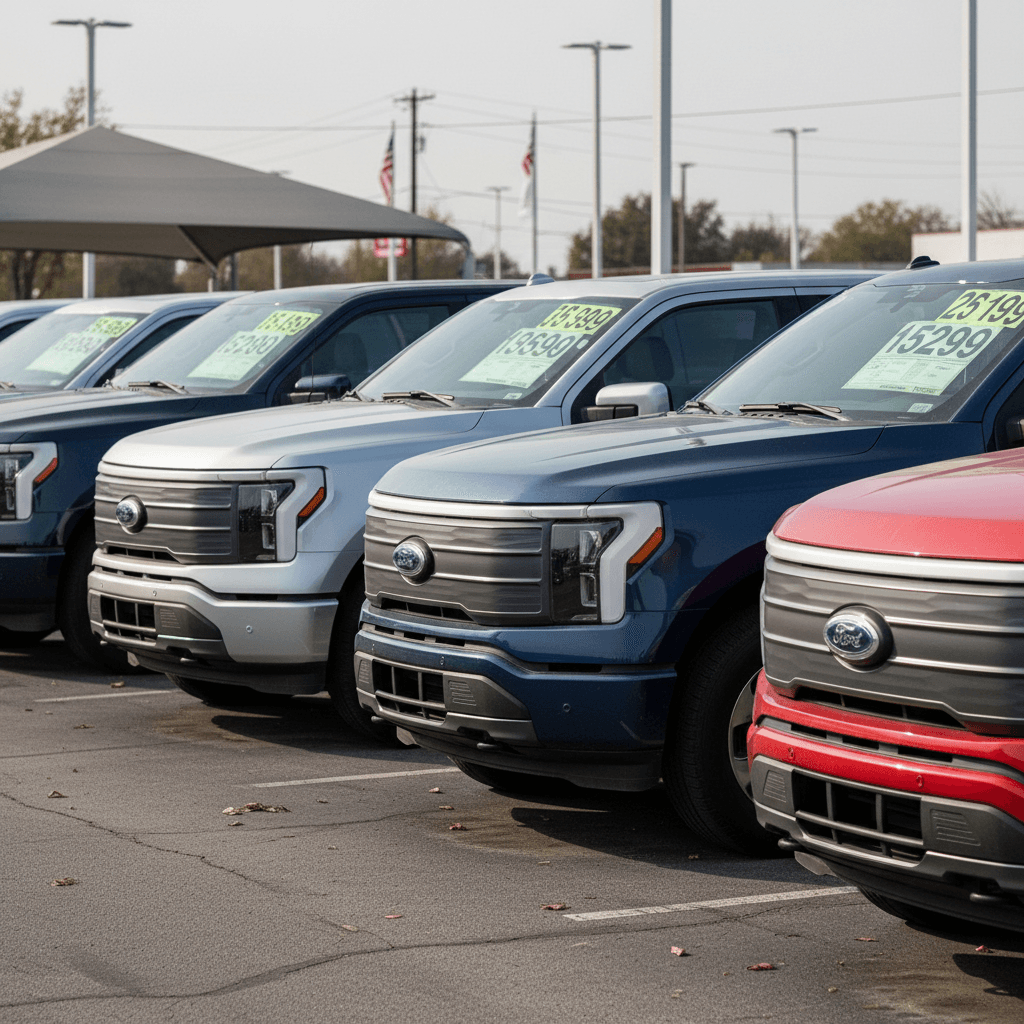
Scroll through used listings in early 2026 and you’ll see the pattern: lots of lightly used, well‑equipped Lightnings priced well below their original sticker. Exact numbers vary with trim, mileage, and region, but a few themes repeat across the market:
- Early‑build 2022–2023 Pro and XLT trucks that once listed in the $55,000–$65,000 range often show up in the low‑to‑mid $40,000s, and sometimes high $30,000s, with average miles.
- Well‑optioned Lariat and Platinum models that could push $80,000–$90,000 new now land squarely in the $50,000–$60,000 used range depending on miles and condition.
- Fleet‑spec or work‑oriented Pro models with higher miles discount more heavily, while lightly driven personal trucks command the strongest prices.
Where Recharged fits in
Ready to find your next EV?
Browse VehiclesHow Battery Health Affects Lightning Resale Value
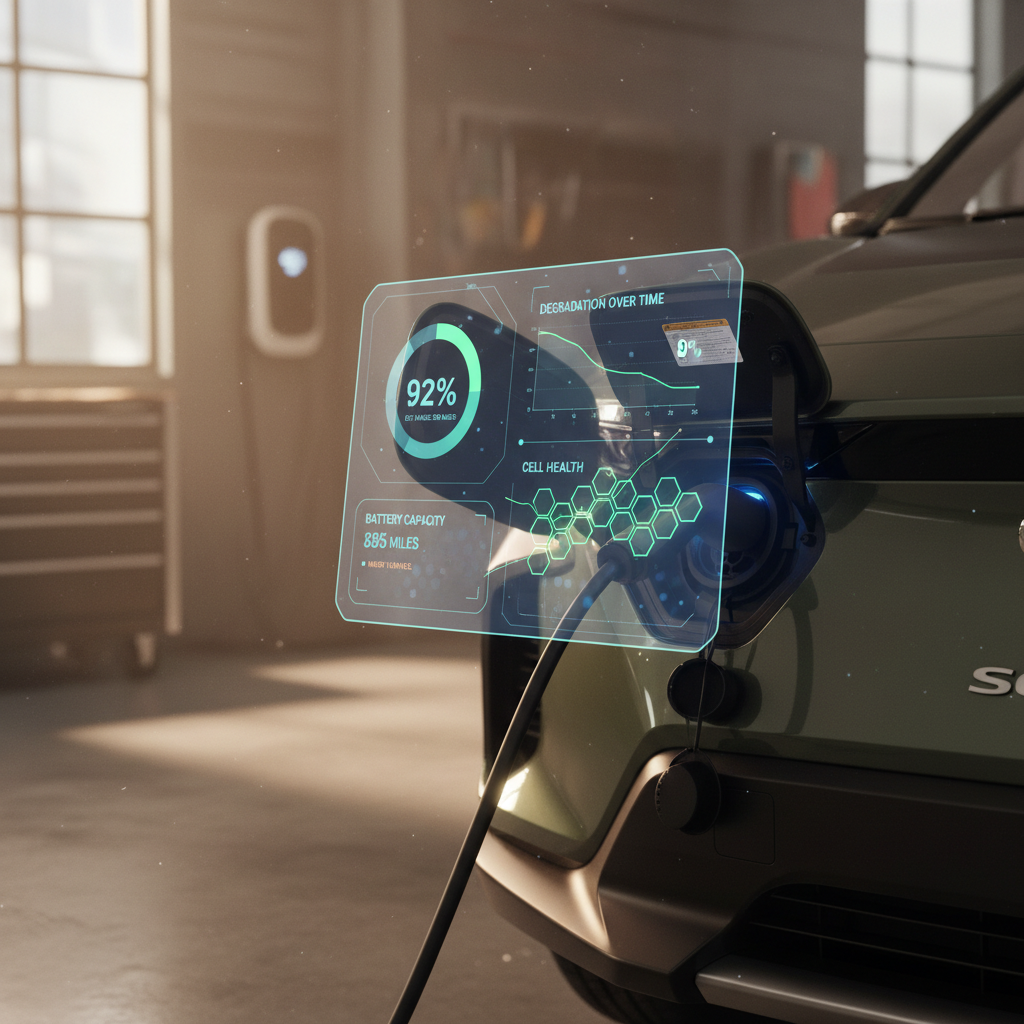
For any EV, resale value lives and dies on one thing: battery health. With a full‑size electric pickup like the Lightning, that’s even more critical because so much of the truck’s promise, towing, payload, road‑trip range, depends on having plenty of usable kilowatt‑hours left.
Battery Factors That Move Lightning Values Up or Down
These are the first things savvy buyers (and lenders) look at.
State of health (SoH)
Use history
Warranty & software
Battery diagnostics are non‑negotiable
Tips for Buying a Used F-150 Lightning
If you’re shopping used, the Lightning’s depreciation can be your best friend, as long as you separate good trucks from problem children. Here’s a simple checklist to work through before you fall for the big frunk and quiet torque.
Used Ford F-150 Lightning Buying Checklist
1. Start with your use case
Be honest about how you’ll use the truck. Daily commuting, weekend Home Depot runs, a few camping trips a year? A lower‑range trim may be plenty. Regular long‑distance towing? You’ll want the extended‑range battery and the newest software you can afford.
2. Verify battery health and range
Ask for a recent <strong>battery health report</strong>, not just the dash range estimate on a full charge. Tools like the Recharged Score quantify remaining capacity so you’re not guessing how much truck you’re actually buying.
3. Check charging history
Look for signs of heavy DC fast‑charging, like frequent road‑trip use or commercial duty cycles. Occasional fast‑charging is fine; living on a fast charger is harder on the pack over time.
4. Dig into towing and payload use
A Lightning that spent its life towing close to max capacity or hauling heavy payloads will show it in tires, brakes, suspension, and sometimes in pack temperature history. Normal truck work is fine, abuse is not.
5. Review software and recall status
Make sure the truck has all <strong>software updates</strong> and that any safety or HV system recalls have been completed. Updated software can improve range estimates, charging behavior, and overall drivability.
6. Compare price to new alternatives
Before you buy a used Lightning, compare its out‑the‑door price to a new (or nearly new) gas F-150 or hybrid. In some markets, the used Lightning with big early depreciation will deliver far more equipment for similar money.
How Recharged simplifies the process
Selling or Trading In Your F-150 Lightning
If you’re on the other side of the table, looking at that depreciation and wondering how to exit gracefully, you have a few levers to pull.
1. Timing your sale
Depreciation is front‑loaded. If your Lightning is barely a year old, most of the early hit is already behind you, but the market is still adjusting. If you can, hold until at least year three, when the curve starts to flatten and you’ve gotten more value from the truck.
2. Show your homework
Buyers fear unknowns. A recent battery health report, complete service history, and proof of software updates can easily be worth thousands of dollars to a private buyer, or help you negotiate a stronger trade‑in offer.
Ways to Maximize Your Lightning’s Resale Value
These steps won’t erase depreciation, but they can soften the blow.
Detail and minor reconditioning
Get a pre‑sale inspection
Compare selling options
Be realistic about pricing
FAQ: Ford F-150 Lightning Depreciation & Value
Frequently Asked Questions
The Bottom Line on Ford F-150 Lightning Depreciation
The story of the Ford F-150 Lightning depreciation rate is a tale of timing. Early buyers paid top dollar for cutting‑edge tech in a fast‑moving, still‑uncertain segment, and the market punished that risk with unusually steep early depreciation. But that same curve is exactly what makes the used Lightning so compelling in 2026: you can buy a quiet, brutally quick full‑size truck with serious capability for the price of a mid‑trim gas pickup.
If you already own a Lightning, your best moves are to document battery health, stay on top of software and maintenance, and be realistic if you decide to sell. If you’re shopping for one used, lean on verified diagnostics and transparent pricing, tools Recharged bakes into every listing, so you can take advantage of the depreciation, not fall victim to it.