If you’re looking at a Ford F‑150 Lightning, you’re probably wondering how practical it is once you start hauling gear. The bed and frunk numbers are easy to find, but Ford F‑150 Lightning cargo space with the seats down is where a lot of owners actually stash tools, dogs, bikes, and weekend gear. Let’s break down how much space you really get inside the cab, how it combines with the frunk and bed, and what that means in real-world use, especially if you’re considering a used Lightning.
Key takeaway up front
F-150 Lightning cargo layout at a glance
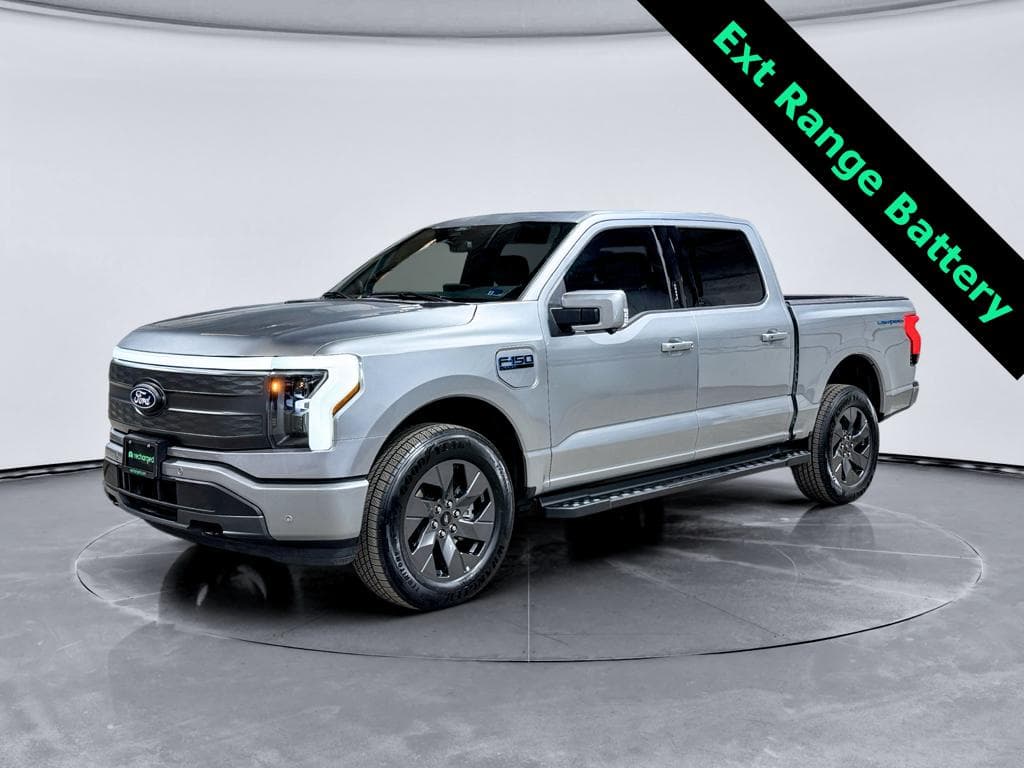
Before we focus on cargo space with the seats down (or up), it helps to understand the basic layout. All current F‑150 Lightning models share the same body style: a four-door SuperCrew cab, a 5.5‑foot short bed, and a large front trunk, or Mega Power Frunk. That means the cargo story is less about picking the right body configuration, and more about learning how to use the one configuration Ford gives you.
Three main cargo zones in every F-150 Lightning
Cab, frunk, and bed work together when you pack smart
Crew cab interior
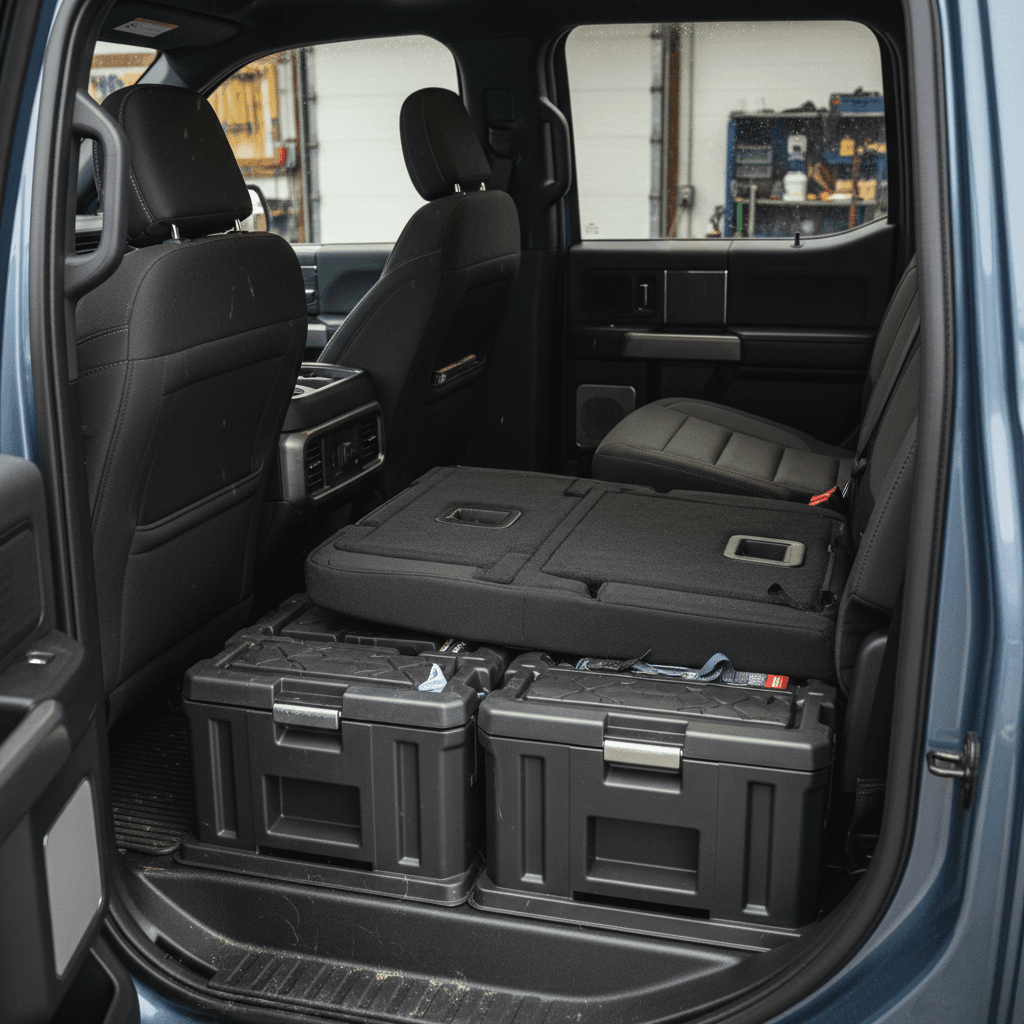
Two rows of seats with a wide second row and generous legroom. The rear bench folds up to create a tall load area, and trims with the fold-flat storage system create a nearly flat floor.
Mega Power Frunk
Lockable front trunk under the hood. Officially about 14.1 cu ft of volume, similar to a sedan trunk, with a 400‑lb payload rating and built‑in power outlets.
5.5-foot bed
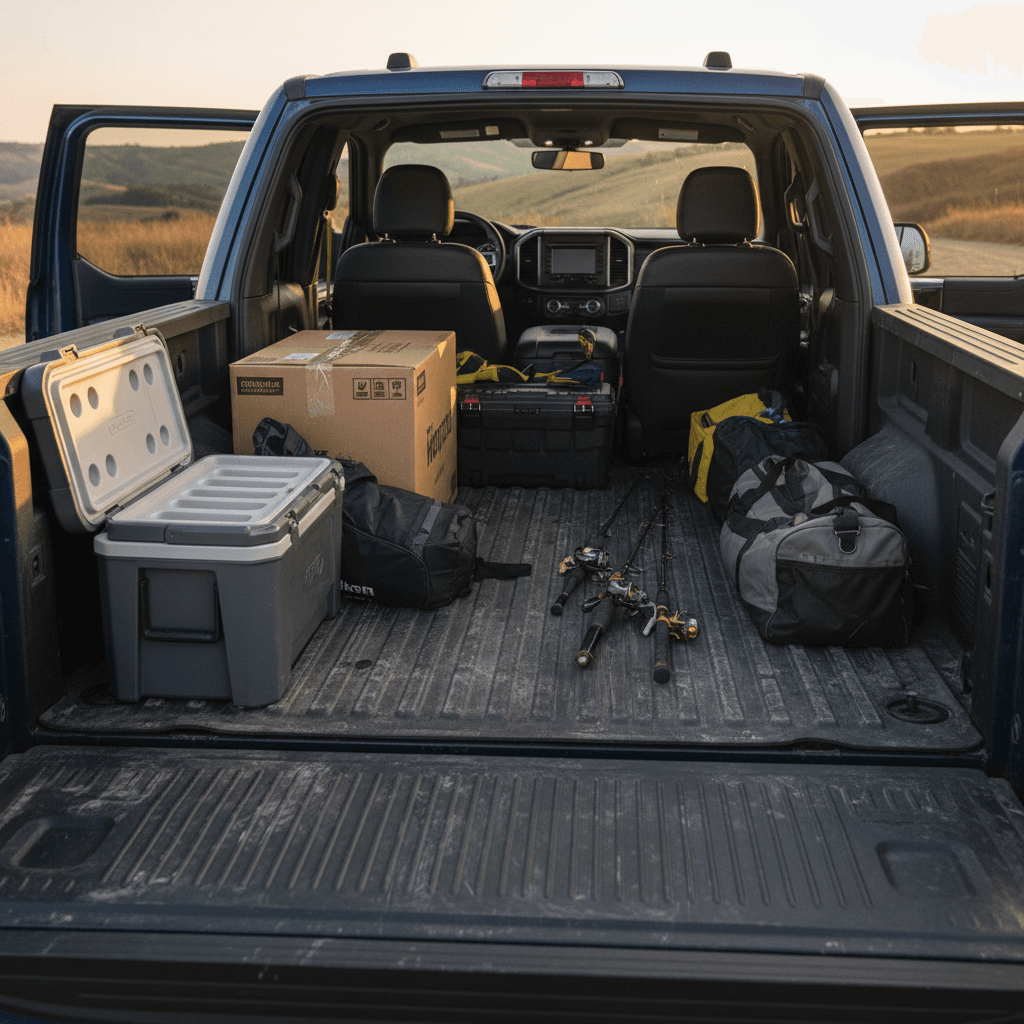
Short bed with about 52.8 cu ft of cargo box volume and roughly 50.6 inches between the wheel wells. Great for messy, tall, or heavy loads.
Think of the Lightning as a three-compartment truck
How much cargo space does the F-150 Lightning have with seats down?
- Seat cushions folded up against the backrests, creating a tall cargo area on the floor.
- Seatbacks folded forward (less common use case, typically for accessing behind-seat space or creating a hidden storage cavity).
Key Ford F-150 Lightning cargo stats
Why numbers can be confusing
- Width: close to 60+ inches at the floor, narrowing around the rear door openings.
- Depth: about the length of the rear footwell plus seat base, enough for large dog crates, multiple moving boxes, or camping bins stacked two high in the middle.
- Height: full cabin height to the ceiling in the center, so tall items like boxed TVs or standing bikes (with front wheel removed) can fit.
Frunk and bed volumes: how they add to interior space
If you’re cross‑shopping EVs, pickups, or SUVs, it’s helpful to look at the Lightning’s cargo story as a total system: cab with seats folded, frunk, and bed all working together. Taken together, it’s one of the most flexible cargo setups of any electric vehicle on sale today.
Ford F-150 Lightning cargo zones and volumes
Approximate cargo capacities and how you’re most likely to use each space day to day.
| Cargo area | Approx. volume | Typical use | Best for |
|---|---|---|---|
| Rear cabin (behind front seats, seats folded up) | ≈50.9 cu ft | Dry, secure interior space with seats unused | Tools, dog crates, moving boxes, expensive gear |
| Mega Power Frunk | ≈14.1 cu ft | Lockable, weatherproof front trunk | Luggage, groceries, work bags, charging cables |
| 5.5-ft bed | ≈52.8 cu ft | Open box with tie-downs and power | Lumber, appliances, bikes, landscaping materials, dirty gear |
All volumes are approximate and can vary slightly by model year and trim, but the layout is consistent across the Lightning lineup.
Hidden advantage vs gas trucks
Real-world examples: what actually fits with the seats down
Numbers are useful, but what most shoppers want to know is: will it fit? Here are some realistic scenarios that show how the Lightning’s rear cargo area, frunk, and bed work together when you fold the rear seats up or down.
Common cargo scenarios in an F-150 Lightning
How people actually use the rear cabin, frunk, and bed
Two large dogs + luggage
With the rear seat cushions folded up and the flat platform deployed, two large dogs can ride on the flat rear floor with room for travel crates or beds. Luggage can go in the frunk to keep hair and dirt out of your bags.
Apartment move
Stack moving boxes across the flat rear floor (keep fragile items inside), heavier or dirty boxes in the bed, and smaller essentials in the frunk. The interior volume with the seats up/floor flat swallows far more boxes than you’d expect from a pickup.
Bikes and outdoor gear
Many owners remove the front wheel and load one or two bikes diagonally across the rear floor with the cushions up. Helmets, shoes, and valuables ride in the cab or frunk, while muddy gear can go in the bed.
Big TV or flat-pack furniture
With the rear seat cushions folded up, you can slide a boxed TV or flat-pack furniture across the rear floor. In many cases a 55‑ or 65‑inch TV box will fit diagonally with the doors closed, keeping it safe from weather and theft.
Large appliance or heavy tools
For heavier items like a washer, dryer, or dense tool chests, the bed is still your best bet. The interior rear cargo space is more about protected, medium-weight cargo than maxing out the truck’s payload rating.
Use the cab for what you can’t replace
How the rear seats fold and storage configurations
On most F‑150 Lightning trims, the rear row isn’t just a bench that flips up. Ford borrowed from the latest gas F‑150 and added clever storage options that change how usable the cabin is as a cargo space when the seats are down or up.
Rear-seat and cargo configurations in the Lightning
1. Seats up, flat load floor deployed
On trims with the fold-flat rear storage, you drop the hinged platform sections to create a wide, near‑level floor from door to door. This is the most useful setup for cargo with passengers only in the front row.
2. Seats up, storage box folded
You can fold sections of the under-seat storage up or down independently (depending on trim), giving you a mix of deeper bins near the seat mounts and open flat floor in the middle for longer items.
3. Seats down (backrests in place)
If you simply want passengers, you leave the backrests up and the cushions down like any normal truck. You still have some shallow storage under portions of the bench, but this isn’t your cargo‑max mode.
4. Partial seat-up configurations
Because the Lightning has a 60/40 split rear bench, you can fold up only one side to carry a single rear passenger plus tall cargo on the other side of the cabin.
5. Behind-the-seat storage
There’s also some space behind the rear seatbacks. It’s not designed for big cargo, but it’s handy for slim items like straps, safety equipment, or charging cables you don’t want rolling around.
Flat floor vs fold-up box differences
Interior vs bed: when to load inside vs outside
Because the F‑150 Lightning combines a big crew cab, a huge frunk, and a conventional bed, you have more choices about where cargo goes than in most trucks. Choosing the right spot isn’t just about convenience, it also affects comfort, safety, and even range.
When the rear cabin is best
- Valuable gear: Tools, electronics, camera gear, or anything that can’t be left in an open bed.
- Weather-sensitive items: Cardboard boxes, documents, musical instruments.
- Pets and kids’ stuff: Crates, strollers, sports bags that you don’t want blown around in the bed.
- Noise-sensitive cargo: Rattly items that would drive you crazy bouncing in the box.
When the bed is the right answer
- Very heavy loads: Appliances, landscaping materials, or anything that pushes payload limits, keep that weight in the box over the rear axle.
- Oversized items: Lumber, kayaks, or dirt bikes that simply won’t fit in the cab even with seats folded.
- Dirty or wet gear: Construction debris, mulch, or muddy camping gear should live in the bed, not on your carpet.
- Short trips with frequent unloading: A waist‑height bed is easier to work out of than a cab you’re constantly climbing into.
Mind the payload and center of gravity
Shopping used? Cargo-space checks to make before you buy
On the used market, two F‑150 Lightnings can look identical from the outside yet feel very different to live with if you care about how cargo fits inside. When you’re walking a truck, whether it’s on a dealer lot or delivered to your driveway, take five minutes to test the rear cargo configurations and storage details.
Used F-150 Lightning cargo checklist
1. Test all rear-seat folding modes
Sit in the back, then fold the cushions up, deploy any fold-flat platform, and check how much floor space you really get. Make sure the latches operate smoothly and that nothing binds or creaks.
2. Look for stains, tears, or damage
Heavy cargo can gouge plastic trim and tear seatbacks if it was loaded carelessly. Inspect door sills, rear seat backs, and the floor for damage that might hint at hard use.
3. Open the frunk and check seals
Confirm the frunk opens and closes smoothly, the weatherstripping is intact, and the drain plugs are present. Look for water marks or rust on fasteners as a clue to past leaks or flooding.
4. Verify bed condition and tie-downs
Surface scratches are normal in a working truck, but bent bed rails, damaged tie-down hooks, or a warped tailgate can suggest overloads or accidents. If there’s a spray‑in liner, look for cracks or peeling.
5. Bring a “test load” if you can
If you know you’ll carry a specific thing, like a bike, a dog crate, or work cases, bring it along. Load it into the rear cabin with the seats up and down to confirm it fits the way you expect.
6. Ask for a battery health report
Cargo space doesn’t change with age, but range does. A <strong>Recharged Score battery health report</strong> gives you objective data on how the Lightning’s pack has aged, so you can be sure the range matches the way you plan to use the truck.
How Recharged can help
Ready to find your next EV?
Browse VehiclesFrequently asked questions about F-150 Lightning cargo space
F-150 Lightning cargo space FAQ
Bottom line: Is the F-150 Lightning’s cargo space enough?
If you’re wondering whether the Ford F‑150 Lightning cargo space with the seats down can replace your current truck or SUV, the short answer is yes for most use cases. The crew cab’s flat load floor gives you more usable interior cargo space than many gas pickups, the 14.1‑cu‑ft Mega Power Frunk adds a whole extra trunk, and the 5.5‑foot bed still does what a full‑size truck bed needs to do. The key is learning how to divide your stuff between those three zones.
If you’re ready to move from research to reality, Recharged can help you compare used F‑150 Lightnings, understand how their cargo space and battery health line up with your needs, and handle the entire purchase online, including trade‑in and delivery. When you know exactly what will fit where, it’s a lot easier to decide if the Lightning is the right electric truck for your life.