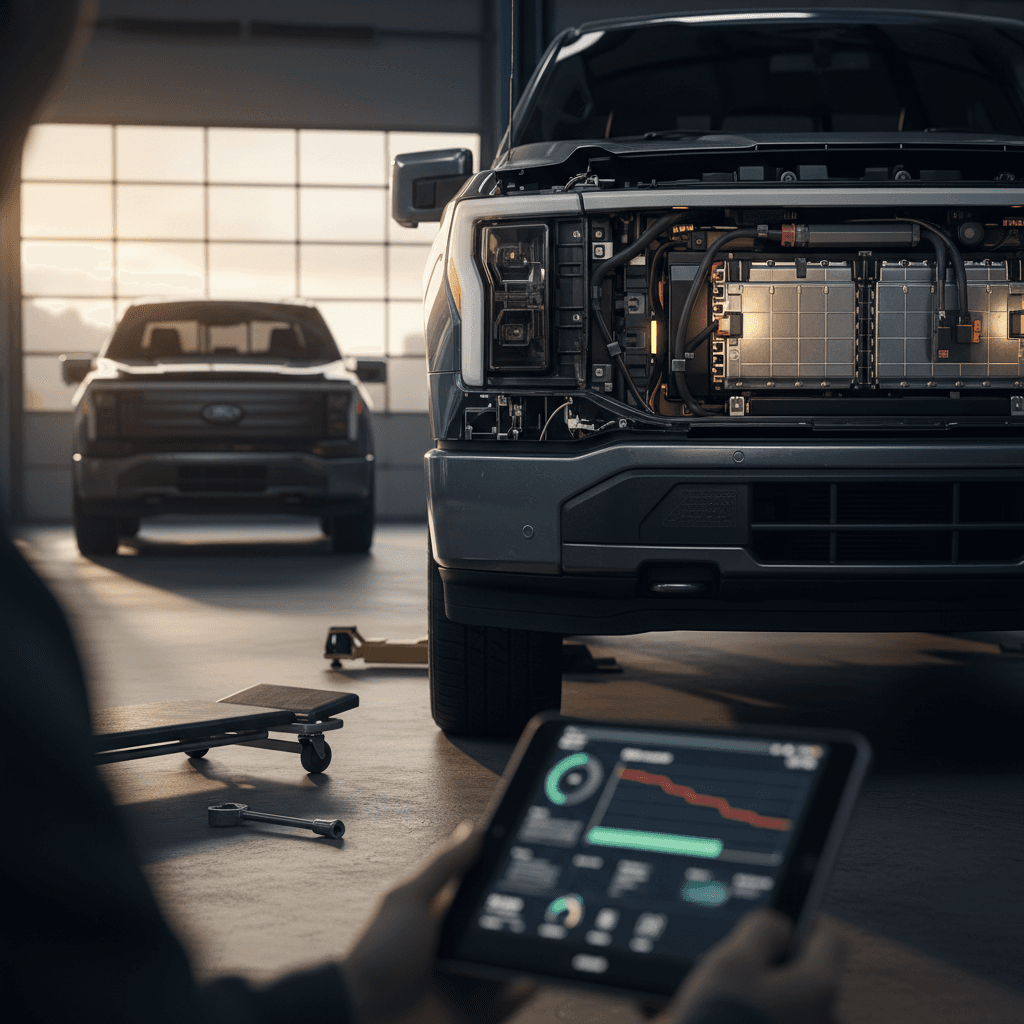
If you’re looking at a Ford F‑150 Lightning, especially a used one, the first big question is simple: how long will the battery last before range loss becomes a real problem? The good news: early data, industry studies, and Ford’s own warranty all point in the same direction. With normal use, an F‑150 Lightning battery is built for a decade or more of service, and in many cases will outlast the truck itself.
Key takeaway
Ford F-150 Lightning battery lifespan at a glance
F‑150 Lightning battery lifespan: quick stats
Those ranges aren’t specific only to the F‑150 Lightning, they come from large datasets across modern EVs. But early Lightning results land right in the middle of those expectations, which is exactly what you want from a truck tasked with towing, hauling and fast charging.
So how long does a Ford F-150 Lightning battery really last?
From a shopper’s standpoint, you can think of Ford F‑150 Lightning battery lifespan in three overlapping ways: calendar age, mileage, and usable range.
- Calendar age: Most current EV battery chemistries are tracking toward roughly 12–15+ years of useful automotive life in moderate climates before dropping to around 70–80% of original capacity.
- Mileage: With typical use, that translates to about 150,000–250,000+ miles before capacity loss becomes a meaningful constraint for most owners.
- Vehicle life: Recent large‑scale studies across tens of thousands of EVs show packs degrading at about 1.5–2% per year on average, suggesting many batteries will actually outlast the vehicles they power.
The F‑150 Lightning uses a large, liquid‑cooled pack and conservative software management. That gives Ford room to protect the cells, and it’s a big reason we’re already seeing high‑mileage trucks with very modest degradation.
What this means for you
Warranty: what Ford actually promises on the Lightning battery
Ford’s battery warranty doesn’t guarantee a specific number of years of life, but it does give you a hard floor of protection, and that matters a lot for used‑truck buyers.
Ford F‑150 Lightning battery warranty basics
Factory coverage that sets the baseline for Lightning battery lifespan expectations.
| Item | What it covers | Duration |
|---|---|---|
| High‑voltage battery & components | Defects in materials and workmanship; abnormally fast capacity loss (below Ford’s defined threshold) | 8 years |
| Mileage limit | Same battery warranty, but capped by mileage as well as time | 100,000 miles |
| Capacity guarantee | Ford generally defines excessive degradation as capacity dropping below a stated percentage in the warranty booklet | Within the 8‑year/100k window |
| What it doesn’t cover | Normal gradual degradation, damage from abuse or unauthorized modifications, accident damage | N/A |
Always verify exact terms for your model year and region, but this is the common U.S. warranty structure for the F‑150 Lightning high‑voltage battery.
Normal vs. warranty-level degradation
When you’re evaluating a used F‑150 Lightning, that 8‑year/100,000‑mile umbrella is useful in two ways: it tells you Ford’s minimum confidence level in the pack, and it may still be in force for newer trucks, providing extra peace of mind.
Real‑world F-150 Lightning battery degradation so far
The F‑150 Lightning hasn’t been on the road for decades yet, but the early mileage stories are encouraging. High‑use trucks, often charged hard, driven long distances, and used for work, are behaving much better than the “dead battery in a few years” myth would suggest.
Early F‑150 Lightning battery stories
Individual trucks aren’t science, but they illustrate what’s possible.
60,000 miles, daily 100% charges
~93,000 miles, 97% health
Owner reports around 40k–50k miles
Why these stories matter
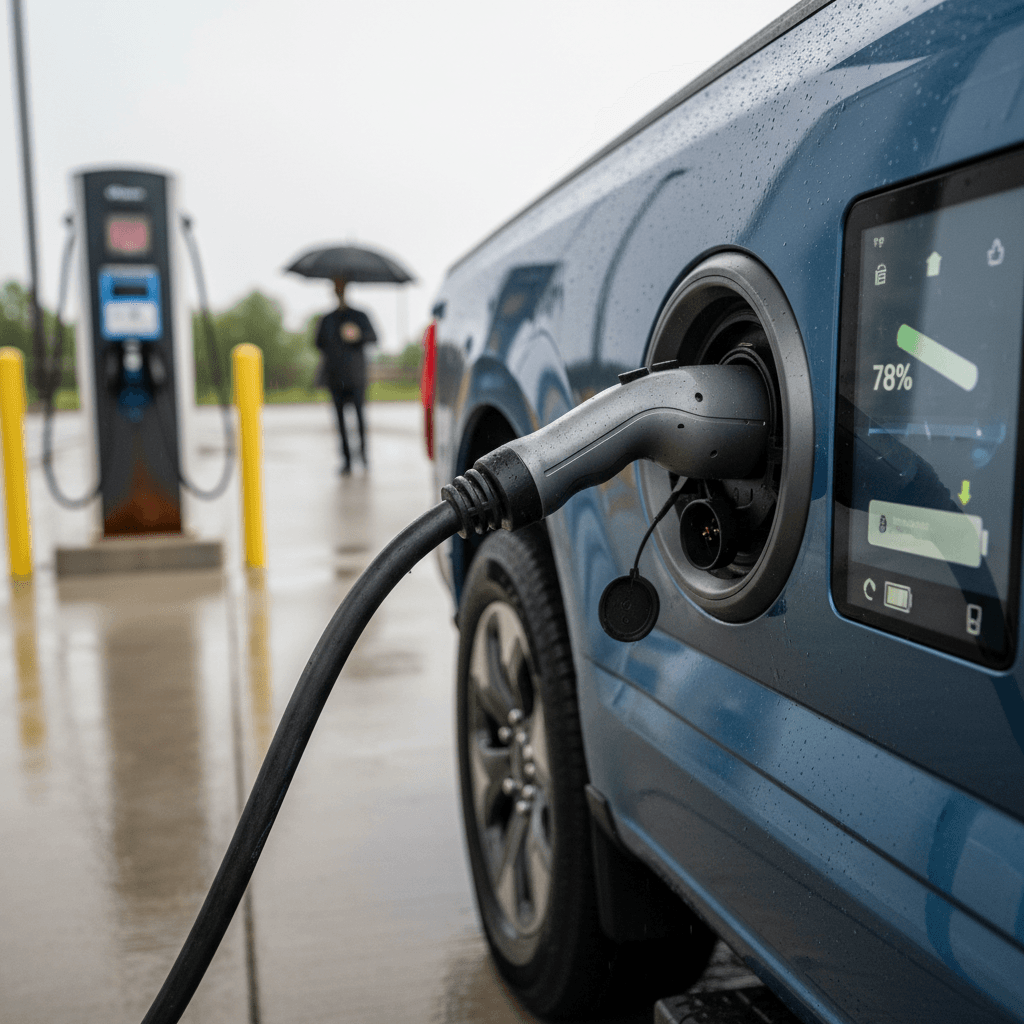
5 biggest factors that affect Lightning battery lifespan
Every EV pack ages, but how you use and charge a Ford F‑150 Lightning can speed that process up or slow it down. Here are the biggest levers you control.
Major factors that shape F‑150 Lightning battery life
1. Heat and climate
High temperatures are tough on lithium‑ion cells. A Lightning parked outside in a hot southern summer and frequently fast charged will age faster than one in a mild coastal climate stored in a garage. Try to park in the shade or indoors when you can.
2. State of charge habits
Batteries are happiest when they spend less time at the extremes. Living near 100% or letting the truck sit at near‑zero often will age the pack faster. For daily use, keeping your Lightning between roughly 20–80% is a healthy target when practical.
3. Fast‑charging frequency
DC fast charging is there to be used, especially on road trips, but constant high‑power charging at high states of charge adds heat and stress. A commuter who mostly charges at Level 2 at home will generally see slower degradation than someone fast charging several times a week.
4. Towing and heavy loads
Pulling a trailer or hauling payloads doesn’t directly harm the cells, but it forces higher power draw and more heat, especially at highway speeds. Occasional towing is fine; constant max‑weight towing in hot weather with frequent fast charging is much harder on a pack.
5. Software and thermal management
Ford’s thermal management and charge‑control software do a lot behind the scenes to protect the pack. Keeping your Lightning updated and avoiding aftermarket modifications that bypass factory limits will help the battery age the way Ford engineered it to.
A simple rule of thumb
Range loss: what you can realistically expect over time
When drivers ask how long a Ford F‑150 Lightning battery lasts, what they really care about is how much useful range they’ll have after years of use. The pack doesn’t suddenly “die”; it gradually holds a bit less energy, and your real‑world range shrinks.
Illustrative F‑150 Lightning range loss over time
Approximate capacity and range expectations for a well‑cared‑for F‑150 Lightning in moderate conditions. These are estimates, not guarantees.
| Truck age | Estimated remaining capacity | What you’ll notice | Example impact on range |
|---|---|---|---|
| Year 1–3 | 95–98% | Range feels essentially new in everyday driving. | A 320‑mile rated truck might still deliver ~305–315 miles in mild weather at moderate speeds. |
| Year 4–6 | 90–95% | Modest loss; you might add a quick extra stop on long road trips. | That same truck might comfortably deliver ~285–300 miles in similar conditions. |
| Year 7–10 | 80–90% | Trip planning matters more; daily errands still feel easy. | Usable range could shift into the ~255–285‑mile ballpark. |
| 10+ years | 70–80% | For most owners this is the practical “end of life” range window. | At 75% capacity, that 320‑mile truck behaves more like a ~240‑mile EV. Still useful for many, but a noticeable step down from new. |
Assumes roughly 1.5–2% capacity loss per year, which lines up with modern EV fleet data. Real results depend on climate, charging behavior, and use case.
Watch winter and highway speed
Used F-150 Lightning battery checklist
If you’re shopping a used F‑150 Lightning, you don’t need to be a battery engineer. You just need a structured way to check that the pack is performing as expected and hasn’t been abused. Here’s a practical checklist you can work through in an afternoon.
Battery health checklist for a used F‑150 Lightning
1. Confirm model year, mileage, and warranty status
Start with basics: model year, trim, odometer reading, and in‑service date. If the truck is less than eight years old and under 100,000 miles, part of the original battery warranty may still apply.
2. Review charging and usage history (if possible)
Ask how the truck has been charged: mostly at home Level 2 or constant DC fast charging? Was it a fleet work truck or a private commuter? Frequent high‑power fast charging plus high heat and towing is the highest‑stress combo.
3. Check expected vs. displayed range at a known state of charge
On a full or nearly full charge in mild weather, compare the displayed range to typical owner reports for that trim. Large unexplained gaps can justify deeper investigation, but remember that driving style and recent trips influence the estimate.
4. Inspect for software updates and warning lights
On a test drive, look for battery‑related warnings. Ask when the last over‑the‑air or dealer software update was applied; staying current ensures Ford’s latest thermal and charging strategies are in play.
5. Request a formal battery health report if available
Some sellers, including <strong>Recharged</strong>, provide a dedicated <strong>battery health diagnostic</strong> with capacity estimates and pack condition. If you’re buying privately, consider a pre‑purchase inspection with an EV‑savvy shop.
6. Test‑drive under your typical conditions
If you’ll tow, haul, or drive mostly highway, try to replicate that on a drive. You’re not just testing absolute range, you’re making sure the truck’s behavior, charging times and energy use match your real‑world needs.
Bring a simple worksheet
How to treat your F-150 Lightning battery so it lasts
You don’t need to baby a Ford F‑150 Lightning, but a few low‑effort habits can meaningfully extend how long the battery lasts before range loss becomes a headache. Think of them as the EV equivalent of regular oil changes and reasonable warm‑up on a gas truck.
Practical habits to maximize Lightning battery lifespan
Focus on patterns, not perfection, what you do most of the time matters most.
Favor home Level 2 charging
Set a daily charge target
Be mindful of heat
Time charges to your departure
Plan towing and charging together
Keep software and hardware stock
You don’t have to be perfect
How Recharged helps you shop a used F‑150 Lightning with confidence
Used EV trucks introduce a new variable compared with used gas pickups: battery health. That’s where a transparent marketplace helps. At Recharged, every used EV we list, including the Ford F‑150 Lightning, comes with a Recharged Score Report so you’re not guessing about the most expensive component on the truck.
Verified battery health
Each Recharged vehicle includes a Recharged Score that pulls in battery diagnostics, capacity estimates, and charging data where available. Instead of squinting at a range readout on a seller’s driveway, you see a structured view of how the pack has aged.
That’s especially valuable on work trucks and high‑mileage F‑150 Lightnings, where usage has been intense but not necessarily harmful.
End‑to‑end EV‑specialist support
Recharged also offers financing, trade‑in options, instant offers or consignment, and nationwide delivery, plus EV‑specialist support from first question to final paperwork.
If you want to compare two used Lightnings, run payment scenarios, or understand how battery health affects value, our team can walk you through it in plain language, online or at our Experience Center in Richmond, VA.
Why this matters for lifespan questions
Ford F-150 Lightning battery lifespan FAQ
Frequently asked questions about F‑150 Lightning battery life
Bottom line: the F‑150 Lightning battery should outlast the truck for most owners
If you strip away the hype, the Ford F‑150 Lightning battery lifespan story is fairly straightforward. The pack is large, well‑managed, and backed by an 8‑year/100,000‑mile warranty. Early, high‑mileage trucks are showing only modest degradation, and industry‑wide data now points to modern EV batteries as 12–15+ year components that will often outlive the vehicles around them.
Your experience will hinge more on how and where you use the truck than on the fact that it’s electric: gentle daily charging, moderate climates, and occasional towing are all in the battery’s comfort zone. Combine those habits with a transparent look at battery health when you’re shopping used, and the Lightning’s pack becomes a strength, not a question mark.
If you’re ready to put numbers behind that peace of mind, explore used F‑150 Lightnings with a Recharged Score Report, financing options, and nationwide delivery at Recharged. The battery is the heart of the truck; we make sure you can see how healthy that heart really is before you buy.