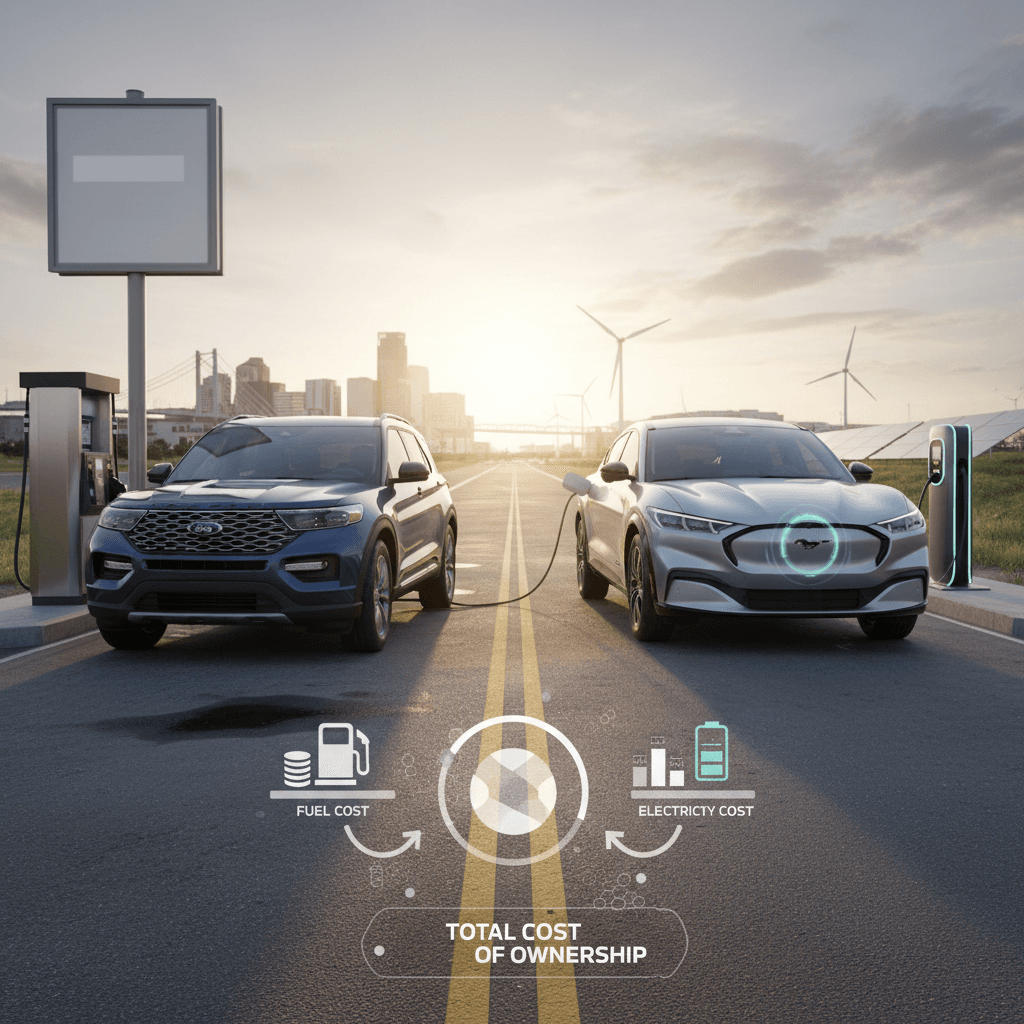
If you’re cross‑shopping a Ford Explorer against a Ford Mustang Mach‑E, sticker price is only the opening bid. What really matters is total cost of ownership, everything you’ll spend over years of driving: fuel or electricity, maintenance, insurance, taxes, and how much value you get back when you sell. This guide walks through the numbers so you can see how a gas Explorer and an electric Mach‑E actually compare in the real world.
Gas vs electric, same Ford family
Why compare Ford Explorer vs Mustang Mach‑E on cost?
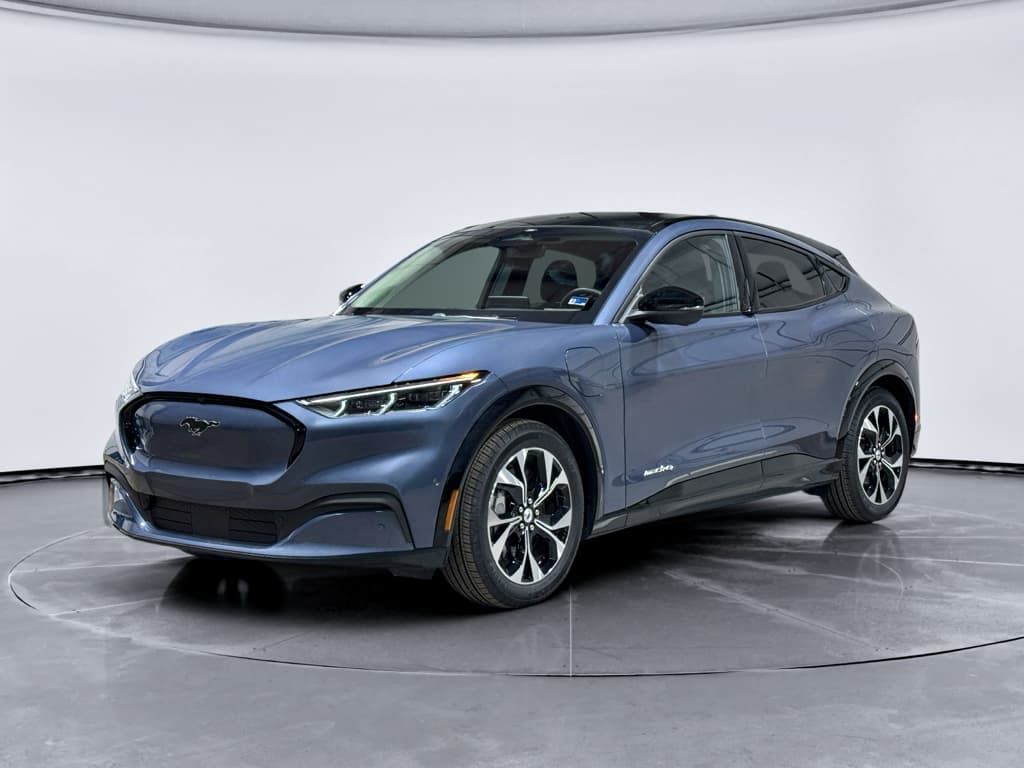
For many drivers, the Explorer is the default choice: it’s a mainstream three‑row SUV, tows, and you can fuel it anywhere. The Mustang Mach‑E, on the other hand, is a two‑row electric crossover with quicker acceleration, lower running costs, and access to rapidly expanding fast‑charging networks. If you’re trying to decide whether to stay with a traditional gas SUV or go electric, comparing the total cost of ownership (TCO) of these two Fords is a practical way to cut through the hype.
- You want to understand how much you’ll really spend over 5–10 years, not just monthly payments.
- You’re coming out of an Explorer lease or loan and considering switching to a Mach‑E.
- You’re skeptical that an EV can be cheaper to own once electricity, charging hardware, and insurance are factored in.
- You’re comparing a new Explorer to a used Mustang Mach‑E and want to know how depreciation tilts the math.
Key assumptions and how we ran the numbers
Total cost of ownership models live and die by their assumptions. To keep things transparent and comparable, we’ll use conservative, U.S.‑average numbers and explain where your real‑world situation might differ. Think of this as a decision framework, not a precision forecast.
Baseline assumptions for Explorer vs Mach‑E comparison
These assumptions use U.S. national averages as of early 2026 and typical trims many families buy.
| Category | Ford Explorer (gas) | Ford Mustang Mach‑E (EV) |
|---|---|---|
| Model year / trim (example) | 2024 Explorer XLT 2.3L RWD | 2024 Mustang Mach‑E Premium RWD, Standard Range |
| Purchase price (new, before fees) | $41,000 | $45,000 |
| Annual mileage | 12,000 miles | 12,000 miles |
| Ownership horizon | 5 years | 5 years |
| Gas price (regular) | $3.50 per gallon | , |
| Electricity price (home) | , | $0.17 per kWh |
| Fuel economy / efficiency | 24 mpg combined (real‑world) | 3.0 mi/kWh (≈33 kWh/100 mi) |
| Driving mix | 80% local, 20% highway | 80% home charging, 20% DC fast charging |
| Discount rate / inflation | Ignored for simplicity | Ignored for simplicity |
Adjust these to match your mileage, local energy prices, and financing terms.
Your numbers will vary
High‑level cost differences at a glance (5‑year, 12,000 mi/year)
Explorer vs Mach‑E: headline total cost results
Putting fuel, maintenance, insurance, and depreciation together, most mainstream analyses, and what we see in real‑world ownership, point the same direction: a Mustang Mach‑E usually costs less to own over 5–10 years than a comparable Ford Explorer, especially if you qualify for EV incentives and do most of your charging at home.
5‑year cost snapshot (simplified)
- Explorer – Higher fuel spend, higher routine maintenance (oil, transmission, exhaust, etc.), somewhat lower insurance, but more predictable resale.
- Mach‑E – Higher upfront price, much lower energy and maintenance costs, potential tax credits, and depreciation that’s already steepest in the first 3 years (great if you buy used).
Where the Mach‑E wins
- Energy cost per mile is roughly half, or less of the Explorer if you mostly charge at home.
- EVs eliminate many wear items, so long‑term maintenance is usually cheaper and less frequent.
- Incentives and HOV access (in some states) can add financial and time savings that gas SUVs don’t get.
Fuel vs electricity: what it costs to drive 12,000 miles a year
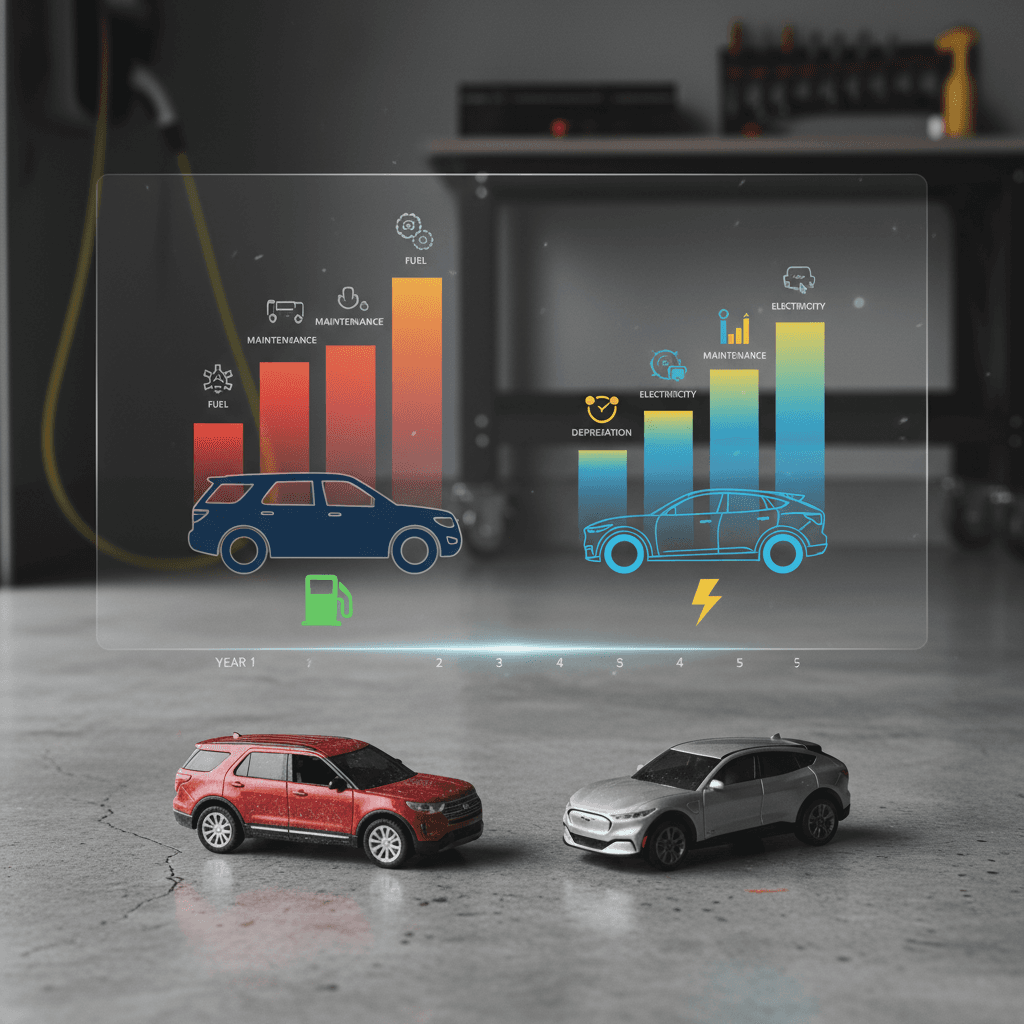
Energy is the single biggest running‑cost difference between the Explorer and Mach‑E. Gasoline prices are volatile, but using a reasonable 2024–2025 average of around $3.50 per gallon and a national residential electricity average around $0.17 per kWh, we can get a clear comparison.
Annual fuel vs electricity costs (12,000 miles)
Uses realistic real‑world efficiency rather than optimistic brochure numbers.
| Metric | Explorer (gas) | Mach‑E (EV) |
|---|---|---|
| Real‑world efficiency | 24 mpg | 3.0 mi/kWh |
| Energy needed for 12,000 miles | 500 gallons | 4,000 kWh |
| Base energy price | $3.50/gal | $0.17/kWh (home) |
| Share of expensive fast charging | , | 20% of energy at $0.40/kWh |
| Annual energy cost (blended) | ≈$1,750 | ≈$860 |
| 5‑year energy cost | ≈$8,750 | ≈$4,300 |
Even with some fast‑charging, the Mach‑E’s energy cost per mile stays well below the Explorer’s fuel cost.
How to estimate your own EV energy cost
On our baseline assumptions, the Mach‑E saves about $880 per year on energy alone. Over five years, that’s roughly $4,400. At higher gas prices, or if you drive more than 12,000 miles a year, that gap widens further in the EV’s favor.
Maintenance and repairs: gas SUV complexity vs EV simplicity
The Explorer is a conventional, complex ICE SUV: internal combustion engine, automatic transmission, exhaust system, fuel system, and more. The Mach‑E’s powertrain is much simpler: an electric motor, reduction gear, and battery pack with far fewer moving parts. That doesn’t mean EVs are maintenance‑free, but the nature and frequency of work is very different.
Typical routine maintenance: Explorer vs Mach‑E
This doesn’t include tires and brakes, which both vehicles need.
Ford Explorer (gas SUV)
- Oil and filter changes 2–3x per year
- Transmission service over life of vehicle
- Coolant, spark plugs, belts, exhaust components
- Fuel system services, emissions systems
Result: Higher ongoing maintenance spend and more time in the shop.
Ford Mustang Mach‑E (EV)
- No engine oil, spark plugs, or exhaust system
- Far fewer fluids to change; mostly brake and coolant intervals
- Regenerative braking reduces brake wear significantly
- Most software updates can happen over‑the‑air
Result: Fewer routine items and lower spending over time.
Typical maintenance savings with EVs
Estimated 5‑year maintenance + minor repairs
Excludes tires and collision work, which are very usage‑dependent.
| Cost bucket | Explorer | Mach‑E |
|---|---|---|
| Routine maintenance | ≈$2,000–$2,500 | ≈$900–$1,300 |
| Out‑of‑warranty repairs (first 5 years) | ≈$600–$1,000 | ≈$400–$700 |
| Total 5‑yr maintenance/repairs | ≈$2,600–$3,500 | ≈$1,300–$2,000 |
Real bills will vary, but directionally the EV tends to be cheaper to keep on the road day‑to‑day.
The battery replacement fear
Insurance, taxes, and fees
Insurance and taxes don’t swing the TCO math as hard as fuel or depreciation, but they still matter, especially when you’re comparing a mainstream gas SUV to a newer‑tech EV.
- Insurance: In many regions, the Mach‑E carries slightly higher comprehensive/collision premiums than an Explorer with similar MSRP, because of repair costs and parts availability. Expect perhaps a few hundred dollars more per year, though this is highly state‑ and driver‑dependent.
- Registration and taxes: Some states charge extra annual fees for EVs to make up for lost gas tax revenue. Others reduce registration fees or offer perks for EVs. Gas SUVs like the Explorer rarely get special treatment, beyond paying fuel taxes at the pump.
- Property / excise taxes: If your state taxes vehicles based on value, both models are treated similarly; the Mach‑E’s higher initial MSRP can mean slightly higher early‑year tax, but depreciation erodes this over time.
Net impact on TCO
Depreciation and resale value for Explorer vs Mach‑E
Depreciation, the value your vehicle loses over time, is the quiet giant of total cost of ownership. It’s also where many shoppers underestimate how much an EV can save them when they buy used rather than new.
New vehicle depreciation
- Explorer: Gas SUVs from mainstream brands typically lose around 45–50% of their value over 5 years, assuming average miles.
- Mach‑E: Early EVs saw steeper, faster depreciation due to incentives and tech change, but pricing has stabilized somewhat. From new, a Mach‑E might lose 50–55% in 5 years, depending on incentives and regional demand.
Why used EVs are interesting
If someone else has already eaten the steepest part of the depreciation curve on a Mach‑E, you capture the upside. A 2–3‑year‑old Mach‑E can often be priced like a new or nearly new Explorer, but with far lower ongoing operating costs.
Illustrative 5‑year depreciation from new
Rounded numbers for a typical buyer, assuming average miles and no major accidents.
| Vehicle | MSRP (approx.) | Value after 5 years | Value lost (depreciation) |
|---|---|---|---|
| Ford Explorer XLT (gas) | $41,000 | $20,500–$22,500 | ≈$18,500–$20,500 |
| Ford Mustang Mach‑E Premium SR (EV) | $45,000 | $20,000–$22,500 | ≈$22,500–$25,000 |
Depreciation is similar in dollars from new, but the Mach‑E’s running‑cost savings can make its higher MSRP easier to justify, especially if incentives helped on day one.
Used Mach‑E sweet spot
Incentives and tax credits: where the Mach‑E pulls ahead
Gas SUVs like the Explorer generally don’t qualify for purchase incentives beyond dealer discounts. EVs like the Mach‑E, on the other hand, may be eligible for federal and state‑level incentives that directly reduce your upfront cost, or your tax bill.
- Federal clean vehicle credit (new EVs): Depending on final assembly location, battery sourcing, MSRP caps, and your household income, a new Mach‑E may qualify for up to a several‑thousand‑dollar federal tax credit. Those rules have tightened over time, so always check the latest eligibility details when you buy.
- Used EV credit: Some used EV purchases can qualify for a smaller federal credit, subject to vehicle price caps and buyer income caps. This can make a used Mach‑E surprisingly compelling against a new Explorer.
- State and local incentives: Many states and utilities offer rebates for home chargers, bill credits for off‑peak charging, or additional EV purchase incentives. These can effectively cut hundreds off your charging equipment and ongoing electricity bills.
- Non‑cash perks: In certain regions, EVs get HOV lane access, reduced tolls, or preferred parking, time and convenience that don’t show up in a simple spreadsheet but matter for daily life.
Incentive rules move fast
Real‑world scenarios: commuter, family hauler, and road‑tripper
Rather than just thinking in averages, it’s useful to step into a few realistic use cases. The Explorer and Mach‑E shine in different scenarios, but the EV’s cost advantage is more robust than many shoppers expect.
How Explorer vs Mach‑E costs look for different drivers
Three common ownership patterns, simplified.
Daily commuter (suburban)
Profile: 40‑mile round‑trip commute, weekend errands, 13,000 mi/year. Home garage, one or two long trips per year.
Explorer: Fuel dominates costs. You might spend ~$1,900/year on gas at $3.50/gal.
Mach‑E: Nearly all energy from home charging; maybe one or two DC fast‑charge sessions a year. Energy cost could be ~$950/year. Over 5 years, the EV’s fuel and maintenance savings likely outweigh its higher purchase price.
Family hauler (3 kids, lots of cargo)
Profile: 2–3 kids, car seats, sports gear, frequent road trips, towing a small camper occasionally.
Explorer: Wins on towing and 3rd‑row space; costs more to fuel, but capability may justify it for some families.
Mach‑E: Lower operating costs, great around town, but two rows and modest tow ratings limit flexibility. TCO may be lower, but only if it truly fits your use case.
High‑mileage road warrior
Profile: 20,000+ mi/year, regular interstate travel.
Explorer: Fuel costs climb quickly; at 20,000 miles, you might spend ~$2,900–$3,200/year on gas.
Mach‑E: Savings grow with mileage, but you’ll rely more on DC fast‑charging, which is pricier than home electricity. TCO still often favors the EV, but the margin depends heavily on where and how you charge.
What changes if you buy a used Mustang Mach‑E?
Comparing a new Explorer to a used Mach‑E is where EV economics get particularly interesting. The Mach‑E has already taken its steepest depreciation hit in years 1–3, but it keeps its fuel and maintenance advantages. That can flip the TCO equation even more decisively toward the EV, if you’re careful about battery health.
Key things to check on a used Mach‑E
1. Battery health and usable range
Don’t rely solely on the dash guess‑o‑meter. A proper diagnostic should estimate usable battery capacity and how much range you can expect at typical highway speeds. Recharged’s <strong>Recharged Score</strong> includes this so you aren’t guessing about your biggest component.
2. Fast‑charging history
Moderate DC fast‑charging is fine, but heavy, high‑power fast‑charging over many years can accelerate battery wear. Ask for charging history when possible, or favor vehicles with more mixed use (home + public).
3. Warranty status
Confirm how much of the 8‑year/100,000‑mile battery and electric‑drive warranty remains, and whether any hardware recalls or software updates are outstanding.
4. Software feature set
Mach‑E feature content can change with software updates and subscription packages. Make sure the car has (or can be updated to) the features you care about, drive modes, driver‑assist suites, etc.
5. Real price vs Explorer alternatives
Compare the out‑the‑door price of the used Mach‑E to both new and used Explorers with similar age and miles. Because Recharged benchmarks market pricing, you can quickly see if the EV’s operating savings are coming on top of, or instead of, a price premium.
Why Recharged leans into used EVs
Ready to find your next EV?
Browse VehiclesHow Recharged can help you run your own numbers
Spreadsheets and rules of thumb are helpful, but no two drivers are exactly alike. Your commute, your local utility and gas prices, your insurance quote, and whether you can install home charging all matter. That’s why Recharged goes beyond listings and spec sheets.
Turn Explorer vs Mach‑E theory into your personal TCO
How Recharged fits into your decision process
Battery‑verified used Mach‑Es
Every Mach‑E on Recharged comes with a Recharged Score that includes independent battery health diagnostics, so you aren’t guessing about capacity or range when you run your ownership math.
Financing and trade‑in support
Recharged offers financing, instant offers and consignment for your current vehicle, even if it’s an Explorer or another gas SUV, so you can see the total picture: payoff, equity, and monthly payment on your next EV.
Digital‑first, with real people
Shop entirely online with expert EV specialists on call, or visit the Recharged Experience Center in Richmond, VA if you prefer to see vehicles in person. Either way, you get transparent, apples‑to‑apples cost comparisons.
FAQ: Ford Explorer vs Mustang Mach‑E total cost of ownership
Common questions about Explorer vs Mach‑E ownership costs
Bottom line: which one is cheaper to own?
If you mainly care about total cost of ownership, a Ford Mustang Mach‑E usually comes out ahead of a comparable Ford Explorer over a typical 5‑ to 10‑year span, particularly if you can charge at home and are open to buying used. The Explorer still makes sense if you routinely need three rows, heavy towing, or the absolute flexibility of gas refueling on long, rural trips. But for a lot of households using their SUV mostly as a commuter and family shuttle, the Mach‑E combines lower running costs with a quieter, quicker driving experience.
The smartest next step is to plug in your own numbers: your miles, your energy prices, and real vehicles with real battery‑health data. That’s where Recharged can help, with Recharged Score battery diagnostics, transparent pricing, and EV‑specialist support that makes comparing Explorer vs Mach‑E economics less of a guessing game and more of a confident decision.