If you’re cross-shopping a Ford Escape against a Ford Mustang Mach-E, you’re not just choosing between gas and electric, you’re choosing between two very different long‑term cost stories. This guide breaks down Ford Escape vs Ford Mustang Mach-E total cost of ownership so you can see what each really costs to live with over five or more years.
Quick takeaway
Why compare Ford Escape vs Mustang Mach-E ownership costs?
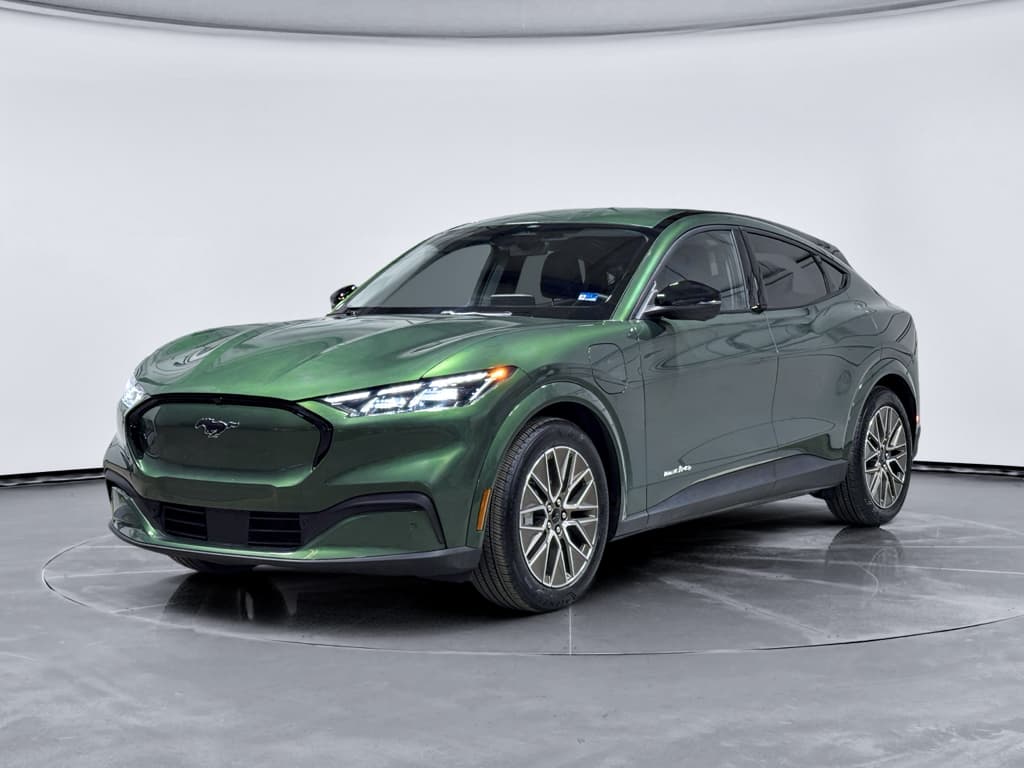
Ford sells the Escape as a compact, practical crossover with gas, hybrid, and plug‑in hybrid options. The Mustang Mach-E is its all‑electric sibling: a stylish EV crossover with strong performance and a modern cabin. On paper, the Escape usually looks cheaper to buy. But when you zoom out to total cost of ownership (TCO), purchase price, fuel or electricity, maintenance, insurance, and resale value, the Mach-E can surprise people who still assume EVs are always more expensive.
- You want an honest, numbers-based look at gas vs electric ownership costs.
- You’re comparing a used Escape to a used Mach-E and trying to understand long‑term value.
- You’re worried about EV battery health, depreciation, or charging costs.
- You’re wondering whether tax credits or incentives can close the price gap.
Start with how you drive
How we’re comparing total cost of ownership
To keep this comparison practical, we’ll focus on typical trims that many shoppers consider and use U.S. averages. Think of the numbers as realistic ballparks rather than penny‑perfect predictions. Replace them with your own gas and electricity prices if you want a kitchen‑table TCO calculation for your household.
Key assumptions for Escape vs Mach-E cost comparison
Realistic U.S. averages you can adapt to your situation
Gasoline & mpg
- Regular gas: $3.50/gallon
- Escape 1.5L FWD: ~30 mpg combined
- Escape Hybrid: ~39 mpg combined
Electricity & efficiency
- Home electricity: $0.15/kWh
- Mach-E RWD extended: ~3.0 mi/kWh
- Public fast charging often costs more per kWh.
Mileage & time horizon
- Annual driving: 12,000 miles
- Time horizon: 5 years
- Mostly home charging for Mach-E.
Important caveat
Purchase price, incentives, and used-market realities
New for new, a comparable Mustang Mach-E usually carries a higher MSRP than a similarly equipped Escape. But incentives and the used market complicate the picture.
Typical new pricing snapshots (approximate, before incentives)
Representative trims as of 2025 model years; actual prices vary by region and incentives.
| Model & trim | Powertrain | Approx. MSRP (new) | Federal EV credit potential |
|---|---|---|---|
| Ford Escape Active | 1.5L gas, FWD | $31,000 | Not eligible |
| Ford Escape ST-Line Elite Hybrid | Hybrid, FWD | $37,000 | Not eligible |
| Ford Escape PHEV | Plug-in hybrid, FWD | $41,000 | May qualify (check latest rules) |
| Mustang Mach-E Select | Standard range, RWD | $41,000–$43,000 | May qualify depending on build and buyer |
| Mustang Mach-E Premium | Extended range, RWD | $48,000–$52,000 | May qualify depending on build and buyer |
Mach-E MSRPs can look intimidating compared with Escape, but EV tax credits and dealer discounts may narrow the gap.
New vs used: where the Mach-E can shine
Used Ford Escape snapshot
- Strong supply of 2–5‑year‑old gas Escapes.
- Hybrids and PHEVs command a premium but cut fuel costs.
- Maintenance costs rise with mileage: engine, transmission, exhaust, and emissions systems.
Used Mustang Mach-E snapshot
- Early depreciation makes 2–3‑year‑old Mach-E pricing appealing.
- Fewer moving parts mean less wear on many high‑cost components.
- Battery health becomes the big question, which is where Recharged’s battery diagnostics and Recharged Score help remove the guesswork.
Fuel vs electricity: what you’ll really spend to drive
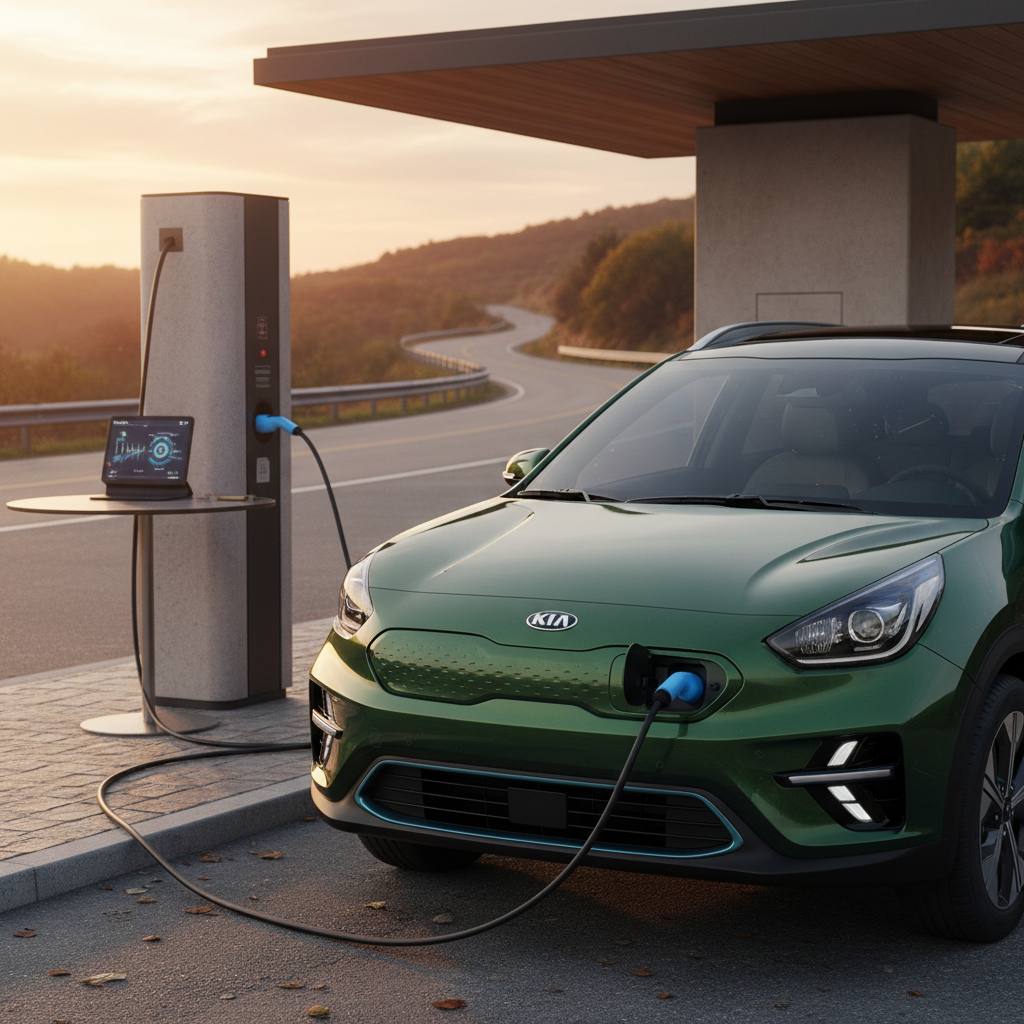
Your monthly “fuel” bill is where EVs like the Mustang Mach-E often claw back their higher purchase price, especially if you drive more than average and charge mostly at home.
Annual energy cost comparison (12,000 miles/year, U.S. averages)
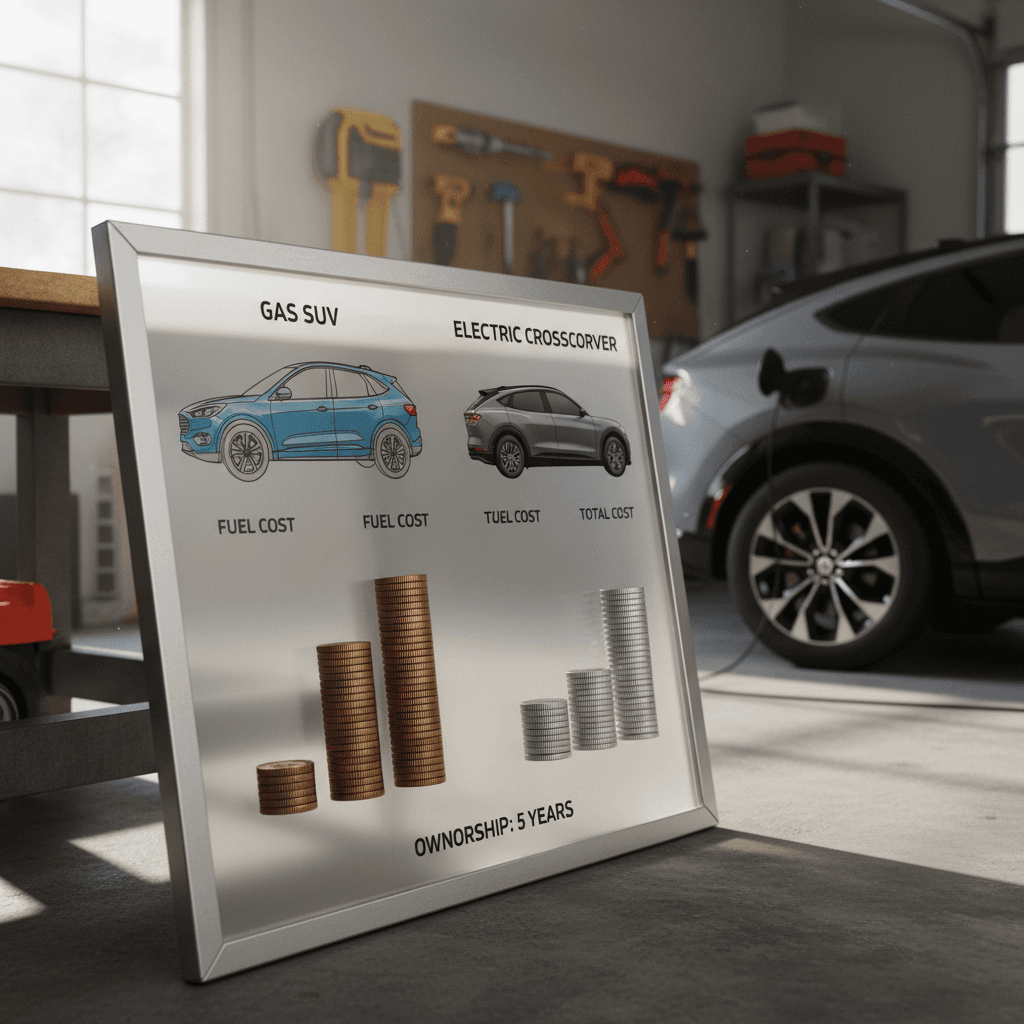
Those estimates tell an important story: even when you give the Escape its best shot with the hybrid powertrain, a Mach-E with home charging often undercuts it on energy costs by several hundred dollars a year. Over five years and 60,000 miles, that gap can grow into thousands of dollars in your favor as an EV driver.
Run your own numbers
Maintenance and repairs: gas SUV vs electric crossover
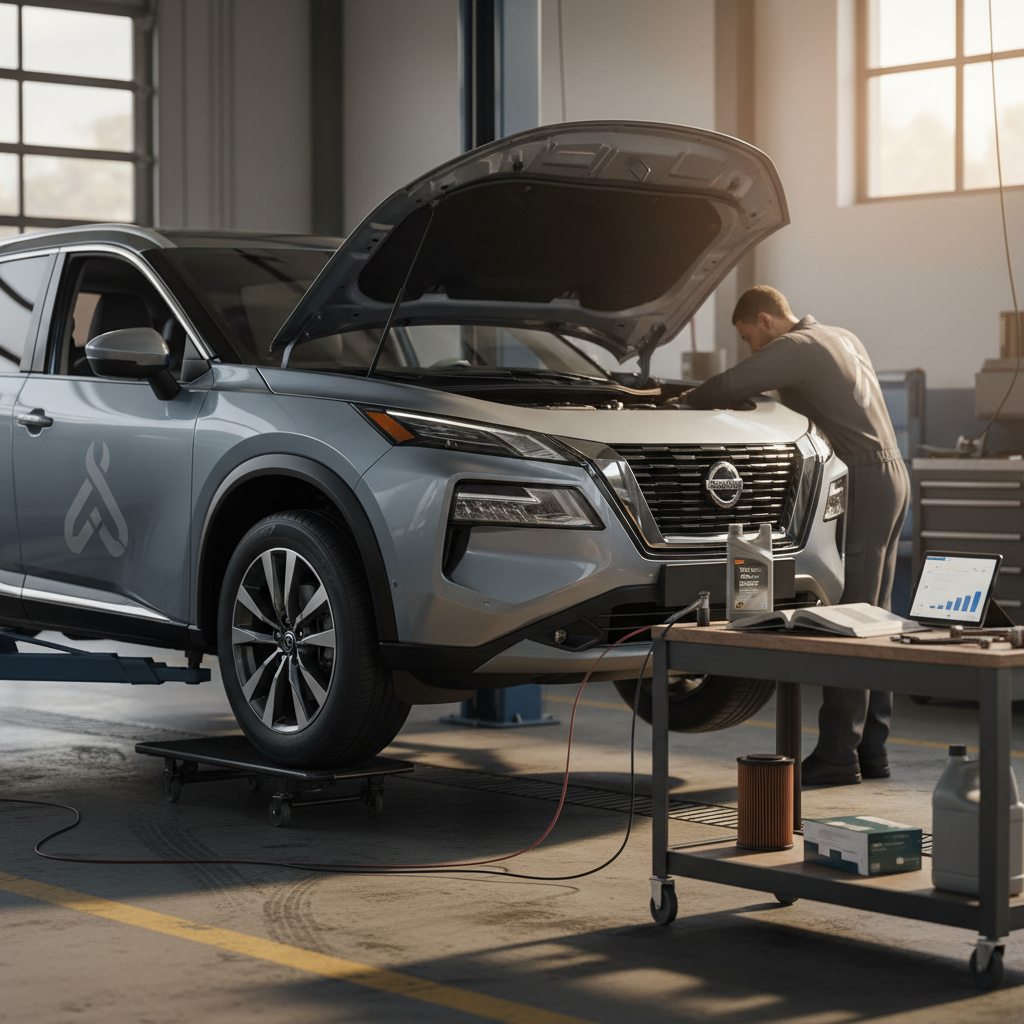
Engines and transmissions are mechanical marvels, and expensive to keep happy. Electric powertrains are simpler. That difference shows up in long‑term ownership costs.
Typical maintenance needs: Escape vs Mustang Mach-E (first 5 years)
High-level comparison of routine services; check each model’s official schedule for exact intervals.
| Service item | Escape (gas or hybrid) | Mustang Mach-E |
|---|---|---|
| Engine oil & filter | Every ~6–10k miles; $70–$120 per visit | Not required |
| Transmission service | Possible fluid change by ~60k miles | Not required (no conventional transmission) |
| Spark plugs, fuel system | Yes, over time | Not applicable |
| Air filters (cabin & engine) | Yes | Cabin filter only |
| Brake pads & rotors | Moderate wear | Slower wear thanks to strong regenerative braking |
| Coolant | Engine cooling system service | Battery and power electronics coolant inspections/interval service |
| EV‑specific checks | Not applicable | Electric drivetrain, high‑voltage system checks |
| Tires | Similar for both | Similar for both (Mach-E may wear slightly faster with more torque) |
The Escape’s engine and transmission add recurring maintenance items that the Mach-E simply doesn’t have.
Where EVs quietly save you money
That doesn’t mean the Mustang Mach-E is maintenance‑free, tires still wear, cabin filters still clog, and EV‑specific coolant systems need attention on schedule. But the big‑ticket wear items that haunt aging gas SUVs aren’t part of the Mach-E picture.
Insurance, taxes, and fees
Insurance is one place where the Escape can keep an advantage. Because the Mustang Mach-E is newer, more powerful, and more expensive to repair when bodywork or battery‑adjacent components are involved, insurers often quote it slightly higher premiums than a mainstream Escape.
- Expect the Mach-E to run a bit higher per year in premiums than a comparable Escape, especially if you choose higher‑performance trims.
- Some states charge additional annual registration fees for EVs to replace lost gas‑tax revenue; that can slightly raise the Mach-E’s yearly costs.
- On the flip side, local or utility incentives for home charging equipment can tilt the scales back in the Mach-E’s favor.
Shop insurance before you decide
Depreciation and resale value over time
Depreciation is where the market has already done early Mach-E adopters a favor, and where savvy used buyers can win. Like many new EVs, the Mustang Mach-E took a steeper first‑owner depreciation hit than the humble Escape. That hurts if you bought new in 2021, but it can be a gift if you’re buying used in 2026.
How depreciation typically looks
Simplified, high‑level view for mainstream trims over 5 years
Ford Escape
- Steady, predictable depreciation.
- Widely known, practical crossover, demand stays decent.
- Hybrids can hold value slightly better than base gas models.
Mustang Mach-E
- Steeper drop in first 2–3 years from new MSRP.
- Used prices have stabilized as shoppers get more comfortable with EVs.
- Battery health and range are key to long‑term resale value.
Battery health is the new odometer
Five-year cost of ownership: sample scenarios
Let’s put the pieces together with simple, directional 5‑year scenarios. These aren’t quotes; they’re realistic illustrations using our earlier assumptions so you can see how the puzzle fits together.
Illustrative 5-year ownership snapshot (60,000 miles)
Very rough, directional totals using typical U.S. prices and averages; your actual costs will vary.
| Category (5 years) | Escape gas (30 mpg) | Escape Hybrid (39 mpg) | Mustang Mach-E (home charging) |
|---|---|---|---|
| Energy (fuel or electricity) | ≈ $7,000 | ≈ $5,400 | ≈ $3,000 |
| Routine maintenance | ≈ $2,000 | ≈ $1,800 | ≈ $1,000 |
| Insurance & fees (incremental EV fees, etc.) | Baseline | Baseline + small savings | Baseline + modest increase |
| Depreciation from similar transaction price (used) | Moderate | Moderate | Moderate (varies with battery health) |
| Estimated 5‑year running cost (energy + routine maintenance only) | ≈ $9,000 | ≈ $7,200 | ≈ $4,000 |
Even with a higher purchase price, the Mach-E can land in the same ballpark, or better, over five years once you include fuel and maintenance.
Where the Mach-E pulls ahead
Which one fits your life: Escape or Mustang Mach-E?
Questions to ask yourself before choosing
1. How do you fuel today, and what will change?
If you have a garage, driveway, or consistent access to Level 2 charging, the Mach-E’s low electricity costs are a strong advantage. If you park on the street with no charging at home or work, the Escape may be simpler.
2. How many miles do you drive a year?
High‑mileage commuters get the most benefit from EV fuel and maintenance savings. If you drive 5,000–7,000 miles per year, the Escape’s lower upfront cost can be harder to overcome.
3. Are you comfortable with charging on road trips?
If you regularly take long highway drives and live far from fast‑charging networks, the Escape’s quick gas fill‑ups are less stressful. If you’re near strong fast‑charging corridors and plan ahead, the Mach-E is a capable road‑trip partner.
4. Do you prioritize performance and tech?
The Mach-E feels quicker, smoother, and more modern, with instant torque and a clean, EV‑centric cabin. If you want a familiar, no‑learning‑curve experience, the Escape sticks with traditional controls and layout.
5. How long do you keep vehicles?
If you tend to keep cars 8–10 years, the Mach-E’s lower mechanical complexity and fuel savings compound over time. If you trade out every 2–3 years and buy new, Escape depreciation may be easier to predict.
Don’t ignore your local reality
Buying a used Mach-E or Escape: how Recharged can help
If you’re leaning toward a used Mustang Mach-E or considering a used Ford Escape as a budget back‑up plan, the difference between a great deal and a headache often comes down to information. You want to know what you’re getting into before you sign.
Why used EV shoppers start with Recharged
Clarity on battery health, pricing, and long‑term costs
Verified battery health
Fair, transparent pricing
EV‑specialist support
Ready to find your next EV?
Browse VehiclesTotal cost of ownership is more than a monthly payment. For many drivers with access to home charging, the Ford Mustang Mach-E can go toe‑to‑toe with, and sometimes beat, a Ford Escape on real‑world costs over five years, especially when you add up fuel and maintenance. For others, the Escape’s simplicity and lower insurance can still make sense. Run your numbers, be honest about how and where you drive, and if a used Mach-E is on your radar, let Recharged help you see the full picture of battery health and long‑term value before you buy.