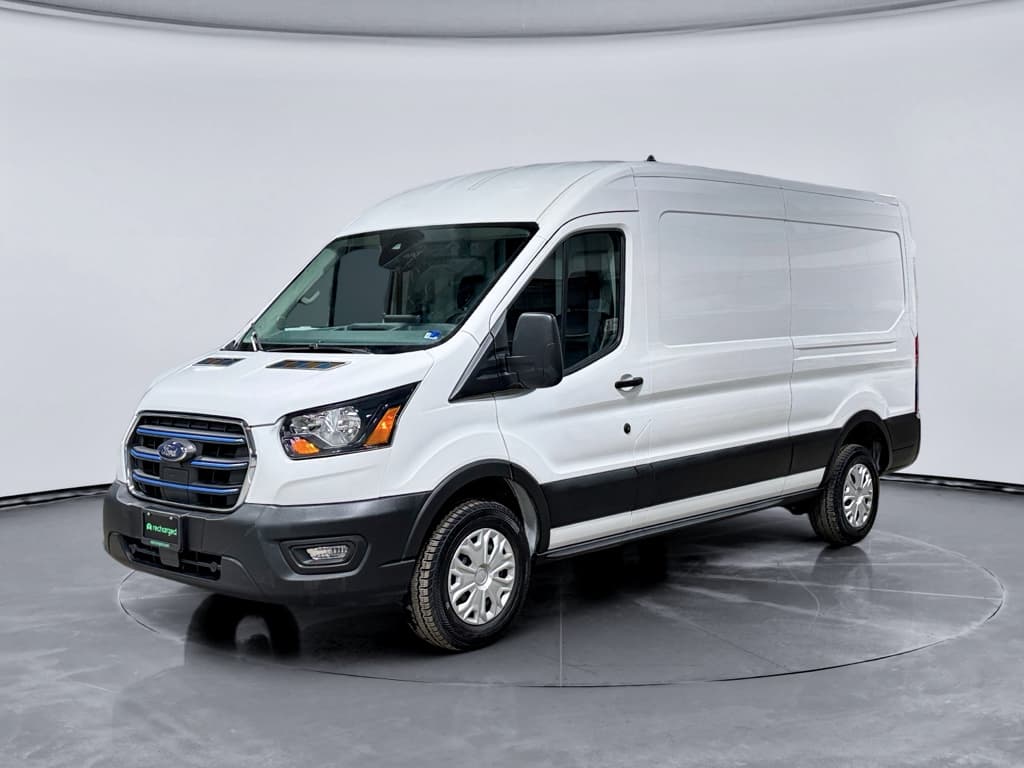
If you run a delivery service, trades business, or local fleet, the idea of an all‑electric cargo van is tempting, no gas stops, quieter operation, and a cleaner image for your brand. This Ford E-Transit review for business owners looks past the brochure and focuses on what matters: range on a loaded route, payload, charging, and total cost of ownership.
At a glance
Who the Ford E-Transit Really Suits
Best-fit business profiles for the E-Transit
If you see yourself in one of these, keep reading closely.
Local delivery & parcel
Multi-stop routes in a tight radius, groceries, parcels, pharmacy, office supplies. Ideal if most vans return to base every night and daily mileage is modest.
Trades & service
Electricians, HVAC, pest control, IT service, mobile repair. Lots of tools, limited highway miles, and plenty of time parked at job sites.
Municipal & campus fleets
City departments, universities, hospitals and corporate campuses where vehicles stay on property or in a small radius with centralized charging.
If your vans routinely run long highway routes, 150+ miles a day, or tow heavy trailers, the E-Transit is a tougher sell. For those use cases, you may want to keep some gas or diesel Transits in the mix, or look at other EV options with more range.
Ford E-Transit Key Specs That Matter for Business
Ford E-Transit business-minded specs (US models)
The E-Transit is sold in familiar Transit flavors, multiple lengths, three roof heights, plus cutaway and chassis cab for box and specialty bodies. Power comes from a rear‑drive electric motor, and the latest US models use an 89 kWh battery with up to an estimated 159 miles of range in the most efficient configurations.
Spec tip for fleets
Real-World Range: Can It Cover Your Routes?
On paper, a low‑roof cargo Ford E-Transit with the newer enhanced‑range battery is rated at up to about 159 miles of range in US testing when lightly loaded. In the real world, with tools, shelves and stop‑and‑go driving, most businesses should plan around 110–140 miles per charge, depending on weather and driving style.
What cuts into range
- Highway speeds: 70–75 mph chews through battery faster than city work.
- Cold weather: Running the heater in a big, uninsulated cargo box can knock range down noticeably.
- Heavy payloads: Running near max payload all day takes a toll.
- Aggressive driving: Hard launches and late braking waste energy.
What helps range
- Urban stop‑and‑go: Regenerative braking recovers energy between stops.
- Pre‑conditioning: Warming or cooling the van while plugged in saves battery.
- Route planning: Clustering stops and avoiding long high‑speed hops.
- Driver training: Gentle throttle and early lift‑off make a real difference.
Don’t buy on best‑case range
Quick range fit check for your business
1. Map your longest regular route
Look at your dispatch logs or telematics. What’s your <strong>longest typical workday in miles</strong>, including detours and idling?
2. Add a 25–30% buffer
Multiply that mileage by 1.25 or 1.3. That accounts for weather, traffic, and the occasional extra stop or two.
3. Compare to 120–140 mile comfort zone
If your longest days usually land under ~100 miles and your buffered number is under ~140, an E-Transit can likely do the job without mid‑day charging.
4. Consider emergency or overtime use
Do these vans ever get pressed into last‑minute long runs? If so, think about keeping at least one higher‑range or gas unit in the mix.
Payload, Cargo Space and Towing: Reality Check
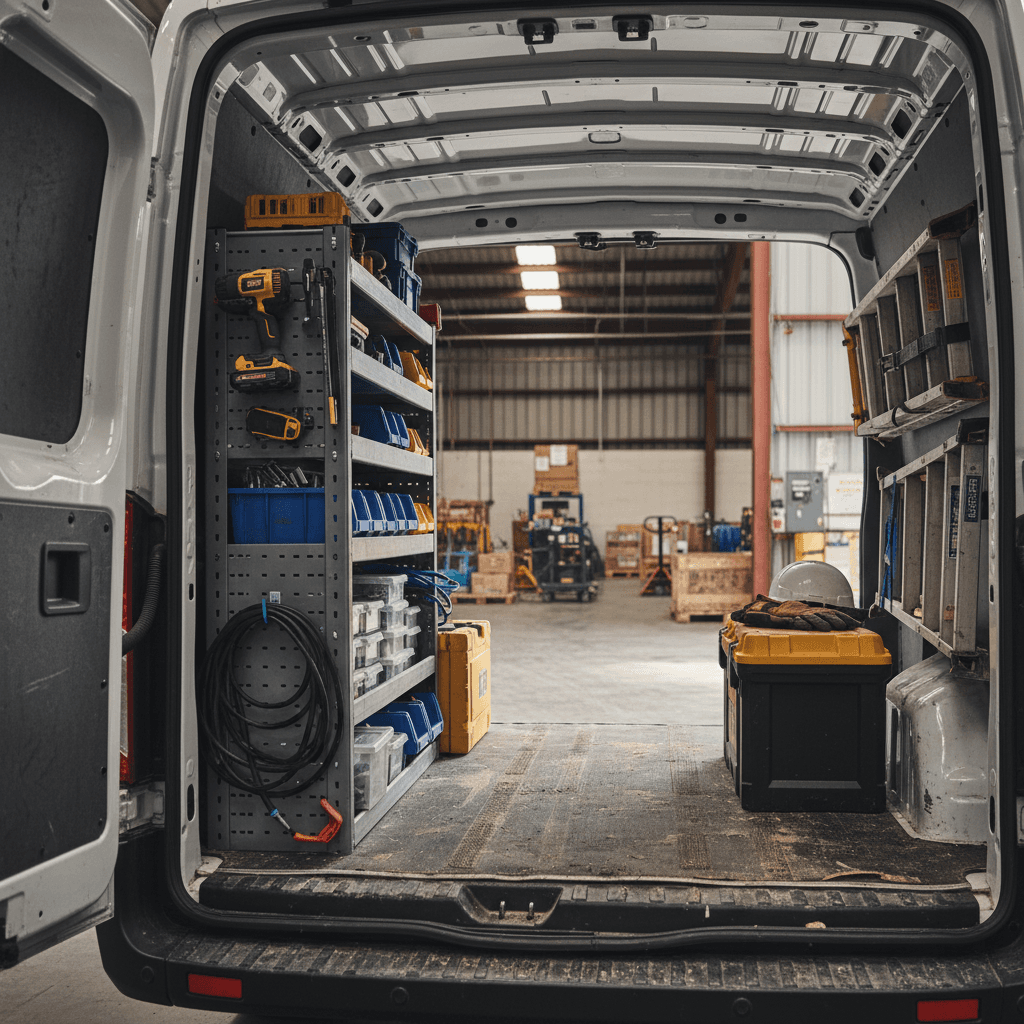
Here’s the good news: cargo volume in the Ford E-Transit is essentially the same as a comparable gas Transit. You can still stand up in a high‑roof, haul big packages in a long‑wheelbase, and bolt in most of the same racking and bins your upfitter already knows.
Ford E-Transit payload basics (approximate US figures)
Exact numbers vary by model year and configuration, but these ballparks are what most businesses will see.
| Configuration | Example use case | Approx. max payload | Cargo volume |
|---|---|---|---|
| Low roof cargo van | Urban parcel delivery | ~3,200 lbs | ~280–300 cu ft |
| Medium roof cargo van | Service trades needing stand‑up room | ~3,000 lbs | ~350–380 cu ft |
| High roof, extended | Large parcel or upfit-heavy vans | ~2,800+ lbs | 400+ cu ft |
| Cutaway / chassis cab | Box body, specialty upfits | Up to ~4,000+ lbs | Body‑dependent |
Always check the specific door jamb label or spec sheet for the van you’re buying, especially in the used market.
About towing with the E-Transit
Charging Strategy for Business Owners
The Ford E-Transit supports Level 2 AC charging at your shop or depot and DC fast charging on the road. Newer vans can fast‑charge at up to about 176 kW on a capable public charger, giving you roughly 10–80% in around 25–30 minutes under ideal conditions. That’s handy in a pinch, but most businesses will live on overnight Level 2.
Three main ways to keep an E-Transit charged
Most fleets mix at least two of these.
Depot Level 2 charging
Hard‑wired 240V stations at your yard or warehouse. Typical full charge overnight, predictable and cheap energy. This is the backbone for most E-Transit fleets.
On‑site workplace charging
If vans go home with employees, you can use installed home Level 2 chargers with reimbursement programs. Requires some admin but can work for small fleets.
Public DC fast charging
Best as a backup: top up during long days, or rescue a van that came home short. Per‑kWh prices are higher, so it’s not ideal as your primary fueling plan.
Think in “hours plugged in,” not just kW
Operating Costs: E-Transit vs Gas Transit
For the right routes, an E-Transit can shine on operating costs. Electricity is usually cheaper per mile than gasoline, and there’s no oil to change, no exhaust system, and far fewer moving parts in the powertrain. But you need to run the math for your business, not just assume every EV is cheaper.
Simplified fuel/energy math
- Assume a gas Transit averages 15 mpg in mixed commercial use.
- At $3.50/gal, that’s about $0.23 per mile in fuel.
- An E-Transit often runs around 2.0–2.5 miles per kWh in real service.
- At $0.15/kWh depot electricity, that’s roughly $0.06–0.08 per mile.
Public DC fast charging can be far more expensive; those numbers are for sensible depot/home charging.
Maintenance and uptime
- No oil changes, spark plugs, belts, or transmission services.
- Brakes can last longer thanks to regenerative braking.
- Fewer moving parts generally mean less routine maintenance.
- You will, however, be watching tires and suspension closely: instant torque and heavy loads are hard on rubber.
Where businesses really win
Driver Experience, Ford Pro Tools and Tech
From the driver’s seat, the Ford E-Transit feels like a modern Transit that happens to be electric: high seating position, big mirrors, and a familiar dash layout, now with a large touchscreen running Ford’s latest infotainment system. What’s different is the instant torque off the line and the near‑silence around town.
- Smooth, one‑speed acceleration with selectable drive modes optimized for city work.
- Selectable levels of regenerative braking, including strong regen that lets drivers mostly use one pedal in traffic.
- Available driver‑assist tech like adaptive cruise control, lane keeping, and collision warning that ease the stress of dense urban routes.
- Ford Pro telematics options that let you see energy use, state of charge, and vehicle location across your fleet from a central dashboard.
About Ford Pro for business users
Common Pain Points and Limitations
The Ford E-Transit is not a perfect van for every job. Owners and fleet managers tend to raise the same handful of complaints, most of which come back to its modest range and charging realities.
What businesses tend to dislike
These aren’t deal‑breakers for every fleet, but they’re worth weighing honestly.
Limited highway range
Once you push past ~65 mph for long stretches, range falls faster. Highway courier work or long rural routes can be tricky without mid‑day charging.
Cold‑weather performance
Heating that big cargo box takes energy. Without an insulated bulkhead, winter range can drop more than you expect, especially in northern climates.
Slow on low‑power chargers
On a basic 120V outlet, you’ll add only a handful of miles per hour. A proper 240V setup is almost mandatory for business use.
Dealer & parts learning curve
While Ford supports the E-Transit, not every dealer is equally experienced yet with EV commercial service. Plan ahead for where you’ll get warranty and repair work done.
Range anxiety is worse for the first 90 days
Should You Buy New or Used E-Transit?
Early E-Transits have been in service since the 2022 model year, and more are now showing up in the used market as fleets cycle inventory. That opens the door for small businesses to step into electric vans at a much lower upfront price, especially if you don’t need every latest‑and‑greatest update.
Reasons to consider new
- Latest enhanced‑range battery and faster DC charging hardware.
- Full factory warranty and Ford Pro support from day one.
- Easy to configure exactly the body, roof and options you want.
- Possible access to current EV incentives or grants in your state.
Reasons to consider used
- Significantly lower purchase price, helpful if you’re testing EVs in your fleet.
- Real‑world history: you can see how the battery has held up so far.
- Faster availability than ordering new in some regions.
- Ability to mix one or two used vans into an existing gas fleet with less capital risk.
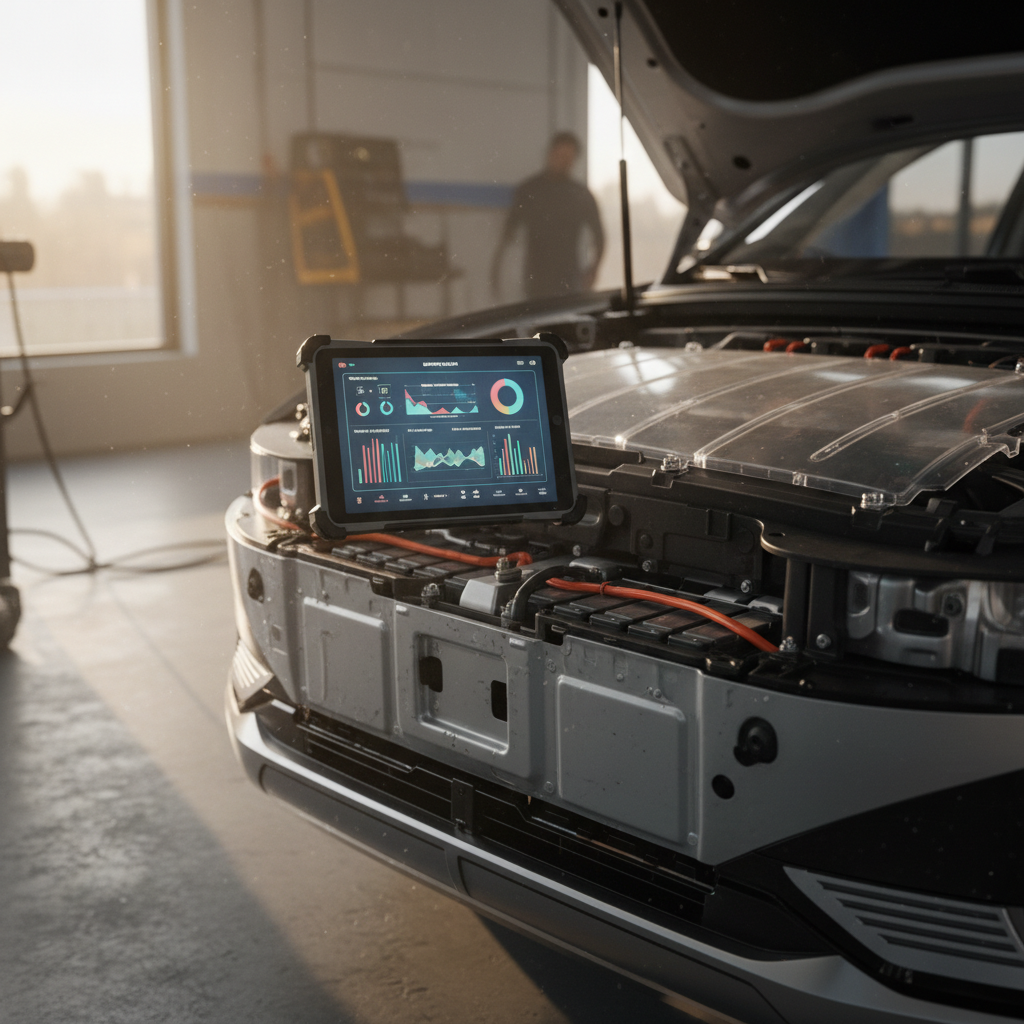
Don’t guess about battery health on a used E-Transit
How Recharged Helps You Buy the Right Van
If you’re curious about adding a Ford E-Transit to your fleet, you don’t have to figure it out alone. Recharged is built specifically around used electric vehicles, including commercial models like the E-Transit, to make ownership simple and transparent for businesses.
- Every van on Recharged comes with a Recharged Score Report that includes verified battery health and a clear picture of remaining range potential.
- You get fair market pricing and options for financing, trade‑in, instant offer or consignment if you’re moving out of older gas vans.
- Our EV specialists can help you match E-Transit configurations to your actual routes, and sanity‑check whether an electric van truly pencils out for your operation.
- Nationwide delivery and a fully digital buying experience streamline adding one test van, or several, to your fleet without losing a day to dealer visits.
- You can also visit our Experience Center in Richmond, VA if you want to see and drive electric vans in person before you commit.
A smarter way to pilot EVs in your fleet
Ready to find your next EV?
Browse VehiclesFord E-Transit for Business: FAQ
Frequently asked questions from business owners
Bottom Line: Is the Ford E-Transit Right for Your Business?
The Ford E-Transit is not a one‑size‑fits‑all solution, but for the right kind of business, it’s a sharp tool. If your vans live in a tight radius, sleep in the same place every night, and mostly haul people, packages or tools (not trailers), an E-Transit can cut fuel spend, reduce maintenance, and give your brand a quiet, zero‑tailpipe‑emissions calling card.
If your work depends on long highway stints, heavy towing, or around‑the‑clock utilization, you’ll want to be more cautious, and probably keep a mix of gas Transits in the yard. That’s where starting with a single, carefully chosen used E-Transit from a specialist like Recharged can make sense. You get verified battery health, fair pricing, and expert guidance on how and where to deploy the van so it earns its keep from day one.
Run the numbers, map your routes, and be honest about how your vans really work. Do that, and you’ll know whether the Ford E-Transit is just a trendy idea, or the next smart move for your business.