If you’re considering a Ford E-Transit for your business, delivery fleet, or a van-life build, you’re probably trying to balance lower fuel and maintenance costs against the risk of early-adopter problems. The good news: the E-Transit’s core electric drivetrain has had relatively few systemic failures reported so far. The bad news: like many commercial Fords, there are some common Ford E-Transit problems and recalls you absolutely need to understand before you sign a purchase order or wiring funds for a used van.
Who this guide is for
Overview: How Reliable Is the Ford E-Transit?
The E-Transit launched for the 2022 model year as a battery-electric version of Ford’s long-running Transit cargo van. Early data from fleet operators and reviewers suggests that the electric motor and single-speed drive unit have been solid so far, with most headaches showing up in the same places that plague many commercial vans: software, accessories, and hardware around the core powertrain rather than the motor itself.
Ford E-Transit Reliability Snapshot (What We Know So Far)
In short, the E-Transit isn’t a disaster, but it’s not trouble‑free either. Many issues are fixable under warranty or via software updates, yet downtime is still downtime if your business depends on the van. That’s why doing your homework on common problems and recall history pays off, especially when you’re shopping the used market.
Major Ford E-Transit Recalls Owners Should Know
Before we zoom into everyday annoyances, let’s talk about the big stuff: recalls that affect safety or the ability to drive the vehicle. Because the E-Transit is built on the same basic platform as the gas Transit, some campaigns overlap, while others are EV‑specific.
Key Ford E-Transit Recalls (High-Level Overview)
Always run the VIN through Ford and NHTSA recall lookup tools to confirm open or completed recalls for a specific van.
| Issue | Affected Model Years (approx.) | What Can Happen | Typical Fix |
|---|---|---|---|
| Left rear axle half shaft may disengage from drive unit | 2022–2025 E-Transit | Loss of drive power; van may stop moving while in gear | Inspection and replacement of affected axle/drive components |
| High-voltage battery tray side rails may crack (Chassis Cab) | 2024–2025 E-Transit Chassis Cab | Water intrusion into battery pack, fire risk; “park outside” advisories | Repair or replacement of tray/battery assembly and sealing components |
| HVAC inoperable due to control software fault (Transit & E-Transit) | Select 2022+ Transit and E-Transit | No cabin heat or A/C, a real issue for cargo and driver comfort | Software update and/or HVAC module reprogramming |
| Rear camera image may fail to display (broader Ford recall) | 2022–2025 Transit/E-Transit among many models | Backup camera may freeze or go blank, hurting rear visibility | Software update (over-the-air or at dealer) |
Recall details change over time. Use this as a starting point, not a substitute for an official VIN search.
Always verify recalls by VIN
Common Ford E-Transit Problems Reported So Far
Because the E-Transit is still relatively new, we don’t yet see the 10‑year horror stories you’ll find for older gas vans. But owner reports, technical service bulletins, and fleet feedback point to several recurring problem themes:
- Axle and driveline issues on early vans (covered by recall in many cases).
- High‑voltage battery tray and water‑intrusion risk on certain Chassis Cab configurations.
- HVAC and climate‑control problems, especially loss of heat or A/C.
- Electrical and software glitches, backup camera, infotainment, warning lights.
- Range and charging complaints, especially under heavy loads or cold weather.
- Typical commercial‑van wear items: suspension components, door hardware, and tires wearing quickly with heavy use.
Let’s unpack each major bucket so you can separate nuisance issues from true deal‑breakers, and know what to check when you’re evaluating a specific van.
Battery, Range, and Charging-Related Complaints
So far, the E-Transit has not developed a widespread reputation for catastrophic battery failures. That’s encouraging, especially for fleet buyers. But that doesn’t mean every owner is thrilled with range or charging behavior.
Real-World Battery and Charging Concerns
What owners notice once the E-Transit is in daily service
Lower-than-advertised range
Many drivers report usable range well below the brochure figure once you factor in:
- Highway speeds (70+ mph)
- Heavy payloads or constant stop‑and‑go
- Cold weather and heater use
DC fast-charging behavior
Some commercial users note that E-Transit DC fast charging:
- Tapers aggressively after ~50–60%
- Can be inconsistent across different public networks
- May require software updates for best performance
Early degradation concerns
Long-term degradation data is limited. A few high‑mileage fleet vans report modest range loss, but there’s no clear pattern of pack failures yet. A verified battery health report is very helpful on a used van.
Smart way to test range
If you’re building your business model around a specific route or number of stops, treat the EPA estimate as an optimistic starting point. Build in a healthy buffer, especially in colder climates or hilly territory.
HVAC and Climate Control Issues
One of the more common Ford Transit‑family complaints in recent years has been HVAC systems that stop heating or cooling properly. For the E-Transit, that can be more than a comfort issue, it can affect both driver safety and cargo quality (think groceries or pharmaceuticals).
Typical E-Transit HVAC Symptoms
- No heat on cold start, even after driving.
- A/C suddenly stops blowing cold air.
- HVAC controls or modes become unresponsive.
- Intermittent operation after software updates or low‑voltage battery issues.
What’s Usually Behind It
- Known software bugs in HVAC control modules (subject of prior Transit/E-Transit campaigns).
- Sensor faults or refrigerant leaks, similar to issues on gas Transit.
- Low 12‑volt battery health causing control modules to behave oddly.
The electric heat pump system is more complex than a simple heater core, so proper diagnosis matters.
Cold-climate warning
Software and Electronics Glitches
Modern commercial vehicles are rolling networks of modules and software, and the E-Transit is no exception. Many of the most common owner complaints fall into the “annoying but fixable with updates” category:
- Backup camera image freezing, going blank, or taking too long to appear in reverse (part of broader Ford camera recalls).
- Infotainment system lag, random reboots, or Bluetooth instability, especially on early software builds.
- Warning lights for driver‑assist systems or sensors that clear after a key cycle but come back intermittently.
- Telematics/"Ford Pro" connectivity hiccups, where vans drop offline from fleet management portals.
Good news on software
Suspension, Brakes, and Ride-Quality Concerns
Here, the E-Transit behaves more like a regular Transit than a spaceship. It’s still a commercial van designed to haul, not a luxury SUV. Most ride and handling complaints trace back to how the van is used rather than a pure design defect.
Chassis-Related Problems You May See
Most are typical for hard‑working commercial vans, but they still cost time and money
Harsh ride when empty
E-Transits can feel stiff and bouncy when driven unladen, especially on rough urban pavement. That’s a consequence of springs and dampers tuned for heavy payload, not necessarily a defect.
Front-end wear items
High‑mileage vans may show:
- Worn ball joints or tie‑rod ends
- Loose or noisy front struts
- Uneven tire wear from misalignment
All of these are very common in gas Transits as well.
Brake wear under load
Regenerative braking helps, but many city‑duty E-Transits still eat through front pads and rotors quickly due to weight and stop‑and‑go duty cycles. Expect more frequent brake jobs than a light passenger EV.
What to do on a test drive
What to Check Before Buying a Used Ford E-Transit
Because most E-Transits have been used for work, you’re not just buying a van, you’re buying its previous owner’s maintenance habits and duty cycle. A lightly used shuttle van that did airport runs is a very different animal from a heavily loaded last‑mile delivery van that lived on the rev limiter of its torque curve all day.
Used Ford E-Transit Pre-Purchase Checklist
1. Pull a full recall and service history
Ask for printed service records, then run the VIN through Ford and NHTSA recall tools. Pay special attention to axle‑, battery‑tray‑, camera‑, and HVAC‑related campaigns, and confirm repairs have been completed, not just scheduled.
2. Get an objective battery health report
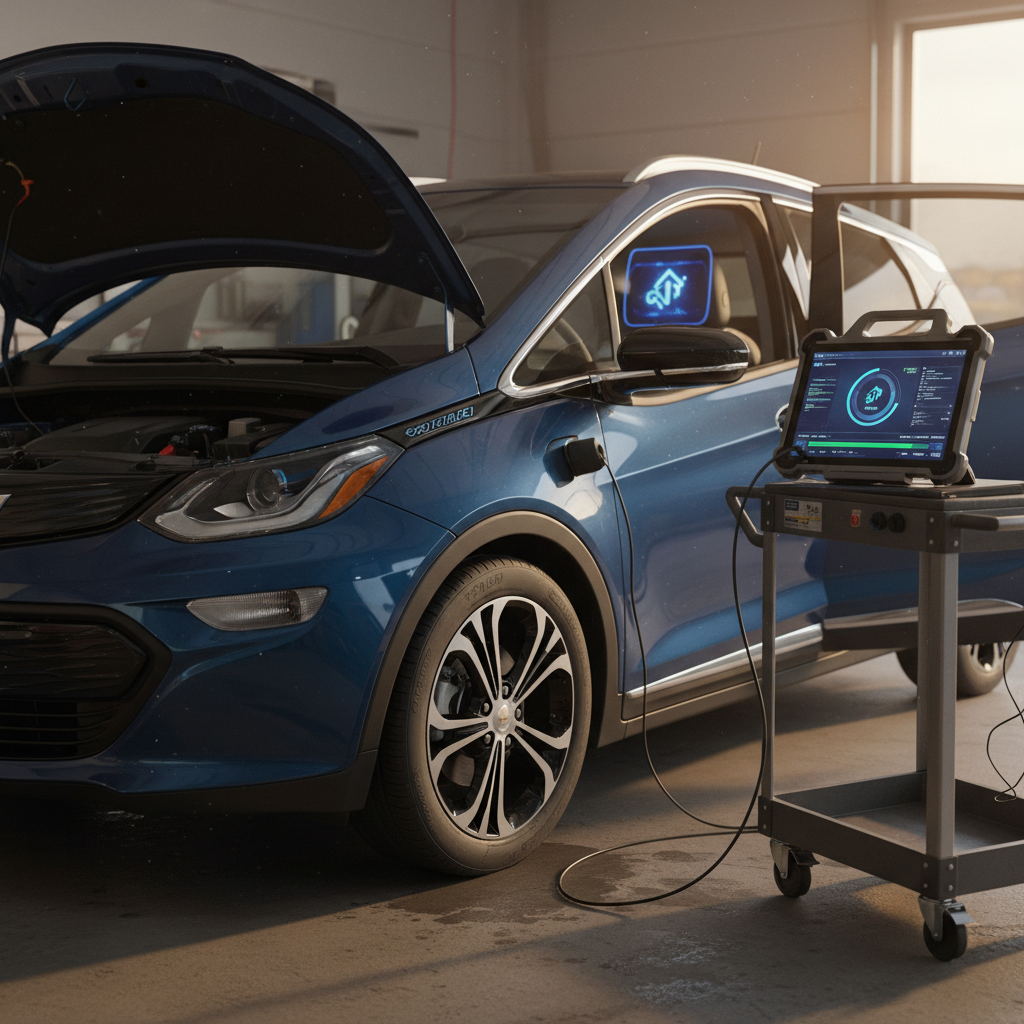
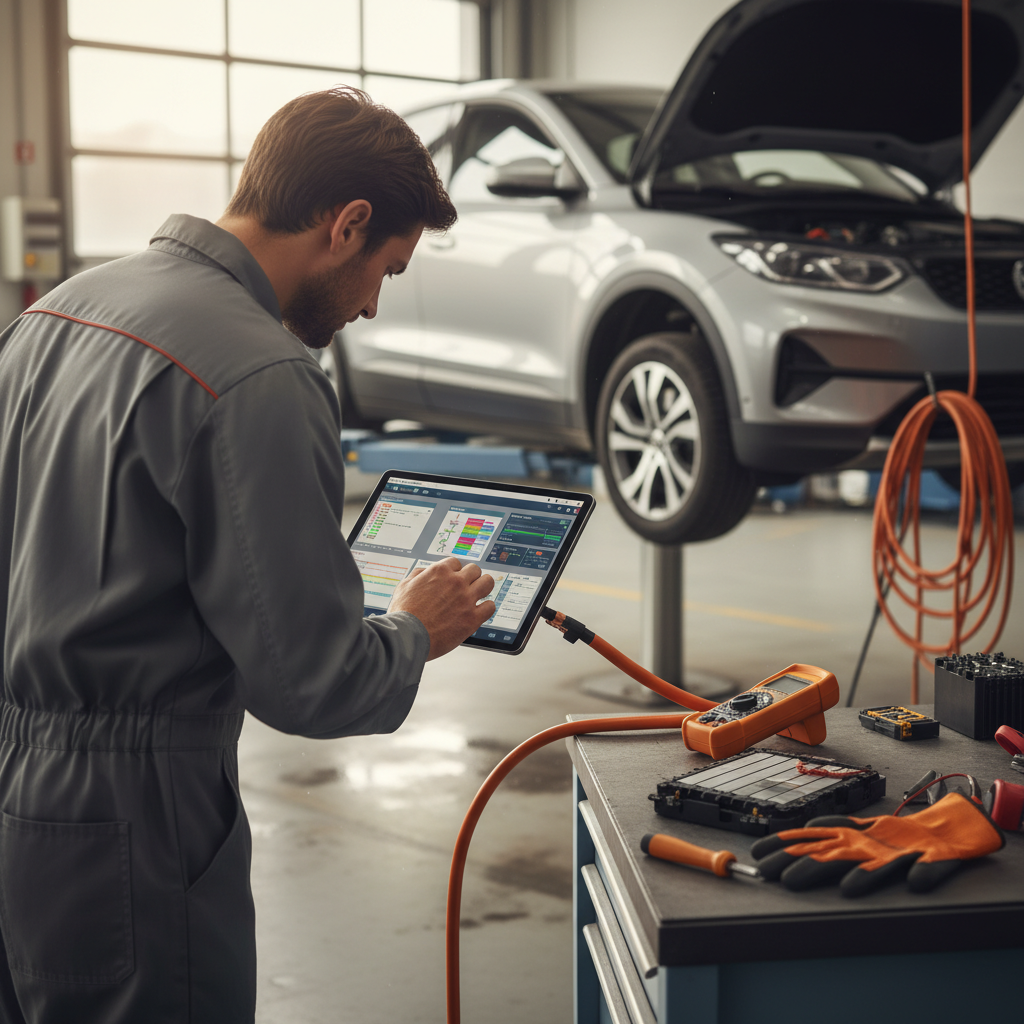
A modern EV’s value lives in its battery. Look for a <strong>third‑party or OEM battery health report</strong> that shows pack capacity, cell balance, and DC fast‑charging history. Recharged’s <strong>Recharged Score Report</strong> includes an in‑depth EV battery diagnostics snapshot on every vehicle we sell.
3. Inspect tires, brakes, and suspension
Uneven tire wear, pulsation under braking, or front‑end clunks can quickly turn a ‘great deal’ into a repair bill. On a commercial van, these are consumables, budget accordingly if they’re near the end of their life.
4. Test HVAC thoroughly
Run both heat and A/C for several minutes. Check all fan speeds and modes, including defrost. A barely warm heater or intermittent A/C could point to software or hardware issues that are pricier to sort on an electric van.
5. Evaluate range and charging behavior
If possible, do a longer test drive and at least one DC fast‑charging session. Make sure the van charges at a reasonable rate, doesn’t throw charging‑system warnings, and delivers the kind of real‑world range your routes require.
6. Consider usage pattern and upfits
Look underneath and inside for signs of heavy commercial use: bent shelving, floor damage, extra holes in the roof, or aftermarket electrical add‑ons. Poorly installed inverters, lifts, or refrigeration can complicate future repairs.
How Recharged can simplify this
Ownership Tips to Prevent or Limit Problems
Once you own an E-Transit, smart habits can prevent some common issues and make warranty conversations much easier if something does go wrong.
Protect the Battery and Driveline
- Avoid constant 0–100% charging. For daily use, staying roughly between 20% and 80% state of charge is gentler on the pack.
- Limit repeated high‑power DC fast charging when it’s not needed. It’s great for trips, but constant use can accelerate wear.
- Mind your payload. Running max‑weight all day every day adds stress to suspension, brakes, and even cooling systems.
Stay Ahead of Software and Service
- Keep software current. Accept over‑the‑air updates and occasionally ask your Ford dealer to check for module updates during service.
- Document issues early. If you notice intermittent HVAC or camera glitches, get them logged under warranty rather than waiting.
- Use EV‑trained technicians. For anything involving high‑voltage or battery hardware, insist on an EV‑certified facility.
Don’t ignore minor electrical quirks
Ford E-Transit Common Problems: FAQ
Ford E-Transit Problems and Reliability: Frequently Asked Questions
Bottom Line: Is a Used Ford E-Transit a Smart Buy?
If your business or van‑life plans line up with its range and charging envelope, the Ford E-Transit can be a smart, cost‑effective electric workhorse. Its most serious issues so far have centered on axle hardware, battery‑tray integrity on certain variants, HVAC function, and software bugs, all of which you can screen for with good records and the right inspections. The core motor and drive unit, on the other hand, look solid so far.
The key is to buy with your eyes open. Confirm recall completion, insist on real battery‑health data, and treat suspension, brakes, and tires as consumables on hard‑worked commercial vans. If that feels overwhelming, you don’t have to navigate it alone. Recharged was built to make used EV ownership simple and transparent, from battery diagnostics and fair‑market pricing to EV‑savvy support and nationwide delivery. Do your homework, choose the right van for your routes, and an E-Transit can give you the torque, low running costs, and quiet operation that make electric work vehicles so compelling.