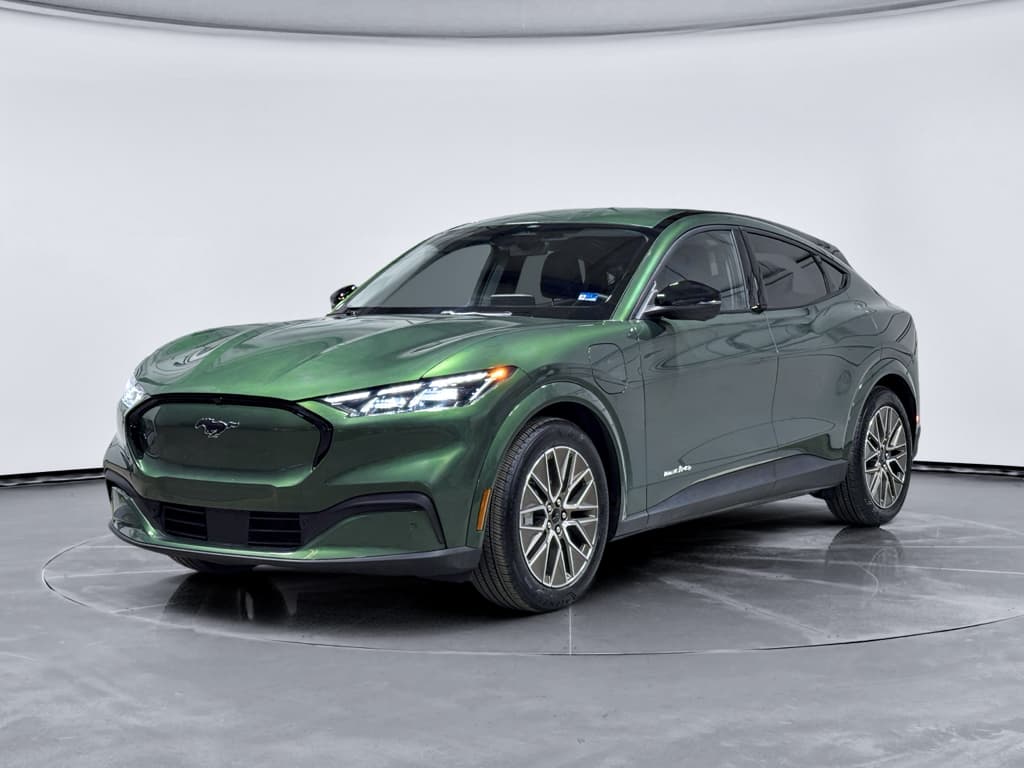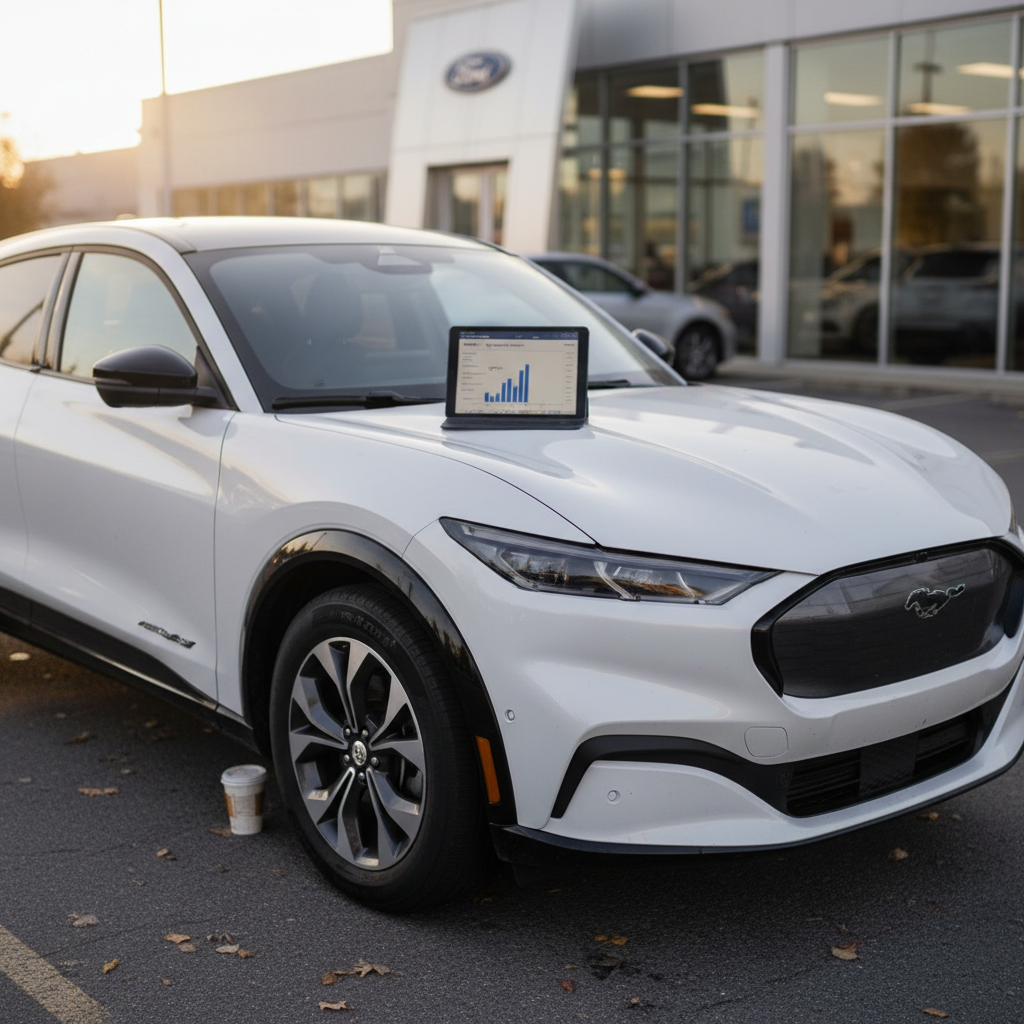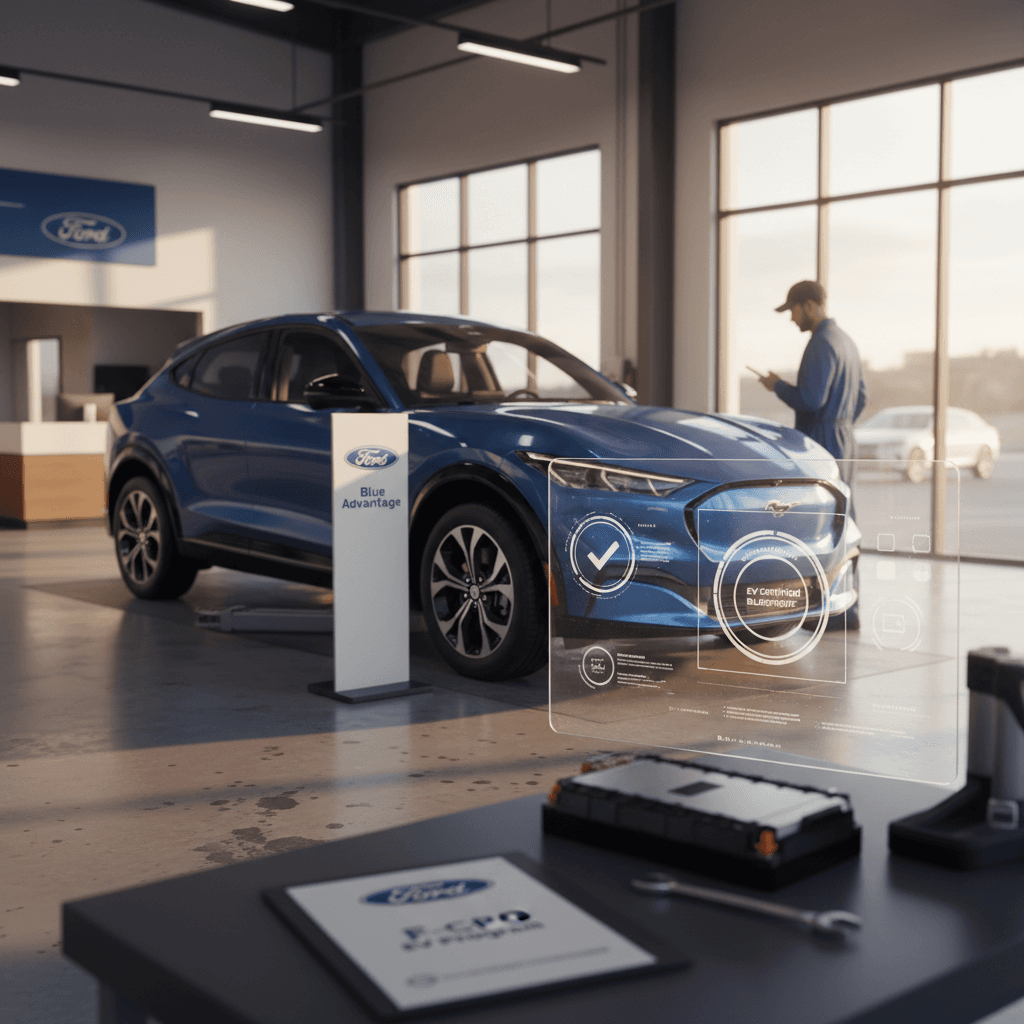
Ford doesn’t call it the **Ford CPO electric car program** anymore. The old “Certified Pre-Owned” label has been rolled into something broader, **Ford Blue Advantage**, with a specific **EV Certified** tier for cars like the Mustang Mach‑E and F‑150 Lightning. The idea is simple: give used‑car shoppers new‑car confidence in a market where one big, silent question hangs over every electric vehicle, *how’s the battery, really?*
Quick Take
Ford’s CPO Electric Car Program, in Plain English
Start with the naming. Ford quietly retired the old “Ford Certified Pre‑Owned” branding and replaced it with **Ford Blue Advantage**, a three‑tier system: **Gold Certified**, **EV Certified**, and **Blue Certified**. For electric cars, the action is in the EV Certified tier, this is Ford’s de facto **CPO program for used electric vehicles** like the Mustang Mach‑E and other fully electric Fords.
- Gold Certified: Late‑model gas and hybrid Fords (up to 6 years/80,000 miles) with a 172‑point inspection plus powertrain warranty.
- EV Certified: Fully electric Fords (also up to 6 years/80,000 miles) with a 127‑point EV‑specific inspection and extra EV warranty coverage.
- Blue Certified: Any make or model, gas, hybrid, or EV, up to 10 years old and higher mileage, with lighter coverage.
If you walk onto a Ford lot in 2026 and ask for a certified used Mustang Mach‑E, you’re really shopping **Ford Blue Advantage EV Certified**, even if everyone on the floor still casually calls it “CPO.”
Ford EV Certified: Core Numbers
How Ford Blue Advantage EV Certified Actually Works
Ford’s EV Certified tier is a kind of curated slice of the used EV market. Only certain vehicles qualify, primarily **fully electric Ford models** that are still relatively young and low‑mileage. Here’s the anatomy of a Ford EV Certified car:
What Makes a Ford EV Certified Vehicle
From eligibility to extras, broken down into plain language
1. Eligibility
- Fully electric Ford vehicle (e.g., Mustang Mach‑E).
- Under 6 years old.
- Fewer than 80,000 miles on the odometer.
If it’s older or higher‑mileage, it’ll show up as ordinary used, or possibly Blue Certified, with lighter coverage.
2. 127‑Point EV Inspection
- High‑voltage battery and cooling systems checks.
- On‑board charger operation and DC fast‑charging port.
- Brake system, steering, suspension, HVAC, safety tech, infotainment.
- Software and update status.
Anything that fails gets repaired or replaced with Ford‑approved parts.
3. Documentation & History
- CARFAX vehicle history report.
- Odometer and title checks.
- Open recalls addressed before sale.
You still need to read the report, CPO doesn’t erase past abuse, it just certifies present condition.
Warranty Coverage on Ford Blue Advantage EV Certified Vehicles
How Ford’s EV Certified tier is structured on paper. Pay special attention to the dates and mileage limits, these are from the original in‑service date, not from when you buy the car.
| Coverage Type | What It Covers | Duration | Mileage Limit | Key Notes |
|---|---|---|---|---|
| Comprehensive Limited Warranty | Over 1,000 components, from electronics to steering and HVAC | 12 months | 12,000 miles | Starts at your purchase date; similar to "bumper‑to‑bumper" coverage. |
| BaseCARE EV Limited Warranty | High‑voltage battery, electric drive components, related hardware | 8 years | 100,000 miles | Measured from original in‑service date; you’re getting the balance of what’s left. |
| Roadside Assistance | Towing, jump starts, flat‑tire changes, lockouts | Up to 8 years | 100,000 miles | Generally mirrors the BaseCARE term for EV Certified vehicles. |
| Money‑Back Guarantee | Return window if you regret the purchase | 14 days | 1,000 miles | Offered by participating dealers; conditions apply and vary by store. |
Always confirm exact coverage terms on the specific VIN before you sign anything.
Pro Tip: Ask For Exact In‑Service Date
What’s Different for Electric vs. Gas Ford CPO Vehicles
Ford’s old CPO setup treated gas, hybrid, and electric as basically the same song in different keys. Blue Advantage splits the orchestra. **Gold Certified** handles internal‑combustion and hybrids; **EV Certified** handles fully electric, with a shorter inspection checklist but a more focused one.
Traditional Gold Certified (Gas & Hybrid)
- 172‑point inspection (more mechanical systems to check).
- 12 mo/12k comprehensive warranty plus 7 yr/100k powertrain warranty.
- Designed around engines, transmissions, exhaust, emissions.
- No dedicated EV‑battery warranty, because it’s not an EV program.
EV Certified (Fully Electric Fords)
- 127‑point EV‑specific inspection (battery, charging, software).
- 12 mo/12k comprehensive warranty plus 8 yr/100k BaseCARE EV limited warranty.
- No engine or exhaust to worry about, but software and charging hardware matter more.
- Roadside assistance tuned for EV realities (like towing to a charger or EV‑certified dealer).
Where Blue Certified Fits In
Key Benefits of Ford’s CPO Electric Car Program
On its best day, the Ford EV Certified program tries to bottle the feeling of a new‑car purchase and pour it over a used EV. When it works, it’s reassuring, especially if you’re new to electric and still unconvinced the future won’t leave you stranded at a dead charger in the middle of nowhere.
Why Shoppers Like Ford EV Certified
The bright side of Ford’s CPO approach to electric vehicles
Extra Protection on Expensive Bits
Cars Cherry‑Picked for Age & Mileage
Structured Inspection & History
Roadside & Short-Term Safety Net
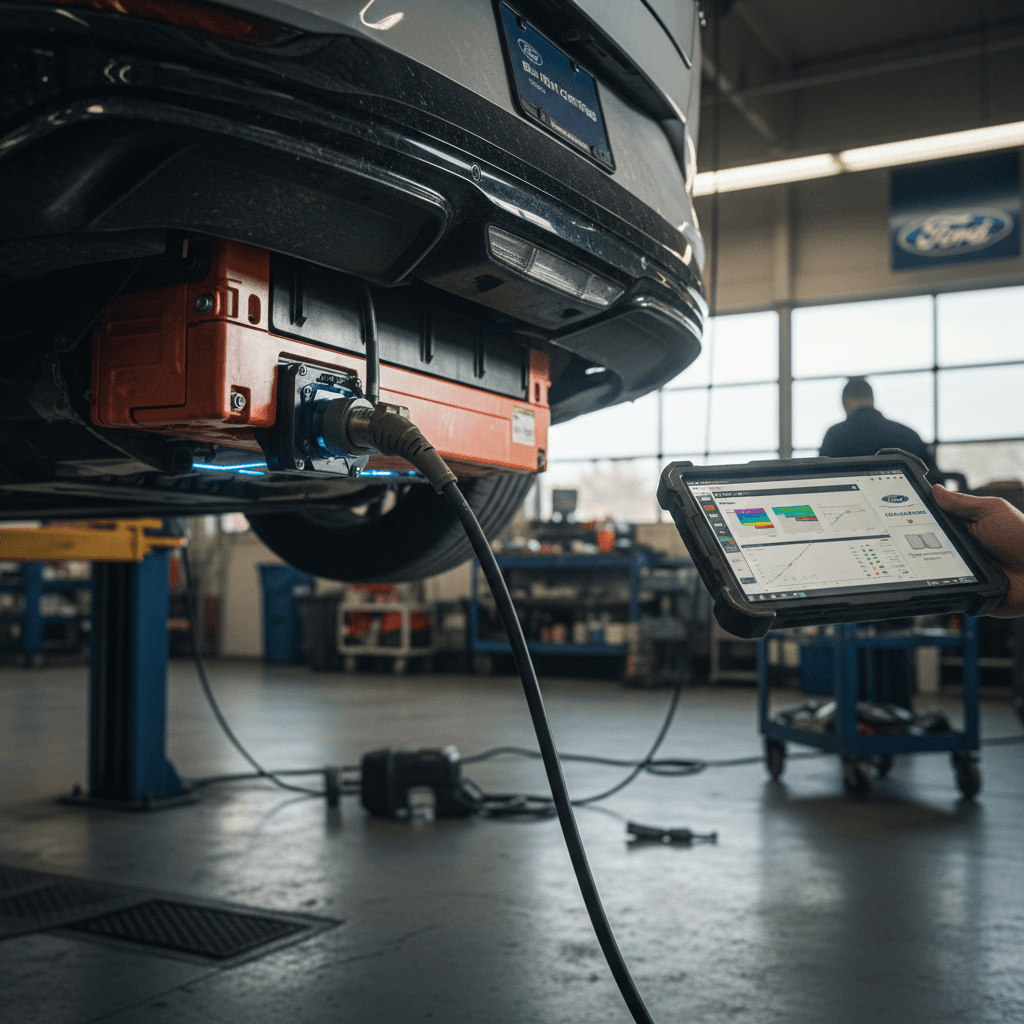
The Fine Print: Limits and Tradeoffs to Watch For
The Ford CPO electric car program looks terrific in brochure copy, most such programs do. The real question is what happens in year five, on a Tuesday, when the traction battery throws a code and the service advisor reaches for the warranty booklet.
Reality Checks Before You Sign on a Ford EV Certified Car
Confirm how much EV warranty is left
Ask the dealer to show you the **original in‑service date** and calculate, in plain numbers, how much of the 8‑year/100,000‑mile BaseCARE EV coverage actually remains. A late‑in‑the‑cycle 2019 or 2020 car might be nearly at the end of its runway.
Ask for battery health data, not just "it passed"
Passing a 127‑point inspection doesn’t guarantee **low degradation**. Push for actual state‑of‑health numbers or detailed diagnostic screenshots so you know whether you’re buying a 90% battery or a tired 70% one.
Read the exclusions in the fine print
Every warranty has escape hatches: abuse, modifications, non‑Ford chargers in some edge cases, neglected maintenance. Don’t assume every battery‑related hiccup is covered, verify what *isn’t*.
Watch pricing vs. non‑CPO inventory
CPO status often commands a premium. Sometimes it’s fair; sometimes it’s just an extra badge. Compare similar non‑certified cars, including outside the Ford network, to see if the coverage is worth the surcharge for you.
Check that your local dealer is EV‑savvy
Warranty is only as good as the technician on the other side of the service bay. Not every Ford store is equally experienced with high‑voltage diagnostics and complex software bugs.
Clarify money‑back and exchange policies
The 14‑day/1,000‑mile guarantee is dealer‑dependent and full of conditions (no new damage, lien status, etc.). Get the rules in writing before you assume you have a two‑week free trial.
Don’t Confuse EV Certified With a Battery Health Guarantee
Ford EV CPO vs. Independent Used EV Retailers
Ford’s CPO electric program is what you’d expect from a legacy automaker: tidy, logo‑forward, and conservative. You get a factory‑backed warranty, a structured inspection, and a store full of blue ovals. What you don’t always get is **choice**.
Shopping Ford’s EV Certified Inventory
- Primarily Mustang Mach‑E and other Ford‑branded EVs.
- Uniform warranty structure and branding nationwide (with dealer‑level wrinkles).
- Traditional dealership experience: desk passes, F&I office, upsell menus.
- Great if you’re sure you want a Ford EV and care most about factory backing.
Shopping the Wider Used EV Market
- Mix of Ford, Hyundai, Kia, Tesla, GM, and others on the same playing field.
- Coverage varies wildly: some cars sold as‑is, others with strong third‑party or retailer‑backed protection.
- More room to arbitrage price vs. mileage vs. battery health data.
- Ideal if you’re EV‑curious first, brand‑loyal second.
Where Ford’s CPO EV Program Shines
Where Recharged Fits In (and When It Makes More Sense)
Recharged lives on the other side of the fence: we’re not tied to one badge on the grille. Our job is to make **used EV ownership**, Ford or otherwise, feel as transparent as buying a good laptop. You should know what you’re getting, what it’s worth, and what it’ll cost you to live with, without needing a PhD in kilowatts.
Recharged vs. Ford EV Certified: Key Differences for EV Shoppers
Same goal, confidence with a used EV. Very different playbooks.
Battery Health, Quantified
Brand‑Agnostic Shopping
Fully Digital Experience
Nationwide Delivery & Support
Pricing Built Around the EV Market
Flexible Ways to Sell or Switch
Ready to find your next EV?
Browse VehiclesFord CPO or Recharged? A Simple Rule of Thumb
Checklist: How to Shop a Ford CPO Electric Car Smartly
Whether you buy from Ford’s Blue Advantage EV Certified program or from a marketplace like Recharged, the homework is similar. The difference is how easy each seller makes it to answer the hard questions. Use this checklist as your short list of non‑negotiables.
Essential Checklist for Any Ford CPO Electric Car
1. Pin down the in‑service date
Ask the salesperson to print or screen‑share the original in‑service date. Subtract that from 8 years to see exactly how many years of EV coverage remain, then compare that to how long you plan to keep the car.
2. Get real battery health metrics
Request battery diagnostic results in writing, state of health, estimated remaining capacity, and any flags or trouble codes. If they won’t provide it, treat that as a data point and compare with a seller that will (Recharged does this by default).
3. Compare CPO price vs. similar non‑CPO cars
Look at at least three comparable vehicles: one Ford EV Certified, one non‑certified Ford EV, and one or two cross‑brand alternatives on Recharged or similar. Decide if the CPO premium makes financial sense for the coverage you actually get.
4. Verify EV‑qualified service nearby
Use Ford’s site or a quick call‑around to confirm which local dealers are **EV‑certified** for service. A great CPO warranty isn’t very useful if the nearest competent shop is two states away.
5. Read the full warranty booklet
Slow down and read the actual EV Certified warranty and money‑back policy, especially the exclusions and claim process. Highlight anything you don’t understand and make the dealer explain it before you sign.
6. Test‑drive for software and charging quirks
On the drive, test DC fast‑charging (if possible), navigation with charger routing, driver‑assist systems, and app connectivity. Many EV pain points are software‑related, not mechanical, and CPO inspections aren’t always great at catching them.
Red Flags That Should Make You Walk Away
- Dealer refuses to provide battery diagnostics beyond “it passed.”
- Huge gap between published range and what the car shows at 100% charge.
- Spotty or unknown service history in the CARFAX report.
- Inconsistent answers about warranty start/end dates.
There are plenty of used EVs out there. You don’t need to marry the first one that smiles at you from the lot.
Ford CPO Electric Car Program: FAQ
Common Questions About Ford’s EV Certified CPO Program
Bottom Line: Who Should Choose Ford CPO for an Electric?
Ford’s modern **CPO electric car program**, Ford Blue Advantage EV Certified, is a decent answer to a hard question: how do you make a used Mustang Mach‑E feel less like a science experiment and more like a normal, predictable car? The extra EV‑specific warranty coverage, inspection, and roadside assistance all help, especially if you already know you want a Ford and you sleep better under the umbrella of a factory logo.
But factory certification isn’t the only way, or always the best way, to buy a used EV. If you care most about **transparent battery health**, cross‑shopping Ford against other compelling EVs, and a **digital, haggle‑light experience** with fair‑market pricing, Recharged usually puts more information and more control in your hands.
The smart move is to treat Ford’s EV Certified cars as one well‑packaged option on a much larger menu. Pull up a few Ford CPO electric listings, then open Recharged in another tab and compare real‑world battery health, pricing, and total cost of ownership across multiple brands. When the numbers and the data all line up, and not just the brochure language, you’ll know you’ve found the right used EV for you.