If you’re considering a Fisker Ocean, especially on the used market, cargo space is probably high on your checklist. The headline cargo numbers don’t look huge, but the Fisker Ocean cargo space dimensions tell a more nuanced story about how practical this EV SUV really is for family life, Costco runs, and road trips.
Quick context
Overview: Fisker Ocean cargo space dimensions at a glance
Key Fisker Ocean cargo numbers
On paper, the Ocean’s cargo volume is 16.8 cubic feet with the rear seats up and 32.4 cubic feet with the rear seats folded. That’s smaller than many compact and midsize electric SUVs, but owners and reviewers consistently say the squared-off opening and clever storage details make it more practical than the numbers suggest.
Don’t confuse early concept figures
Official Fisker Ocean cargo specs: cubic feet and liters
Multiple spec sources for the 2023–2024 Fisker Ocean line up on the same basic numbers, regardless of trim (Sport, Ultra, Extreme, One):
Fisker Ocean official cargo space specs
Factory-style and SAE-style figures for cargo volume behind the second row and with seats folded.
| Configuration | Cubic feet (approx.) | Liters (approx.) | Notes |
|---|---|---|---|
| Behind 2nd row (seats up) | 16.8 ft³ | ≈ 476 L | Primary trunk space above the load floor |
| Max cargo (rear seats folded) | 32.4 ft³ | ≈ 918 L | Measured to window line per SAE-style data |
| Frunk (front trunk) | 0 ft³ | 0 L | Ocean does not have a front trunk |
All values apply to 2023–2024 Fisker Ocean models sold in North America.
You may also see slightly different numbers rounded to one decimal place (for example, 16.81 and 32.43 cubic feet). Those minor differences are just rounding; functionally, they describe the same space.
Why do some sites quote much bigger numbers?
How usable is Fisker Ocean cargo space in real life?
Numbers only get you so far. What matters is whether the Ocean’s cargo area feels cramped or workable in everyday use. Reviewers and early owners describe it like this:
- The space feels larger than 16.8 ft³ because the opening is tall and nearly square.
- The load floor is low and flat, which makes it easy to load heavy boxes or a stroller.
- There’s useful under‑floor storage for charging cables and small items, effectively increasing usable volume.
- Rear visibility isn’t compromised even when packing to the roof, thanks to the digital rear-view mirror on many trims.
Practical takeaway
Seat configurations, pass-throughs, and hidden storage
Beyond raw volume, the Fisker Ocean cargo space dimensions become more interesting when you look at how the cabin can be configured. The Ocean is designed more like a premium lifestyle SUV than a pure cargo hauler.
Fisker Ocean cargo flexibility features
How the Ocean makes the most of limited volume
40/20/40 rear seat split
The rear bench folds in a 40/20/40 split, not just 60/40. You can:
- Fold the center section for skis or lumber
- Keep two outboard seats usable for passengers
- Fold one side plus center to balance people and cargo
Under‑floor storage
A removable floor panel reveals a bin sized for:
- Charging cables and adapters
- Cleaning supplies
- Small bags or valuables out of sight
This doesn’t show up cleanly in cubic‑foot ratings but matters day‑to‑day.
Drop-down rear glass
The rear window can lower independently from the hatch. With the glass down, it’s easier to:
- Carry longer items with the hatch closed
- Let pets poke their heads out (safely restrained)
Family-friendly packaging
Dimension walkthrough: length, width, and loading height
Fisker doesn’t publish every interior cargo dimension the way they do exterior specs, but between official data and hands-on reports, we can build a useful picture of how the trunk is shaped.
Cargo length
- Seats up: Expect enough floor length for most suitcases placed sideways and a compact stroller.
- Seats folded: With the 40/20/40 split down, you can slide in skis, snowboards, or flat‑packed furniture up to around 6 feet with some front‑seat adjustment.
- Center pass‑through: The narrow center section folded alone is ideal for long, thin items while keeping four seats usable.
Cargo width & opening
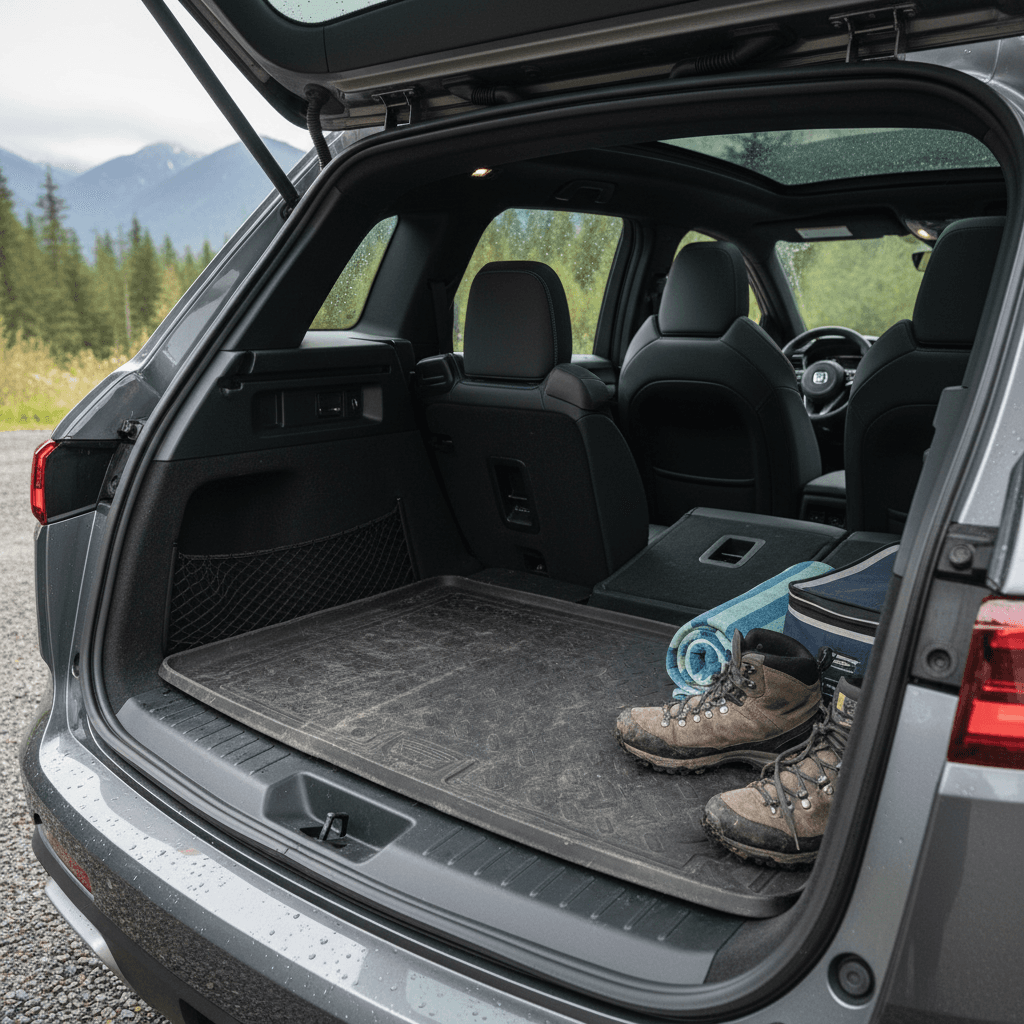
- The rear opening is wide and nearly vertical, making it easy to load bulky items without fighting a sloped roofline.
- Wheel arches eat into width a bit at floor level, but the upper area is boxy enough for wide suitcases.
- The load lip is low for an SUV, which is helpful if you’re lifting heavy gear or a dog that doesn’t jump well.
Exterior size reference
Fisker Ocean cargo space vs rival EV SUVs
The most important context for the Fisker Ocean cargo space dimensions is how they compare with other popular electric SUVs you might be cross-shopping on the used market.
Cargo space: Fisker Ocean vs key EV rivals
Seats-up and seats-down cargo volume comparisons for popular electric SUVs.
| Model | Seats up (behind 2nd row) | Seats folded (max) | Notes |
|---|---|---|---|
| Fisker Ocean | 16.8 ft³ | 32.4 ft³ | Smallest in this group; packaging helps usability |
| Tesla Model Y | ≈30 ft³ | ≈68 ft³ | Significantly larger trunk plus small under‑floor storage |
| VW ID.4 | 30.3 ft³ | 64.2 ft³ | Boxy rear makes volume easy to use |
| Hyundai Ioniq 5 | 27.2 ft³ | 59.3 ft³ | Good blend of legroom and cargo |
| Kia EV6 | 24.4 ft³ | 50.2 ft³ | Sportier design, slightly less upright space |
Values are approximate manufacturer or SAE-style figures for U.S.-spec vehicles.
Viewed strictly by the numbers, the Fisker Ocean’s trunk is clearly smaller. Rear legroom and design flair took priority over load bay volume. If maximum cargo is your top priority, a Model Y, ID.4, or Ioniq 5 will simply carry more.
Watch your expectations coming from a wagon or minivan
What actually fits: strollers, bikes, dogs, and road-trip gear
Specs don’t tell you whether your life will fit. Here’s how the Fisker Ocean cargo space dimensions translate into real-world packing scenarios.
Common real-world cargo scenarios in a Fisker Ocean
Family grocery run with kids in back
With all five seats in use, 16.8 ft³ is enough for a week’s worth of groceries plus a couple of duffel bags. The under‑floor bin is perfect for cleaning supplies or smaller items you don’t want rolling around.
Compact stroller + diaper bag + groceries
Most compact or travel strollers fit diagonally or sideways behind the second row. You’ll still have room for a couple of reusable grocery bags, but not much more. A big double stroller will likely require folding at least one rear seat section.
Two checked suitcases + carry-ons
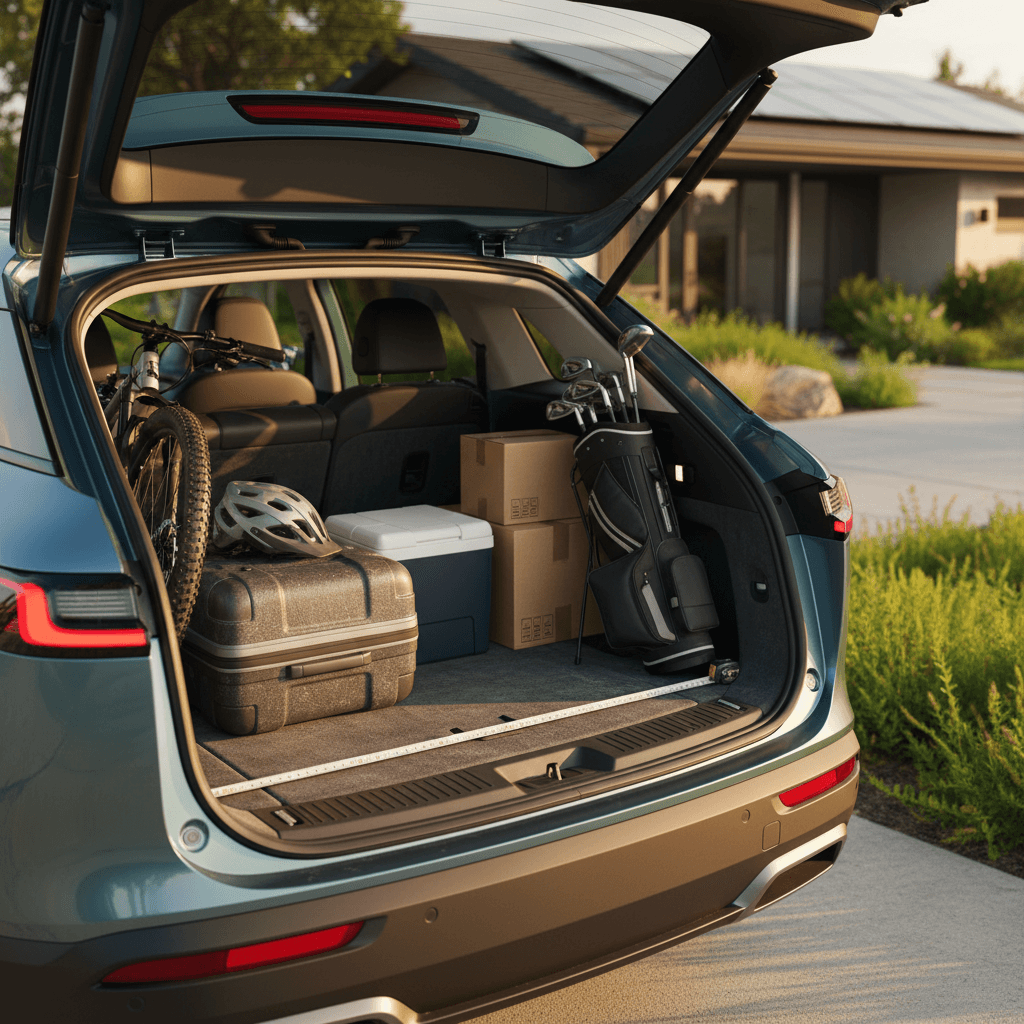
Two large checked bags (28–30") plus two carry‑ons can fit with careful stacking. For airport runs with four or five adults and luggage, folding the center section of the rear seat gives you extra length and makes packing easier.
Bikes and outdoor gear
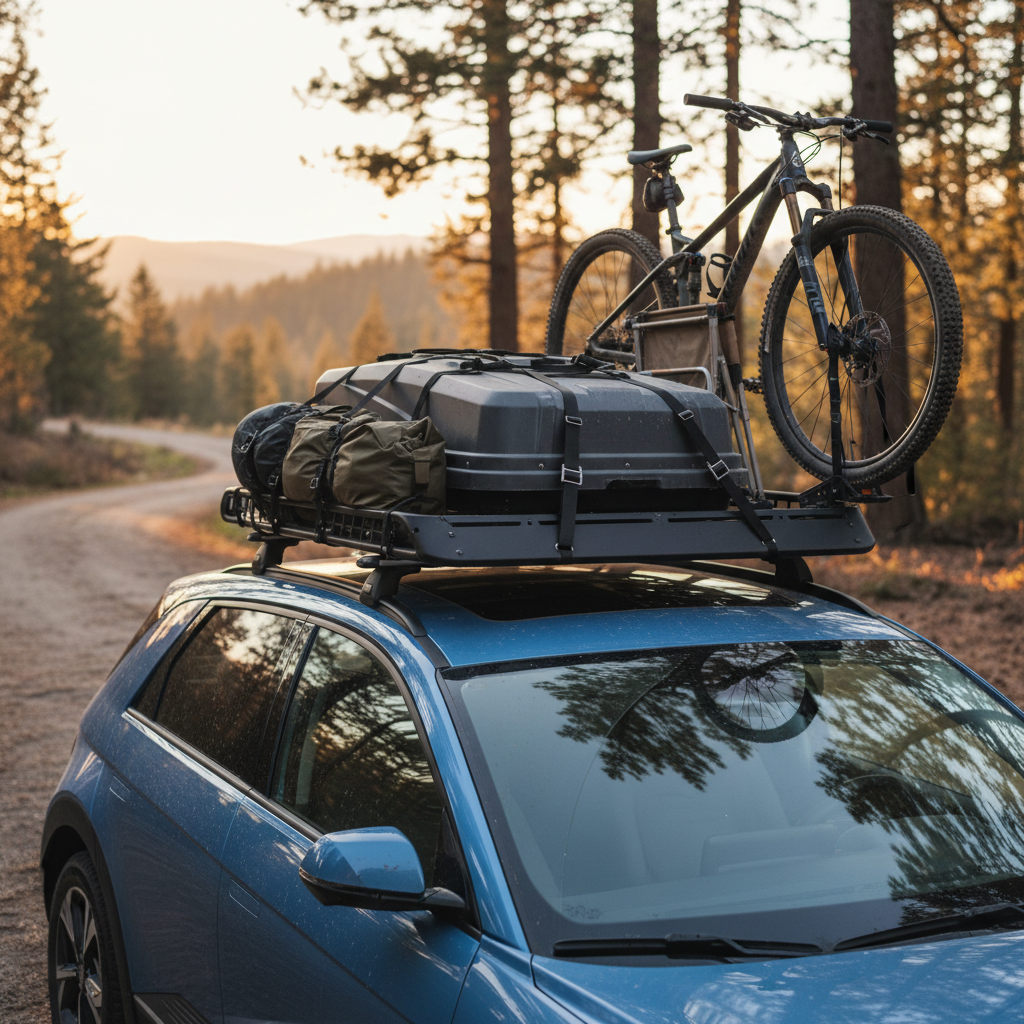
With the rear seats folded, the Ocean can take one or two bikes with the front wheels removed, especially if you angle the bars. For serious cycling families, an exterior rack is still the better solution.
Dogs and pet gear
The low load floor and tall opening are dog‑friendly. A medium to large dog crate fits with the seats up in many cases, though measuring is essential. Dropping the rear glass adds ventilation while you’re parked (never leave pets unattended in heat).
Flat packs and DIY projects
Fold at least two rear sections and slide in flat‑pack furniture or 2x4s up to roughly 6 feet long. The square hatch opening and relatively straight side walls make this easier than in some coupe‑like EV crossovers.
Bring a measuring tape to a test drive
Pros and cons of the Fisker Ocean cargo area
Cargo pros
- Smart 40/20/40 rear seat split offers more flexibility than basic 60/40 setups.
- Low, flat load floor makes it easier to lift heavy items and load pets.
- Under‑floor storage bin keeps cables and small items organized.
- Square hatch opening is forgiving for bulky objects, even if volume is modest.
- Drop‑down rear window can help with long items without opening the full hatch.
Cargo cons
- Lower cargo volume than most competing EV SUVs, both seats up and seats down.
- No front trunk (frunk), so you can’t offload cargo to the nose like in a Model Y.
- Limited "all seats up" space means big families may run out of room quickly on trips.
- Brand uncertainty and parts questions make rear-area repairs (trim, hatch components) a consideration on the used market.
Brand status caveat
Buying a used Fisker Ocean: cargo-related checks
If you’re looking at a used Fisker Ocean, you’re likely weighing value (and style) against practicality and long‑term support. The cargo area is one of the easiest places to spot how a vehicle has actually been used.
Cargo-specific checks for a used Fisker Ocean
Inspect the load floor and under‑floor bin
Lift the removable floor panel. Look for cracks, water intrusion, damage from heavy items, and missing cargo hooks or tie‑downs. A heavily scarred floor can hint at hard use.
Check hatch alignment and seals
Open and close the rear hatch several times. It should latch smoothly without slamming. Look for misaligned gaps, torn weatherstripping, or moisture in the spare‑storage area, any of which can signal prior damage.
Test the rear seat folding mechanisms
Fold all three rear sections (40/20/40) separately and together. They should fold flat without unusual resistance and lock back into place firmly. Sticky latches may mean spilled liquids or lack of use.
Verify power features and rear glass operation
If the Ocean you’re viewing has a power hatch or the drop‑down rear glass, test them repeatedly. Intermittent operation can hint at wiring, switch, or software issues that might be hard to fix post‑Fisker.
Smell and stain check
Sniff around the cargo area and look closely at the carpet. Persistent odors, pet hair woven into fabric, or deep staining could be deal‑breakers for some buyers, or leverage for a better price.
Confirm cargo meets your needs today
Before falling for the design, load in a stroller, cooler, golf clubs, or whatever you haul most often. If you need to fold seats for basic errands, you may be better off with a roomier used EV.
How Recharged can help with used EV cargo questions
Ready to find your next EV?
Browse VehiclesFAQ: Fisker Ocean cargo space and dimensions
Frequently asked questions about Fisker Ocean cargo space
The Fisker Ocean’s cargo numbers won’t wow you in a spec-sheet comparison, but the Fisker Ocean cargo space dimensions are more livable than they look, thanks to a smart 40/20/40 split, under‑floor storage, and a square hatch opening. If you’re shopping for a used Ocean, be honest about how much you really haul. For light family duty and urban life, it can work well. If you regularly pack for five on long road trips or use your EV like a pickup, you may be better served by a roomier used EV SUV. Either way, going in with clear expectations, and a tape measure, will help you choose the vehicle that actually fits your life, not just your driveway.