The road-trip verdict
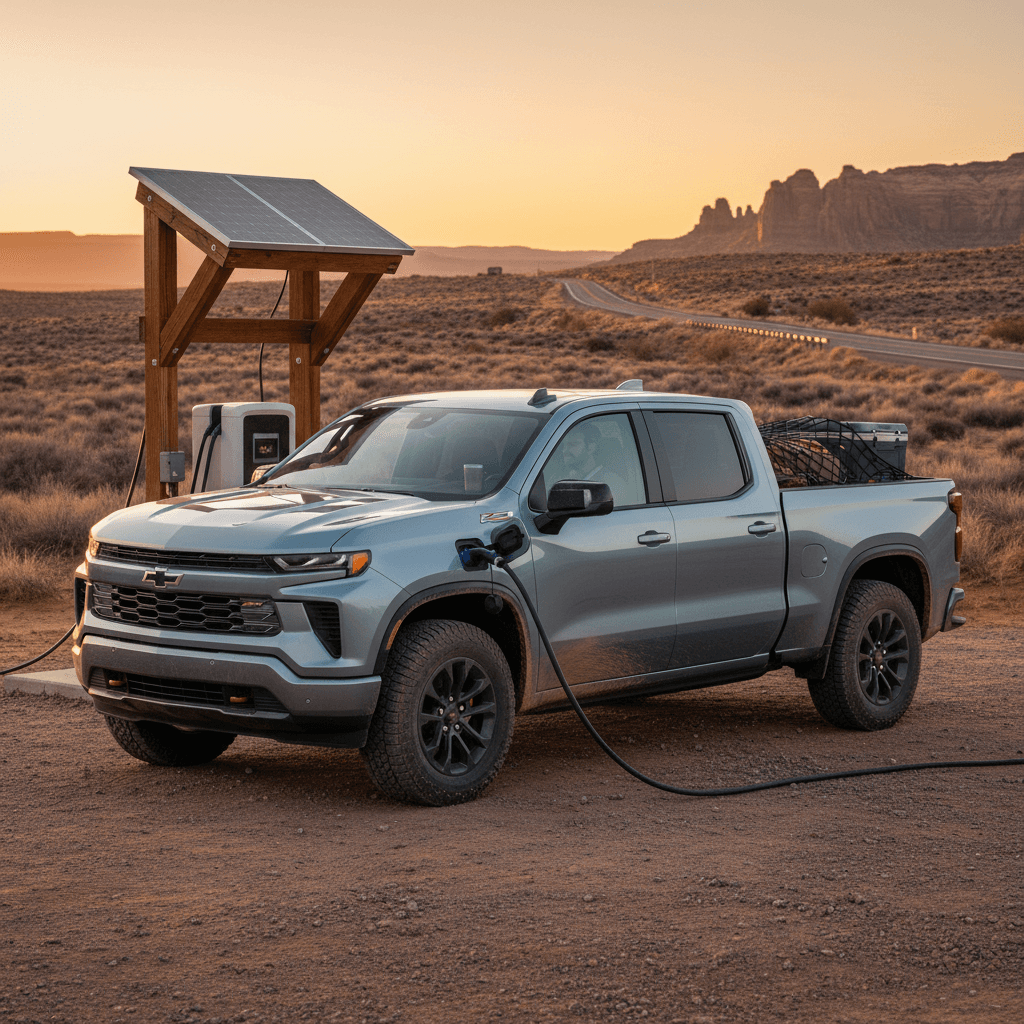
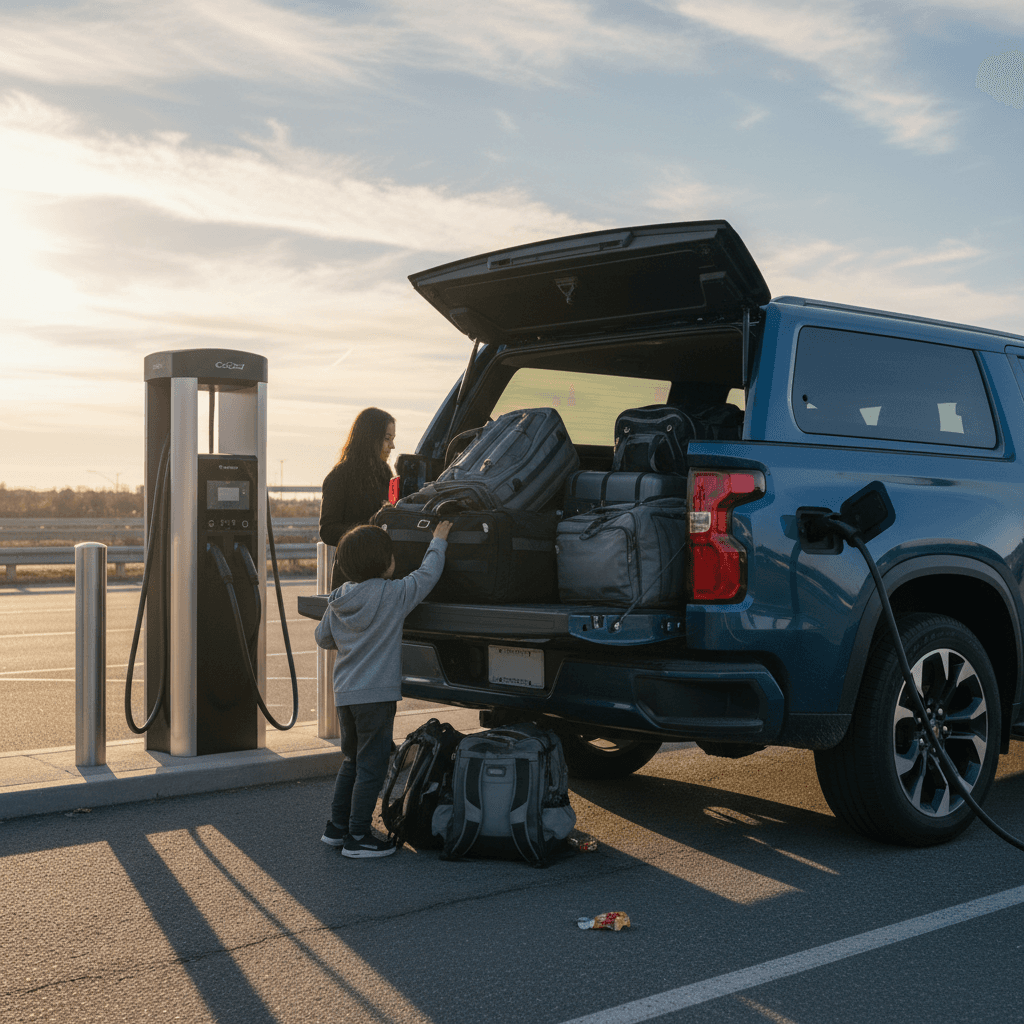
The Silverado EV is a promising road-trip pickup when your route has dependable charging and you aren’t treating its displayed range as a guarantee. Its full-size-truck format gives you useful passenger and cargo flexibility, but that size also makes speed, wind, weather, payload, and towing especially important planning variables. In practical terms, you should evaluate the truck and the route as a pair: a comfortable highway EV can still become frustrating when its next usable charger is too far away or difficult to enter with a trailer.
What this review covers
Where the Silverado EV fits best
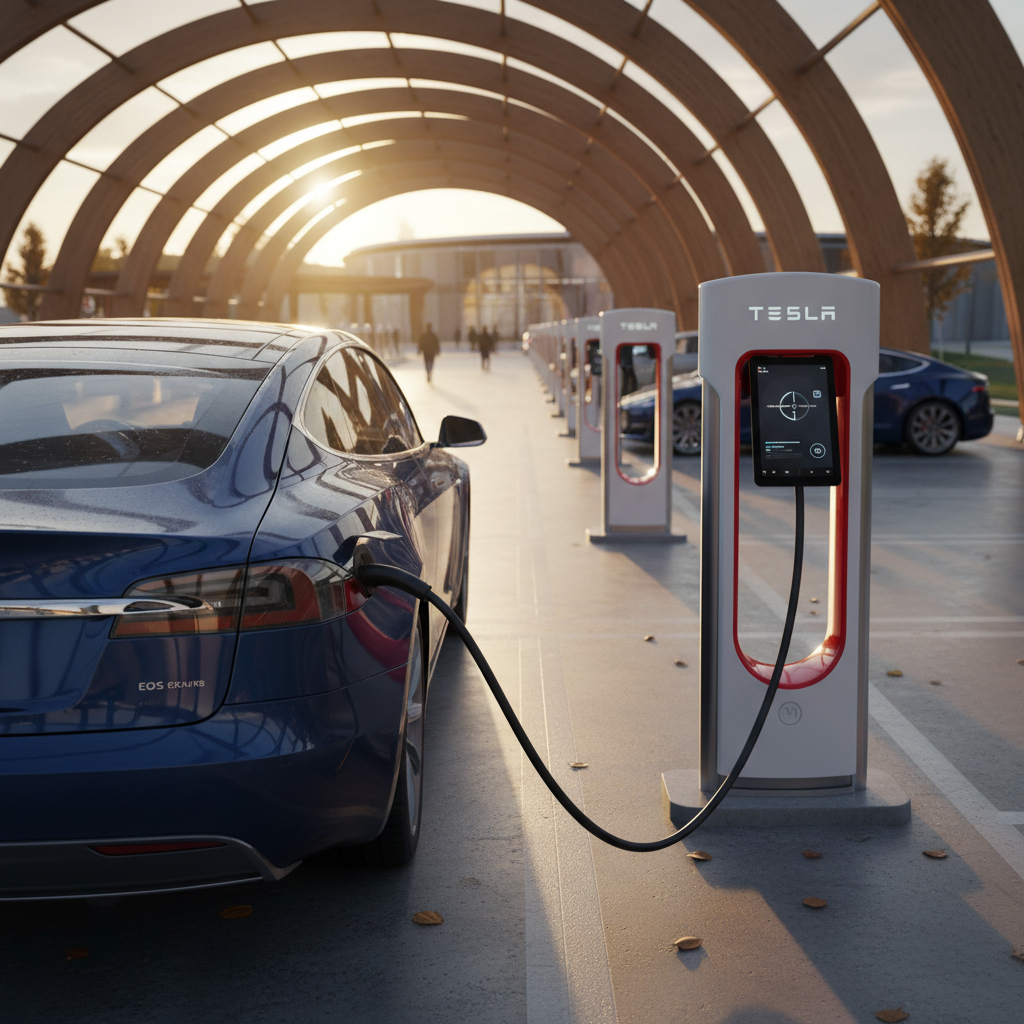
The Silverado EV fits best on trips with well-spaced, compatible fast chargers and enough schedule flexibility to handle a busy or unavailable station. Highway travel without a trailer is the simplest case, while towing and remote travel demand more conservative planning. Before leaving, build the route around chargers the exact truck can use, not around every station icon shown on a map.
Road-trip fit by driving scenario
The truck’s suitability changes with the load, route, and charging access.
| Trip scenario | Overall fit | Main concern | What to verify |
|---|---|---|---|
| Highway, no trailer | Strongest case | Speed and weather | Primary and backup stops |
| Family plus cargo | Generally suitable | Load and energy use | Range after loading |
| Towing | Conditional | Range and stall access | Shorter legs; trailer plan |
| Remote travel | Route-dependent | Charger spacing | Reliable backup stations |
Qualitative guidance; actual range and charging performance vary by vehicle and conditions.
What changes range on the road?
Four variables can change the trip more than the optimistic number you see at departure: speed, weather, load, and charger access. EV range estimates continually react to recent driving and conditions, so the dashboard prediction may fall faster after you add a trailer, meet a headwind, or hold a high highway speed. Planning with a reserve, and checking the next station before passing the current one, is more useful than trying to reproduce one ideal range claim.
Conditions to account for before departure
Sustained highway speed
Higher speed increases aerodynamic drag and can raise energy consumption sharply.
Cold or severe heat
Cabin conditioning and battery temperature can reduce the distance available between stops.
Payload and accessories
Passengers, cargo, racks, and other equipment can change consumption and handling.
Towing
Trailer weight and aerodynamics can reduce range while also limiting which charging stalls are practical.
Wind and elevation
Headwinds and long climbs can consume energy faster than a flat, calm route.
Station reliability
A charger only helps if it works, accepts the truck, and has enough space to enter safely.
What Recharged battery data shows
Recharged’s inspection data shows why you should evaluate the individual battery instead of assuming every used EV will deliver the same trip. Across 2,242 Recharged Score battery inspections, tested remaining capacity averaged 93.9% of original capacity and the median was 94.9%. Tested real-world range across that mixed-EV inspection set averaged 266 miles, with a 268-mile median, but those figures cover many models and do not predict the range of a particular Silverado EV. The takeaway is simple: broad fleet data can provide context, but the truck’s own diagnostic report should drive your buying and trip-planning decisions.
A battery-health report is more useful than mileage alone because it measures the component that determines how much energy the truck can still store. Recharged includes a Recharged Score Report with verified battery health on every vehicle, helping you compare tested remaining capacity and condition before committing. For a road-trip vehicle, that inspection also gives you a more defensible starting point than an unverified dashboard estimate from a short test drive.
Recharged data
Used EV battery health
94%
avg remaining capacity
From Recharged battery inspections, not manufacturer estimates.
- Lowest
- 63%
- Median
- 95%
- Highest
- 100%
- Est. range
- 266 mi avg
- Cell balance pass
- 100%
- Quick charges
- 18 avg
- Slow charges
- 65 avg
Average cell imbalance: 7.3 mV
Based on vehicles Recharged tested
Recharged data
Used EV prices at Recharged
$30,997
median list price
Current list prices for matching inventory at Recharged.
- Lowest
- $12,996
- Average
- $34,803
- Highest
- $146,998
Average Recharged Score on these listings
4.8 / 5
Range
3.7 – 5.0
Based on available listings
Every EV is battery-tested with a Recharged Score. Nationwide delivery.
How should you plan the trip?
A successful Silverado EV trip starts with a charger-by-charger plan rather than a single destination entered into navigation. Confirm that each stop offers compatible DC fast charging, high-powered charging intended for travel, and identify a second station near every critical stop. Recheck the route after loading the truck, and use battery preconditioning if the specific vehicle provides it; preconditioning warms or cools the battery before a fast-charge session. For more detail, see Recharged’s guides to planning an EV road trip and DC fast charging.
- Charge before departure and review the truck’s updated range estimate.
- Enter the first charging stop into the vehicle’s navigation system when supported.
- Confirm connector compatibility, station status, access hours, and nearby alternatives.
- If towing, inspect satellite views or station photos for pull-through access and turning space.
- Check consumption early in the trip and shorten the next leg if conditions are worse than expected.
- Avoid arriving at an isolated station without enough energy to reach a backup.
Don’t plan from advertised range alone
What should you inspect before buying used?
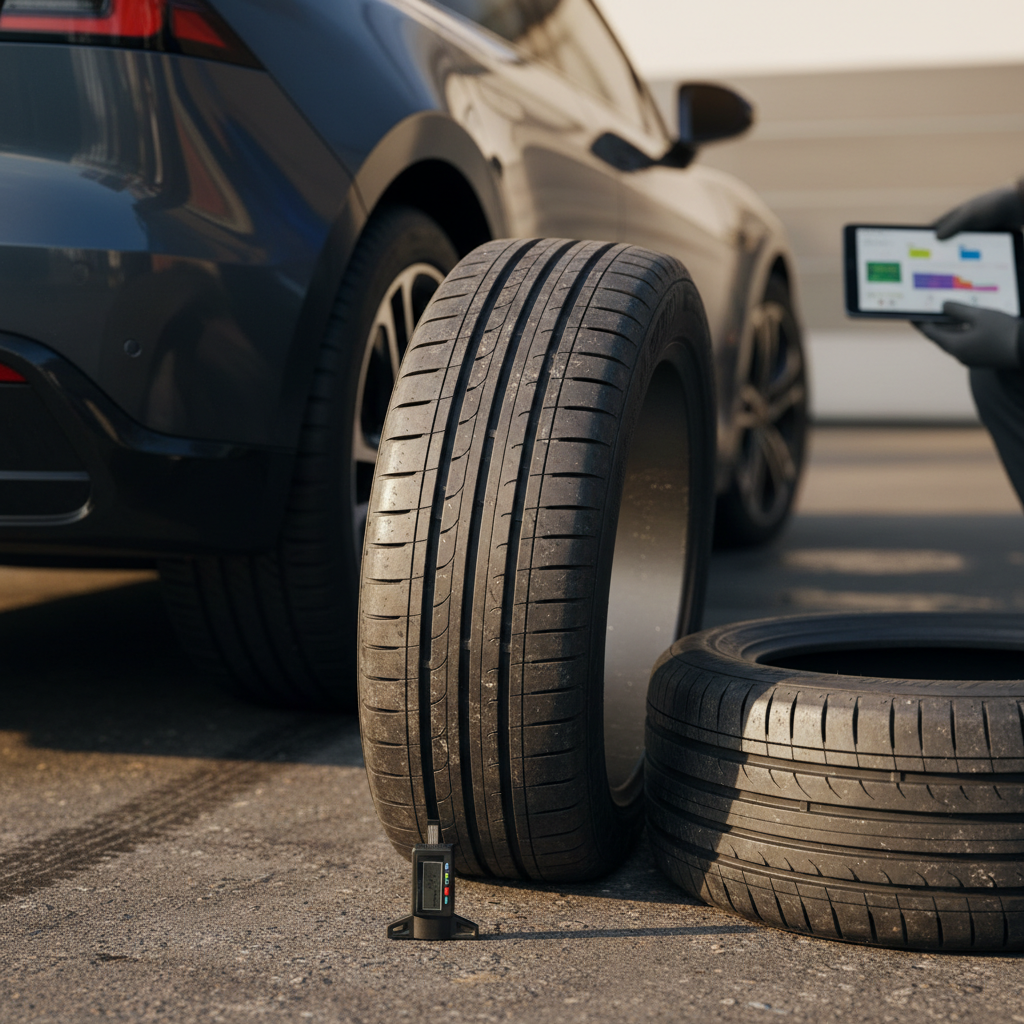
The individual truck’s condition matters more than a generic model reputation when you’re buying a used Silverado EV for travel. Review verified battery capacity, tested range, charging operation, tire condition, software status, and any damage or repair history. During a test drive, confirm that the charging port, navigation, climate control, driver displays, and range estimate operate normally; then ask to see the diagnostic basis for any battery-health claim. Recharged’s used-EV buying guide covers the broader inspection and ownership questions.
Used-truck road-trip inspection
Verified battery health
Ask for tested remaining capacity, not a verbal assurance based only on age or odometer mileage.
Charging test
Confirm the charge port and charging communication work correctly before relying on the truck for travel.
Tires and alignment
Uneven wear can affect efficiency, noise, traction, and the cost of making the truck trip-ready.
Software and navigation
Check for pending updates and verify that route planning and charger information load properly.
Service and damage history
Review prior work carefully, especially repairs near the battery enclosure, charging system, or underbody.
Accessories and towing setup
Verify that installed equipment matches your intended use and has been fitted correctly.
Don’t count on a federal EV tax credit
Instant offer, trade-in, or consignment. Pickup available.
Silverado EV road-trip questions
The final verdict
The Silverado EV can work well as a road-trip truck, but it rewards preparation more than bravado. It makes the most sense when your common routes have reliable fast charging, your towing expectations are realistic, and the truck has documented battery health. Buy the condition rather than the badge, plan backups rather than perfect-case mileage, and the long drive becomes much easier to manage.