If you’re hunting for a small, cheap, all‑electric city car, the Fiat 500e is probably on your shortlist. It’s charming, quick off the line, and older US‑market cars can be astonishingly affordable. But this is also a quirky “compliance car” with modest range and a battery pack you can’t afford to guess about, so going in with a clear Fiat 500e buying checklist is essential.
Two very different 500e generations
Which Fiat 500e are you buying? (US 2013–2019 vs new 500e)
2013–2019 US Fiat 500e (compliance car)
- Battery: 24 kWh pack, about 84 miles EPA range when new.
- Motor: ~111 hp (83 kW) front‑drive, single‑speed.
- Charging: 6.6 kW onboard AC charger, no DC fast charging.
- Availability: Originally sold/leased mainly in California and Oregon; most used examples are ex‑lease cars from those states.
- Sweet spot years: 2016–2019 typically have newer infotainment and fewer early‑run quirks.
New‑generation 500e (2024+ US return)
- Built on a newer EV platform with more modern safety and tech.
- Longer real‑world range than the original US 500e.
- Improved interior quality and driver‑assist tech vs older cars.
- Pricing much higher than a used 2013–2019 car, this is more of a new EV purchase decision than a bargain commuter.
- If you’re cross‑shopping both: use this checklist for fundamentals (battery, charging, paperwork), and weigh whether you want a low‑cost city car or a longer‑term modern EV.
Know your target car before shopping
Fiat 500e buying checklist at a glance
Quick Fiat 500e pre‑purchase checklist
1. Confirm model year and battery warranty window
For US 2013–2019 cars, look for the in‑service date on the paperwork and confirm whether the original 8‑year/100,000‑mile high‑voltage battery warranty is still in effect, or already expired.
2. Assess real‑world range today
Ask the seller what they actually see from 100% to near empty, on their typical routes. For older 500e cars, anything much below 55–60 miles in mild weather should prompt deeper battery questions or a lower price.
3. Review a battery health report
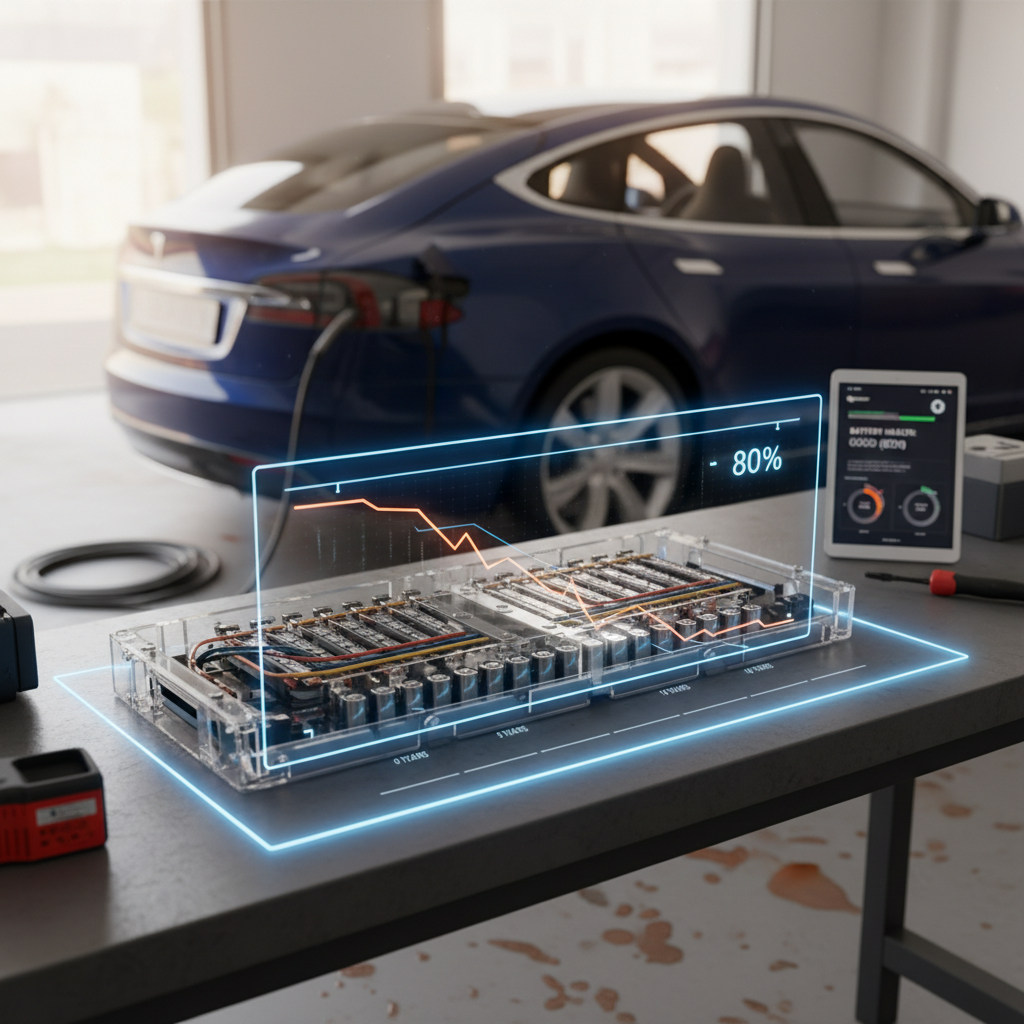
Whenever possible, get an independent battery health assessment. With Recharged listings, every vehicle comes with a <strong>Recharged Score Report</strong> so you can see verified battery condition before you decide.
4. Inspect charging equipment
Confirm the car charges reliably on Level 1 and Level 2, and that the charge port, latch, and cables are intact. Budget for a home Level 2 solution if your daily miles justify it.
5. Check for common 500e problem areas
Look for warning lights, infotainment glitches, odd noises over bumps, and any signs of water intrusion. Ask directly about past electrical issues, steering repairs, and 12V battery replacements.
6. Match price to age, miles, and battery health
Older 500e models are often cheap for a reason. Make sure the asking price reflects real range, cosmetic condition, and remaining warranty, don’t pay “perfect car” money for a tired battery.
How Recharged fits in
Ready to find your next EV?
Browse VehiclesBattery health, range and thermal management
On any used EV, the battery pack is the story. With the original US‑market Fiat 500e, it’s the whole plot. Early cars left the factory with about 84 miles of EPA range from a 24 kWh pack and rely on relatively simple thermal management. Over a decade later, plenty of cars still make good city‑car range, but some have lost a big chunk of capacity, especially if they lived in hot climates or sat at a high state of charge for long periods.

Battery and range checks to do before you buy
You don’t get a second chance with a tired pack.
Ask for real numbers
Don’t settle for “range is fine.” Ask:
- How many miles they get per full charge now.
- What kind of driving that reflects (city, highway, mixed).
- How range changes in winter or extreme heat.
Look for patterns in use
Light, regular use is ideal. A great used 500e often:
- Lived as a short‑commute or errand car.
- Wasn’t left parked at 100% for days at a time.
- Didn’t sit unused with the pack empty.
Get a battery report if possible
Some independent shops and EV‑focused retailers can read battery state‑of‑health. On Recharged, you get a Recharged Score with battery data, so you’re not guessing.
Why thermal management matters on an older 500e
Battery red flags that should give you pause
Won’t take or hold a full charge
If the car struggles to reach 100%, drops range quickly after unplugging, or throws high‑voltage battery warnings, you’re looking at a potentially expensive problem.
Real‑world range under 50 miles in mild weather
On a healthy early 500e, 60+ miles of mixed driving in spring/fall weather is still realistic. If the seller admits they only see 40–45 miles, the battery is well into the “compromise” zone.
Inconsistent or missing charging history
An owner who can’t tell you how they normally charge (Level 1 vs Level 2, frequency) or how long it sits parked at high or low state of charge may not have cared for the battery thoughtfully.
Charging hardware and home setup
The Fiat 500e is happiest as a city or short‑commute EV, and its relatively small battery makes life easy on the charging side. Every 500e uses a standard J1772 AC inlet in the US. There’s no DC fast‑charging port on the original cars, so Level 2 home or workplace charging is what turns this into a stress‑free little runabout.
Fiat 500e charging basics
Use this to sanity‑check the seller’s setup against your daily driving.
| Charging type | Voltage / power | Approx. charge time 0–100% | Miles of range per hour |
|---|---|---|---|
| Level 1 (included cord) | 120 V ~1.4 kW | ~20–24 hours | 3–4 mi/hr |
| Level 2 home / public | 240 V up to 6.6 kW | ~4 hours | 18–22 mi/hr |
Figures are approximate and assume the original 24 kWh pack on the older 500e models.
Match charging to your lifestyle
Charging and hardware inspection checklist
Inspect the charge port
Check that the J1772 port door opens smoothly, the latch locks firmly onto the connector, and there are no bent pins, corrosion, or signs of impact around the port opening.
Test with Level 1 and Level 2
If possible, plug into both a 120 V outlet (portable EVSE) and a 240 V station to confirm the car starts charging immediately, doesn’t throw errors, and charges at the expected rate.
Confirm included equipment
Make sure a working portable charger is included, and note whether the seller is including any <strong>aftermarket Level 2 EVSE</strong>. Factor replacement cost into your budget if they’re keeping theirs.
Plan your home setup
If you don’t already have a 240 V circuit in the garage or driveway, talk with a licensed electrician before you buy. Recharged can help you size a home charger and understand typical installation costs.
Common Fiat 500e issues to screen for
Every older EV has a personality. The 500e’s is playful and quick, but there are a handful of known trouble spots you’ll want to ask about directly. None of these are reasons to avoid the car entirely, but they’re negotiating leverage and, occasionally, reasons to walk.
Typical problem areas on older 500e models
Use this as a script when you talk to the seller or service shop.
Electrical and infotainment glitches
- Flashing odometer, dead or frozen head unit.
- Random warning lights that come and go.
- Bluetooth or audio failures.
Ask if any modules or the head unit have been replaced, and whether issues were fixed at a Fiat/Chrysler dealer or an independent shop.
Steering and suspension noises
- Clunks over low‑speed bumps.
- Notchy or heavy steering feel.
- History of steering shaft or front suspension work.
There have been service bulletins for steering components, repairs aren’t outrageous, but you don’t want surprises right after you buy.
12V battery sensitivity
Like many EVs, the 500e can turn into a brick with a weak 12V battery. A tired 12V can trigger error messages, charging issues, and no‑start conditions.
Ask when the 12V was last replaced and whether any parasitic drain problems have been diagnosed.
The big one: high‑voltage battery or inverter faults
- Check all exterior lighting, brake lights, and turn signals, older 500e models are known to go through bulbs more quickly than average.
- Verify all windows, locks, mirrors, and the charge‑port door operate smoothly from the switches.
- Cycle the climate control through heat, A/C, and defrost; listen for unusually loud fans or compressor noises.
- Confirm key fobs are present and working; replacements on older low‑volume EVs can be more of a hassle than you’d think.
Pricing, mileage and value checks
One of the 500e’s best tricks is price. In today’s used market, you’ll often see older 2013–2017 cars advertised in the mid‑$3,000s to $7,000 range depending on miles and condition, with later model years and especially clean, low‑mile examples commanding a bit more. New‑generation 500e models, by contrast, are priced more like other modern subcompact EVs.
How to think about 500e value in 2026
Use range as your real price guide
Value questions to ask before you negotiate
How does this car fit your actual use?
Map your normal week: commute miles, errands, occasional longer drives. If you routinely need 70–80 miles in one shot with no charging, an older 500e may be the wrong tool, no matter how cheap it is.
Is the pack still under warranty?
If you’re close to the end of the 8‑year/100,000‑mile battery warranty, treat that as a risk factor. A car well inside the warranty window is worth more than one that just aged out.
What’s the local support picture?
Ask nearby Fiat/Chrysler dealers whether they still service the 500e. In some regions you may be relying more on independent EV shops, which is fine, but you should know that before you buy.
What does a comparable Recharged listing cost?
Even if you buy privately, browse EV‑focused marketplaces like Recharged to see what professionally inspected, warrantied 500e or rival city EVs with known battery health actually sell for.
Test drive checklist: how a good 500e should drive
A solid Fiat 500e should feel like a lively little city hatchback, not a science experiment. Use your test drive to listen past the cuteness and really evaluate how the car behaves.
On‑road test drive checklist
Start‑up and warning lights
On first power‑up, the dash should briefly light up and then settle with no persistent error messages. A single yellow light for tire pressure or a washer‑fluid message is common; high‑voltage or “service EV” warnings are not.
Instant, smooth takeoff
From a stop, the 500e should pull away briskly with no hesitation, shudder, or jerky engagement. Any lurching, clunks, or delay between pedal and motion deserve further diagnosis.
Braking feel and noises
In city traffic, the transition between regenerative and friction braking should be seamless. Grinding, squealing, or a soft pedal that sinks too far is a red flag. Remember EVs can develop surface rust on rotors if they sit.
Steering and ride quality
At low speeds, listen for clunks over driveways or potholes; at highway speed, the car should track straight with no vibration through the wheel. This is a short‑wheelbase car, so the ride will be firm but not harsh or crashy.
HVAC and defrost performance
Run the heater and A/C. You want quick windshield clearing and stable cabin temps without strange odors or excessively loud fan operation.
Noise levels
On smooth pavement at 45–60 mph, you should hear tire noise and some wind, but not a booming resonance, whine, or drone from the drivetrain. Any howling from the motor area under steady throttle deserves attention.
Paperwork, recalls and warranty details
Because the 500e was a low‑volume EV in many parts of the US, clean paperwork is especially important. You’re not just checking for accidents, you’re trying to understand how the car was used and whether it qualifies for any remaining warranty or recall work.
Documents and digital history to review
Don’t skip this part just because the price is low.
Title, Carfax/AutoCheck, and service history
- Ensure the title is clean (no salvage, flood, or lemon branding).
- Look for regular maintenance entries, tire rotations, brake service, software updates.
- Pay attention to geographic history; long stints in very hot regions can be hard on older batteries.
Recalls and technical service bulletins
Use the VIN on the manufacturer recall website or through your local dealer to check if:
- Any open recalls remain (battery, driveshaft, software, etc.).
- Earlier campaigns were completed; completed recall paperwork is a plus.
Battery warranty fine print
- Confirm there are two working keys or fobs, and that they’re programmed correctly.
- Check for manuals, charging‑cable documentation, and any receipts for major repairs (especially battery or inverter work).
- If buying from a dealer, ask them to print a service history from their internal system; even partial records are helpful.
- If you’re buying through Recharged, review the digital Recharged Score Report carefully, it’s essentially your cliff notes on the car’s battery and condition.
Should you buy a Fiat 500e, or consider alternatives?
Owned and used in the right way, the Fiat 500e can be a delightful, low‑cost electric runabout. It’s quick, easy to park, and cheap to keep in electrons and brake pads. But you need to be honest about what you’re asking it to do, and how comfortable you are living with an older, relatively rare EV.
When a used 500e is a smart buy
- You have a short, predictable commute well under the car’s current real‑world range.
- You can charge at home or work and don’t rely on DC fast‑charging.
- You treat it as a second car or a city specialist, not your only long‑distance vehicle.
- You’ve confirmed healthy battery behavior and clean paperwork.
When you should look elsewhere
- You regularly need 80–120 highway miles in one shot with no chance to charge.
- Your region has limited support for older Fiat EVs and no independent EV shops.
- You’re uncomfortable with the idea that a future battery or inverter failure could total the car economically.
- You’d rather pay more upfront for a newer, longer‑range used EV with DC fast‑charging.
Considering alternatives?
Fiat 500e buying FAQ
Frequently asked questions about buying a Fiat 500e
Final thoughts: how Recharged can help
A used Fiat 500e can either be the bargain of the decade or a short‑range headache that never quite fits your life. The difference comes down to doing your homework on battery health, range, charging, and support before you sign anything. Treat this checklist as your roadmap, ask direct questions, and don’t be afraid to walk away from a cute car with an iffy pack.
If you’d rather not go it alone, Recharged was built for exactly this kind of decision. Every EV we sell comes with a Recharged Score Report that verifies battery health, fair‑market pricing backed by data, and EV‑specialist support that can talk you through how a specific car will fit your daily driving. We can help you compare the 500e to other used EVs, arrange financing, trade‑in, and nationwide delivery, or even make an instant offer on your current car, all from your couch. That way, whether you end up in a Fiat 500e or another compact EV, you’ll know it’s the right one for the way you actually drive.