If you’re eyeing a used Fiat 500e, whether the original 2013–2019 “compliance car” or the new 2024+ model, your biggest question is probably battery health. How much Fiat 500e battery degradation per year is normal, how does that affect range today, and how worried should you be when you’re shopping?
Two different Fiat 500e generations
Overview: How Fiat 500e Batteries Degrade
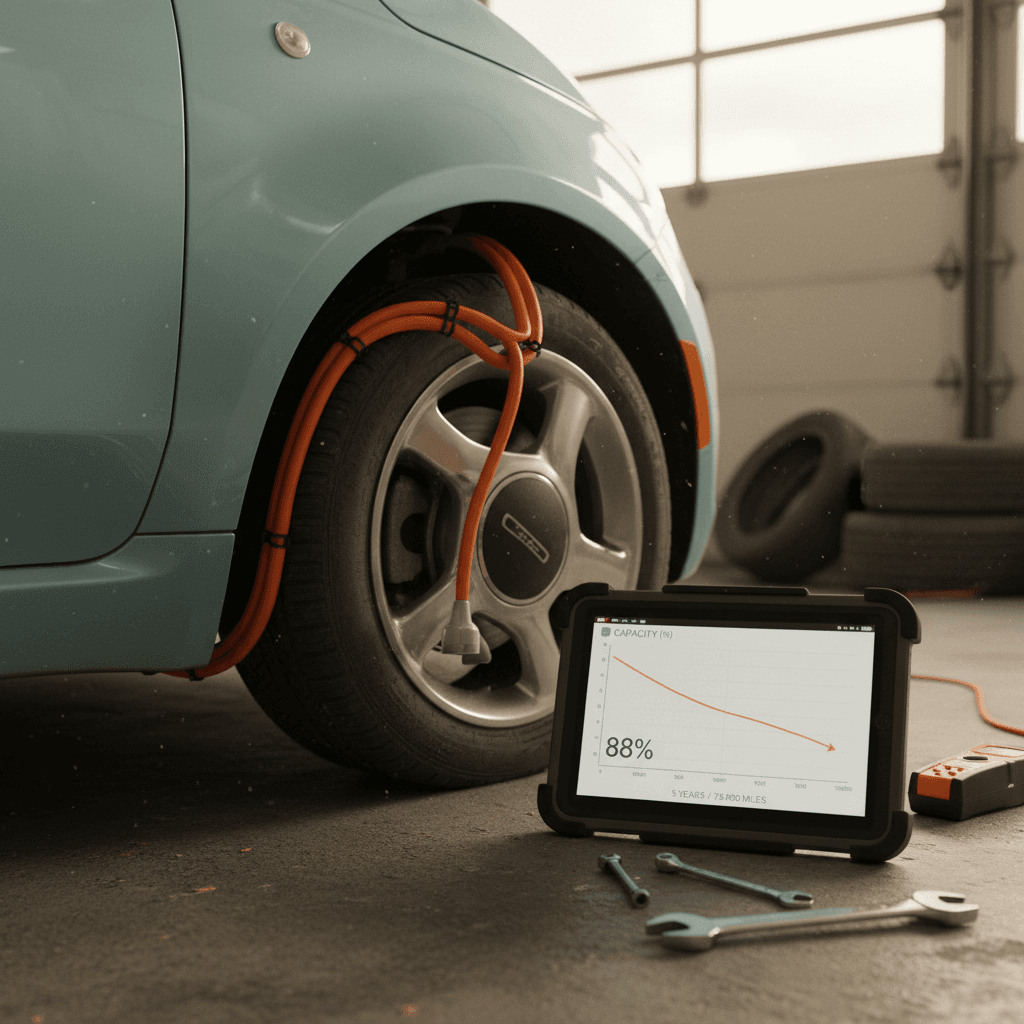
All lithium‑ion EV packs lose capacity over time. The good news is that, in the real world, most Fiat 500e packs have aged more gracefully than many shoppers fear. The original 24 kWh 500e typically shows roughly 2–3% capacity loss per year in moderate climates, while the newer 42 kWh 500e should do even better if treated well.
Fiat 500e battery degradation at a glance
Those numbers are broad averages, not guarantees. Climate, storage habits, and fast‑charging behavior can easily double or halve your personal degradation rate. The key for a used‑EV buyer is to look past rule‑of‑thumb numbers and get verified battery health data on the specific car you’re considering.
Battery degradation on the original 24 kWh Fiat 500e
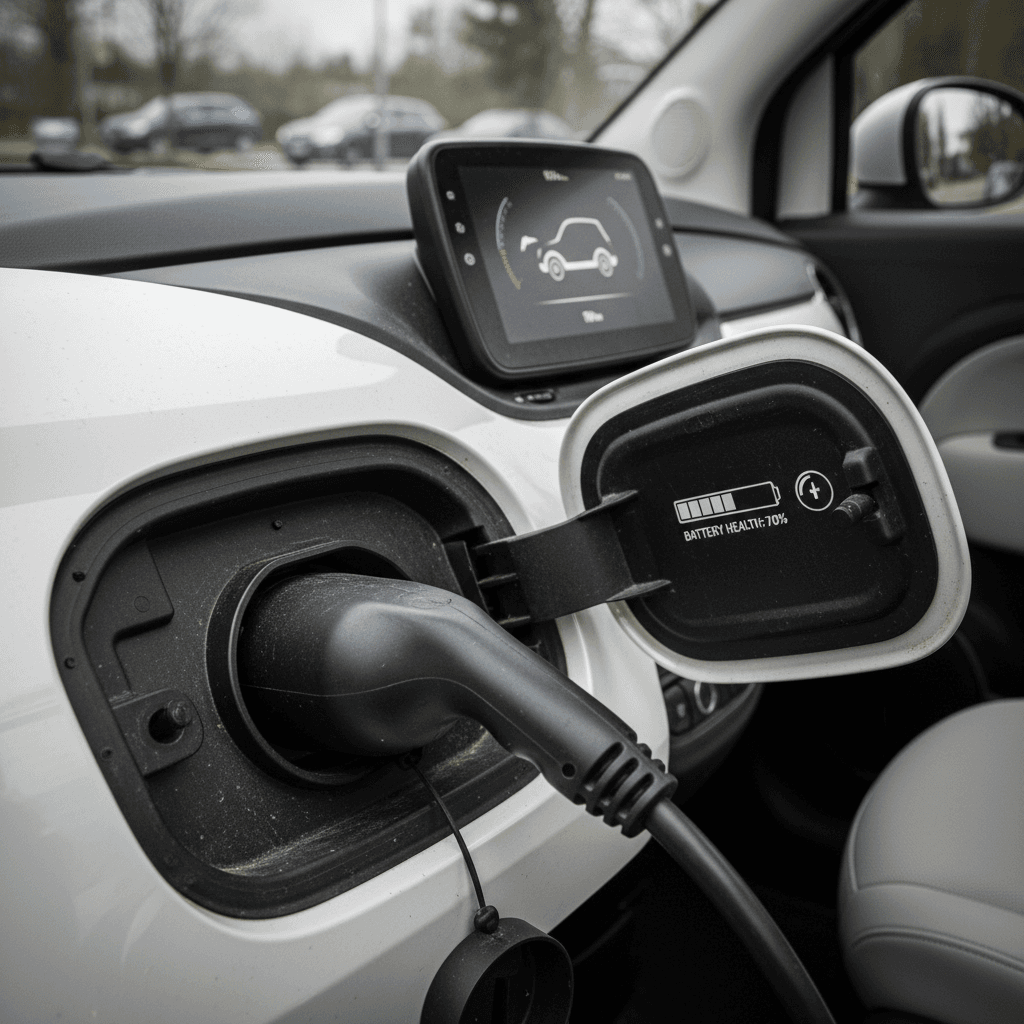
The first‑generation Fiat 500e sold in California and Oregon (2013–2019 model years) uses a nominal ~24 kWh lithium‑ion pack and was EPA‑rated around 84 miles of range when new. In practice, owners often saw 70–90 miles depending on driving style and climate.
Real‑world degradation patterns on 2013–2019 cars
There’s no single official dataset for early 500e degradation, but owner reports and OBD‑based readings paint a reasonably consistent picture:
- Many 2013–2016 cars with 50,000–70,000 miles still show roughly 85–90% state of health (10–15% capacity loss).
- Some higher‑mileage or cold‑climate cars report closer to 18–20% loss by 80,000–100,000 miles, especially if they were frequently run very low or stored outside in harsh winters.
- A notable minority of owners report almost no noticeable range loss after 30,000–40,000 miles in mild coastal climates, reinforcing how strongly environment and use patterns matter.
Why the 500e ages better than you’d expect
Rule‑of‑thumb degradation per year on early 500e
Estimated annual degradation on 24 kWh Fiat 500e
These are approximate, real‑world ranges, not manufacturer guarantees, and assume the car hasn’t been abused or stored in extreme conditions.
| Vehicle age / mileage | Mild climate, careful use | Hot or cold climate, harsher use | What that means for range |
|---|---|---|---|
| 3–4 years / ~30k–40k mi | 5–8% total loss (~2%/yr) | 8–12% total loss (~3%/yr) | Range typically 75–80 mi vs. ~84 mi when new |
| 6–7 years / ~60k–80k mi | 10–15% total loss (~2%/yr) | 15–20% total loss (~3%/yr) | Range typically 65–75 mi in mixed driving |
| 9–10+ years / 90k+ mi | 15–20% total loss | 20–30% total loss (outliers worse) | Still usable for short commutes, but highway stretches require more planning |
Use this as a sanity check when you’re looking at battery health reports or range estimates on a used first‑gen 500e.
Beware of extreme outliers
Battery degradation on the new 42 kWh 2024+ Fiat 500e
The 2024+ Fiat 500e that recently returned to the U.S. is a different animal. It uses a 42 kWh, 400‑volt pack with liquid cooling and DC fast‑charge capability up to about 85 kW. In U.S. trim it’s rated at roughly 149 miles of combined EPA range, with real‑world testers often matching or slightly exceeding that in city driving.
Because this generation is still very new in North America, we don’t have 10‑year data yet. But based on the chemistry, pack design, and what we’ve seen from similar Stellantis and European‑market 500e packs, there are reasonable expectations:
- Most owners should see under 10% capacity loss in the first 5 years if they don’t abuse the pack.
- A realistic long‑term target is roughly 70–80% capacity remaining after 10–12 years for a well‑treated car.
- Heavier DC fast‑charging, hot‑climate outdoor parking, and frequent 100% charges can push you toward the high end of that degradation range.
Why the 42 kWh pack should age better
- Newer cell chemistry tuned for cycle life rather than ultimate power.
- Larger usable capacity spreads your daily miles over more kWh, reducing stress per mile.
- Refined liquid‑cooling strategy learned from a decade of EVs across the Stellantis lineup.
But it’s still limited by physics
- High temperatures and high states of charge still accelerate aging.
- Lots of DC fast‑charging is convenient, but it’s harder on the cells.
- Very low state‑of‑charge storage (near 0%) is just as harmful as long‑term 100% parking.
EPA range vs. what you’ll actually feel
What actually controls Fiat 500e battery degradation per year?
Fiat’s pack design and buffers give both generations of 500e a head start, but your behavior still matters a lot. When you see stories of 500e packs doing poorly, you almost always find one or more of these patterns in the background.
Key drivers of Fiat 500e battery degradation
Understanding these helps you predict how a specific used car has aged.
Heat exposure
Parked outside in hot sun at high state of charge is the fastest way to age a pack. Desert and hot‑southern‑state cars degrade faster than coastal or northern‑climate cars.
Cold climate abuse
Cold weather itself doesn’t permanently hurt the battery, but repeatedly fast‑charging a cold pack or storing the car near empty in sub‑freezing temps can add wear.
Charging patterns
Living at 80–90% for long periods is fine. Living at 100% or under 10% for days is not. Lots of DC fast‑charging, especially on road trips, also increases annual degradation.
Mileage and duty cycle
High mileage doesn’t automatically mean a bad pack. A 500e that racks up miles gently on the highway may age better than a low‑mileage city car that sits fully charged in the heat.
Software and BMS limits
Fiat’s battery management system reserves hidden buffer at the top and bottom. As the pack ages, the BMS can recalibrate, which sometimes makes apparent degradation jump even when the underlying cells haven’t suddenly failed.
Storage habits
Cars stored for months at very high or very low state of charge tend to show higher‑than‑average loss. Storing around 40–60% is healthier.
Real‑world range loss: what you’re likely to see
Numbers on a battery‑health screen are abstract. What most shoppers actually care about is: how far will this thing go today, and how far will it go five years from now? Here’s how typical degradation translates into range for both generations.
Typical range vs. age for Fiat 500e
Approximate mixed‑driving ranges assuming a reasonably efficient driver. Real‑world results vary with speed, climate, wheels, and HVAC use.
| Model and condition | Approx. capacity remaining | Expected mixed range | What it feels like day to day |
|---|---|---|---|
| 2015 500e, 50k mi, mild climate | ~90% | ~75 mi | Still fine for short commutes and errands; you just charge a bit more often. |
| 2015 500e, 90k mi, harsh climate | ~75–80% | ~55–65 mi | Still usable as a city car, but winter highway trips will require more planning and charging stops. |
| 2024 500e, 3–4 years old | ~92–95% | ~135–145 mi | You might not even notice the difference unless you regularly run the pack down to single digits. |
| 2024 500e, 8–10 years old (projected) | ~80–85% | ~115–130 mi | Still perfectly functional for urban use, but big weekend road trips will be more charger‑dependent. |
Use this to sanity‑check seller claims and your own expectations when test‑driving a used 500e.
The upside of a small, efficient EV
How to check Fiat 500e battery health before you buy
If you’re buying a used Fiat 500e, especially an older 24 kWh car that’s already a decade old, you shouldn’t rely on guess‑o‑meters or seller assurances. You want an objective view of the pack.
Battery‑health checklist for used Fiat 500e shoppers
1. Ask for documented range history
If the seller has owned the car for years, ask what typical real‑world range they saw when new versus now, in the same conditions. Large unexplained changes deserve more scrutiny.
2. Start with the dash estimate, but don’t stop there
A full charge followed by the dashboard range estimate is a rough sanity check. If a first‑gen 500e shows 45–50 miles at 100% in mild weather, that’s a sign of substantial degradation.
3. Run a controlled test drive
Drive a set route (for example 20 miles of mixed driving), track how many percentage points the battery drops, and back‑calculate an implied full‑pack range. Do this with climate control set similarly to the seller’s usual use.
4. Get an OBD‑based health reading
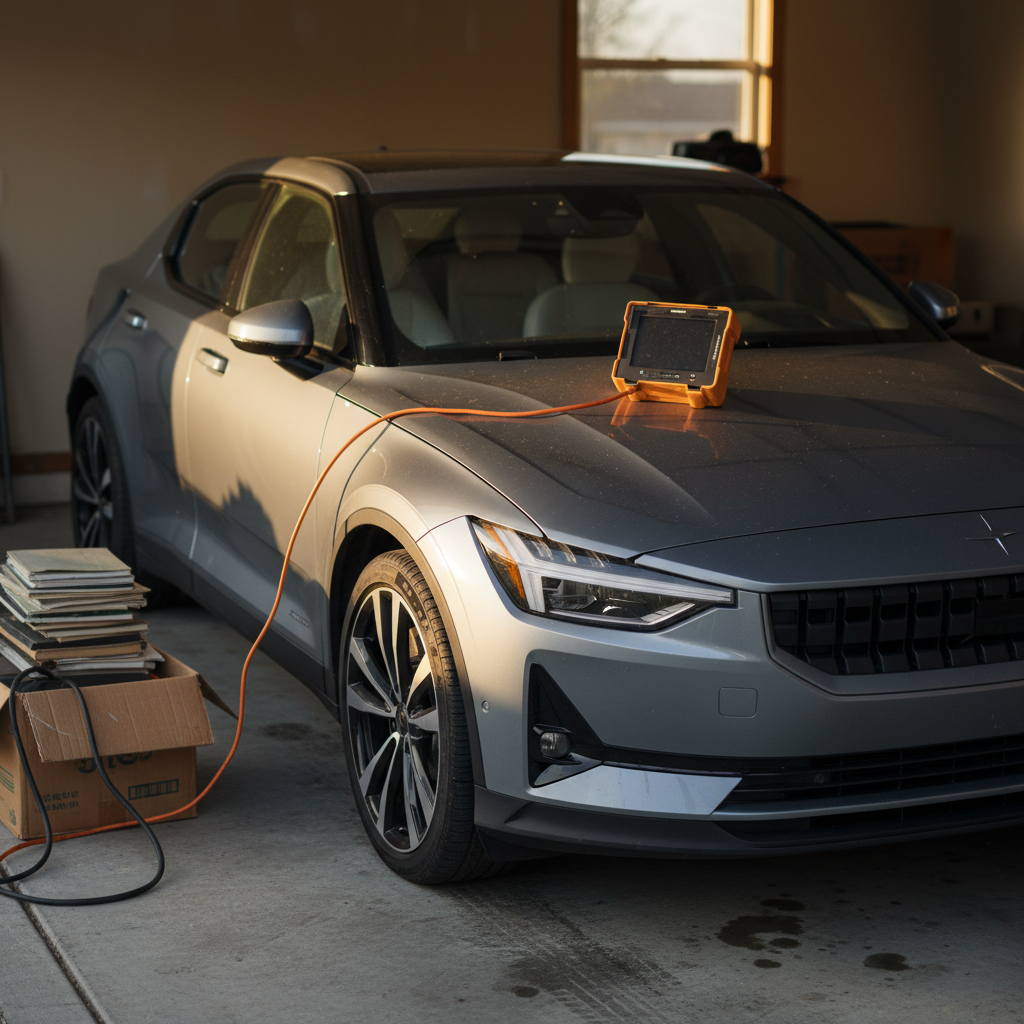
On first‑gen cars, an inexpensive OBD dongle plus a community‑recommended app can reveal state‑of‑health estimates and pack voltages. Treat those numbers as indicators, not gospel, but they’re far better than guessing.
5. Have the pack professionally evaluated
Especially for older cars, consider a third‑party battery health report that uses external measurements rather than just trusting the car’s own BMS estimate.
6. Use a verified report like the Recharged Score
When you buy through <strong>Recharged</strong>, every EV, including the Fiat 500e, comes with a <strong>Recharged Score battery health report</strong> that uses diagnostic data to benchmark degradation and range against similar vehicles. That way you’re not guessing about whether the pack is average, better, or worse than its peers.
Don’t ignore cooling‑system issues
Warranty coverage and replacement costs
Fiat, like most manufacturers, backs its high‑voltage packs with an 8‑year battery warranty, typically with a mileage cap (around 100,000–160,000 miles depending on market and generation). However, there are two important nuances for shoppers:
- Early 24 kWh 500e cars sold in California/Oregon are mostly out of warranty by now on both time and mileage, unless the pack was recently replaced.
- Not all warranties explicitly guarantee a minimum capacity percentage (like 70%), some only cover outright pack failures or defects, not normal degradation.
- Warranty approval for a replacement pack can be slow and sometimes contentious, which matters less for you as a buyer if the car is out of coverage but is important if you’re considering a newer 42 kWh car.
Replacement pack costs can exceed the car’s value
For older 24 kWh 500e
- Assume no remaining battery warranty unless you see paperwork for a recent pack replacement.
- Price the car assuming the existing pack needs to last the entire time you own it.
- Favor cars with documented mild‑climate use and healthy battery reports.
For newer 42 kWh 500e
- Check in‑service date to understand how many of the 8 warranty years are left.
- Ask dealer or seller for any battery‑related warranty work history.
- Plan to own the car well into the post‑warranty years by taking care of the pack from day one.
Driving and charging tips to slow degradation
Whether you’re buying a used 500e or planning to keep yours for a decade, your day‑to‑day habits can easily change your effective battery degradation per year from 1–2% to 3–4% or more. The basics aren’t complicated, but they’re surprisingly powerful.
Simple habits that protect your Fiat 500e battery
Avoid living at 100% or 0%
Charging to 100% for a road trip is fine, but try not to leave the car parked at 100% or under 10% for days at a time. For regular commuting, targeting 40–80% is a healthy sweet spot.
Use Level 2 home charging as your default
Level 2 overnight charging is gentler on the pack than frequent DC fast‑charging. Think of DC fast‑charge as a road‑trip tool, not daily routine.
Keep it cool when you can
If you live in a hot climate, prioritize shaded or indoor parking, especially when the car is fully charged. Heat plus high state‑of‑charge accelerates chemical aging.
Let the car manage itself
Modern 500e models include thermal management and software that preconditions the pack when needed. Don’t fight it by repeatedly unplugging or waking the car during preconditioning cycles.
Drive smoothly and efficiently
Aggressive driving doesn’t just burn more kWh; it can also mean higher pack temperatures. Smooth acceleration and regen‑aware driving keep temperatures and stress down.
Schedule charging when possible
If your charger or car allows scheduling, set it so the car finishes charging shortly before you leave, rather than sitting full all night, especially in summer.
FAQ: Fiat 500e battery degradation per year
Frequently asked questions about Fiat 500e battery health
Is a used Fiat 500e still worth it?
If you understand Fiat 500e battery degradation per year, the little Fiat stops looking like a ticking time bomb and starts looking like what it really is: a compact, efficient city EV whose value lives or dies on the health of its pack. First‑gen 24 kWh cars can be phenomenal bargains if they’ve lost only 10–15% capacity, while the newer 42 kWh 500e offers much more range headroom and a longer runway under warranty.
The key is not to gamble. Insist on real‑world range checks, scrutinize the car’s climate and charging history, and lean on objective diagnostics rather than guess‑o‑meters. When you buy through Recharged, every Fiat 500e comes with a Recharged Score Report that includes verified battery health, fair market pricing, and EV‑specialist support from first click to delivery. That way, you know exactly how much range you’re getting today, and how confidently you can count on it for years to come.