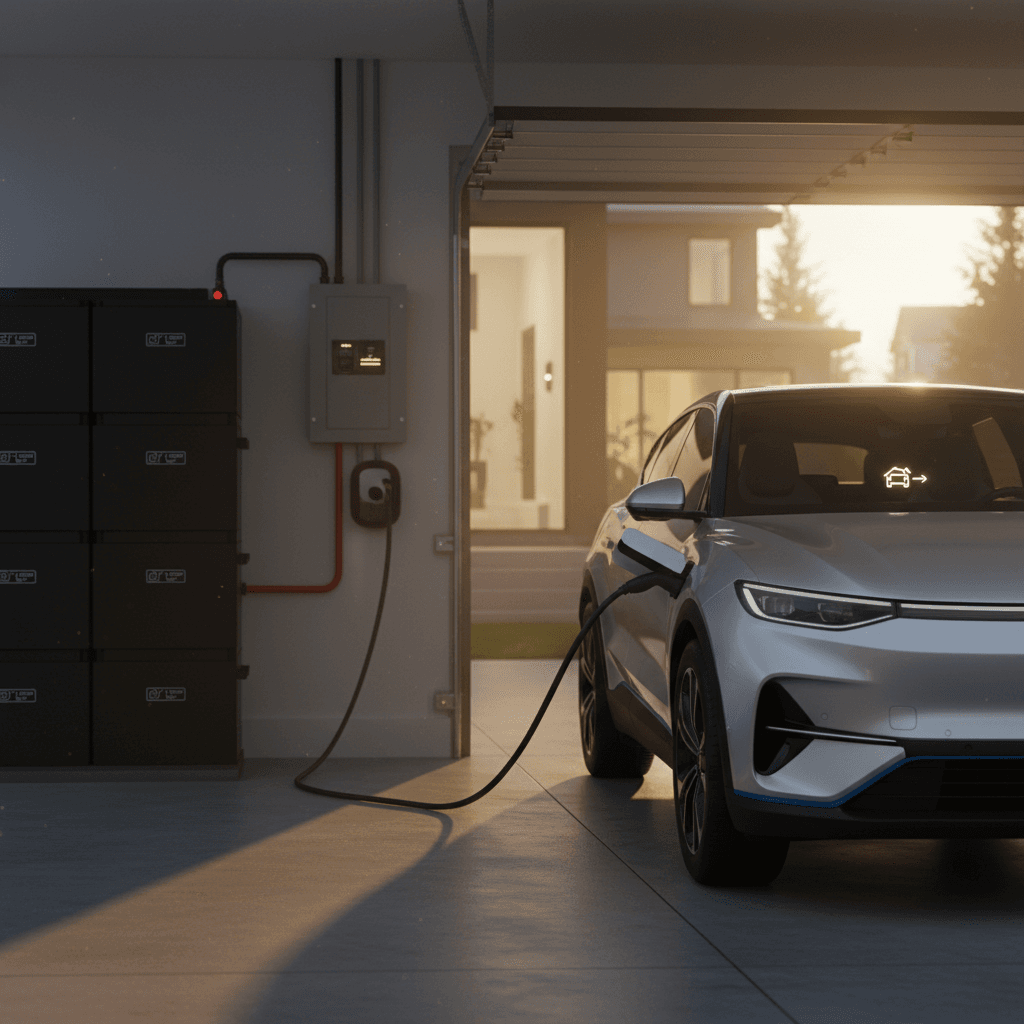
The fantasy is seductive: the grid goes dark, your neighbors are lighting candles, and you casually plug your house into your electric car. Thanks to EVs with vehicle-to-home (V2H) charging, that scene is no longer science fiction, it’s in driveways right now, and more models join the club every year.
The big picture
Why EVs with vehicle-to-home charging matter
If you live in a place where storms, heat waves, or brittle infrastructure make power outages routine, vehicle-to-home charging turns your EV into a rolling battery backup. Instead of buying a standalone generator or home battery, you’re leveraging the massive pack already sitting in your driveway.
Vehicle-to-home in 2026: where things stand
On paper, many modern EVs carry more usable energy than a whole stack of Powerwalls. A Ford F‑150 Lightning can run a typical home for up to three days on a full charge, longer if you ration. The same story is emerging with GM’s Ultium trucks and SUVs, Tesla’s Powershare‑equipped models, and Kia and Hyundai’s new V2H offerings.
Think of your EV as a battery first, car second
V2H vs V2G vs V2L: what’s the difference?
Vehicle-to-Home (V2H)
V2H is what most homeowners care about: your EV powers your house through a transfer switch or bidirectional charger. When the grid goes down, an automatic or manual switch isolates your home from the utility lines and feeds power from the car.
- Typically 7–12 kW continuous power
- Can run big loads (HVAC, well pump) if sized correctly
- Requires dedicated home hardware and permitting
Vehicle-to-Grid (V2G) & Vehicle-to-Load (V2L)
V2G lets your EV send power back into the utility grid, usually as part of a utility program that pays you to discharge during peak demand. Great for grid nerds, less relevant if you just want blackout insurance.
V2L is simpler: the car has built‑in 120V/240V outlets. You can run tools, fridges, or smaller loads directly from the car, but not hard‑wire your whole house.
V2L is not the same as V2H
Which EVs offer vehicle-to-home charging today?
The list is growing quickly, but as of early 2026 the roster of mainstream EVs with vehicle-to-home charging in the U.S. still fits on a single page. Below is a simplified snapshot; always confirm hardware and software options for a specific VIN, especially if you’re shopping used.
Notable EVs with vehicle-to-home charging (U.S., 2024–2026)
Approximate capabilities; actual performance depends on trim, battery size, and home setup.
| Brand / Model | Model years (US) | V2H type | Max output (approx.) | Notes |
|---|---|---|---|---|
| Ford F-150 Lightning | 2022+ | Full V2H | Up to 9.6 kW | Requires Ford Charge Station Pro + Home Integration System |
| Tesla Cybertruck | 2024+ | Powershare V2H | Up to ~11.5 kW | Native bidirectional via Tesla ecosystem |
| Tesla Model Y (select builds) | Late 2025+ | Powershare V2H | Up to ~11.5 kW | Newer builds only; confirm VIN and options |
| GM Ultium trucks/SUVs (Silverado EV, Sierra EV, Escalade IQ, etc.) | 2024+ | GM Energy V2H | Up to ~19.2 kW | Requires GM Energy home bundle; many 2025+ Ultium models support it |
| Cadillac Lyriq & Optiq | 2024+ | GM Energy V2H | Up to ~19.2 kW | V2H via GM Energy PowerShift hardware |
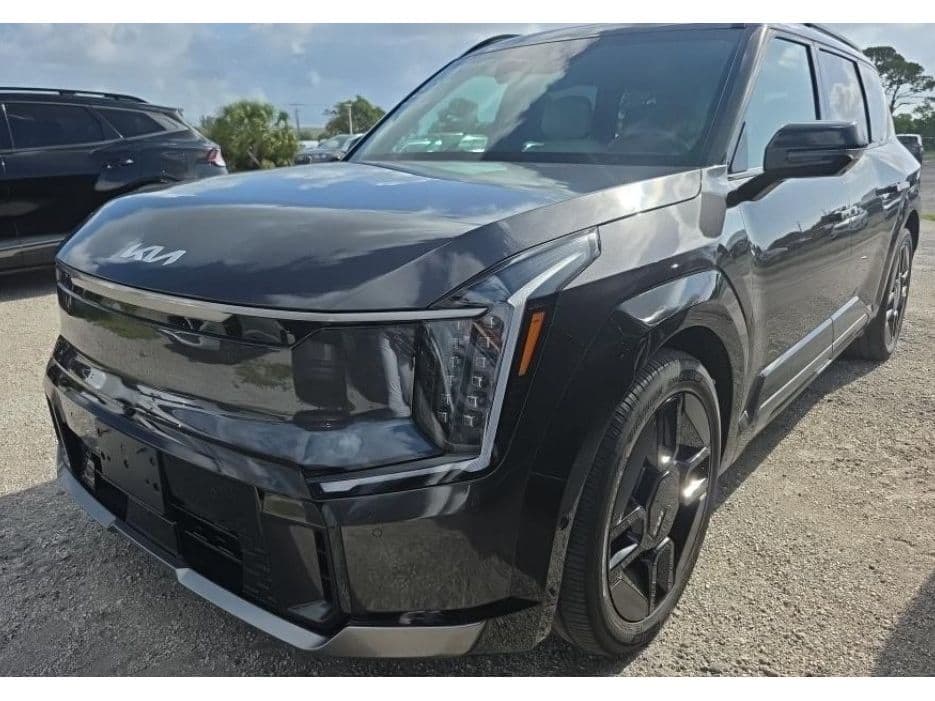
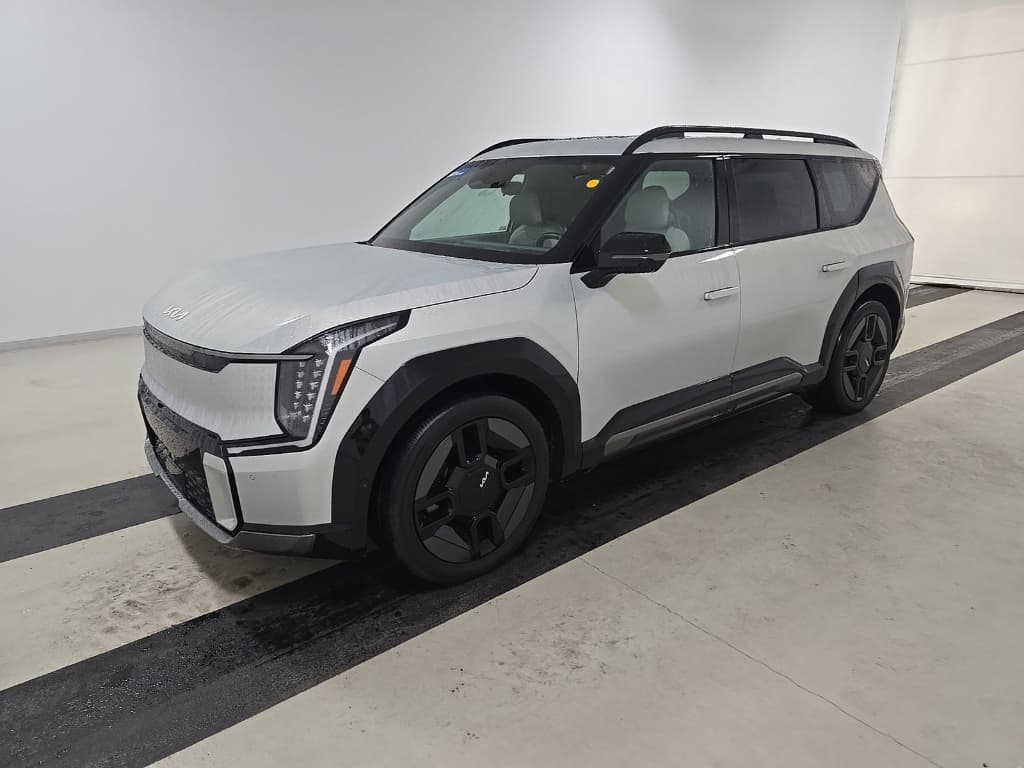
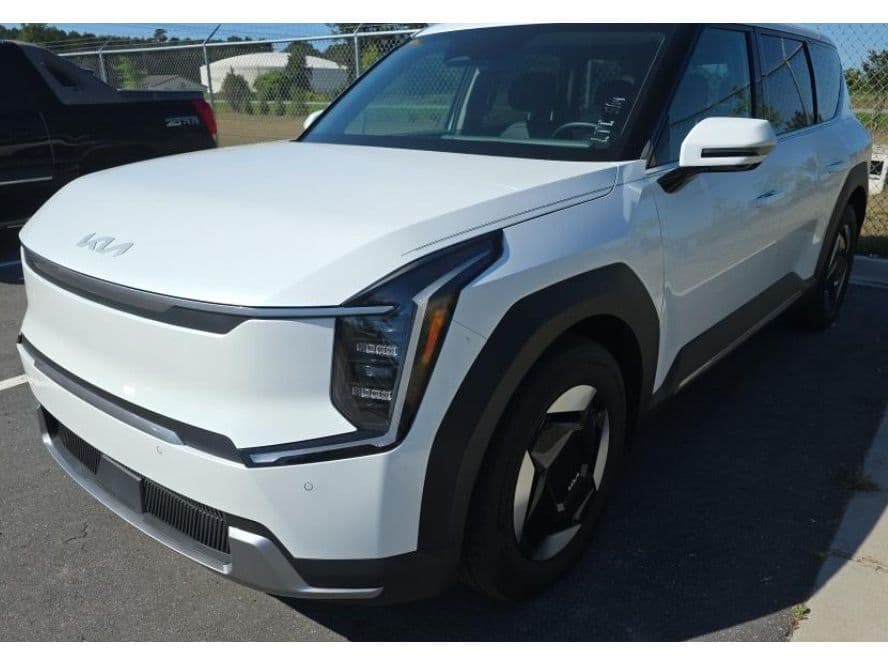
| Kia EV9 | 2024+ | V2H + V2G | ~9.6 kW | Works with compatible bidirectional chargers (e.g. Wallbox Quasar 2) |
| Hyundai Ioniq 7 / 9 | 2025+ | V2H + V2G | ~9.6 kW | U.S. rollout focused on V2H for outages |
| Nissan Leaf (CHAdeMO) | 2013–2025 | V2H / V2G | 6–7 kW | Supported via CHAdeMO bidirectional chargers like Fermata |
| Next-gen Nissan Leaf (CCS) | 2025+ | V2H / V2G | ~7 kW | New platform, CCS‑based bidirectional support |
| Rivian R2 | 2026+ | V2H | TBD (~10+ kW) | Upcoming SUV with integrated home‑power module |
| 2026 Chevy Bolt | 2026+ | GM Energy V2H | TBD (~9.6 kW) | Ultium-based, budget V2H option |
Check the exact configuration on any used EV to verify that V2H hardware and software are present and enabled.
What about plug-in hybrids?
How much of your home an EV can really power
Automakers like to say things like “power your home for three days,” which is technically true and also slightly theatrical. What actually matters is how many kilowatts you can pull at once (power) and how many kilowatt‑hours you have in the battery (energy).
What an EV can realistically run in an outage
Assuming a 70–130 kWh EV battery and 7–12 kW V2H output
Essential loads only
Fridge, lights, Wi‑Fi, outlets
- Power draw: ~1–2 kW average
- Runtime: 3–7 days on a full battery
- Behavior: Live pretty normally, maybe skip the sauna.
Comfort mode
Essentials + gas furnace blower or small heat pump
- Power draw: ~3–5 kW average
- Runtime: ~2–4 days
- Behavior: Heat/cool the main living spaces, not the whole McMansion.
Whole‑home hero
Most of the house including big loads
- Power draw: 5–8+ kW average
- Runtime: 1–3 days
- Behavior: You forget there’s an outage until you look outside.
Don’t backfeed through a dryer outlet
What you need at home for V2H to work
Buying an EV with vehicle-to-home charging is only half the equation. To actually power your house, you need the right hardware hanging on your wall, and a bit of help from a qualified electrician.
Home requirements for vehicle-to-home charging
1. A V2H-capable EV and onboard hardware
Not every trim has the same guts. For example, some GM Ultium models and Tesla builds require specific option packages or software to enable V2H. Always verify that the exact vehicle you’re buying supports bidirectional charging.
2. A compatible bidirectional charger or gateway
Systems like Ford’s Charge Station Pro + Home Integration System, GM Energy’s PowerShift, Tesla’s Powershare hardware, and third‑party units such as Wallbox Quasar 2 or dcbel integrate the car with your home panel.
3. Transfer switch or smart panel
Your home must be able to disconnect from the grid when the EV is powering it. That happens via an automatic transfer switch, gateway, or smart panel that meets local electrical codes.
4. Adequate electrical service and panel space
Most whole‑home V2H systems are 240V and can draw 40–80 amps. Older homes may need panel upgrades or service increases before you add bidirectional charging.
5. Professional design, permits, and inspection
Between utility rules, NEC requirements, and local inspectors, V2H is not a DIY hobby. Budget for professional installation and expect a permitting process similar to a standby generator or solar project.
6. A plan for outages and daily driving
Decide in advance how low you’re willing to let the car’s battery go during an outage. Many systems let you set a minimum state of charge so you’re not stranded once the lights come back on.
Good news for homeowners
Costs, payback, and when V2H makes sense
There’s no polite way to say this: V2H is not cheap yet. Between the charger, gateway, wiring, and labor, a full system often lands in the $4,000–$10,000 installed range, sometimes more for long runs or panel upgrades. That’s roughly generator money, and in the early days you’re paying extra for flexibility and quiet, not necessarily for pure dollars‑and‑cents ROI.
When V2H is a strong value
- You see regular outages from storms, wildfires, or grid instability.
- You already want a Level 2 charger and can roll V2H into that project.
- You’re considering home batteries and like the idea of using your EV instead.
- Your utility offers V2G programs that pay you for discharging during peaks.
In these cases, the incremental cost over a basic Level 2 charger can make sense as part of a resilience or energy‑savings plan.
When V2H is more of a luxury
- You almost never lose power where you live.
- You rent, or expect to move soon.
- Your driveway or parking doesn’t suit permanent wiring.
- Your EV has a relatively small battery.
Here, a simple portable generator or a smaller battery might be a more rational choice, even if it’s less glamorous than plugging your house into your car.
Use incentives to soften the blow
V2H considerations for used EV buyers
If you’re shopping the used market, V2H is one of those features that sounds simple on a spec sheet but lives in a swamp of mid‑cycle hardware changes, software updates, and option‑package fine print. This is where a structured inspection and good data pay off.
What to check on a used V2H-capable EV
Avoid surprises before you hang hardware on the wall
1. Confirm V2H support for that VIN
Don’t assume all 2024+ models of a given nameplate support V2H. Some require specific trims or software builds. Ask the seller for documentation, check the owner’s portal, or call the brand’s support line with the VIN.
2. Understand real battery health
V2H leans heavily on the battery. A pack that’s significantly degraded will still work, but you’ll have less runtime. At Recharged, every vehicle comes with a Recharged Score, including verified battery health, so you know what you’re actually working with.
3. Find out what hardware it shipped with
Some vehicles ship with only a portable cord; the bidirectional charger or gateway is always extra. In other cases, the original owner may have already installed matching home hardware, which can be a huge bonus if you’re buying their car and house together.
How Recharged can help
Step-by-step: using your EV for home backup
The first time the grid dies and your EV takes over, you want it to feel boring, in the best possible way. The exact process varies by brand, but the broad strokes are similar across Ford, GM, Tesla, Kia, Hyundai, Nissan, and others.
From outage to backup: a typical V2H sequence
1. Park and plug in normally
During normal operation, your EV is just charging through the bidirectional unit or gateway. Keep the car plugged in whenever you’re home if you want it available as backup.
2. Transfer switch detects an outage
When the grid voltage disappears or drops out of spec, the V2H system opens the connection to the utility to avoid backfeeding. This can be fully automatic or manual, depending on your setup.
3. EV switches to discharge mode
Your vehicle and charger coordinate so current now flows from the battery into your home panel. Some systems let you choose between “essential loads only” and “whole‑home” modes.
4. System manages state of charge
Most modern setups let you set a minimum state of charge, say, 30%, below which the car will stop powering the house. That ensures you still have enough range once power returns.
5. Power returns, system reconnects
When grid power stabilizes, the transfer switch reconnects your home, and the EV goes back to being a regular charger, topping itself off as needed.
6. Review logs and adjust settings
After a real‑world outage, look at your usage history in the vehicle or app. You may want to tweak which circuits are on the backup panel or raise/lower your minimum state of charge.
Pros and cons of EVs with vehicle-to-home charging
Advantages of vehicle-to-home EVs
- Quiet, emissions‑free backup – No fumes, no noise, no gasoline runs at 2 a.m.
- Leverages a battery you already own – Your EV’s pack often dwarfs a typical home battery.
- Smart controls – Apps, schedules, minimum state of charge, and sometimes utility integration.
- Future grid value – As V2G matures, your car could become a paid grid asset.
Drawbacks and tradeoffs
- Upfront cost – Bidirectional hardware and pro installation are still pricey.
- Complexity – More parts, more software, more places for compatibility to break.
- Battery cycling – Every kWh you send to the house is a kWh not going to the wheels, though modern packs are built with margin.
- Limited model support (for now) – You’re shopping a narrower slice of the EV market if V2H is a must‑have.
Watch for software “promises”
FAQs: EVs with vehicle-to-home charging
Frequently asked questions about EVs with vehicle-to-home charging
Bottom line: should you prioritize V2H in your next EV?
If the grid where you live is solid and storms are more cinematic than threatening, vehicle-to-home charging is a very cool feature you might barely use. But if you’ve ever thrown out a freezer’s worth of food, shivered through a winter outage, or watched wildfire‑related blackouts roll across the map, an EV that can quietly power your home stops being a gimmick and starts looking like infrastructure.
Over the next few model years, bidirectional capability will quietly become table stakes on many new EV platforms. For now, the list of EVs with vehicle-to-home charging is short enough that it should explicitly shape your shopping list if backup power matters to you. And when you’re exploring the used market, working with a specialist like Recharged, with transparent battery‑health data and EV‑savvy guidance, can mean the difference between owning a genuine backup‑power tool and just owning a very large flashlight on wheels.