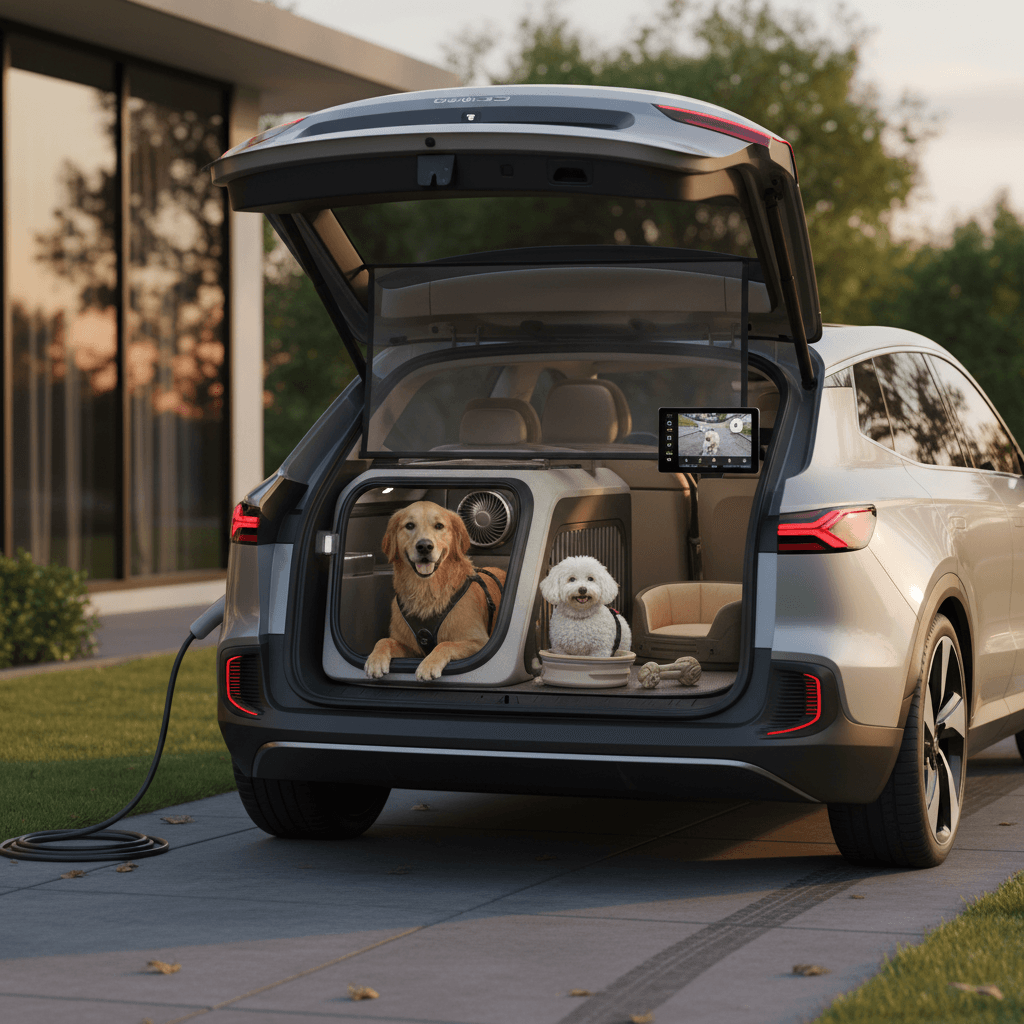
If your dog is part of the family, your next car has to work for them too. The good news: more **EVs with pet-friendly features** are hitting the market, from built‑in “Dog Mode” climate control to roomy cargo areas, easy‑clean materials, and factory pet accessories. Whether you’re eyeing a new model or a used EV from a retailer like Recharged, you can absolutely find something that keeps you, your pet, and your battery happy.
What counts as a pet-friendly EV?
Why pet-friendly EVs are on the rise
EVs already tick a lot of boxes for pet owners. The near‑silent powertrain can help keep anxious animals calmer, there’s no exhaust at idle, and many electric SUVs and crossovers use flat floors and boxy shapes that make better use of interior space than comparable gas vehicles. As more buyers treat pets like family, brands are starting to market explicit dog‑friendly touches on top of those EV basics.
Pets, families, and the shift to EVs
Put simply: you’re not alone if you’re trying to balance range, charging speeds, and battery health with crate dimensions and dog‑ramp angles. Automakers know this, which is why features like Dog Mode, Pet Mode, and factory‑branded dog guards are making their way into EV marketing materials.
Key pet-friendly features to look for in an EV
Pet-friendly EV features that really matter
Focus on safety, comfort, and practicality, then think about tech extras.
Ride & NVH comfort
Electric powertrains already reduce noise and vibration. For pets, a smooth, quiet ride is less stressful, especially on long trips. Look for:
- Comfort‑tuned suspension (not ultra‑sporty)
- Good road noise insulation
- EVs marketed as family or comfort‑oriented
Pet-safe climate control
Many EVs now offer ways to keep cabin climate running while parked:
- Tesla “Dog Mode” with an on‑screen message
- Kia “Pet Mode” in models like the EV9 and some hybrids
- Remote pre‑conditioning via phone apps (Hyundai, Ford, Nissan, etc.)
These should only be backups to supervision, not permission to leave pets unattended for long periods.
Space & access
Size alone isn’t enough. Think about how your pet actually moves:
- Low cargo load floor and wide tailgate opening
- Flat or nearly flat cargo floor with seats down
- Rear doors that open wide for carriers or crates
- Panoramic glass can brighten the space (but mind heat)
Bonus features that make life easier with pets
Not essential, but they can tilt the scales between two similar EVs.
Easy-clean interiors
Claws, sand, mud, and drool are tough on interiors. Helpful details include:
- Textured plastics in the cargo area
- Rubber or vinyl flooring in some MPVs and vans
- Factory boot liners or mats
- Dark, durable seat fabrics instead of pale suede
Pet accessories & mounting points
Look for built‑in tie‑down points, 12V outlets, and OEM accessories:
- Dog guards dividing cargo from the cabin
- Harnesses that integrate with seat belts
- Cargo barriers and washable liners
- Underfloor cubbies for leashes, bowls, and toys
Rear-seat safety tech
EVs increasingly add tech that indirectly protects pets:
- Rear occupant alerts that warn if someone is left inside
- Wide‑angle interior cameras (in some models)
- Advanced airbags and side‑impact protection
Don’t rely solely on “Dog Mode”
Best EVs with pet-friendly features
You don’t need a particular badge on the grille for a dog‑friendly EV, but some models stand out for space, access, and pet‑focused tech. Here’s a snapshot of EVs that regularly show up on “best for dogs” lists and offer features that work well for pets and their people.
EVs with notable pet-friendly features
Always check the specific model year and trim, features like climate modes and seat materials can change over time, especially if you’re shopping used.
| Model | Type | Why it’s pet-friendly | Notable pet-related tech/traits |
|---|---|---|---|
| Tesla Model Y | Compact SUV | Huge hatch opening and up to ~850L of cargo space with seats folded; low, flat load floor makes it easy for dogs to hop in. | Dog Mode climate control; frunk storage for leashes and towels; over‑the‑air updates add new features over time. |
| Hyundai Ioniq 5 | Compact crossover | Very flat floor and wide‑opening rear doors; rear seats slide to balance legroom and cargo for crates or beds. | App‑based pre‑conditioning; heat pump and efficient HVAC to keep temps stable; quiet, comfortable ride praised by families. |
| Kia EV9 | 3‑row SUV | Boxy shape with low load lip and massive cargo area when rear rows are folded, great for large dogs or multiple crates. | Select trims offer Pet Mode‑style climate features via the Kia Connect app; available easy‑clean accessories and liners. |
| Skoda Enyaq (Europe) | Midsize SUV | Square cargo area and low loading height; often highlighted in UK guides as a top dog‑friendly EV. | Factory dog guard, rubber boot tray, and other pet accessories available from dealers. |
| Nissan Ariya | Compact SUV | Lounge‑like interior with roomy second row and practical hatch; works well for medium crates and travel gear. | Dual‑zone climate control and app‑based remote climate; smooth, quiet ride for nervous animals. |
| Ford Mustang Mach‑E | Compact SUV | Large tailgate and usable frunk; plenty of space for medium dogs with rear seats folded. | FordPass app allows remote climate control similar to Dog Mode; multiple tie‑down points in cargo area. |
| Nissan Leaf | Hatchback | Compact footprint with a surprisingly usable cargo area, good budget EV for smaller dogs and urban owners. | Remote climate features on many trims; gentle ride and quiet operation can help keep pets relaxed. |
Cargo figures are approximate and may vary by seating configuration.
Think categories, not just nameplates
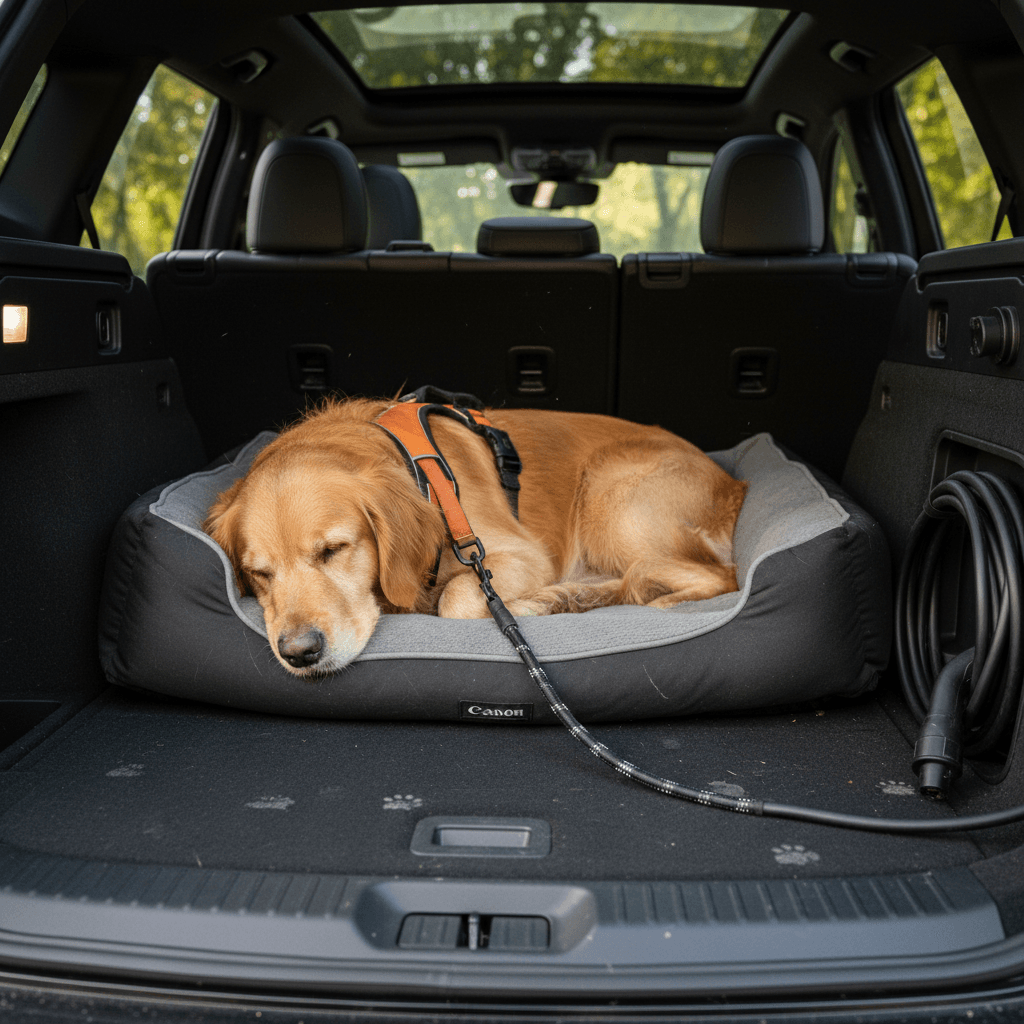
Evaluating space and comfort for your pet
1. Match the EV to your pet’s size
If you have a small dog and live in a dense city, a compact EV like a Nissan Leaf or Chevy Bolt EUV can be more than enough. For medium or large breeds, or multiple pets, you’ll probably want a compact SUV or larger. When you’re browsing online listings, look for:
- Published cargo volumes with seats up and down
- Photos of crates or strollers in the cargo area
- Floor height relative to the bumper (for jumping or ramps)
2. Think about day-to-day use
Your dog doesn’t care about 0–60 mph times, but they do care about how easy it is to get in and out. Ask yourself:
- Can an older dog step in without a big hop or steep ramp?
- Do rear seats fold flat, or is there a big step in the floor?
- Is there room to sit or lie down comfortably without hitting the roof?
If possible, bring your dog’s crate, carrier, or bed to a test drive so you can physically check the fit.
How Recharged helps you assess space
Safety first: how to secure pets in an EV
EVs don’t burn fuel while idling, but physics still applies: in a crash, an unrestrained 60‑pound dog becomes a dangerous projectile. The most “pet‑friendly” EV in the world isn’t safe if your pet is loose in the cabin.
Essential safety practices for pets in EVs
Use a crash-tested harness or crate
The gold standard is a <strong>crash‑tested harness</strong> clipped to a seat belt or a properly anchored crate in the cargo area. Avoid securing leashes directly to fixed points, they can tangle or cause injury.
Secure crates to solid anchors
If you travel with a carrier or crate, use cargo tie‑downs or seat belts to keep it from sliding. Many EVs provide solid loops or rails in the rear specifically for this purpose.
Keep pets out of the front seat
Airbags are engineered for adults, not animals. Even in an EV with advanced airbags, the safest spot for dogs is the rear seat or cargo area behind a sturdy barrier.
Manage temperature proactively
Even with advanced climate control, never assume software will keep your pet safe in extreme heat or cold. Pre‑cool or pre‑heat the cabin, park in shade where possible, and limit unattended time to the bare minimum.
Mind charging-station hazards
Public chargers can have moving cables, other vehicles pulling in, and hot pavement. Use a leash at all times, and keep your dog clear of cables and traffic while you plug in and out.
Plan rest stops on long trips
Fast charging already builds pauses into your route. Use those 20–30 minute windows to walk your dog, offer water, and check harnesses or crate fittings before you get back on the road.
Never rely on tech alone for pet safety
Owning a pet-friendly EV: used vs. new
If you’re shopping for an EV with pet‑friendly features, you don’t have to buy new. Many of the most dog‑friendly models, Tesla Model Y and 3, Hyundai Ioniq 5, Mustang Mach‑E, Nissan Leaf, are now widely available on the used market, often with the same cargo layouts and climate tech as new examples, at a lower price.
Why a used EV can be perfect for pet owners
- Lower up-front cost leaves budget for quality crates, ramps, and liners.
- Cosmetic wear from pets hurts less on a pre‑owned interior you bought at a discount.
- Many 2021–2024 EVs already have advanced climate control and app connectivity.
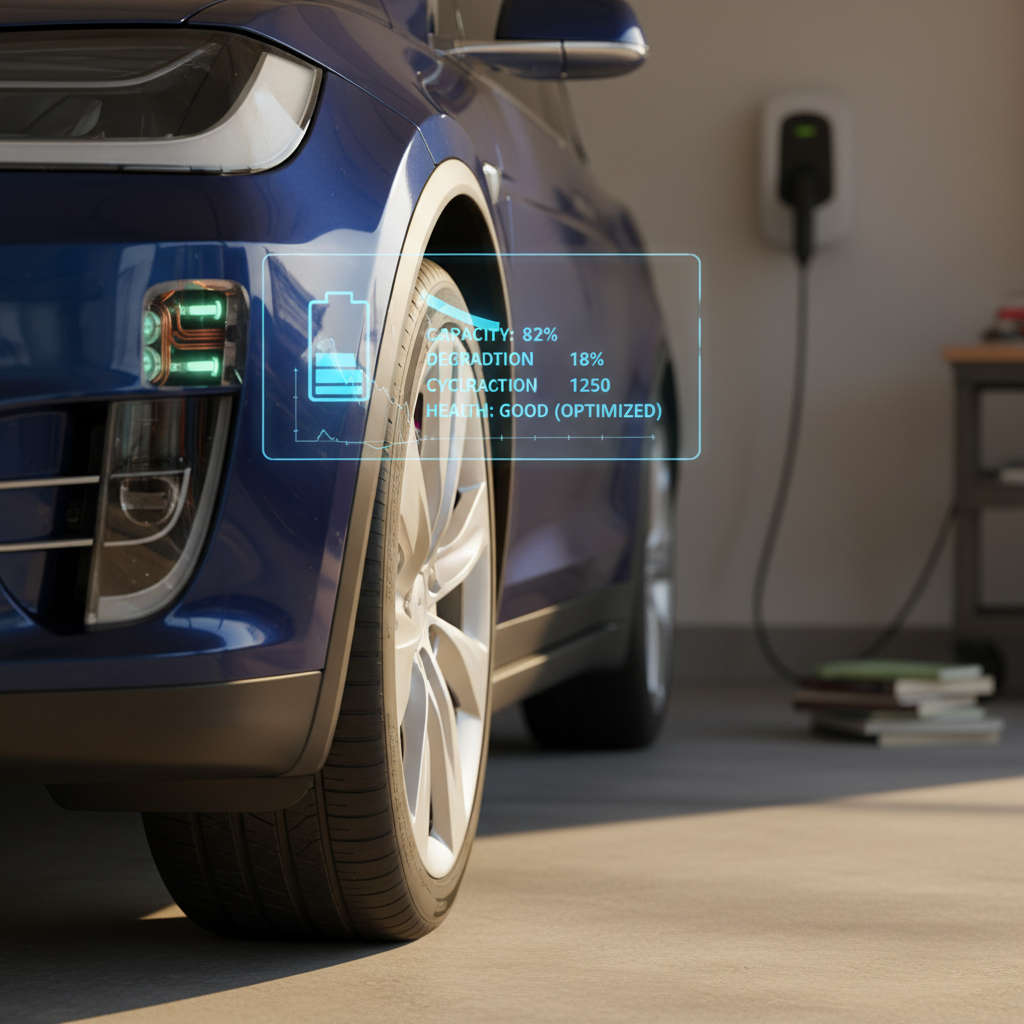
The key is confirming battery health, so your range doesn’t drop sharply when fully loaded with family, pets, and gear.
How Recharged simplifies the used EV process
Every vehicle at Recharged comes with a Recharged Score Report that includes verified battery health, so you know how much real‑world range to expect. EV specialists can walk you through:
- Which models in stock offer the cargo space and access you need
- How climate features differ by trim and model year
- Financing options and trade‑in or consignment if you’re selling your old pet hauler
You can handle everything online and have the vehicle delivered nationwide, or visit the Recharged Experience Center in Richmond, VA if you prefer to see it in person.
Checklist for test-driving an EV with your pet in mind
Pet-focused EV test-drive checklist
1. Bring real gear
Show up with your actual crate, carrier, or bed, plus a tape measure. See how everything fits with seats up and folded. If you can, bring your dog for a quick supervised try‑out in the cargo area.
2. Evaluate access points
Try the tailgate, rear doors, and step‑in height. Is the load lip low enough for your dog to jump in comfortably? Could you realistically lift an injured pet into the back if you had to?
3. Check tie-downs and anchors
Locate cargo tie‑downs, seat‑belt buckles, and any accessory rails. Make sure there’s a practical way to secure a harness or crate without awkward strap routing.
4. Test climate behavior
Experiment with pre‑conditioning and any Dog/Pet Mode features. How easy are they to activate? Does the car clearly display cabin temperature, and what warnings appear as the battery gets low?
5. Listen and feel on the road
On the drive, focus on cabin noise and ride harshness more than acceleration. Would your dog be rattled around by stiff suspension or booming road noise at highway speeds?
6. Think about cleanup
Inspect cargo materials, fabrics, and seams. Will dog hair embed itself in the carpet? Is there a lip around rubber mats to catch mud or spilled water bowls?
FAQ: EVs with pet-friendly features
Frequently asked questions about pet-friendly EVs
Bottom line on EVs with pet-friendly features
The right EV can make life easier, and safer, for both you and your pets. Focus on the fundamentals: enough space for crates or beds, a low and flat load floor, gentle ride quality, and reliable climate control. Treat extras like Dog Mode and app‑based pre‑conditioning as helpful layers of protection, not substitutes for common sense.
If you’re exploring used EVs with pet-friendly features, a retailer like Recharged can help you narrow the field. With verified battery health, transparent pricing, and EV‑savvy specialists who understand real‑world use cases, from school runs to dog‑park trips, you can shop confidently, online or in person. Your next EV should fit your budget, your range needs, and your four‑legged co‑pilot, and with today’s market, you don’t have to compromise on any of the three.