
If you own, or are thinking about buying, a Tesla Model X, you’ve probably heard horror stories about EV batteries wearing out. The reality is more boring and more encouraging: Tesla Model X battery degradation is real, but usually slower and more predictable than most people fear, especially when the car’s been driven and charged sensibly.
Key takeaway
Tesla Model X battery degradation at a glance
Real‑world Model X battery degradation snapshot
Tesla has published data indicating that Model S and Model X batteries retain about 88–90% of their original capacity after roughly 200,000 miles of driving. Independent analyses of mixed-model Tesla fleets show the Model X sitting in that ballpark, with around 11% average loss at 100,000 miles and low‑teens loss at 200,000 miles. In other words, for a typical U.S. driver, the Model X battery is engineered to last the effective life of the vehicle, not the other way around.
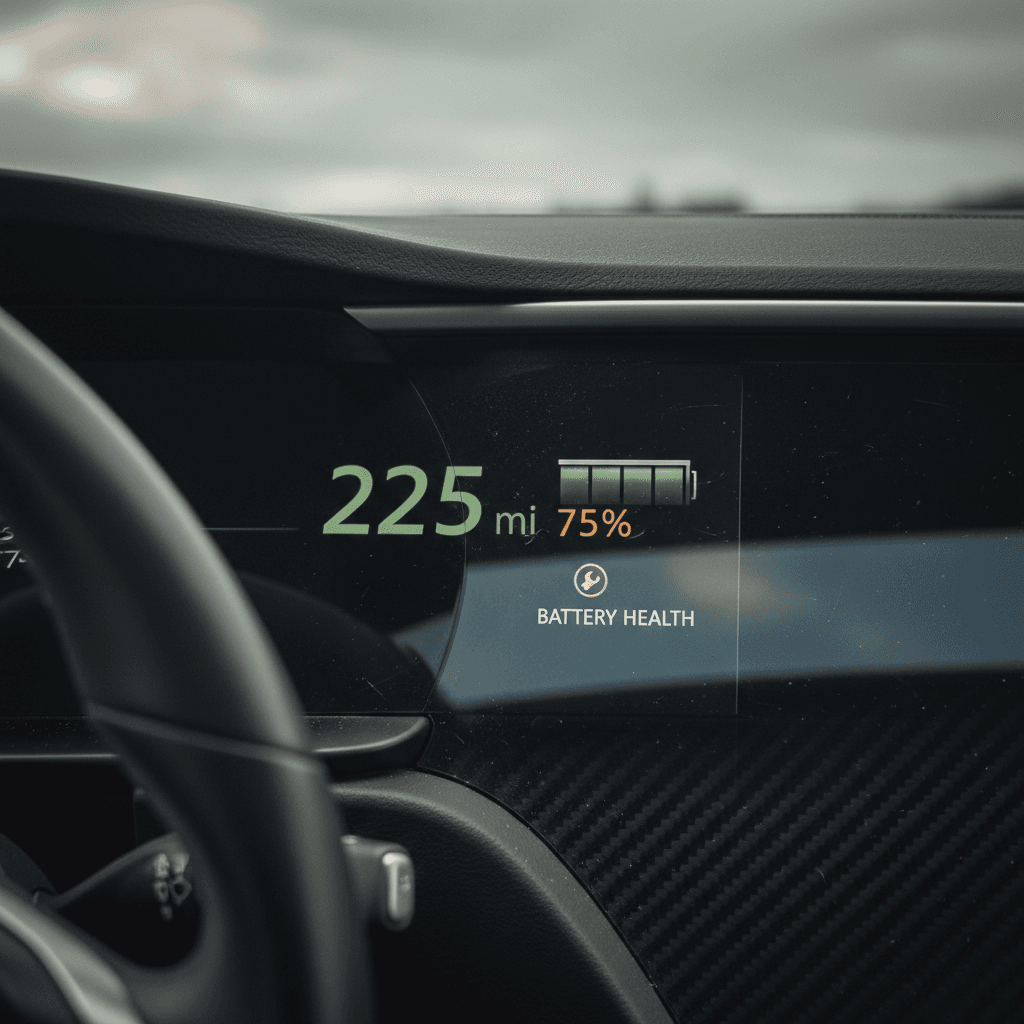
How much range will you actually lose?
Battery degradation is about capacity, not mechanical failure. As your Model X ages, the usable kilowatt-hours (kWh) in the pack slowly shrink. That shows up as reduced rated range at 100% charge, and fewer real‑world miles between plugs.
Typical Model X capacity loss and range impact
Illustrative examples based on real‑world degradation trends for long‑range Model X variants.
| Odometer | Approx. capacity vs. new | EPA‑rated range when new* | Approx. usable range now |
|---|---|---|---|
| New | 100% | ~295–330 miles | 295–330 miles |
| 50,000 miles | ~95% | ~295–330 miles | 280–315 miles |
| 100,000 miles | ~89–90% | ~295–330 miles | 260–295 miles |
| 150,000 miles | ~82–85% | ~295–330 miles | 240–280 miles |
| 200,000 miles | ~88% avg (fleet) | ~295–330 miles | 260–290 miles |
Numbers are approximations to illustrate how modest‑sounding capacity loss translates into fewer highway miles.
Why the table looks odd
For daily driving, the difference between a new Model X and one with, say, 10–12% degradation is often not dramatic. Your 250‑mile weekend trip might require one extra brief fast charge. Where degradation hurts most is cold‑weather road trips and towing, where you’re already burning through range faster than the EPA sticker suggests.
Why Tesla Model X batteries degrade over time
Under the floor of every Model X sits a large lithium‑ion pack made up of thousands of small cells. Over years of use, those cells experience chemical changes that slowly reduce how much energy they can store. That’s battery degradation in a nutshell, and it happens to every EV, not just Tesla.
- Chemistry & age: Nickel‑rich chemistries like the NCA cells used in Model X offer strong performance but slowly lose capacity over calendar time, even if you don’t drive much.
- Charge cycles: Every time you discharge and recharge the pack, you complete a fraction of a “cycle.” More cycles, especially deep ones (from near 0% to 100%), mean more wear.
- Heat: High temperatures accelerate the chemical reactions that age a battery. Parking in the sun in Phoenix at a high state of charge is harder on a pack than a cool garage in Seattle.
- Fast charging: DC fast charging (Supercharging) pumps energy in quickly by raising pack temperatures and currents, great for convenience, tougher on long‑term health if it’s your main charging method.
Model X vs. smaller Teslas
Driving and charging habits that speed up Model X degradation
You can’t stop chemistry, but you can influence how hard your daily routine is on the battery. In owner data sets, the biggest spread in Model X degradation doesn’t come from luck, it comes from how the car is charged, stored, and driven.
Habits that are hardest on a Model X battery
If you care about long‑term range, these are the behaviors to watch.
Living at 100%
Regularly charging to 100% and letting the car sit there is one of the fastest ways to age cells.
- Reserve 100% for road trips.
- For daily use, a 70–80% limit is usually plenty.
Fast‑charge everything
Superchargers are fantastic on road trips, but constant DC fast charging keeps pack temps and stress high.
- Favor home or workplace Level 2.
- Think of Supercharging as your backup, not your default.
Heat and high SoC
Parking a fully charged Model X in direct sun, especially in hot states, accelerates chemical aging.
- Use shaded or indoor parking where possible.
- Pre‑cool the cabin while still plugged in.
Aggressive driving & heavy loads
Hard launches, high sustained speeds, and frequent towing all raise pack temperatures and draw higher currents. Over hundreds of cycles, that adds up to measurable extra degradation. The Model X is a heavy SUV to begin with, add a trailer or a full load of passengers and luggage, and you’re working the battery even harder.
Gentle driving & smart planning
Smoother acceleration, moderate highway speeds, and using tools like trip planning in the Tesla navigation system keep the pack in a more comfortable operating window. You’ll see better efficiency today and less long‑term wear on the battery tomorrow.
The real red flags
Tesla’s Model X battery warranty and when to worry
For U.S. buyers, the current Battery and Drive Unit Limited Warranty for the Tesla Model X covers the pack for 8 years or 150,000 miles, whichever comes first, with at least 70% capacity retention. That means if your battery falls below roughly 70% of its original capacity within that window, Tesla is on the hook to repair or replace it.
Tesla Model X battery warranty basics
How Tesla’s warranty frames acceptable degradation for Model X owners.
| Item | Coverage | What it means for you |
|---|---|---|
| Battery & drive unit term | 8 years / 150,000 miles | Coverage ends at the earlier of 8 years in service or 150k on the odometer. |
| Capacity guarantee | Minimum 70% retention | Tesla considers up to 30% capacity loss “normal” within the warranty term. |
| Trigger for repair/replacement | Capacity under 70% or clear defect | If diagnostics confirm capacity below 70% or serious pack fault, Tesla repairs or replaces under warranty. |
| Transferability | Yes, to next owner | Warranty stays with the car, which is crucial when you’re shopping for a used Model X. |
Always confirm terms for your specific build year in your in‑car or online warranty booklet.
How to sanity‑check warranty coverage
You should start to worry less about the fact that some degradation exists, and more about whether the car’s behavior matches what you’d expect for its age and use. A 6‑year‑old Model X with 15% capacity loss that still drives normally is not a crisis. A 4‑year‑old car that suddenly loses 30–40 miles of displayed range in a month deserves immediate attention.
Shopping used: how to check Model X battery health
On the used market, the battery is the single most expensive component of a Model X, and the hardest for a casual shopper to evaluate. That’s why structured battery‑health data is quickly becoming table stakes for serious used‑EV buyers.
Battery‑health checklist for used Model X shoppers
1. Look at rated range at 100%
Ask the seller to charge the car to 90–100% and share a photo of the displayed rated range. Compare that to the original EPA figure for that trim to estimate rough capacity loss.
2. Check firmware and error messages
During the test drive, look for any battery or power‑reduced warnings on the cluster. Browse the Service menu for recent alerts tied to the high‑voltage system.
3. Review the fast‑charging history
Heavy Supercharger use isn’t a dealbreaker, but a car that’s fast‑charged daily for years is more likely to show above‑average degradation. Ask how and where the car was typically charged.
4. Consider climate history
A Model X that lived its life in mild coastal California may age more gently than one that spent years in very hot or very cold states. Ask where the car has been registered and parked.
5. Get a third‑party or marketplace battery report
Some sellers and marketplaces, including <strong>Recharged</strong>, provide a dedicated battery‑health report that reads pack data and summarizes remaining capacity and fast‑charge history.
6. Verify remaining warranty
Confirm the in‑service date and mileage to see how much of the original 8‑year/150,000‑mile battery warranty is still available to you as the next owner.
How Recharged helps de‑risk used Model X shopping
How to slow Tesla Model X battery degradation
You can’t make degradation disappear, but you can meaningfully slow it down. Think of it like tire wear: your driving and maintenance habits determine whether you get 25,000 miles or 45,000 miles out of a set.
Practical habits that help your Model X battery age gracefully
Most of these cost you little or nothing, just a few tweaks to your routine.
Aim for 20–80% state of charge
For daily use, set your charge limit to about 70–80% and avoid letting the pack sit near 0% or 100% for long:
- Use 100% only before road trips.
- Don’t store the car at very low charge.
Favor Level 2 home charging
Regular overnight Level 2 charging at home or work is gentler than repeated DC fast charging.
- Install a 240V Level 2 charger if you can.
- Schedule charging to finish near your departure time.
Manage temperature extremes
In very hot or cold climates, use Tesla’s pre‑conditioning and cabin overheat protection.
- Pre‑heat or pre‑cool while plugged in.
- Park in shade or a garage whenever possible.
Drive with the battery in mind
Short bursts of performance are fine, that’s part of the fun of a Tesla. But if you want to preserve range for the long haul, try to avoid repeated top‑speed runs or long periods at very high highway speeds. They generate more heat, which is what ultimately ages the pack.
Keep software and service up to date
Tesla continuously tweaks battery management through software updates. Staying current ensures your Model X benefits from the latest charging algorithms and thermal‑management tweaks. If you notice odd behavior, big jumps in state‑of‑charge, unusual noises from pack cooling, schedule service sooner rather than later.
Daily‑use sweet spot
What degradation means for resale value and total cost
Battery health is quietly becoming one of the biggest drivers of used‑EV pricing. Two Model X SUVs can be the same year, mileage, and trim, but the one with 90% remaining capacity instead of 78% can command a significant premium, because it effectively offers more usable range and more years of comfortable ownership.
How different battery health levels feel in the real world
Simple scenarios to show how remaining capacity changes the ownership experience.
| Remaining capacity | Approx. full‑charge range | Real‑world impact | Likely shopper reaction |
|---|---|---|---|
| ~95% | ~285–290 miles | Feels nearly new; most owners won’t notice a difference day to day. | Premium condition; strong resale appeal. |
| ~88–90% | ~260–270 miles | One extra fast‑charge stop on some road trips; daily driving unchanged. | Normal for age and mileage; usually priced near market average. |
| ~75–80% | ~225–240 miles | More planning for long highway trips; winter range noticeably lower. | Discount expected; buyers ask for documentation and stronger pricing. |
| <70% | <210 miles | Frequent charging on road trips; some owners may change usage patterns. | Warranty threshold; major red flag unless priced accordingly and supported by repairs. |
These examples assume a long‑range Model X variant that had ~300 miles of EPA range when new.
Why the used market is normalizing around degradation
Tesla Model X battery degradation: FAQ
Common questions about Tesla Model X battery degradation
Bottom line: what Model X owners and shoppers should do next
The story the data tell is reassuring: Tesla Model X battery degradation is real but usually modest. Most packs lose a bit of capacity in the early years, then settle into a slow decline that stays comfortably above Tesla’s 70% warranty floor for well over 100,000 miles. The bigger risk isn’t that your battery will suddenly die, it’s that you’ll pay too much for a used Model X whose battery health doesn’t match the sticker price.
If you already own a Model X, the playbook is simple: keep daily charging between about 20–80%, favor Level 2 over constant fast charging, and avoid letting the car bake at 100% in extreme heat. If you’re shopping for one, prioritize vehicles with clear battery‑health data, documented charging habits, and remaining factory warranty. Marketplaces built around transparency, like Recharged, with its battery‑focused Recharged Score and EV‑specialist support, are designed to make that process easier and less risky.
Get those pieces right, and battery degradation becomes less of a lurking threat and more of a manageable, predictable part of owning one of the most capable electric SUVs on the road.