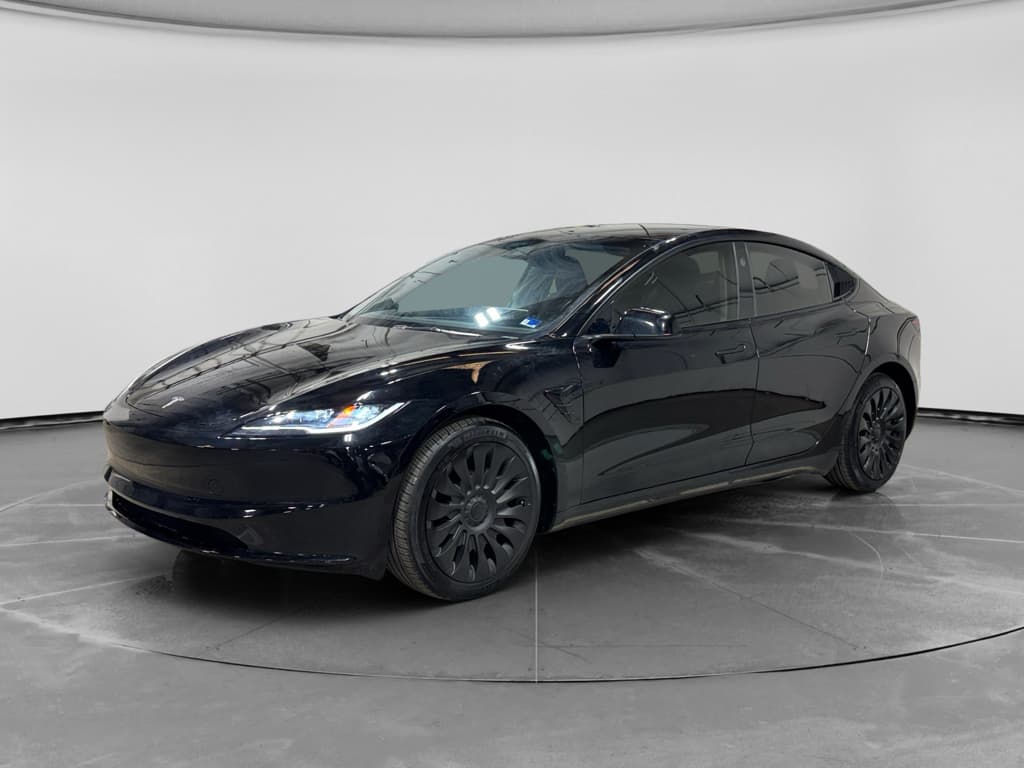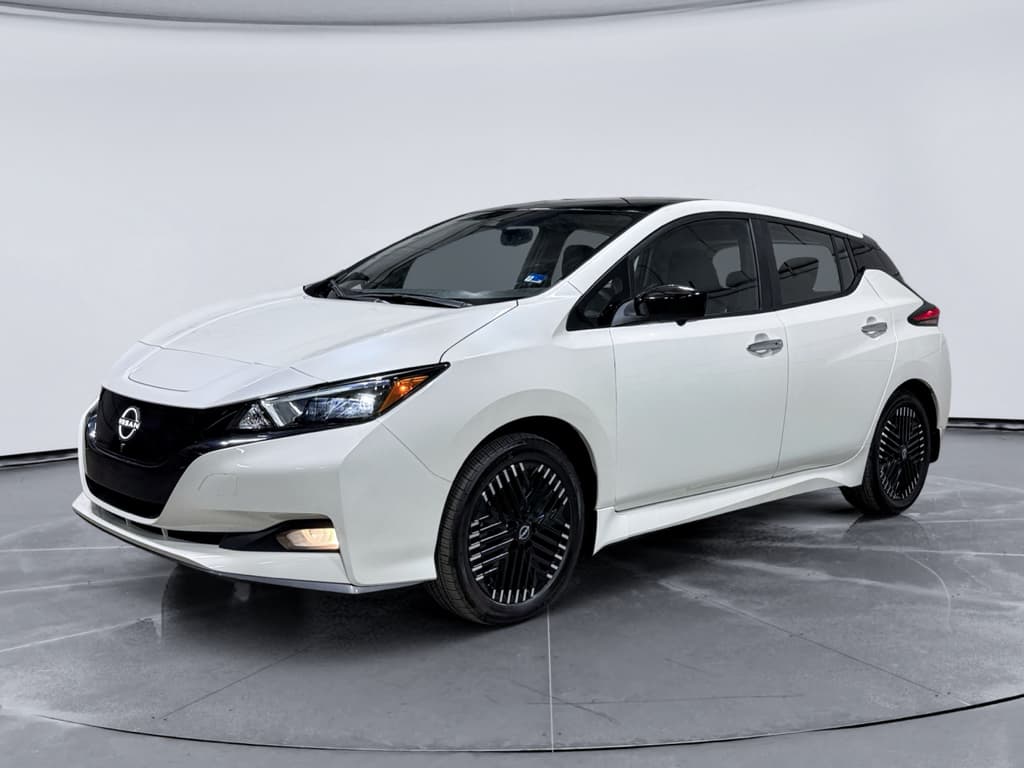
If you’re tall, regularly carry adults in the back seat, or juggle rear-facing car seats, the search for the EV with the most rear legroom isn’t just a spec-sheet exercise, it can be the difference between loving an electric car and resenting it. The challenge: interior dimensions look precise on paper, but they don’t always match how comfortable the back seat actually feels.
Quick takeaway
Why rear legroom matters in an EV
EVs package their batteries under the floor, which is great for handling and crash safety, but it can raise the floor and change your rear seating position. That’s why two EVs with the same rear legroom spec can feel totally different, one lets adults stretch out comfortably, while the other has you sitting knees-up like an airline middle seat.
Who really benefits from extra rear legroom?
It’s not just tall friends, rear space matters across everyday use cases.
Families with car seats
Rear-facing seats are bulky. Extra legroom makes it easier to fit a seat without shoving the front seats forward to an uncomfortable position.
Rideshare & carpooling
If you run Uber/Lyft or commute with coworkers, generous rear space means fewer complaints and more tips.
Tall households
When driver and rear passengers are all tall, a couple of inches of legroom and a deeper seat cushion can be the difference between "fine" and "never again."
How rear legroom is measured (and why it can be misleading)
Automakers typically measure rear legroom from the rear seatback to a fixed point at the front seat, essentially, how far you can stretch your legs in a straight line. That gives you a number in inches, but it ignores some key realities of how people actually sit.
- Floor height and knee angle: A high battery floor can force your knees up, which becomes tiring on longer drives even if the legroom number is big.
- Seat cushion length: Short cushions don’t support your thighs, which makes tall passengers slide forward and eat into their own knee room.
- Headroom and roofline: Sloping rooflines (common in coupe-style EVs) can make tall adults slouch, again reducing perceived space.
- Foot room under front seats: If you can’t slide your feet under the front seat, the rear bench feels tighter than the specs suggest.
Spec sheet trap
EVs with the most rear legroom: top picks
Let’s start with the numbers. Below is a snapshot of popular EVs that offer standout rear legroom. Figures are manufacturer or third‑party published specs for recent model years; small variations by trim and model year are common, but this is a useful ballpark for shopping, especially in the used market.
EVs with standout rear legroom (recent model years)
Approximate second-row legroom figures for popular EVs. Actual comfort depends heavily on seat and floor design.
| Model | Type | Approx. rear legroom (in) | Rear seat notes |
|---|---|---|---|
| Hyundai Ioniq 6 | Midsize sedan | ~39.2 | Very flat floor, reclining rear backrest; adults fit comfortably despite sleek roofline. |
| Kia EV6 / EV9 | Compact & 3-row SUV | ~39.0–41.4 | EV6 is generous for a compact; EV9 offers SUV-style stretch-out space in rows two and three. |
| Tesla Model Y | Compact SUV | 40.5 | Roomy for adults, great with child seats; flat floor helps foot space. |
| Tesla Model X | 3-row SUV | ~38.7 (2nd row) | Second row comfortable; third row best for kids/shorter adults. |
| Volkswagen ID.4 | Compact SUV | ~37.6 | Good knee room and headroom for the footprint, flat rear floor helps middle passenger. |
| Ford Mustang Mach-E | Compact SUV | ~38.1 | Decent legroom; sloping roof trims headroom for tall adults. |
| Hyundai Ioniq 5 | Compact SUV | ~39.4 | Sliding rear bench and near-flat floor create very flexible rear space. |
| Mercedes-Benz EQE SUV | Midsize luxury SUV | ~40.6 | Deep seat cushions and upright position favor long-distance comfort. |
| BMW i5 | Midsize luxury sedan | ~36.5 | More "European sedan" roomy than limo, but very supportive seating. |
| Chevrolet Blazer EV | Midsize SUV | ~39.6 | Wide cabin and generous knee room, especially in two-row configs. |
Use these numbers as a starting point, then test-sit whenever possible.
Don’t chase just the biggest number
Rear legroom benchmarks to keep in mind
Best used EVs for rear-seat space
If you’re shopping the used market, which is where Recharged specializes, the good news is that several earlier EVs were engineered with surprisingly generous rear legroom. Here are standouts that balance space, availability, and value.
Spacious used EVs worth targeting
These models tend to offer adult-friendly rear seats at used-EV prices.
Tesla Model Y
The Model Y’s rear legroom (around 40.5 inches) is one of the reasons it’s such a popular family EV. The flat floor makes the middle seat more usable, and the big glass roof keeps it airy.
On the used market, it’s abundant, which makes it easier to find a color/trim you like while prioritizing interior space and battery health.
Hyundai Ioniq 5
More of a tall hatchback than a traditional SUV, the Ioniq 5 has a sliding rear bench and generous legroom. Slide the seat back and adults can stretch out; slide it forward and you open up extra cargo space.
It’s an especially smart pick if you need flexibility between kid duty and road trips.
Volkswagen ID.4
The ID.4 doesn’t top the charts on pure inches, but its upright seating, good headroom, and flat floor make it feel very usable in the real world.
For families coming out of compact crossovers, it will feel familiar but quieter and smoother.
Roomy luxury used EVs
If you care about both legroom and upscale materials, models like the Mercedes EQE SUV or BMW iX give rear passengers generous space plus better seat padding and recline features than mainstream crossovers.
Just remember that larger wheels and air suspensions can affect ride comfort and repair costs, so factor that into any used-EV budget.
Need a third row?
For families who need occasional third-row use, used Tesla Model X and early three-row EVs (and more recently, Kia EV9) provide strong second-row legroom while still squeezing in row three.
The trade-off is cargo space with all rows up, so think honestly about how often you’ll carry six or seven people versus luggage.
Rear legroom vs. cargo and kid-hauling needs
Maximizing rear legroom can come at the expense of cargo space, especially in compact EVs. Some models push the rear bench back to open up knee room, then rely on a steeper hatch or shorter cargo floor. That’s fine until you load a stroller, pack-and-play, and a week’s worth of groceries.
Balancing rear seat space with real-life usage
Measure your stroller and luggage
Physically measure your stroller length and typical luggage stack. In a test drive, fold the rear seats, then put the seats back upright and see how much legroom remains with your gear on board.
Simulate your tallest passenger
Have the tallest person in your household sit behind the driver when they’ve adjusted the seat for themselves. If both are comfortable, you’ve probably found enough real-world legroom.
Check car-seat install positions
If you’ll run two car seats, try them both behind the front seats and then one in the center. Some EVs only feel spacious with a center-mounted seat due to hard plastic seatbacks.
Look at roofline and door opening
A swoopy coupe-style roof may still have decent legroom numbers but force you to duck and twist kids into seats. Wide door openings matter just as much for family sanity.
Don’t forget the floor hump (or lack of it)
Test-sitting like a pro: what to look for
Once you’ve shortlisted a few roomy EVs, the most important step is the low-tech one: sitting in them. Here’s how to evaluate rear comfort like someone who does this for a living.
6-step rear-seat comfort test
1. Set the driver’s seat realistically
Adjust the driver’s seat to how you’d actually drive, not all the way forward just to make the rear look good. Then sit directly behind yourself to judge legroom honestly.
2. Check knee and foot room
Make sure your knees aren’t pressed into the front seat and that your feet can slide under the front seat frame. If your toes hit a metal bar, that EV will feel smaller on long drives.
3. Look at thigh support
Your thighs should rest on the cushion, not hang in the air. Poor thigh support makes people slide forward, which reduces effective legroom and comfort.
4. Evaluate headroom while sitting upright
Sit fully upright and see if your head or hair brushes the headliner or glass roof. Slouching to avoid contact is a red flag, especially for tall teens who will only keep growing.
5. Sit three across
If you ever carry three passengers, buckle all three seats and see whether shoulders overlap and feet clash in the footwell. A flat floor pays off here.
6. Try a realistic time test
If you can, spend 10–15 minutes in the back during the test drive while someone else drives. Minor annoyances show up that a quick sit might miss.
Common mistakes people make when shopping by legroom
- Chasing the single biggest number: An EV with 39 inches of legroom but great seat design can feel better than a 40‑inch rival with a high floor and short cushions.
- Ignoring door openings: Tight rear doors and low rooflines make every child-seat load a chore, even if the rear bench itself is roomy.
- Not testing "driver behind driver": Dealers often slide the front seat way forward to make any car look huge in back. Always reset it to your real position first.
- Forgetting cargo trade-offs: An EV that’s wonderful for legroom but weak on cargo might be fine now, but less so when sports gear and suitcases start piling up.
Good strategy
How Recharged helps you judge space in a used EV
When you’re buying used, you can’t always assume the exact trim and model year listed in a review match the car in front of you. That’s where a transparent, data-driven retailer makes life easier.
Making space shopping easier with Recharged
Beyond specs: how to understand real comfort in a used EV.
Recharged Score & photos
Every EV on Recharged comes with a Recharged Score Report that details battery health, usage history, and more, so you’re not trading rear comfort for a tired pack. Listings also include detailed interior photos, so you can judge rear space before visiting.
Expert EV guidance
Recharged’s EV specialists talk through practical questions like:
Will two rear-facing seats fit behind tall drivers? or How does this compare to my current SUV? You get context, not just numbers.
Simple, digital buying experience
You can shop and finance online, get a trade-in or instant offer, and have the vehicle delivered nationwide. If you’re near Richmond, VA, you can visit the Recharged Experience Center to sit in specific models before you buy.
Ready to find your next EV?
Browse VehiclesLeverage expert eyes
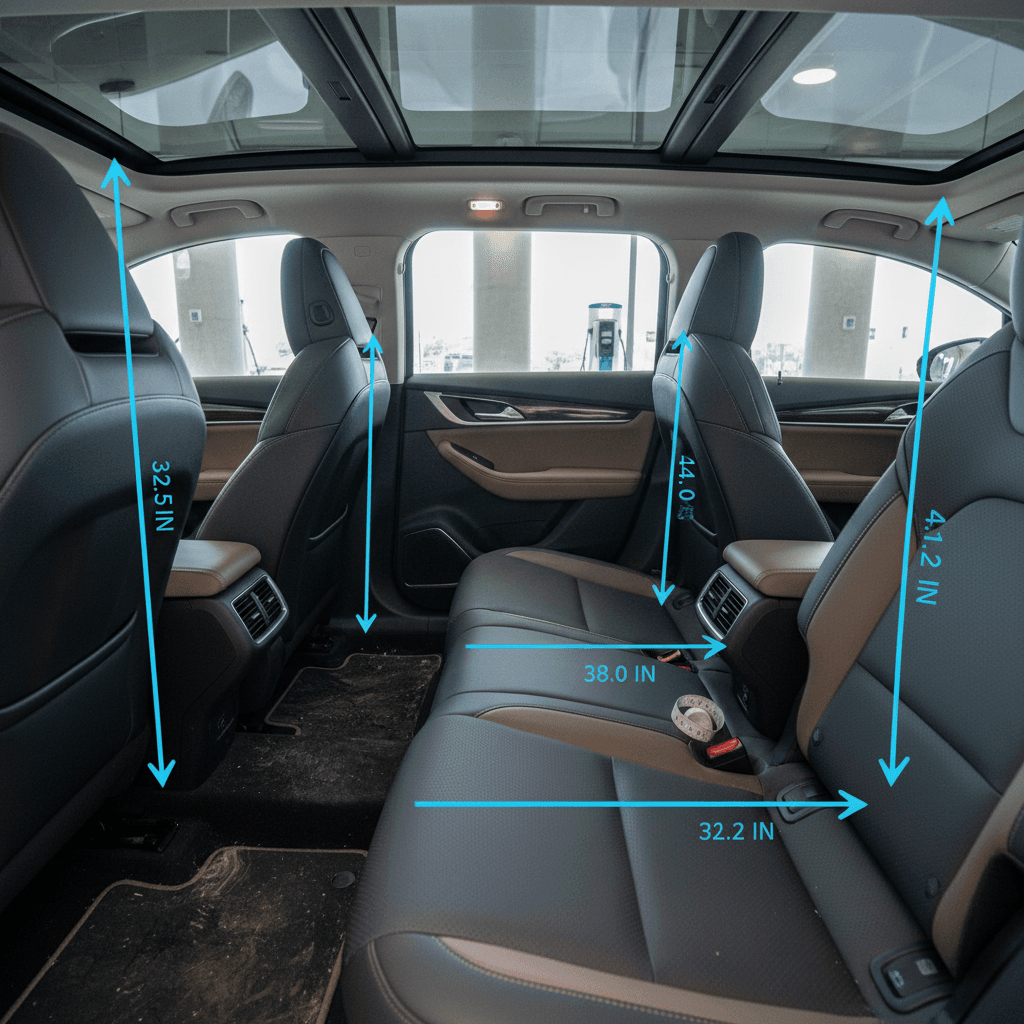
FAQ: EVs with the most rear legroom
Frequently asked questions about rear legroom in EVs
Rear legroom in EVs is one of those areas where the numbers only tell half the story. Once you filter for EVs with solid specs, roughly 38 inches or more in the back seat, what really matters is how the floor, seat cushions, roofline, and door openings work together for the people who’ll actually ride there. If you’re shopping used, that’s where Recharged can help you move past brochure numbers to a car that fits your family, your budget, and your daily life, without sacrificing the battery health and transparency you need for long-term peace of mind.