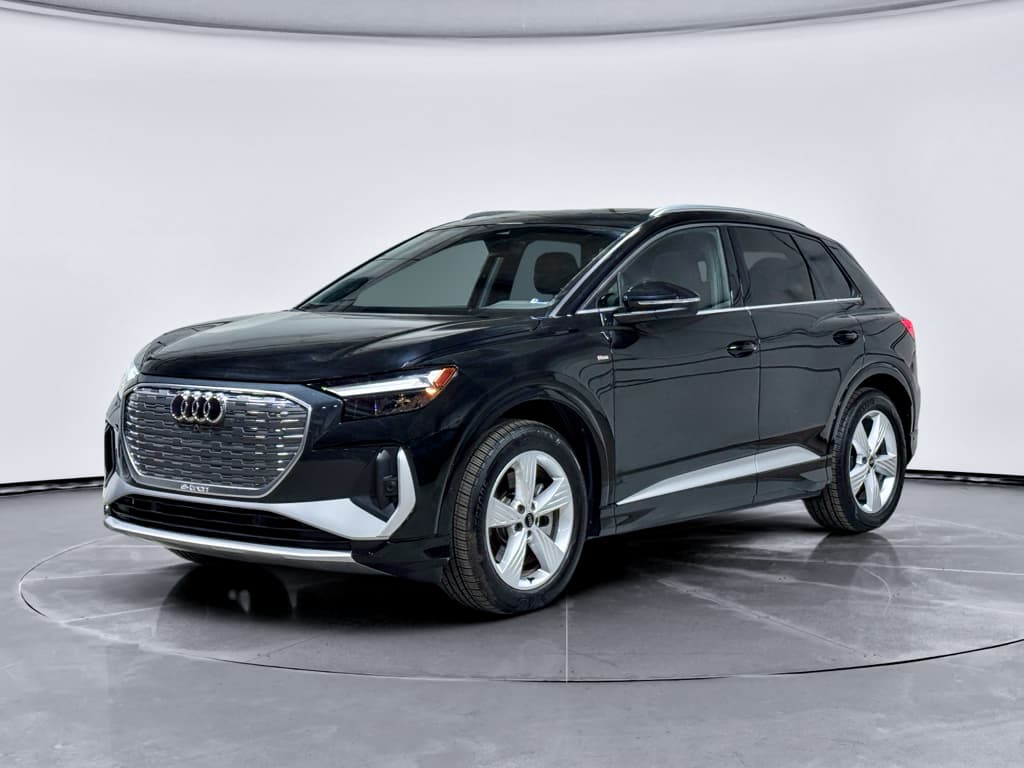
If you’re wondering how fast the Audi Q4 e-tron depreciates, you’re not alone. Early resale data shows this compact luxury EV SUV loses value faster than many gas SUVs, and even faster than some rival electric models. The bad news is for first owners. The good news? That steep drop opens the door to some very compelling used Q4 e-tron deals if you know what you’re looking at.
Quick take
Audi Q4 e-tron depreciation at a glance
Audi Q4 e-tron depreciation snapshot (U.S. market)
Different data providers use different assumptions, but they all tell a similar story: the Q4 e-tron is a fast depreciator in its early years. iSeeCars and other industry trackers peg 5‑year depreciation for the Q4 in the rough neighborhood of 65–70% of original MSRP, versus about the high‑40s to low‑50s for the average SUV. Independent calculators such as CarEdge also land in that ballpark, showing 5‑year value retention in the low‑40% range or below for typical usage.
Check the fine print on any data point
Year by year: how fast does the Q4 e-tron depreciate?
To answer how fast the Audi Q4 e-tron depreciates, it helps to look at a simple year‑by‑year curve. We’ll use a typical, well‑equipped Q4 e-tron with an original MSRP around $55,000, which is a common real‑world sticker for mid‑ and upper‑trim models in the U.S.
Illustrative 5‑year depreciation curve for Audi Q4 e-tron
Rough value trajectory for a Q4 e-tron that originally stickered at $55,000. These are directional, market‑based estimates, not guaranteed buy‑back numbers.
| Age | Estimated value retention | Estimated dollar value | What’s happening |
|---|---|---|---|
| Brand new | 100% | $55,000 | You’re paying full new‑car pricing and absorbing all future depreciation. |
| 1 year | ≈70–75% | $38,500–$41,250 | Early hit as incentives, discounts, and nearly‑new inventory undercut MSRP. |
| 2 years | ≈60–65% | $33,000–$35,750 | More used Q4s come off lease; newer model‑year tech and range tweaks push values down. |
| 3 years | ≈50–55% | $27,500–$30,250 | Where many 2022–2023 Q4 e-tron examples are landing in today’s market. |
| 5 years | ≈30–35% | $16,500–$19,250 | Heavier discounting as newer generations arrive; battery health becomes the deciding factor. |
Real‑world prices will vary, but the shape of the Q4 e-tron’s depreciation curve is consistently front‑loaded: the biggest hit comes in the first 3–5 years.
Notice how the Q4 e-tron loses roughly half its value in the first three years, then another 15–20 percentage points between years 3 and 5. That front‑loaded curve is typical of luxury EVs: they behave more like premium tech products than like old‑school, body‑on‑frame SUVs.
How to read these numbers
Why does the Audi Q4 e-tron depreciate so quickly?
Four big forces behind Q4 e-tron depreciation
Understanding these helps you predict where values are headed next.
1. Fast‑moving EV tech
2. Heavy incentives on new EVs
3. Luxury badge, luxury drop
4. Charging and standards uncertainty
There are also model‑specific dynamics. The Q4 e-tron competes directly with vehicles like the Tesla Model Y, Mercedes‑Benz EQB, and Volvo XC40 Recharge. Aggressive price cuts and incentives from any one of those players can ripple through the entire used‑EV compact SUV segment and hit Audi values indirectly.
A note on headline figures
How the Q4 e-tron compares to other EVs and luxury SUVs
Versus other electric SUVs
Across the EV market, five‑year depreciation often falls in the 60–65% range, with some models much worse. The Q4 e-tron tends to land on the steeper side of that average, closer to 65–70% total loss from MSRP by year 5 in many forecasts.
That puts it broadly in line with other luxury compact EV SUVs, which suffer from the same tech‑cycle and incentive pressures. If anything, Q4 depreciation is a bit worse than Tesla’s current compact offerings in percentage terms, but Tesla’s much larger starting volumes mean there are more distressed examples as well.
Versus gas luxury compact SUVs
Compare the Q4 e-tron to a similarly priced gas Audi Q5 or BMW X3, and the spread becomes obvious. Many combustion luxury compact SUVs lose roughly 45–55% by year 5, painful, but not catastrophic.
Put differently, the Q4 e-tron can be down two‑thirds of its MSRP by the same point, while a comparable gas SUV might have lost only about half. That gap is precisely what makes Q4 e-tron such an interesting play on the used market.
Why steep depreciation is good news for used buyers
Depreciation math: what it really means in dollars
Percentages are useful, but what most shoppers really want to know is: “How much money are we talking about?” Let’s walk through a couple of realistic scenarios, using that same $55,000 reference MSRP.
- If a Q4 e-tron retains about 55% of value at year 3, you’re looking at roughly $30,000 market value, an on‑paper loss of $25,000 from MSRP.
- If it’s closer to 50% retention, that’s around $27,500, or a $27,500 drop from new.
- At 5 years and 35% retention, it’s in the ballpark of $19,000. At 30%, closer to $16,500.
Again, these are directional, not promises. Local demand, trim, mileage, accident history, and battery health can swing a real quote up or down by several thousand dollars. But they give you a clear sense of just how much value moves in and out of the vehicle over a relatively short window.

Selling vs. keeping: when does it make sense to move on?
Knowing how fast the Audi Q4 e-tron depreciates is one thing. Deciding what to do about it is another. Whether you already own one or you’re thinking a few steps ahead while shopping, timing matters.
Common exit points for Q4 e-tron owners
When different owners tend to sell, and why.
Around 3 years (end of lease)
Around 5–6 years
8–10 years+
Leasing as a depreciation hedge
How to protect your Audi Q4 e-tron’s resale value
You can’t change the overall market, but you can influence where your particular car lands within it. Think of depreciation as a curve with a high and low band, your goal is to keep your Q4 e-tron as close to the top of that band as possible.
Seven practical ways to slow depreciation on your Q4 e-tron
1. Stay on top of maintenance and recalls
Keep up with scheduled service, software updates, and recall work. A clean service history from an Audi dealer or respected EV shop is a tangible selling point when it’s time to list or trade.
2. Treat the battery kindly
Avoid parking at 100% state of charge for long periods, minimize frequent DC fast‑charging when you don’t need it, and keep daily charging targets in a moderate band (for example, 70–80%). Healthier packs command stronger money.
3. Keep mileage in check
Depreciation curves typically assume about 12,000–15,000 miles per year. If you’re far above that, your Q4 will underperform the average curve on price. If you’re well below it, you pick up negotiating leverage.
4. Protect the interior and exterior
Luxury buyers notice condition. Fix curb rash, repair windshield chips quickly, and address cosmetic damage before it multiplies. A clean, odor‑free cabin does more for resale than an extra option package ever will.
5. Document everything
Keep digital or paper records of services, tire replacements, alignment checks, and any battery or charging diagnostics. Organized documentation reassures buyers and can justify a higher asking price.
6. Time the market
If you can, avoid selling into periods with heavy new‑EV incentives or big price cuts from competitors. Spring and early summer often see stronger retail demand than the dead of winter in many U.S. regions.
7. Get a battery health report before selling
A third‑party battery report, like the <strong>Recharged Score</strong> that comes with every vehicle sold through Recharged, quantifies remaining capacity and fast‑charging history. Sellers can use strong results to defend their price; buyers feel safer paying a premium for a verified pack.
How Recharged approaches depreciation and battery health
Smart strategies for buying a used Audi Q4 e-tron
If you’re on the shopping side, the Q4 e-tron’s fast depreciation is less of a problem and more of an opportunity. The trick is making sure you’re getting a bargain, not just a low price on a high‑risk car.
1. Aim for the "sweet spot" years
For many buyers, that’s 2–4 years old. You skip the nastiest part of the new‑car hit but still land inside the factory battery warranty and, often, within portions of the bumper‑to‑bumper or CPO coverage. At this age, you can still find low‑mileage examples coming off lease.
On Recharged, you’ll typically see Q4 e-tron inventory in exactly this window, paired with battery health data so you know what you’re getting.
2. Focus on battery and charging, not just miles
Two Q4s with similar odometer readings can have very different futures. A car that’s lived its life on slow home charging and moderate SOC habits is more attractive than one that’s fast‑charged multiple times a week.
Ask for battery capacity readings, DC fast‑charge history if available, and how the previous owner charged day‑to‑day. If you’re buying through Recharged, the Recharged Score distills this into a single, easy‑to‑read report.
Key negotiation points on a depreciated Q4 e-tron
What to bring up when you’re sitting across from the seller, or filling out an online offer form.
Remaining warranty coverage
Tires, brakes, and wear items
Local EV demand
Leverage marketplace competition
Ready to find your next EV?
Browse VehiclesFAQ: Audi Q4 e-tron depreciation and resale
Frequently asked questions about Audi Q4 e-tron depreciation
Bottom line: is the Audi Q4 e-tron’s depreciation a bug or a feature?
From a purely financial perspective, the Audi Q4 e-tron is a fast depreciator. Over three years, it can shed around half its original MSRP; over five, it may give up as much as two‑thirds. That stings if you buy new without planning for it. But for value‑oriented shoppers in the used market, the same dynamic turns into an advantage: you’re getting a lot of EV for the money precisely because the first owner already took the hit.
If you already own a Q4 e-tron, your best moves are to protect the battery, document maintenance, and time your exit around warranty milestones and market conditions. If you’re shopping used, look for a 2–4‑year‑old example with strong battery diagnostics and clean history, and make sure the asking price lines up with what the broader market is doing.
Either way, the key is information. At Recharged, every used EV, including any Audi Q4 e-tron we list, comes with a Recharged Score battery‑health and pricing report, plus EV‑specialist guidance from first click to final delivery. In a segment where depreciation moves fast, that kind of transparency can be the difference between an anxious guess and a confident, long‑term decision.