If you’re driving an electric car in North Carolina and thinking about upgrading, your EV trade in value is the hinge on which the whole deal swings. In 2026, used EV prices in the U.S. are still whipsawing: some models have cratered, while others quietly hold their own. The difference between a lazy trade‑in and a smart, prepared one can be thousands of dollars, or whether you should trade at all.
Why North Carolina is its own animal
How EV trade‑in value works in North Carolina
Under the hood, valuing an electric vehicle in North Carolina isn’t mystical. Dealers, online buyers, and marketplaces all start from the same basic inputs: wholesale market data, auction results, and software guides (think Black Book, Manheim, etc.), then adjust up or down for your specific car’s condition, mileage, options, and now more than ever, battery health.
- They estimate what your EV would bring at auction next week.
- They subtract their reconditioning, transport, and overhead costs.
- They add a margin so they’re not upside‑down when they retail it or send it to auction.
- They layer local North Carolina demand on top, Charlotte and Raleigh EV demand, for example, doesn’t look like rural counties.
For you as a seller, the crucial idea is this: trade‑in value is wholesale value, not retail. When you see similar EVs listed for $27,000 on dealer sites, your trade‑in number might be closer to $21,000–$23,000 after the math, depending on model and condition. Your job is to narrow that gap, or bypass it with smarter selling options.
EV value snapshot going into 2026
Don’t anchor on your payoff amount
EVs vs gas cars: what happens to your value
For years, the knock on EVs has been brutal depreciation. That story is more complicated now, but it still matters more in North Carolina than most owners realize. Compared with gas cars, EVs have tended to drop faster in the first 3–5 years, then level off. Why? Software moves fast, battery tech moves faster, and the market punishes short range and slow charging.
EV vs gas depreciation: the short version
Why your neighbor’s Camry seems to age more gracefully than your early‑adopter hatchback
Gas cars
- Depreciation patterns are familiar and predictable for dealers.
- Engine tech isn’t evolving as fast, so a 5‑year‑old car feels similar to a new one.
- Buyers understand the risks and repair costs.
EVs
- Tech and range improve quickly, making older models feel dated.
- Battery health is a new, sometimes misunderstood risk.
- Headlines about plummeting EV prices spook some buyers, even when they don’t apply to your model.
The key takeaway for you: model and range matter more with EVs than with gas cars. A long‑range, popular EV with healthy battery data (think Tesla Model 3/Y, Hyundai Ioniq 5, Kia EV6) can hold value surprisingly well. A first‑generation, 110‑mile commuter with slow fast‑charging can see its trade‑in value hit much harder at the same age.
What dealers actually look at when valuing your EV
When a North Carolina dealer appraises your EV, they’re mentally working through a checklist. They may only walk around the car for three minutes, but the spreadsheet behind that quick look is doing a lot of work.
The invisible EV appraisal checklist
1. Year, make, model, trim
High‑demand EVs in NC, especially with heat pumps and larger battery packs, get better numbers. Obscure trims or oddball options can actually hurt if they’re hard to explain to the next buyer.
2. Odometer and usage pattern
Mileage still matters. An EV with 80,000 highway miles can look better than a 40,000‑mile city car that’s been fast‑charged daily, but most systems still punish raw mileage first and ask questions later.
3. Battery health and range
If a dealer can see a credible battery health report, they’re more confident pricing your car aggressively. If they’re guessing, they’ll err on the conservative side, that’s code for "we’re going to lowball you."
4. Cosmetic and structural condition
Curb rash? Hail? Accident history? North Carolina shoppers are no more forgiving than anyone else. Clean Carfax and straight panels keep you in the top of the pricing band.
5. Options, tires, and included equipment
Winter pack, premium audio, driver‑assist suites, fresh tires, and both original keys all help. Missing the factory portable charger or home charging cable can knock a few hundred dollars off.
6. Local demand and exit strategy
A big Charlotte store with EV‑savvy sales staff may price your car differently than a small‑town lot that plans to send it to auction. They’re asking: how fast can we turn this into money?
Bring your homework
North Carolina tax rules that affect your trade‑in
Now the part almost nobody explains clearly: how North Carolina’s tax system changes the math on trading vs selling your EV. Instead of a regular sales tax, NC charges a Highway Use Tax on vehicle purchases. The standard rate for most vehicles is typically comparable to sales tax in other states, but the way your trade‑in interacts with it is what matters.
How the NC trade‑in credit usually works
- In practice, many NC dealers calculate your taxable price after subtracting your trade‑in from the new vehicle price.
- That effectively gives you a tax break on the trade‑in value, which is why dealers talk about "tax savings" when you trade.
- On a $10,000 trade‑in, that tax savings can easily be worth several hundred dollars, depending on the final purchase price.
Why the law is confusing
- North Carolina’s tax code doesn’t always treat allowances and trade‑ins the way people assume; some definitions treat trade‑in credit separately from sales price.
- In the real world, you should ask the finance manager to show you exactly what amount they’re taxing and how your trade‑in is applied.
- If you’re comparing a dealer trade‑in to selling your EV outright, make sure you factor in any tax savings when you do the math.
Trade‑in vs. sell‑it‑yourself: how the numbers stack in NC
A simplified example to show why a lower trade‑in number can still be competitive once tax savings are included.
| Scenario | Used EV value | Taxable amount for new car | Estimated tax on purchase | Net to you / effective value |
|---|---|---|---|---|
| Dealer trade‑in | $22,000 allowance | Lower, because trade‑in reduces taxable price | Lower tax bill | You get $22,000 off the new car plus tax savings, maybe feels more like ~$22,500–$23,000 |
| Sell to marketplace or private party | $24,000 sale price | Higher, no trade‑in credit applied | Higher tax bill on the new car | You pocket $24,000 cash, but pay a bit more tax when you buy the replacement vehicle |
Illustrative numbers only; always confirm current NC tax rates and dealer calculations for your specific deal.
Always compare after‑tax, after‑fees numbers
How battery health can make or break your offer
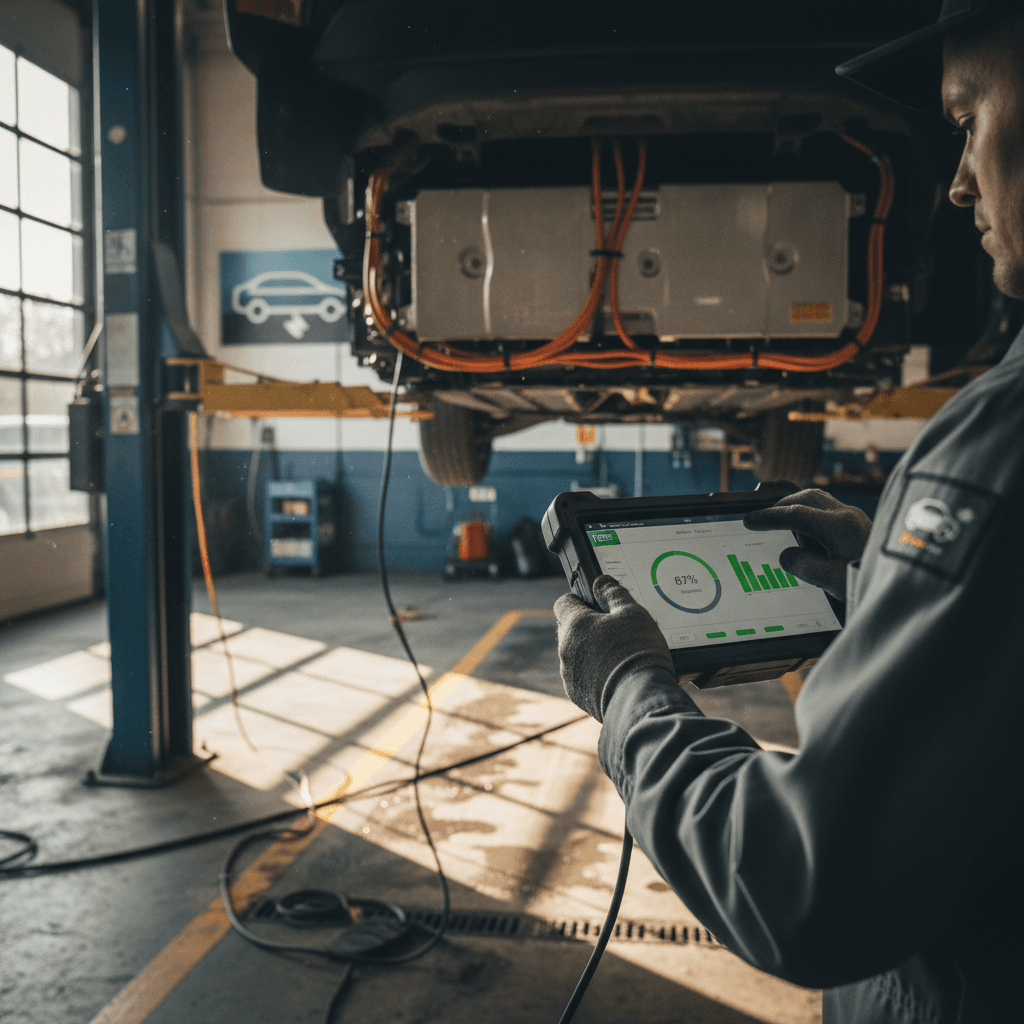
With EVs, the battery pack is the whole ballgame. Two otherwise identical cars can differ by thousands of dollars in value if one has a strong, documented pack and the other has obvious degradation or fast‑charging abuse. In a market where headlines scream about EV depreciation, good battery data is the antidote.
How battery health shows up in your trade‑in number
Same car, different battery story, very different offers
Healthy pack, documented
State of health (SoH) still in the 90s, gentle charging habits, and a clean third‑party battery report. Dealers and marketplaces can lean into the higher end of the pricing band.
Noticeable degradation
If an EV has lost a big chunk of range, it becomes a commuter or second car in most buyers’ minds. Appraisers price it like a niche car with a smaller audience.
Unknown or suspicious data
No battery data, lots of DC fast‑charging, or warning lights? That’s when you see “unexpectedly” low offers. The buyer prices in the risk they might be the one stuck holding the bag.
Where Recharged fits in
Ready to find your next EV?
Browse VehiclesWays to sell a used EV in North Carolina
Once you understand how your EV is valued, the next question is where to take it. In North Carolina, your options fall into a few broad buckets, each with its own mix of convenience and price.
Your main paths to cashing out of an EV in NC
Convenience on the left, maximum value on the right
1. Traditional dealer trade‑in
- Fast, one‑stop transaction.
- Potential NC tax savings on the new purchase.
- Lowest transparency on how your number was calculated.
- Best when you’re upside‑down and need everything rolled together.
2. Online instant‑offer buyers
- Quick quotes from home, sometimes with home pickup.
- Better EV awareness than small local lots, but not always.
- Numbers can swing hundreds or thousands, always get at least 2–3 offers.
3. EV‑focused marketplaces (like Recharged)
- Built specifically around used EVs and battery health.
- Options for instant offers or higher‑value consignment.
- Recharged adds a battery health report and markets your EV nationwide, not just in your ZIP code.
4. Private party sale
Still the theoretical top of the food chain for price, especially for clean, desirable EVs. You keep the dealer’s margin and negotiate directly with the next owner.
- Best for: Late‑model EVs in excellent shape, with clear battery data.
- Downside: Time, tire‑kickers, and handling your own payoff and paperwork.
- NC‑specific wrinkle: You’ll give up any trade‑in tax savings on your next purchase.
When Recharged makes the most sense
If you want something between "just dump it at the dealer" and "become your own salesperson," an EV‑specialist marketplace is the middle path. Recharged can:
- Give you an instant offer or list the car on consignment.
- Handle financing for the buyer and nationwide delivery from North Carolina.
- Use the Recharged Score to reassure EV‑curious shoppers who might otherwise lowball you.
Step‑by‑step checklist before you get quotes
You don’t need to become a used‑car manager to protect yourself. Spend an afternoon doing the right prep and you’ll separate yourself from the parade of unprepared owners dealers see every day.
Pre‑trade‑in prep for North Carolina EV owners
1. Pull current market values, not just one source
Check at least two valuation tools or offer platforms for your specific year, trim, mileage, and options. Save screenshots; they become leverage.
2. Get a battery health check
Use your EV’s built‑in diagnostics or a third‑party scan to capture state of health and recent range figures. If you plan to use Recharged, this becomes part of your Recharged Score.
3. Gather documents and accessories
Title (if you have it), registration, payoff info, service records, recall paperwork, both keys, and any charging equipment that came with the car.
4. Fix the cheap, obvious stuff
Clean the interior, wash and vacuum, replace wiper blades, remove stickers, and deal with inexpensive cosmetic issues. Don’t spend $1,500 on paint work to chase a $500 bump in value.
5. Get written offers from multiple buyers
Line up offers from a local NC dealer, at least one online buyer, and if possible, an EV specialist like Recharged. Compare them all after tax and fees.
6. Decide whether to trade, sell, or consign
Once you’ve got real numbers, choose: instant trade‑in convenience, slightly better instant‑offer price, or a consignment route that aims higher and takes a few extra weeks.
Example EV trade‑in scenarios in North Carolina
To make all this less abstract, let’s run through simplified examples. Numbers will vary with the NC Highway Use Tax rate on your deal, incentives, and your specific buyer, but the structure of the decision is the same.
Three simplified EV exit strategies
Assume you own a 4‑year‑old EV with a solid battery and a realistic private‑party value around $26,000 in today’s market.
| Path | What you do | Headline number | What you actually walk away with |
|---|---|---|---|
| A. Dealer trade‑in in Raleigh | Trade EV to dealer, roll everything into new EV deal | $23,000 trade‑in allowance | $23,000 off new car, plus several hundred dollars in tax savings vs no trade; lowest hassle, mid‑pack value. |
| B. Sell through Recharged consignment | List EV on Recharged, with Recharged Score and nationwide marketing | Roughly $26,000 sale price | After selling costs, you may net closer to $24,500–$25,000, with Recharged handling buyer, financing, and delivery. |
| C. Private sale in Charlotte | List on marketplaces, handle showings and paperwork yourself | Maybe $26,000–$27,000 if you’re patient | Highest ceiling but most work; you’ll also pay more tax on the replacement vehicle without a trade‑in credit. |
These examples are illustrative only. Always use your actual offers, payoff, and NC tax rate when you run the math.
Think in terms of “effective value”
FAQs: EV trade‑in value in North Carolina
Frequently asked questions about EV trade‑ins in NC
Bottom line: maximizing EV trade‑in value in NC
North Carolina isn’t a bad place to trade or sell an EV, it’s just a place where the details really matter. Highway Use Tax rules, fast‑evolving EV tech, and a used market still learning how to price batteries all collide on the appraisal line of your offer sheet. Walk into that process cold and your EV is just another VIN; walk in prepared and you’re negotiating over a specific, well‑documented asset.
Start with reality on your side: understand how your model depreciates, document your battery health, clean up the car, and collect offers from multiple buyers, including at least one EV‑focused option. If you’re looking for a path that blends convenience with real transparency, consider using Recharged to get an instant offer, explore consignment, or line up your next used EV with a verified Recharged Score Report. However you choose to exit your current electric car, the goal is the same: squeeze every last honest dollar out of the pixels and electrons you’ve already paid for.