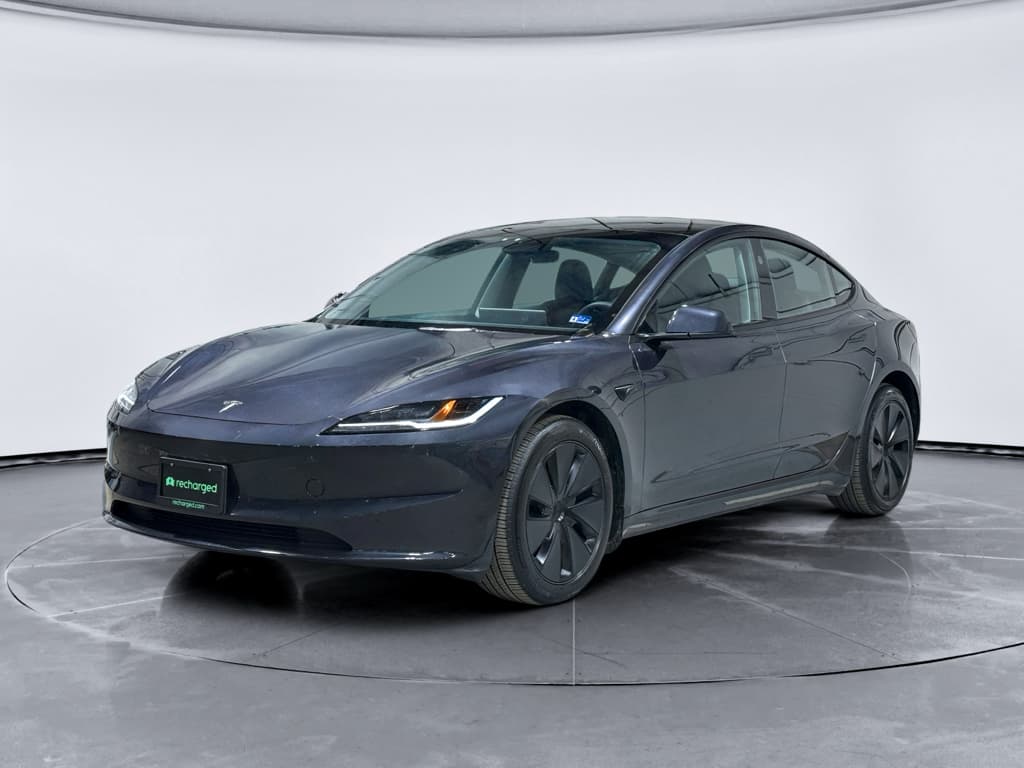
If you own an electric vehicle in the Sunshine State and you’re thinking about trading it in, you’ve probably discovered that EV trade in value in Florida doesn’t always follow the same rules as a gas car. Depreciation has been steeper, battery health is under the microscope, and 2025’s tax-credit changes reshaped both new and used EV pricing. This guide walks you through how value is really set in Florida today, and what you can do to keep thousands of dollars from slipping through your fingers.
Big picture: used EV values in 2026
Why EV trade-in value is different in Florida
Florida is one of the biggest EV markets in the Southeast, with growing public charging, heavy ride-share use in metro areas like Miami and Orlando, and a constant stream of out‑of‑state vehicles driven or shipped in. All of that shapes what your dealer is willing to pay. Unlike traditional cars, used EV value is dominated by battery health, fast‑changing tech, and local demand for specific models, and Florida has its own twists on each of those.
- High EV adoption in coastal metros means plenty of supply, and more price competition on popular models.
- Ride-share and delivery fleets cycling out high‑mileage EVs can drag down values on certain trims.
- Heat and frequent DC fast charging can accelerate battery wear, which Florida buyers and dealers increasingly watch closely.
- Flood and hurricane risk make clean titles and inspection history even more important to in‑state buyers.
Watch out for hurricane history
How dealers actually calculate EV trade-in value
Walk into a Florida dealership and ask for a trade appraisal, and the process will look familiar, but behind the scenes, the math for an EV is different. The appraiser is trying to answer one question: what will this EV bring at auction or retail after reconditioning and risk? For that, they lean on data, auction trends, and increasingly, battery diagnostics.
Key inputs that shape your EV trade-in number
Most Florida dealers blend several inputs to land on your offer:
What Florida appraisers look at on an EV
These six factors usually decide your trade-in number
Year, mileage & trim
Auction & retail data
Battery & charging history
Title & damage history
Condition & tires
Marketability
Bring your homework
Battery health: the #1 driver of EV trade-in value
For a gas car, appraisers focus on miles and maintenance. For an EV, the single most important variable is remaining usable battery capacity. Two 2021 crossovers with 40,000 miles can be thousands of dollars apart if one still charges to near its original capacity and the other has lost a big chunk of range.
- Shoppers in Florida care deeply about real‑world range with the A/C running and highway speeds, battery degradation has a direct dollar value.
- Heat, frequent fast charging, and regularly charging to 100% can all contribute to faster capacity loss.
- A car that still gets close to its rated range and shows healthy battery metrics typically sells faster and for more money.
- Conversely, an EV that’s lost 20–30% of range will either be priced aggressively or sit in inventory, which dealers factor into your offer.
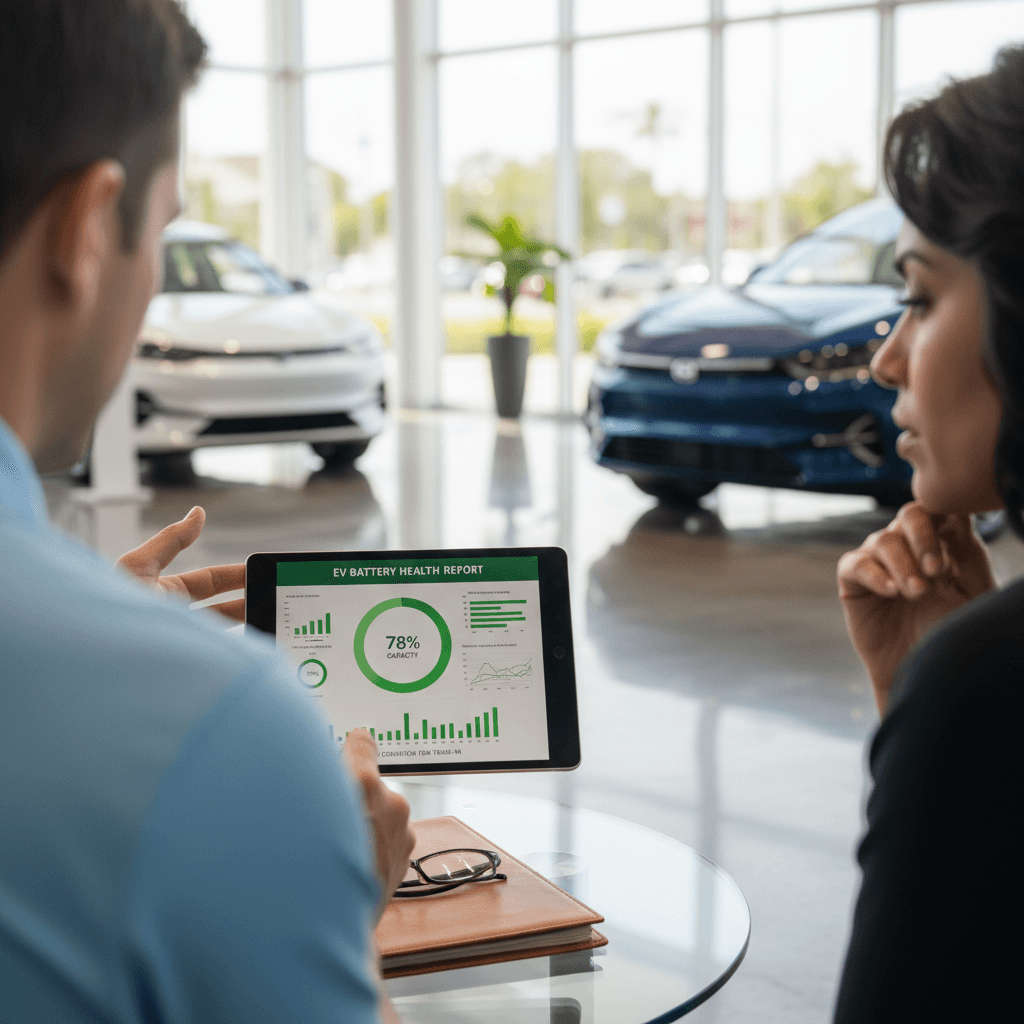
Why third‑party battery reports help you
Florida taxes, fees, and title quirks that affect your bottom line
No discussion of EV trade-in value in Florida is complete without looking at how sales tax and fees work. The good news: Florida generally gives you sales‑tax credit for a trade‑in when you buy another vehicle. The trade-in amount is subtracted from the taxable price of your next car, reducing the 6% state sales tax and any county surtax. That tax savings is part of your real‑world value, even if the number on the appraisal looks a bit lower than a private‑party price.
How trade-in tax credit works
- You trade an EV worth $25,000 and buy another vehicle for $45,000.
- In Florida, you generally pay sales tax on the $20,000 difference, not the full $45,000.
- At 6% state sales tax, that’s $1,200 in tax instead of $2,700, a savings of $1,500, before local surtax.
Exact tax treatment can vary by county and situation, so confirm details with the dealer or a tax professional before you sign.
When tax credit doesn’t help much
- If you’re not buying another vehicle, a straight sale or instant offer may put more cash in your pocket.
- On lower‑value older EVs, the tax savings may be small enough that you’re better off selling privately.
- Out‑of‑state transactions or unusual title situations can change how Florida calculates tax.
If you’re moving to Florida or buying from an out‑of‑state dealer, ask exactly how the title, tax, and registration will be handled before you commit.
Titles and paperwork matter more than you think
Model-by-model: what tends to hold value best
Every individual car is different, but there are clear patterns in how various EV categories are trading in 2025–2026. High original MSRPs and heavy discounts on new vehicles put more downward pressure on trade‑in values, while affordable, efficient EVs with strong range and low running costs often fare better.
Typical EV trade-in trends Florida dealers are seeing
General patterns only, your actual offer will depend on condition, battery health, mileage, and equipment.
| Category / Example | Florida demand snapshot | Typical value behavior | What helps your trade-in |
|---|---|---|---|
| Compact commuter EVs (Bolt EUV, LEAF Plus, Kona EV) | Healthy demand in cities and college towns | Older early‑range models can be soft; newer long‑range trims hold better | Clean history, good tire tread, recent battery check |
| Mainstream crossovers (Tesla Model Y, Hyundai Ioniq 5, Kia EV6) | Strong interest statewide, especially with families | Depreciation was steep in 2023–24 but has begun to stabilize | Popular colors, driver‑assist packages, and DC fast‑charge capability |
| Premium sedans & SUVs (Tesla Model S/X, Mercedes EQ, BMW iX) | Niche but present in wealthier coastal ZIP codes | Biggest percentage drops from MSRP; trade-in offers can feel low | Low miles, clean wheels, and spotless cosmetic condition |
| Electric pickups & vans (F‑150 Lightning, Rivian R1T, cargo vans) | Growing commercial and lifestyle interest | Values still finding their level; some trims lose value quickly | Towing package, bed protection, and fleet‑friendly specs |
These categories reflect how many Florida dealers and used‑EV specialists view the market in early 2026.
Why used EV buyers have the edge on depreciation
Trade-in vs instant offer vs consignment in Florida
You have more options than ever for getting out of your EV in Florida. The right path depends on whether you prioritize speed, simplicity, or maximizing every last dollar.
Three main ways to sell your EV in Florida
Each has its own sweet spot depending on your priorities
1. Traditional trade-in
You bring your EV to a dealership and use its value toward another vehicle.
- Best for: Convenience, one‑stop transaction.
- Upside: Sales‑tax savings on your next car, dealer handles paperwork.
- Downside: Often not the highest dollar amount, especially on clean, low‑mile EVs.
2. Instant cash offer
Online buyers and local dealers give you a quick cash price, often good for a few days.
- Best for: Fast exit, settling a loan, or switching to another transportation option.
- Upside: Speed and certainty; no need to buy another car.
- Downside: Convenience discount; offers often bake in conservative assumptions.
3. Consignment / marketplace
A specialist markets and sells your EV on your behalf for a fee.
- Best for: Well‑optioned EVs where a private buyer will pay a premium.
- Upside: Potentially higher net after fees than a straight trade.
- Downside: Takes more time, and you’ll need to coordinate handoff.
Don’t just compare offers, compare net outcomes
How to maximize your EV trade-in value in Florida
You can’t change the market, but you can absolutely influence how your individual EV is perceived and priced. Here’s a Florida‑specific checklist to work through before you start asking for numbers.
Pre‑trade checklist for Florida EV owners
1. Get a real battery health report
Don’t rely on a rough range estimate. Use a trusted diagnostic, many EV‑focused retailers, including Recharged through its <strong>Recharged Score</strong>, can provide a detailed battery health snapshot that you can show to any buyer or dealer.
2. Pull and read your vehicle history
Request a fresh vehicle history report and check for errors in mileage, title brand, or accident descriptions. Correcting a clerical mistake before you sell can easily be worth hundreds or even thousands of dollars.
3. Address cosmetic and odor issues
Detail the interior, remove beach sand and pet hair, and consider fixing curb rash on wheels or minor paint scuffs. Florida buyers are picky about cars that look like they’ve sat outside by the coast for years.
4. Gather both keys, manuals, and charger
Missing keys or the original Level 1/Level 2 charging cable are bigger value hits on an EV than on a gas car. Replacements are expensive, and dealers will deduct accordingly.
5. Document software and service history
Print or screenshot records of dealer services, recalls, and major software updates. For Teslas and other connected EVs, that history reassures Florida buyers that your car has been kept up to date.
6. Time your sale around season and incentives
In Florida, tax‑time and early summer often bring more buyers. Watch for new‑EV incentives that might temporarily push used prices down, and try not to trade in right after a major price cut on your model.
Heat is the silent battery killer
When it makes sense to keep your EV longer
Sometimes the best financial move is the one that doesn’t involve a new car smell. With EVs in particular, trading too early can lock in the steepest part of the depreciation curve. Holding your EV a bit longer can let depreciation slow while you extract more low‑cost miles from the battery you’ve already paid for.
You might keep your EV if…
- Your battery health is still strong and range covers your daily use with ease.
- The car is paid off or close to it, and insurance/registration are manageable.
- You’d be stretching your budget to step into a newer EV at today’s prices.
- You’re waiting for next‑gen models (longer range, faster charging) to hit the used market in 1–2 years.
Trading sooner may be smarter if…
- Your EV’s range is becoming a daily headache, especially with I‑95 or I‑4 commutes.
- The battery warranty window is closing, and any issue would be fully on you.
- Your current EV is in a segment that’s depreciating quickly, like some luxury models and big trucks.
- You can move into a more efficient used EV whose depreciation curve is already leveling out.
The biggest mistake I see Florida EV owners make is reacting emotionally to how far their car has already depreciated, instead of calmly asking, ‘What’s my best move from here forward?’ The money you’ve lost is gone. Focus on the next 3–5 years, not the last three.
How Recharged approaches EV trade-ins and offers
Because Recharged focuses solely on electric vehicles, valuation starts with what matters most to EV buyers: battery health, charging capability, and real‑world demand for your specific model. Instead of treating your EV like just another used car on a wholesale sheet, Recharged uses its own data, on‑the‑ground pricing trends, and a rigorous battery check to build an offer that actually reflects your car’s electric value.
What you can expect when you trade or sell an EV through Recharged
Florida‑friendly options for different situations
Recharged Score battery diagnostics
Instant offer and trade support
Consignment-style marketplace
Ready to find your next EV?
Browse VehiclesWhy this matters in Florida
Florida EV trade-in FAQ
Common questions about EV trade-ins in Florida
Florida is one of the best places in the country to own, and eventually sell, an electric vehicle, but only if you understand how EV trade in value in Florida is really set. Battery health, market timing, and tax rules matter just as much as paint and miles. Take the time to gather your data, clean up your paperwork, and compare offers from both traditional dealers and EV‑focused specialists like Recharged. Do that, and you’ll walk away from your trade knowing you made a smart, informed move, not just for this transaction, but for your next few years of electric driving as well.