If you drive an electric car in Massachusetts, or you’re thinking about buying a new or used EV, the state of the Massachusetts electric car charging network matters as much as tax credits or sticker price. The good news: Massachusetts is now one of the densest EV charging markets in the country, with more public chargers per square mile than anywhere else. The more nuanced reality is that coverage, speed, and reliability still vary sharply depending on whether you live in Boston, commute along I‑90, or park on a side street in Springfield.
Massachusetts is punching above its weight
How strong is Massachusetts’ electric car charging network?
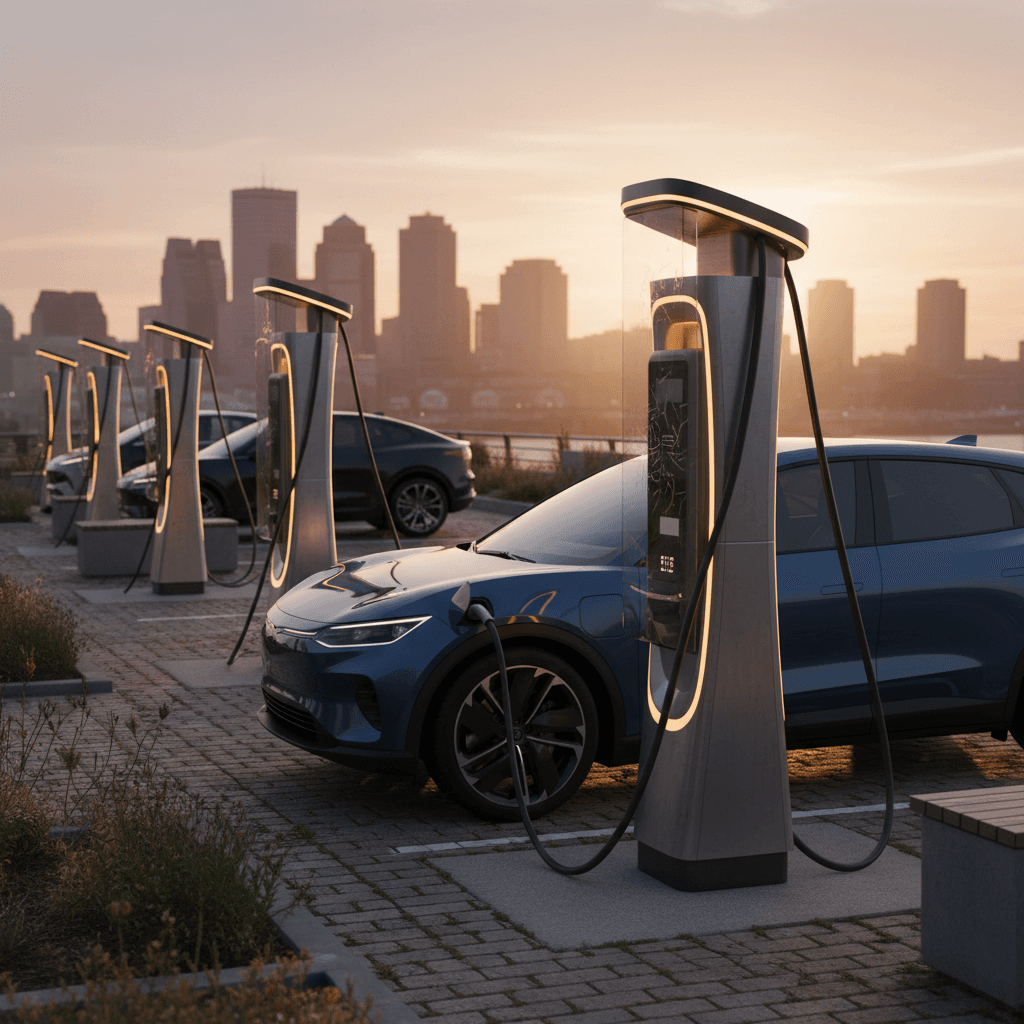
Massachusetts has spent the last few years turning climate targets into concrete infrastructure. As of late 2025, the state had roughly 3,900+ public charging stations and about 9,900 public charging ports, the bulk of them Level 2, with more than 1,500 DC fast‑charging ports for quick turnarounds. That’s up from 8,791 public ports at the end of 2024, according to state data, and well ahead of where planners expected to be a few years ago.
Massachusetts EV charging network at a glance
From a pure infrastructure standpoint, the Commonwealth is outpacing many parts of the country. The question for drivers is more granular: Is there a reliable charger where you actually need it, near work, at your apartment, or along the highway on a February road trip? That depends on a mix of policy decisions, private‑sector buildout, and how the major charging networks are positioning themselves in New England.
By the numbers: Public chargers and EVs on the road
Growth of Massachusetts public EV charging ports
How Massachusetts’ public charging network has scaled alongside EV adoption.
| Year | Public charging ports | Change vs. prior year | Notes |
|---|---|---|---|
| 2022 | 6,767 | +, | State ramps up early NEVI planning and utility make‑ready programs. |
| 2023 | 6,767 | +0 | Growth plateaus briefly as projects queue up. |
| 2024 | 8,791 | +2,024 | NEVI groundwork and private networks add significant new capacity. |
| 2025 (approx.) | 9,900+ | ~+1,100 | Ongoing buildout of Level 2 city sites and highway fast charging. |
Figures are statewide public charging ports at year‑end; 2025 is an estimate based on state and industry data.
On the vehicle side, Massachusetts hit roughly 139,000 light‑duty EVs (battery‑electric and plug‑in hybrid) on the road by the end of 2024, with a state goal of 200,000 EVs by 2025 and 900,000 by 2030. That means the charging network you see today is a down payment on far heavier usage later this decade.
Targets vs. reality
Where the chargers actually are: Cities, suburbs, and highways
Urban & inner‑suburban hubs
Boston, Cambridge, Somerville, and the Route 128 corridor are where you’ll see the densest clusters of plugs. Level 2 chargers dominate, often in parking garages, university lots, hospitals, workplaces, and curbside pilots. DC fast charging is concentrated at select garages, retail centers, and a handful of high‑traffic sites.
- Strong coverage if you live or work near major job centers.
- Competition for plugs during peak hours, especially near popular shopping areas.
- Plenty of options to “top off” while you’re parked for a few hours.
Outer suburbs & smaller cities
Worcester, Lowell, Springfield, Pittsfield, and Cape communities are in a different phase. You’ll find fewer total stations, but the ones that exist are more likely to be visible, at supermarkets, highway exits, and downtown off‑street lots.
- Level 2 coverage is expanding, but still patchy neighborhood‑to‑neighborhood.
- Fast chargers tend to hug interstates and key state highways.
- In some towns, a single DC fast site serves a wide radius, so reliability matters.
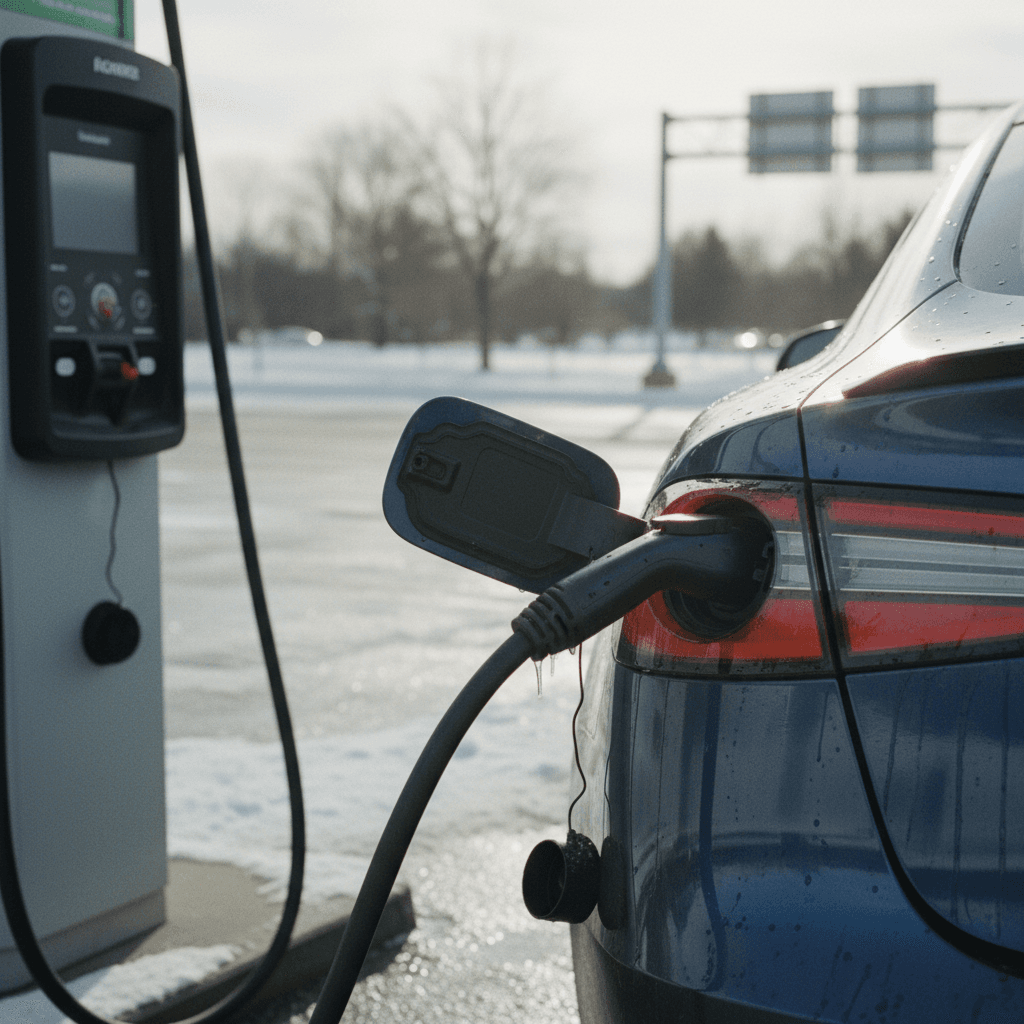
At Logan Airport and other Massport‑controlled sites, charging has quietly become a major piece of the portfolio. Logan alone now offers dozens of public Level 2 ports plus DC fast chargers for ride‑for‑hire fleets, with additional public stations at Worcester Regional Airport and Logan Express facilities. For frequent flyers and rideshare drivers, that cluster of infrastructure matters as much as what’s on your local block.
How to see the network the way planners do
Highway fast charging and the NEVI buildout
For long‑distance driving, the backbone of the Massachusetts electric car charging network is DC fast charging along the Mass Pike, I‑93, I‑95, and other Alternative Fuel Corridors. That’s where the federal National Electric Vehicle Infrastructure (NEVI) program comes in.
What NEVI means for Massachusetts drivers
Fast‑charging requirements that shape how and where new stations get built
Designed for highways
Minimum power levels
Regional connectivity
MassDOT’s first NEVI projects focus on upgrading and filling gaps along the Mass Pike and key north–south routes. Existing service plazas that once had a couple of aging fast chargers are being rebuilt with higher‑power hardware, multiple stalls, and better uptime targets. As more contracts are awarded, expect additional sites in Western Massachusetts and on routes that feed into ski country and coastal destinations.
Good news for road‑trippers
What it costs to use Massachusetts public chargers
Charging economics can make or break EV ownership, especially if you don’t have a driveway. In Massachusetts, public charging prices are high enough that you’ll want to pay attention to when and where you plug in.
- Average public charging prices hover around $0.34 per kWh across the state, with wide variation by network, site host, and time of day.
- Level 2 public charging is usually cheaper and best used when you can leave the car for several hours, at work, while shopping, or overnight in a garage.
- DC fast charging commands a premium. Pricing may be per‑kWh, per‑minute, or a mix, and some networks now add idle fees if you stay plugged in after charging finishes.
- Utility off‑peak programs and workplace charging can significantly cut your effective cost per mile if you structure most of your charging around them.
Watch for per‑minute pricing on slower chargers
Networks, plugs, and how to avoid compatibility headaches
Massachusetts doesn’t have a single “state network.” Instead, it’s a patchwork of national and regional operators building sites where they think the demand pencils out. For drivers, the key is to understand who runs the station and what plug it offers.
Major players in the Massachusetts EV charging landscape
You’ll see a mix of these logos across the state, from city garages to truck stops.
Utility & municipal programs
National fast‑charging networks
Tesla Supercharger network
Connector standards are in flux. Most non‑Tesla EVs on the road today in Massachusetts still use CCS for DC fast charging and J1772 for Level 2, while Tesla vehicles use the NACS plug for both. Starting in 2025–2026, more new EVs will ship with NACS ports and may rely on adapters for older CCS infrastructure.
Compatibility checklist for Massachusetts chargers
How to plan everyday driving and road trips in Massachusetts
Smart charging strategies for Massachusetts EV owners
1. Lock in a home or workplace baseline
If you have off‑street parking, a Level 2 home charger will cover most of your miles at the lowest cost. If you don’t, look for reliable workplace chargers or garages where you can plug in a few times a week.
2. Map your “go‑to” public stations
Identify 2–3 dependable public chargers near home and work, ideally a mix of Level 2 and DC fast. Save them in your apps so you’re not scrambling when you’re low on range.
3. Use fast charging strategically
On highways, prioritize NEVI‑compliant sites and modern DC fast hubs with multiple stalls. Plan stops where you can combine charging with meals or errands so the time doesn’t feel like a tax.
4. Plan for winter derating
Cold New England winters slow both charging speeds and range. Build in extra buffer on highway trips and don’t assume you’ll hit your vehicle’s published fast‑charging peak in sub‑freezing weather.
5. Check status before you drive
Most major networks now show real‑time station availability and, in some cases, reliability scores. Always verify that a site is online and has at least one open stall before committing to it.
6. Have a Plan B (and C)
On less‑traveled routes in Western or Central Massachusetts, identify backup chargers within 10–20 miles of your primary stop in case a site is busy or offline.
Equity, reliability, and where the gaps remain
For all the progress, Massachusetts’ electric car charging network still has blind spots. Apartment dwellers without reserved parking, especially in older housing stock, face a tougher math problem than homeowners with driveways. Some Gateway Cities have only a handful of public chargers covering large populations. And like the rest of the country, reliability has improved but not enough; failed sessions and out‑of‑service stalls are still part of the EV ownership story.
Where the network is thin
- Older urban neighborhoods with dense street parking and few off‑street lots.
- Rural Western Massachusetts, where DC fast chargers are spaced farther apart.
- Some Gateway Cities that are still waiting on utility and grant‑funded projects to come online.
Drivers in these areas often lean heavily on a small number of sites, which magnifies the impact of any outage.
How the state is responding
- The Electric Vehicle Infrastructure Coordinating Council (EVICC) has been steering funding toward curbside charging, fleet electrification, and bidirectional pilots that can support the grid.
- MassCEC’s vehicle‑to‑everything (V2X) pilots are deploying bidirectional chargers in homes, schools, and municipal fleets to test how EVs can feed power back to the grid.
- Equity requirements baked into state and federal grants push networks to serve disadvantaged communities, not just wealthy suburbs and tourist corridors.
Equity is becoming a siting requirement, not a talking point
What this network means if you’re buying a used EV
A robust public charging network does more than make road trips easier, it underpins the used EV market. In Massachusetts, stronger infrastructure and state incentives are starting to improve resale confidence, particularly for shoppers who can’t install home charging.
How Massachusetts’ charging network shapes used EV ownership
What to think about if you’re shopping the secondary market.
Neighborhood reality check
Battery health vs. charging speeds
Total cost of ownership
This is where a platform like Recharged comes in. Every used EV listed with Recharged includes a Recharged Score Report with verified battery health and fair‑market pricing, plus EV‑specialist support to help you understand how your driving patterns and local charging options will play together. If you’re in Massachusetts and buying without a driveway, having that data, and a clear picture of your nearby charging network, can be the difference between a car that fits your life and one that doesn’t.
Pair the Recharged Score with a local charger audit
Massachusetts EV charging network: FAQ
Common questions about Massachusetts’ electric car charging network
Bottom line: Is Massachusetts ready for more EVs?
On paper, Massachusetts is one of the best‑prepared states in the country for mainstream EV adoption: high charger density, an aggressive buildout plan, and a growing backbone of highway fast charging. On the ground, the experience is more nuanced, excellent for many suburban homeowners, workable but demanding for renters and rural drivers, and heavily dependent on the reliability of a still‑maturing mix of networks.
For shoppers eyeing a new or used EV, the message is clear. Don’t just kick the tires; interrogate the charging network around your life. If you pair a solid local charging map with a vehicle that has verified battery health and compatible fast‑charging hardware, Massachusetts’ electric car charging network should be an asset, not a risk. And as more NEVI sites open and equity‑focused projects come online, the ceiling for EV ownership in the Commonwealth is likely to rise, along with the resale prospects for the cars in today’s used‑EV pipeline.