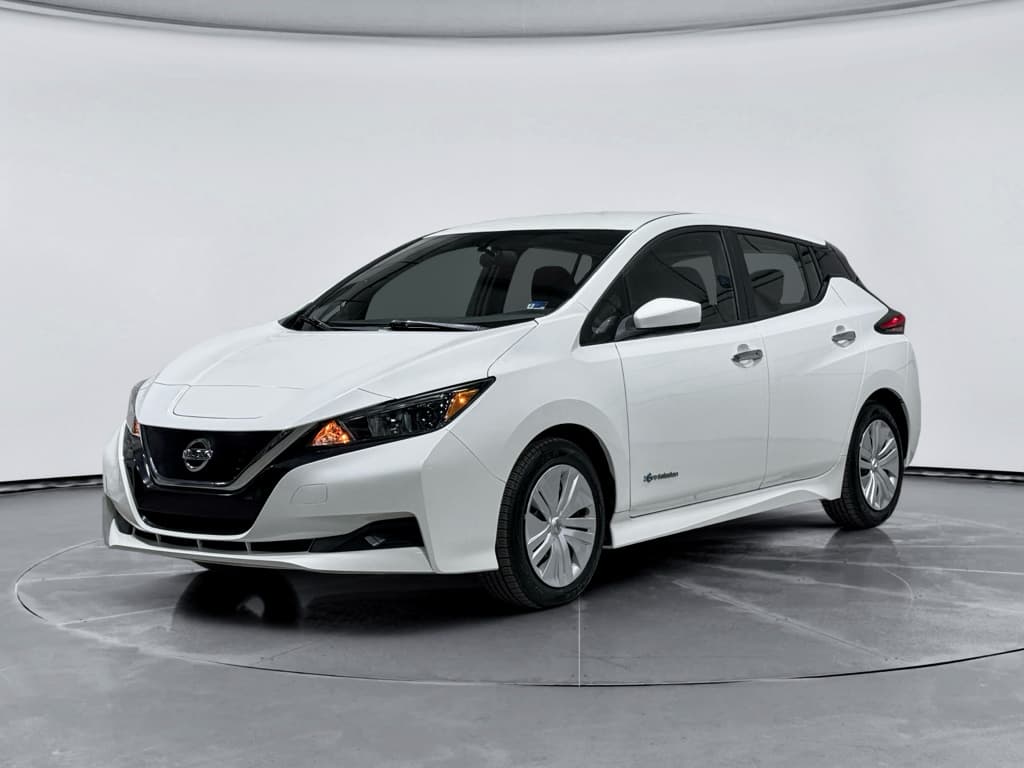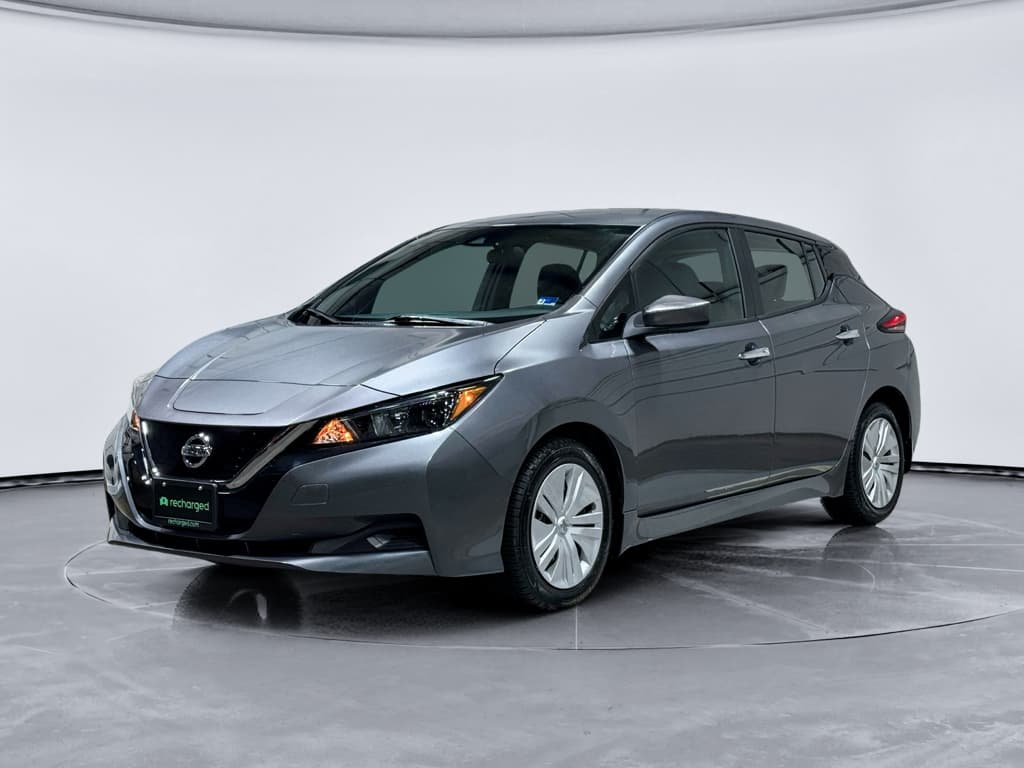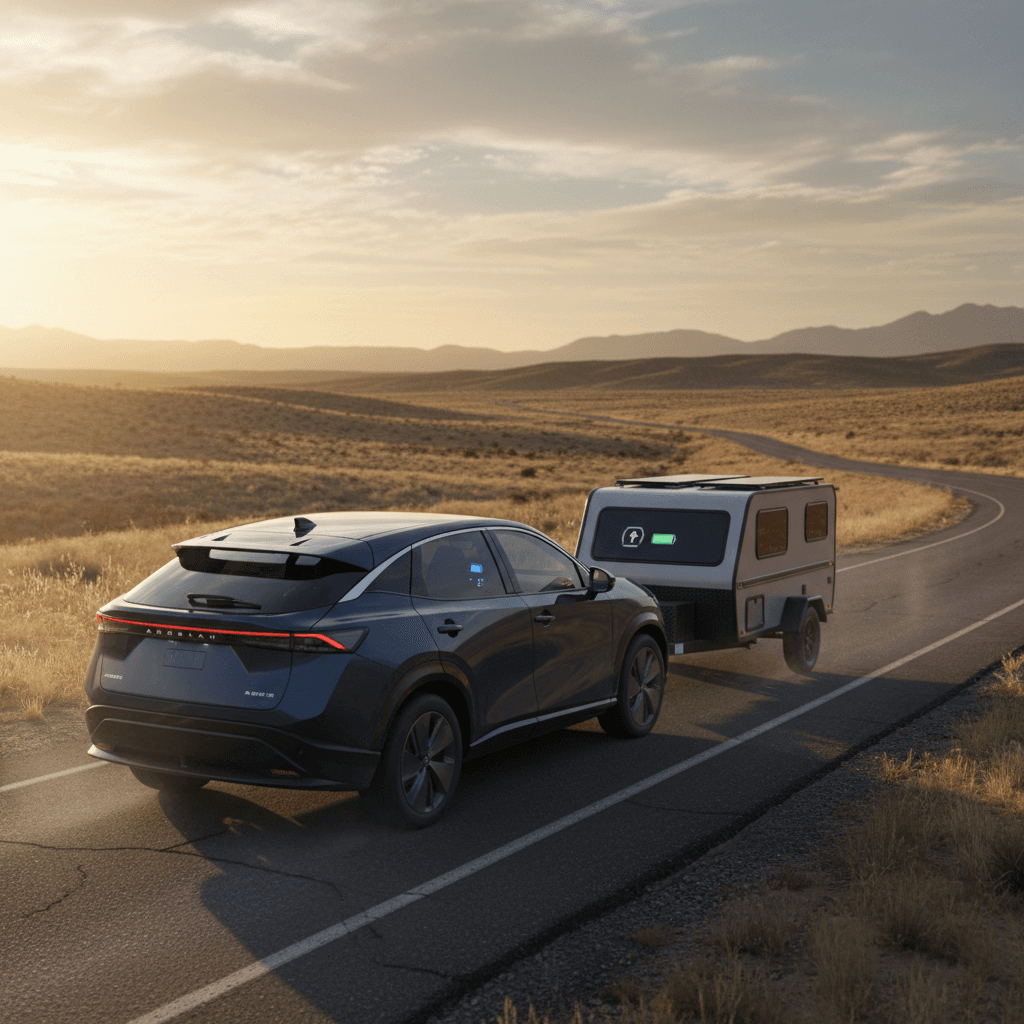
If you’re looking at the Nissan Ariya towing capacity and range, you’re trying to answer one very practical question: can this sleek electric SUV haul your gear without turning every road trip into a charging scavenger hunt? The short answer: yes, within its limits. The Ariya can tow, but it’s a compact crossover with a comfort bias, not a battery‑powered F‑150.
Key takeaway in 20 seconds
Overview: Ariya towing and range at a glance
Nissan Ariya towing & range snapshot
The Ariya is an interesting contradiction: a calm, almost lounge‑like cabin wrapped around a fairly serious EV powertrain. Nissan gives you two battery options (around 63 kWh and 87 kWh) and both front‑ and all‑wheel‑drive versions. That mix determines not only how far you can go on a charge, but also how confidently you can tow.
Check your actual sticker
Nissan Ariya towing capacity by trim and battery
Unlike some early EVs that were explicitly "no‑tow" vehicles, the Nissan Ariya was engineered with light towing in mind. That said, it’s a unibody crossover with a relatively soft suspension, not a dedicated tow rig. Think small campers and utility trailers, not car haulers.
Typical Nissan Ariya towing ratings (U.S. market)
Approximate factory ratings for recent U.S. Ariya trims. Always verify against your specific vehicle documentation.
| Configuration | Battery | Drive | Typical Tow Rating | Best Use Case |
|---|---|---|---|---|
| Engage / Venture+ (63 kWh FWD) | 63 kWh | FWD | Up to 1,500 lb | Small utility trailer, single jet ski, lightweight cargo |
| Evolve+ / Empower+ (87 kWh FWD) | 87 kWh | FWD | Up to 1,500 lb | Teardrop camper, small pop‑up, pair of lightweight bikes on a trailer |
| Evolve+ / Platinum+ e‑4ORCE | 87 kWh | AWD | 1,500 lb (U.S.), higher in some other markets | More stable towing in bad weather, same basic weight limit in U.S. |
Front‑wheel drive Ariya models are best for light towing; dual‑motor e‑4ORCE versions add traction more than raw tow capacity.
Why U.S. numbers look conservative
- Most U.S. Ariya trims: plan around 1,500 lb (including the trailer and everything on it).
- Aim to stay comfortably under the maximum rating, 1,000–1,200 lb is a sweet spot for drivability and range.
- Tongue weight (downforce on the hitch) typically should stay around 10% of trailer weight.
Don’t tow without the proper equipment
Battery size, range, and efficiency explained
Before you hook a trailer to an EV, you need to understand what you’re asking of the battery. The Nissan Ariya gives you two packs: a smaller ~63 kWh battery and a larger ~87 kWh battery. EPA‑rated range depends on which pack, which motor configuration, and even which wheels you have.
Approximate EPA range by battery and drivetrain
Representative EPA combined range figures for recent Ariya trims. Exact numbers vary slightly by model year and equipment.
| Battery / Trim Example | Drive | EPA Combined Range | Notes |
|---|---|---|---|
| 63 kWh (Engage FWD) | FWD | ~216 miles | Good for commuting and light regional trips. |
| 87 kWh (Evolve+ FWD 19" wheels) | FWD | Up to ~289–304 miles | Best‑case highway cruiser; lighter and more efficient than AWD. |
| 87 kWh (e‑4ORCE AWD, 20" wheels) | AWD | ~257 miles | Extra motor and bigger wheels trade range for grip and style. |
Think of these as "sunny‑day, no‑trailer" ranges. Towing and bad weather both take a bite.
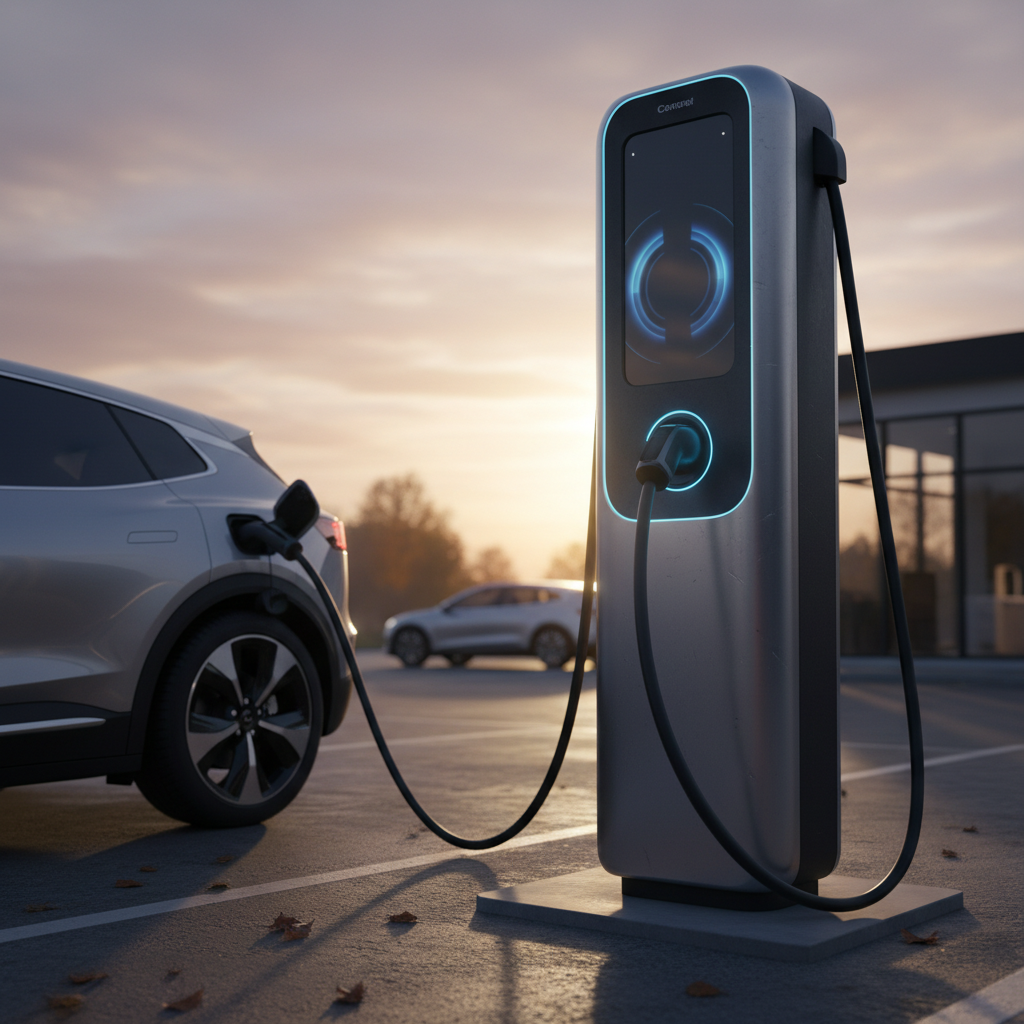
On DC fast chargers, the Ariya can accept up to 130 kW and typically goes from about 10% to 80% in the neighborhood of 30–40 minutes when the battery is warm and the charger is behaving. On Level 2 (240 V) at home, you’re looking at roughly 10.5 hours to fully recharge the 63 kWh pack and around 14 hours for the 87 kWh pack from empty, comfortably overnight in real life.
A simple way to think about range
How towing actually affects Nissan Ariya range
Electric crossovers and trailers have a complicated relationship. Weight matters, but aerodynamics often matter more. A flat‑fronted camper behind an Ariya turns the whole combination into a rolling brick; even a light trailer can crush your efficiency if it punches a big hole in the air.
Main factors that kill (or save) your towing range
You can’t cheat physics, but you can negotiate with it.
Aerodynamics
Boxy campers and tall trailers create massive drag. A small, low teardrop or bike trailer typically hurts range far less than a tall travel trailer of the same weight.
Total weight
More mass means more energy to accelerate and climb hills. A heavily loaded 3,300 lb trailer can nearly double your energy use compared with driving empty.
Speed & weather
Speed is a range multiplier: 75 mph vs. 60 mph can be the difference between making the next charger or calling roadside assistance, especially in cold or windy conditions.
Rough efficiency numbers
In gentle highway driving without a trailer, an Ariya with the big battery might average around 2.8–3.2 miles per kWh. That’s how you get those 250–300 mile figures.
Hook up a modest trailer and drive at real‑world interstate speeds, and you can easily fall to 1.5–2.0 miles per kWh. Larger, taller trailers can drag you down toward 1.0–1.3 miles per kWh.
What that means in miles
- 87 kWh battery at 3.0 mi/kWh ≈ 260 miles of practical highway range.
- Same battery at 1.8 mi/kWh (small trailer) ≈ 155 miles.
- Same battery at 1.2 mi/kWh (big, boxy trailer) ≈ 105 miles.
That’s before you hold back a safety buffer, which you absolutely should when towing.
Cold weather makes it worse
Real‑world examples: What you can tow and how far
Let’s translate all the numbers into real trips. These aren’t lab results; they’re realistic planning scenarios for a healthy Ariya with the 87 kWh battery, set up properly with a hitch and staying under its rated towing capacity.
Example towing scenarios for Nissan Ariya
1. Lightweight utility trailer (~800–1,000 lb)
Think open 4x8 utility trailer with camping gear, bikes, or a small load of lumber. Expect perhaps <strong>25–35% range loss</strong> at 60–65 mph. Your 260‑mile highway day suddenly looks more like 170–190 miles between comfortable charges.
2. Compact teardrop camper (~1,200–1,500 lb)
Stay near the top of the Ariya’s rating and choose a low, rounded shape. At 60 mph on relatively flat ground, <strong>40–45% range loss</strong> is a reasonable planning assumption. A practical hop becomes <strong>140–160 miles</strong> before you’ll want to DC fast charge.
3. Tall boxy trailer (~1,500 lb but high frontal area)
The frontal area is the villain here. Even at the same weight, you might see <strong>50%+ range loss</strong>. On a 260‑mile "unloaded" highway range, design around <strong>110–130 miles</strong> between charges, maybe less if it’s windy or hilly.
4. Short regional trip with Level 2 at the destination
Hauling a small trailer to a cabin two hours away with a 40‑amp Level 2 on site? This is where the Ariya shines. You don’t care if you arrive at <strong>20–30% state of charge</strong> as long as you can plug in overnight, which you can with even a modest 32A home charger.
Stay well under the limit for a better trip
Charging strategy when you’re towing an Ariya
Towing with an EV isn’t just a question of whether it can move the load. The real art is stringing together chargers so the trip feels like a journey, not a siege.
Smart charging moves for towing
Planning beats white‑knuckle hypermiling every time.
Shorter hops, more often
Instead of trying to stretch a long leg, plan 80–120 mile segments between DC fast chargers. It’s easier on the battery and your nerves.
Charge 10–70%, not 10–100%
On most fast chargers the Ariya is quickest between 10–70 or 80%. The last 20–30% takes a disproportionately long time, so it’s often better to leave sooner and charge again down the road.
Know your networks
The Ariya uses CCS1 for DC fast charging, and with the right adapter kit, can access many Tesla Superchargers. Check compatibility in your charging apps before you leave.
Precondition the battery when you can
On the way out
- Start the trip at or near 100% at home.
- Plan the first DC fast charge for when you’re down to about 20–30%, not close to zero.
- Use this first stop to calibrate your real towing efficiency vs. what the trip computer predicted.
On the way back
- Leave your destination with as much charge as practical, ideally 80–100%.
- Reuse the same chargers you liked on the way out; you already know how they perform.
- Give yourself a bit more buffer if the return leg includes more climbing or worse weather.
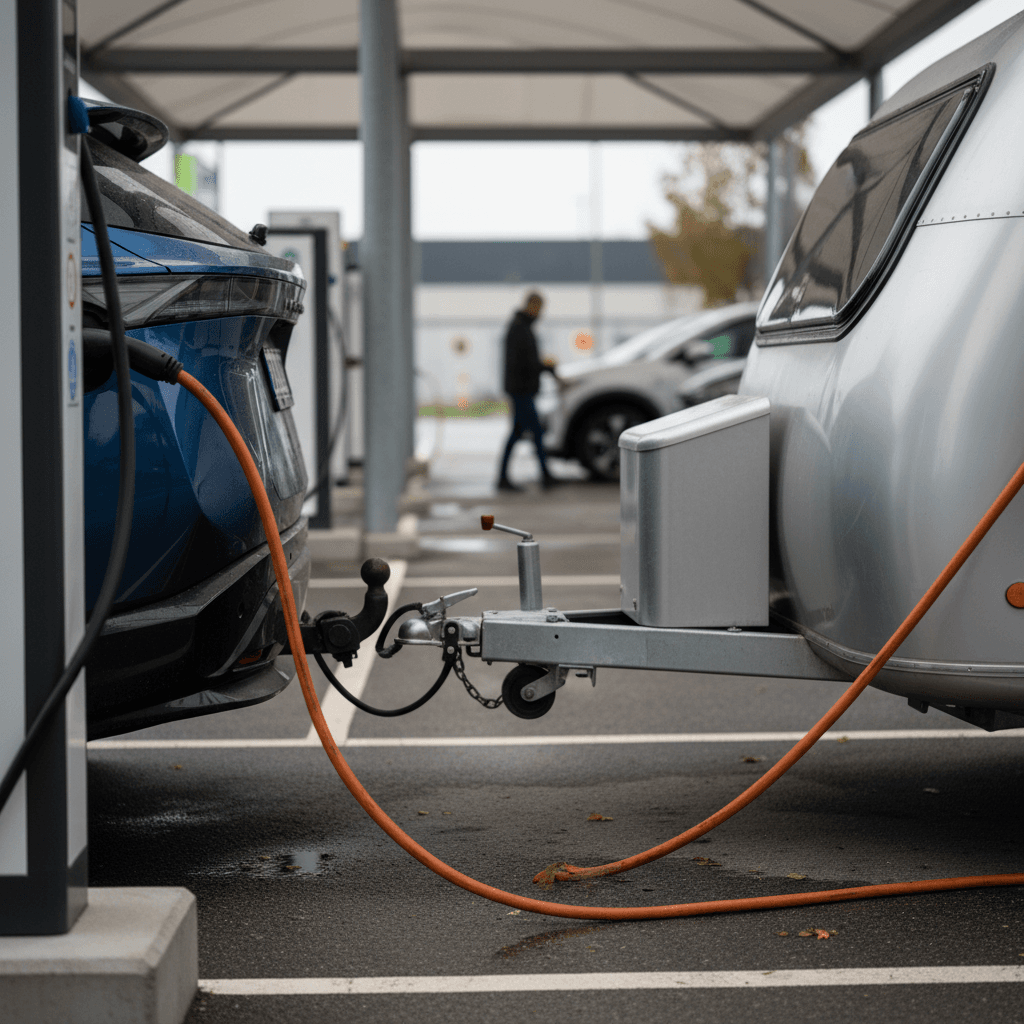
Mind your trailer at the charger
Is the Nissan Ariya the right EV for towing?
The Ariya is more "quiet weekend escape" than "tow anything, anywhere." That’s not a criticism; it’s a question of character. This car is tuned for serenity, not swagger. As a tow vehicle, it works best for people whose lives already fit inside its envelope.
Where the Ariya shines, and where it doesn’t
For the right use case, it’s a lovely, cultured little workhorse.
Ariya towing strengths
- Very smooth, quiet power delivery, no gear hunting, instant torque.
- All‑wheel‑drive e‑4ORCE adds stability and traction on wet or gravel roads.
- Excellent cabin comfort for long days: quiet, airy, genuinely premium feel.
- Reasonable DC fast charging around 130 kW when conditions are right.
Ariya towing limitations
- Modest 1,500 lb U.S. tow rating keeps you in the lightweight trailer category.
- Range drop of 30–50%+ is very real with taller trailers.
- CCS fast‑charging network quality can be inconsistent compared with Tesla’s native network.
- Discontinued in the U.S. after 2025, so future parts and resale depend on Nissan’s long‑term support.
"As a tow vehicle, the Ariya is less about flexing at the campground and more about arriving there relaxed, having listened to jazz instead of your own range anxiety."
Shopping a used Ariya for towing and road trips
Because Nissan is winding down new Ariya sales in the U.S., the real story going forward is the used Ariya market. That’s where you’ll likely find the best value, and where doing your homework on towing and battery health really pays off.
Used Ariya towing & range checklist
Confirm the tow rating and hitch quality
Make sure the car is <strong>rated for towing in your market</strong> and that any aftermarket hitch is properly installed, rust‑free, and rated for at least the weight you plan to pull.
Prioritize the 87 kWh battery for towing
If towing and road‑tripping are on your agenda, lean toward trims with the <strong>larger 87 kWh pack</strong>. More usable energy means more buffer when the weather or terrain doesn’t cooperate.
Check battery health, not just odometer
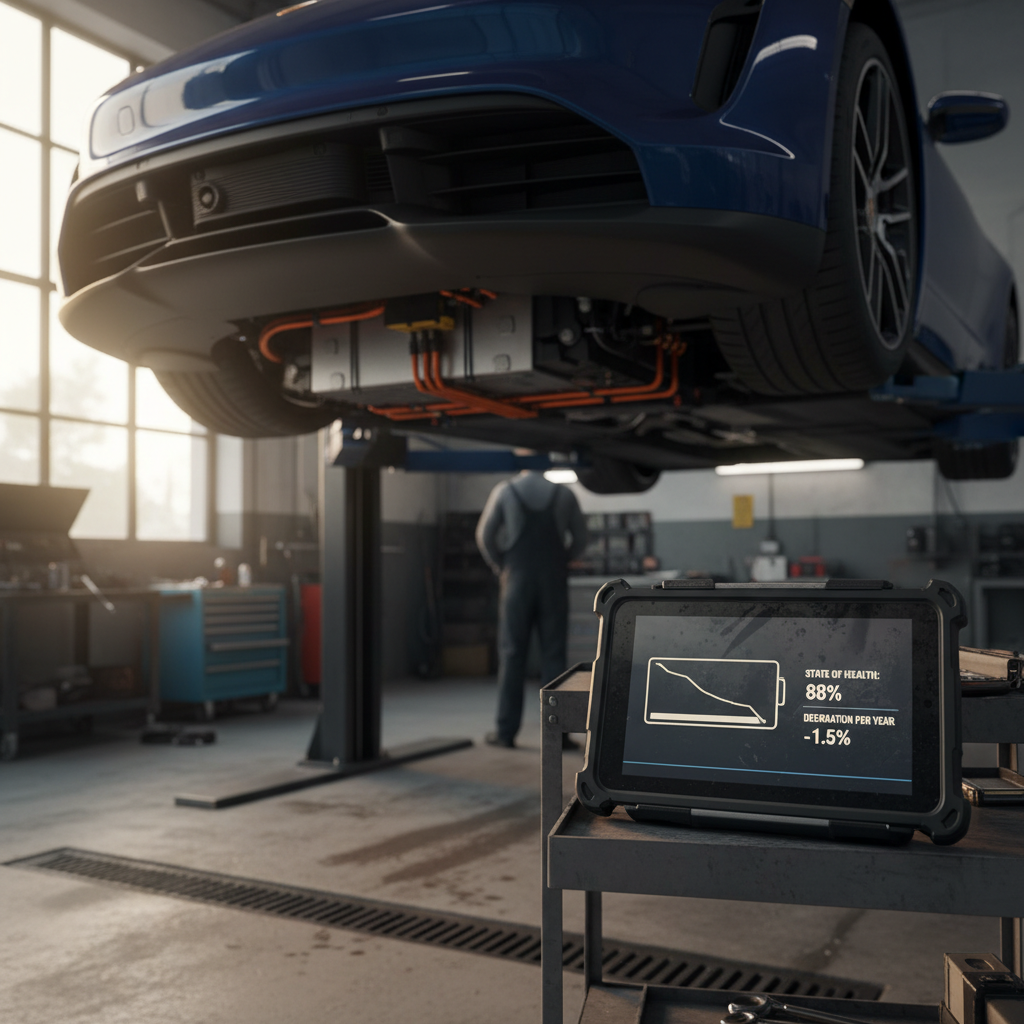
For an EV tow vehicle, <strong>usable battery capacity</strong> is everything. A healthy pack maintains range; a degraded one shrinks your towing radius. A detailed battery report is worth more than a generic "looks fine" from a non‑EV dealer.
Look for DC fast‑charge history
Moderate DC fast‑charging isn’t a deal‑breaker, but if a car lived on 350 kW chargers every day, you’ll want a closer look at its battery health and cooling performance.
Test‑drive with weight, if possible
Even if the seller can’t provide a trailer, a car full of adults and gear can simulate a partial load. Pay attention to <strong>braking feel, suspension control, and temperature warnings</strong> on a long test drive.
How Recharged can help
Nissan Ariya towing capacity & range FAQ
Frequently asked questions about Nissan Ariya towing and range
The Nissan Ariya isn’t the EV equivalent of a three‑quarter‑ton diesel, and it doesn’t pretend to be. What it offers is a refined, comfortable electric crossover that can tow the kind of lightweight trailers many people actually own, provided you respect its limits and plan your charging with care. If you’re shopping the used market, pay close attention to battery size, health, and tow rating, and don’t be shy about asking for data. And if you’d rather have someone do that legwork for you, Recharged is built exactly for that: matching you with a used EV, Ariya or otherwise, that fits your real life, trailer included.