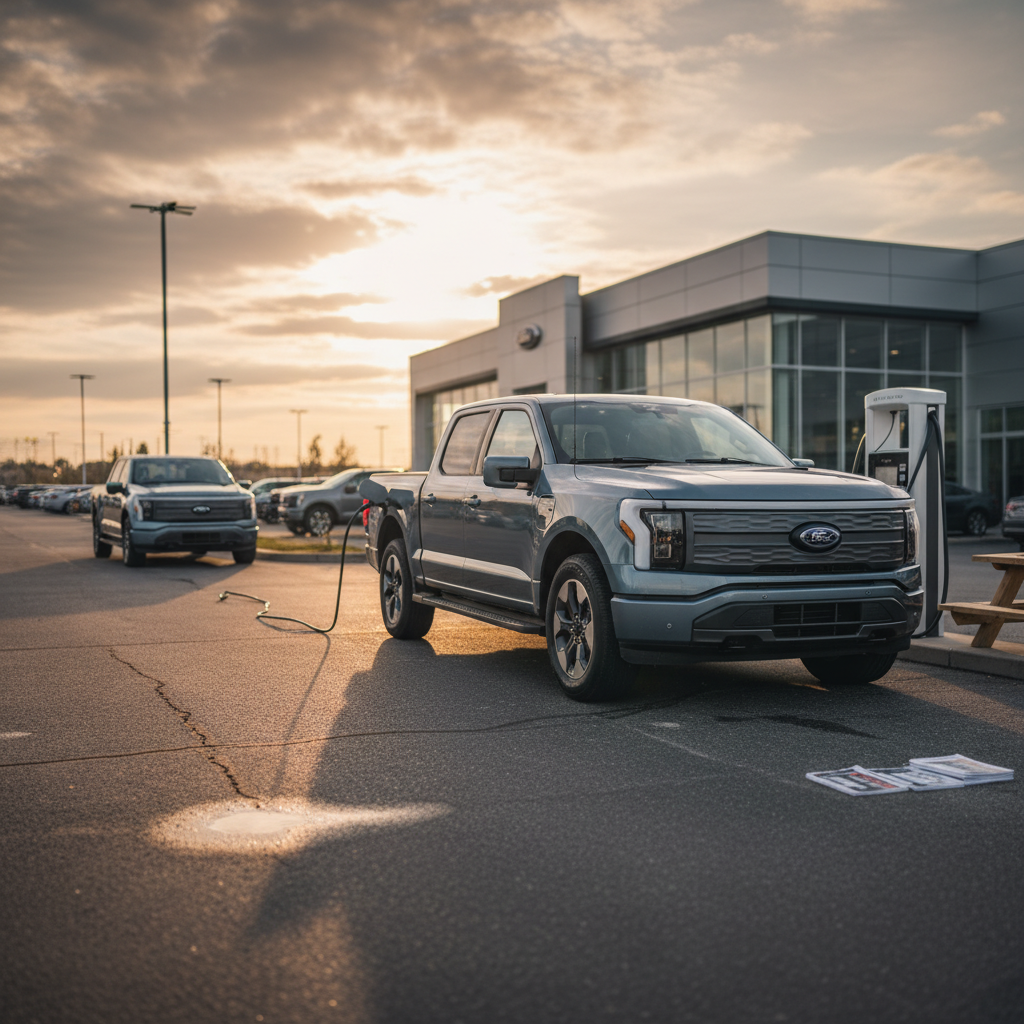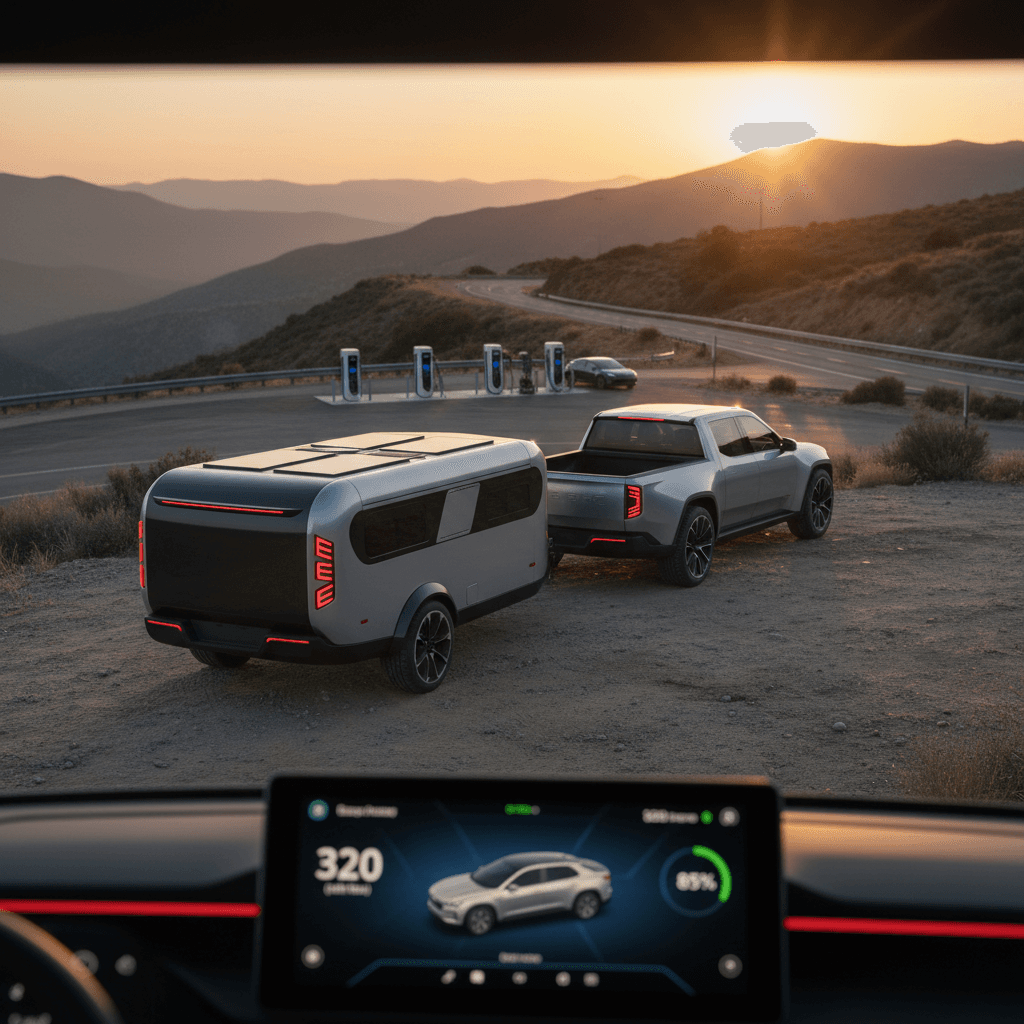
You’re not the first person to look at a quiet, torquey electric truck and think, “Could an EV tow my fifth wheel?” On paper, modern electric pickups boast tow ratings that rival gas trucks. In practice, fifth wheels are a much tougher test than the numbers on a brochure, and today’s EVs are only just starting to catch up.
Short answer
Can an EV Tow a Fifth Wheel Today?
Before we get into model names and spec sheets, it helps to separate two different questions: 1. **Can an EV generate enough pulling power for a fifth wheel?** 2. **Are today’s EVs actually built and rated to carry a fifth‑wheel hitch and pin weight safely?**
- Electric motors have no problem with torque, that part is easy. Trucks like the Chevy Silverado EV are rated to tow up to 12,500 lbs, squarely in fifth‑wheel territory.
- The hard part is payload and packaging. Fifth wheels drop 20–25% of their total weight (the pin weight) into the truck’s bed, directly over the rear axle. That eats payload fast, and many current EVs weren’t designed with a traditional fifth‑wheel hitch in mind.
Important safety note
Towing Capacity vs. Payload: Why Fifth Wheels Are Tricky for EVs
With travel trailers, you mainly care about the truck’s tow rating. With fifth wheels, you have to care just as much, if not more, about payload.
Tow Rating vs. Payload, Explained
Both matter for fifth‑wheel towing with an EV
Tow rating (pulling power)
What it is: The maximum weight your truck can legally pull on a hitch.
- Measured in pounds (e.g., 10,000 lbs).
- Determined by frame strength, powertrain, cooling, brakes.
- Most electric pickups already match or beat half‑ton gas trucks here.
Payload (weight on the truck)
What it is: The total weight the truck can carry in and on itself.
- Includes people, cargo, hitch, and fifth‑wheel pin weight.
- Typical fifth‑wheel pin weight is ~20–25% of the trailer’s loaded weight.
- Many EVs have lower payload than comparable gas trucks due to heavy battery packs.
Rule of thumb for pin weight
Typical Payload vs. Fifth-Wheel Needs
Are Any EV Trucks Rated for Fifth-Wheel Towing?
As of early 2026, most electric pickups on sale in the U.S. focus on **conventional bumper‑pull towing**, not fifth‑wheel or gooseneck setups. Here’s where the big names stand conceptually:
Where Today’s EV Trucks Stand on Fifth-Wheel Towing
High‑level view of capability and limitations for popular electric pickups
| Model | Max Tow Rating (approx.) | Typical Payload (approx.) | Fifth‑Wheel Friendly? |
|---|---|---|---|
| Ford F‑150 Lightning | 7,700–10,000 lbs | ~1,600–2,000 lbs | Tow capacity is there, but no factory fifth‑wheel prep and limited payload for pin weight. |
| Chevy Silverado EV | Up to ~12,500 lbs | ~1,400–2,100 lbs | Strong tow rating; fifth‑wheel hardware and ratings are still emerging. |
| GMC Hummer EV Pickup | ~7,500–8,000 lbs | Often under 1,500 lbs | Very heavy truck; payload is the choke point for serious fifth‑wheel use. |
| Rivian R1T | Up to ~11,000 lbs | Often under 1,700 lbs | Has under‑bed storage and bed structure that make traditional fifth‑wheel hitches difficult or impossible. |
| Upcoming midsize EV trucks | Lower (5,000–8,000 lbs) | Likely 1,200–1,800 lbs | Better matched to small campers, not classic fifth wheels. |
Always confirm the exact tow and payload ratings for your specific truck configuration and model year before towing.
Watch the bed design
Range Reality: Towing a Fifth Wheel With an EV
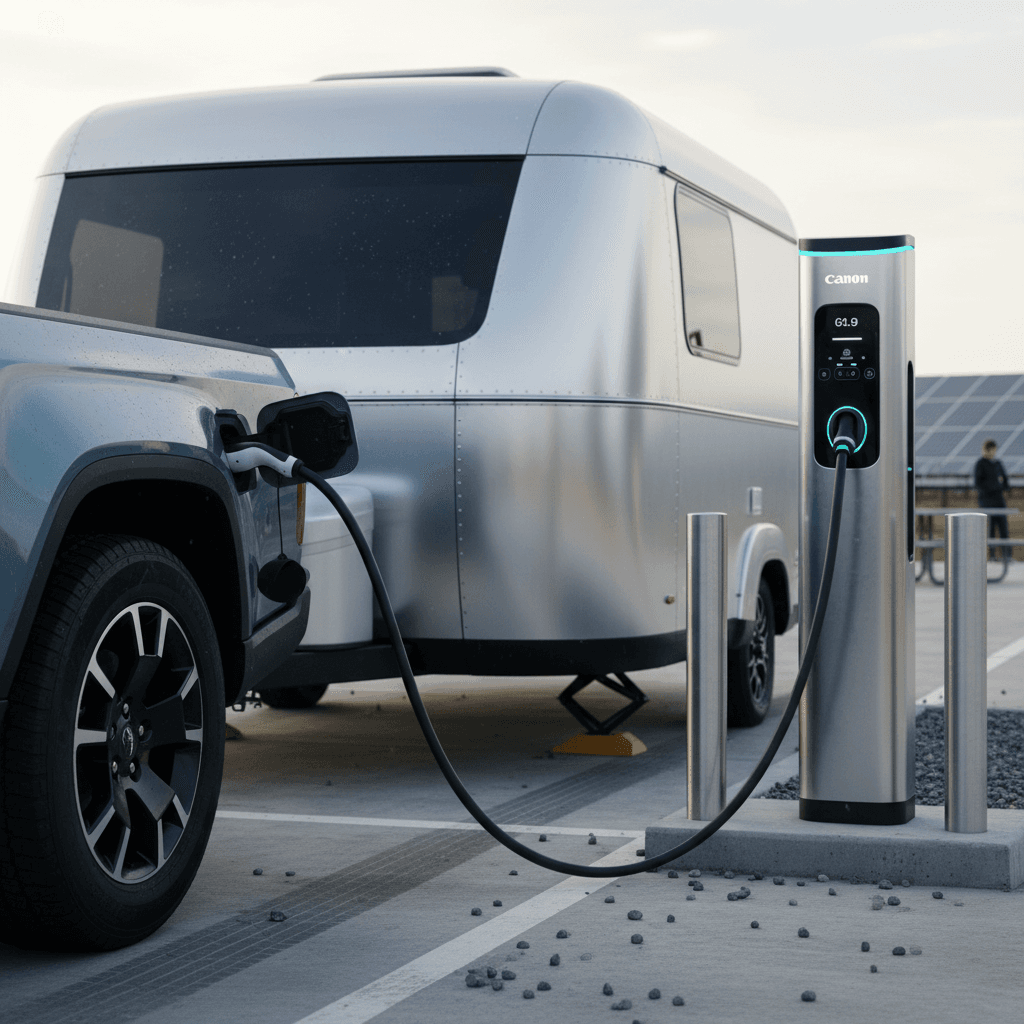
Even if you solve the hitch and payload puzzle, you still have to live with the **range hit**. Any truck, gas or electric, burns more energy dragging a big RV. With EVs, you just feel it more clearly because you see every mile on the range gauge.
- Many owners of electric trucks towing large boxy trailers report losing 40–60% of their normal range, depending on speed, terrain, and weather.
- A truck that does 300 miles solo might realistically manage 120–180 miles between charges with a tall, heavy fifth wheel behind it.
- Fast‑charging a big‑battery EV from 10–80% can take 30–40 minutes at a strong DC fast charger; campground Level 2 charging is much slower but works overnight.
Plan with energy, not just miles
How to Run the Numbers for Your Fifth Wheel and EV
Let’s walk through how to tell whether an EV + fifth‑wheel combo is realistic for you, on paper, at least. You’ll use four key numbers from the truck and two from the trailer.
EV + Fifth Wheel: The Math You Must Do
1. Find the truck’s payload rating
Open the driver’s door and look for the yellow Tire and Loading sticker. You’ll see a line that reads something like: “The combined weight of occupants and cargo should never exceed 1,850 lbs.” That’s your real‑world payload limit.
2. Estimate your fifth wheel’s loaded pin weight
Take the trailer’s GVWR (maximum loaded weight) from its sticker and assume <strong>20–25% of that will be on the pin</strong>. For a 10,000‑lb fifth wheel, that’s 2,000–2,500 lbs on the truck, before people or cargo.
3. Subtract passengers, hitch, and gear
Add the weight of everyone in the cab, plus a realistic estimate for tools, coolers, and other cargo. Don’t forget the hitch itself, which can weigh 200–300+ lbs. All of that counts against payload.
4. Compare remaining payload to pin weight
Take your truck’s payload rating and subtract people, hitch, and cargo. Whatever is left has to safely handle the pin weight. If the math doesn’t work, the combo doesn’t work, no matter how strong the motor is.
5. Sanity‑check against the tow rating
Once payload checks out, confirm that your trailer’s loaded weight is under the truck’s **max conventional/fifth‑wheel tow rating** for that exact configuration. Tow ratings change with battery size, axle ratio, and trim.
6. Be honest about how and where you’ll tow
Mountains, high speeds, winter temps, and headwinds all hammer range. If your trip plans constantly push the limits of public fast‑charging, you’ll have a much more stressful experience than you would with a lighter travel trailer.
Practical Setups That Do Work Today
So given today’s hardware, what kind of fifth‑wheel + EV pairing is realistic, and what belongs in the future‑tech fantasy bucket?
Realistic today
- Compact, lightweight fifth wheels in the 6,000–9,000‑lb GVWR range, especially those marketed for 1/2‑ton gas trucks.
- Electric pickups with higher‑end payloads (closer to 2,000 lbs than 1,400 lbs), correctly outfitted by a professional hitch installer.
- Short‑hop camping within 100–150 miles of home, where you can recharge slowly at a campground or back in your driveway.
- Owners who are comfortable trip‑planning, watching energy use, and accepting slower travel days.
Unrealistic (for now)
- Huge luxury fifth wheels with 14,000–20,000‑lb GVWR and pin weights well over 3,000 lbs.
- Expecting gas‑truck range and refill speed while pulling a wall‑sized RV through the mountains at 75 mph.
- Using an EV whose bed design and structure simply won’t accept a fifth‑wheel hitch (for example, some trucks with large under‑bed storage tubs).
- Boondocking far from both public fast chargers and shore‑power hookups.
A sweet spot for many campers
Planning Trips and Charging With a Fifth Wheel
If you do end up with an EV and a small fifth wheel that play nicely together, the last piece is learning to travel differently. The good news is that RV camping already lends itself to slower days and longer stops.
- Plan charge stops around truck‑friendly stations. Not every fast‑charger layout lets you pull through with a trailer. Look for sites at big box stores, travel plazas, or dedicated pull‑through DC fast‑charge stalls where you can stay hitched.
- Leverage campground power whenever possible. Many RV parks offer 50‑amp service, which a properly equipped EV can use through your mobile connector or wall box to refill overnight while your rig is plugged in.
- Drive at RV speeds, not car speeds. Knocking your cruising speed down from 75 to 60–65 mph can dramatically reduce drag on the fifth wheel and keep your energy use manageable.
- Watch weather and terrain. Headwinds, cold temperatures, and long grades are range killers. Build padding into your plan so you’re not arriving at chargers below 10–15% state of charge.
- Have Plan B and Plan C. Just like with a gas truck, know where the next two charging options are in case your first choice is down, busy, or blocked.
Cold weather + towing = big range hit
Buying a Used EV Truck for Towing: What to Look For
If you’re shopping used and wondering whether an electric truck can handle your camping dreams, you’ll want to look beyond the glossy tow‑rating headline. This is where a structured inspection and solid data really help.
Key Things to Check on a Used EV Truck
Especially if you plan to tow any kind of RV
Battery health
Heavy towing leans hard on the battery and cooling system. A verified battery health report, like the Recharged Score you get with every EV on our marketplace, tells you how much usable capacity you’re really working with.
Actual payload sticker
Two identical‑looking trucks can have wildly different payload because of trim and options. Always read the door‑jamb sticker on the exact truck you’re considering, not just a brochure or online spec sheet.
Hitch & frame history
Look for professional‑grade hitch installs, clean wiring, and no signs of frame or bed damage from overloading. If the seller towed heavy, ask for details, weights, distances, and how often they used it as a tow rig.
At Recharged, every used EV comes with a Recharged Score report that summarizes battery health, fair‑market pricing, and key condition items. If towing matters to you, our EV specialists can help you interpret that data and decide whether a given truck is a good match for the kind of RVing you want to do.
EV & Fifth-Wheel Towing FAQ
Common Questions About EVs Towing Fifth Wheels
Bottom Line: Is EV Fifth-Wheel Towing Possible?
If you’re wondering whether EV towing a fifth wheel is possible, the honest answer is: yes, but it’s still a niche use case. Today’s electric pickups have plenty of torque and respectable tow ratings, yet most are limited by payload, bed design, and the hard reality of range under heavy load. For many campers, a well‑matched travel trailer behind an EV is the smarter move right now, while fifth‑wheel duty remains the domain of heavy‑duty gas and diesel trucks.
That doesn’t mean you have to give up on an electric tow rig. If you’re curious whether a used EV truck could fit your RV life, a transparent battery‑health report and a careful look at the payload sticker will tell you far more than a marketing brochure ever will. Every EV sold through Recharged comes with a Recharged Score report and access to EV specialists who can walk you through those numbers, so you can decide, with eyes wide open, whether an electric pickup makes sense for the way you camp and travel.