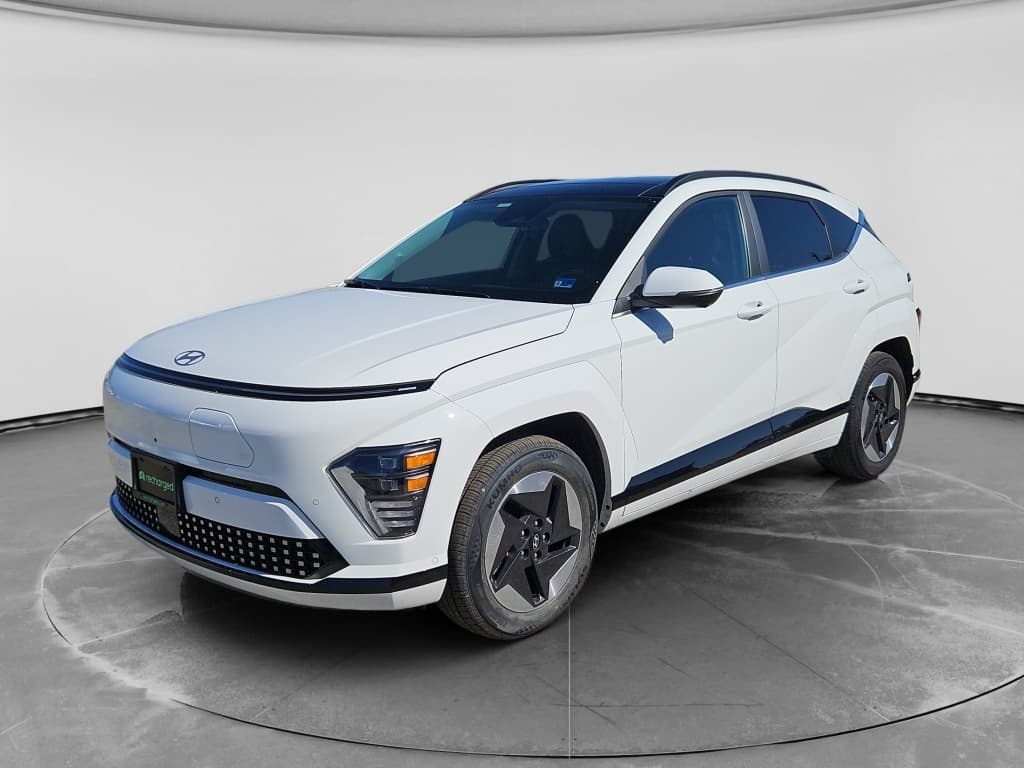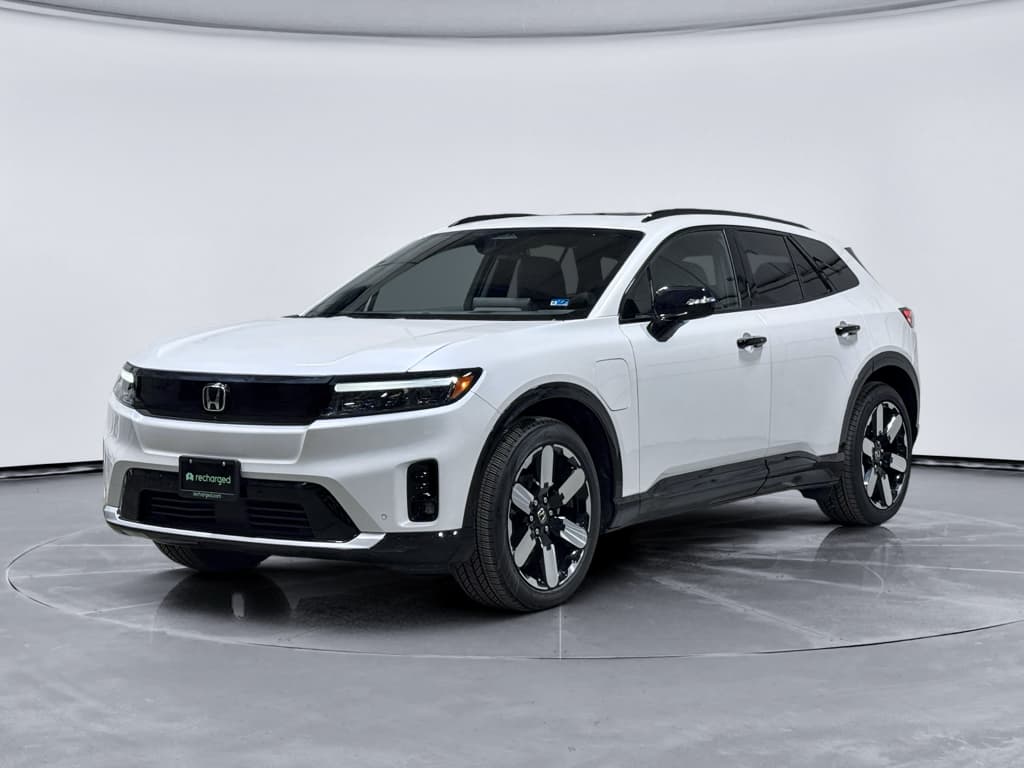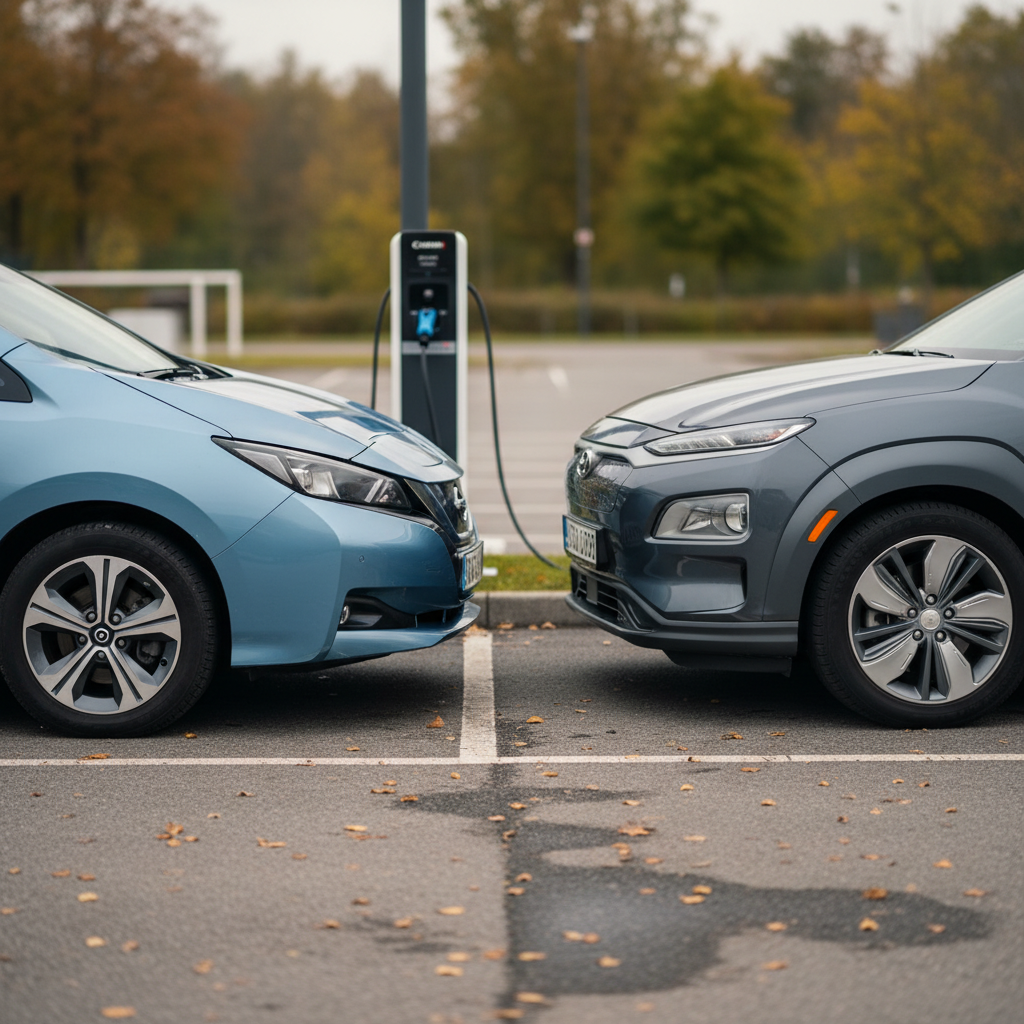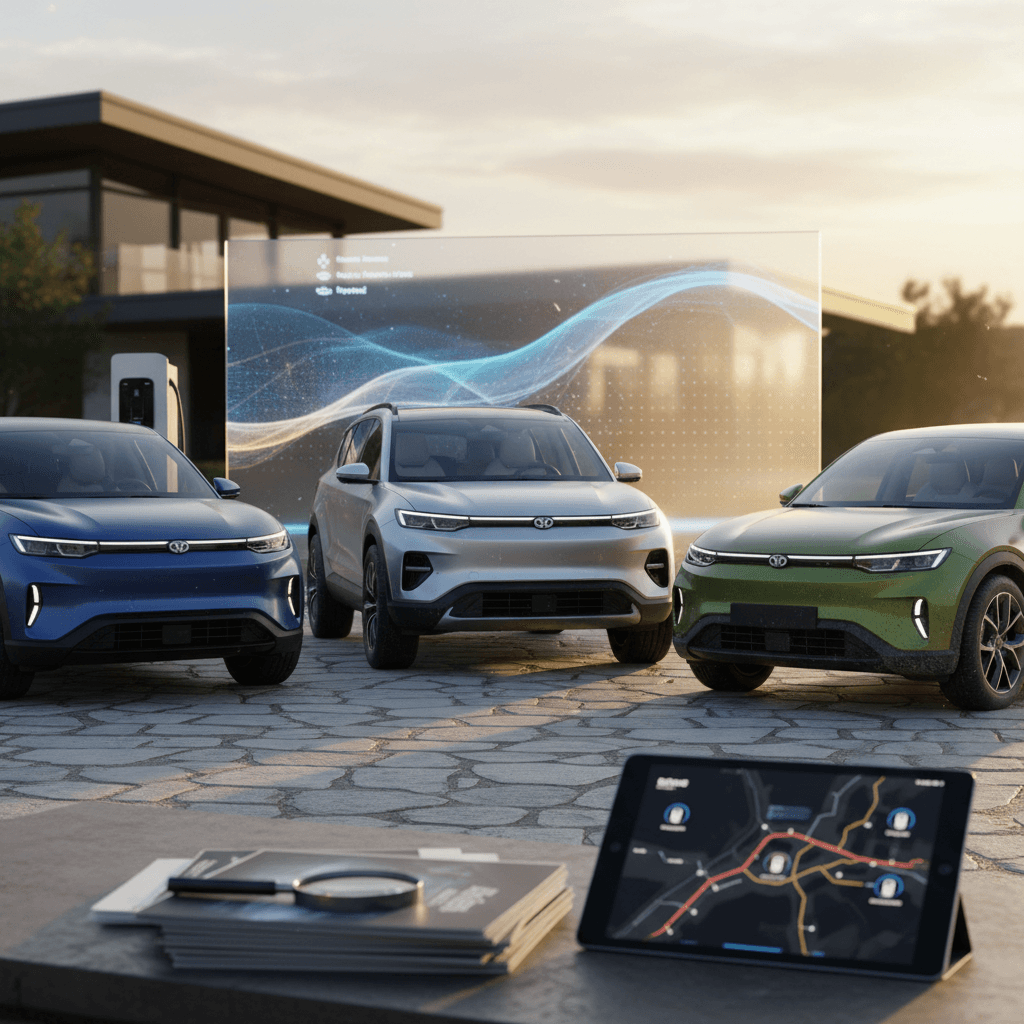
EV SUVs are having a moment. In 2024, electric crossovers like the Tesla Model Y, Ford Mustang Mach‑E, Hyundai Ioniq 5 and Kia EV9 helped push U.S. EV registrations past 1.3 million, with SUVs and crossovers taking an ever‑bigger slice of that pie. If you want space, comfort and all‑weather confidence without burning a drop of gas, an electric SUV is where the market is moving.
Quick take
Why EV SUVs are everywhere now
EV SUVs: where the growth actually is
The American car market has a type, and that type is SUV‑shaped. Automakers figured out that if they want shoppers to move from gasoline to electrons, they can’t just build science‑project hatchbacks. They have to build EV SUVs that feel familiar: upright seating, decent cargo space, available all‑wheel drive, child‑seat‑friendly back seats.
- Battery tech has improved: 300‑mile range in a family EV SUV is now common, not exceptional.
- Fast‑charging networks have spread beyond Tesla, with GM, Hyundai, Ford and others adopting the NACS plug for Supercharger access.
- Shoppers are cross‑shopping EV SUVs directly with gas CR‑Vs, RAV4s and Tellurides on monthly payment, not just sticker price.
Think monthly, not sticker
Key specs that actually matter on EV SUVs
Spec sheets for EV SUVs read like a math exam: kW, kWh, DC vs AC, NACS vs CCS. Most of it is noise. There are five numbers you should actually care about when you’re comparing electric SUVs.
The 5 numbers that define an EV SUV
Get these right and you’ll be happy on day 1,000, not just day 1.
Battery size (kWh)
Bigger battery, more potential range, but also more weight and cost. Today’s mainstream EV SUVs typically sit between 70–100 kWh.
EPA range (miles)
300 miles has become the magic number. For most drivers, 260–320 miles of rated range is the sweet spot.
DC fast‑charge speed (kW)
This tells you how quickly you can add miles on a road trip. Many competitive EV SUVs now peak around 150–250 kW.
Form factor & size
Compact crossover? Midsize 2‑row? Full‑size 3‑row? Don’t over‑SUV yourself; bigger isn’t always better in city parking and charging.
Usable passenger space
Focus on rear‑seat legroom, headroom, and the shape of the cargo area, not just cubic‑foot numbers in a brochure.
Drivetrain & towing
AWD is common on EV SUVs and often very quick. If you tow, check the tow rating and real‑world range hit when pulling a trailer.
Don’t chase the biggest number on the page
Compact and midsize EV SUVs: sweet spot for most drivers
If you park in a city or suburbs and rarely carry more than four people, compact and midsize EV SUVs are where the value and refinement really live. These are the vehicles that finally made electric mainstream.
Popular 2‑row EV SUVs in 2025
Representative examples to orient you on price and range. Exact numbers vary by trim and wheel choice.
| Model | Size class | Approx. new starting price | Max EPA range (mi) | Notable strengths |
|---|---|---|---|---|
| Tesla Model Y | Compact/midsize | Mid‑$40Ks | ≈320 | Huge charging network, efficient, lots of software features |
| Hyundai Ioniq 5 | Compact | Low‑$40Ks | ≈318 | Ultra‑fast charging, standout design, comfortable ride |
| Ford Mustang Mach‑E | Compact/midsize | High‑$30Ks | ≈320 | Fun to drive, strong tech, widely available used |
| Chevrolet Blazer EV | Midsize | Mid‑$40Ks | ≈330 | Roomy interior, GM’s latest Ultium tech, strong DC fast‑charging |
| Volkswagen ID.4 | Compact | Low‑$40Ks | ≈290 | Smooth and quiet, approachable pricing, practical cabin |
| Nissan Ariya | Compact/midsize | High‑$30Ks | ≈290 | Soft‑touch interior, calm driving manners, lots of safety kit |
You don’t have to buy new, many of these are already hitting the used market at meaningful discounts.
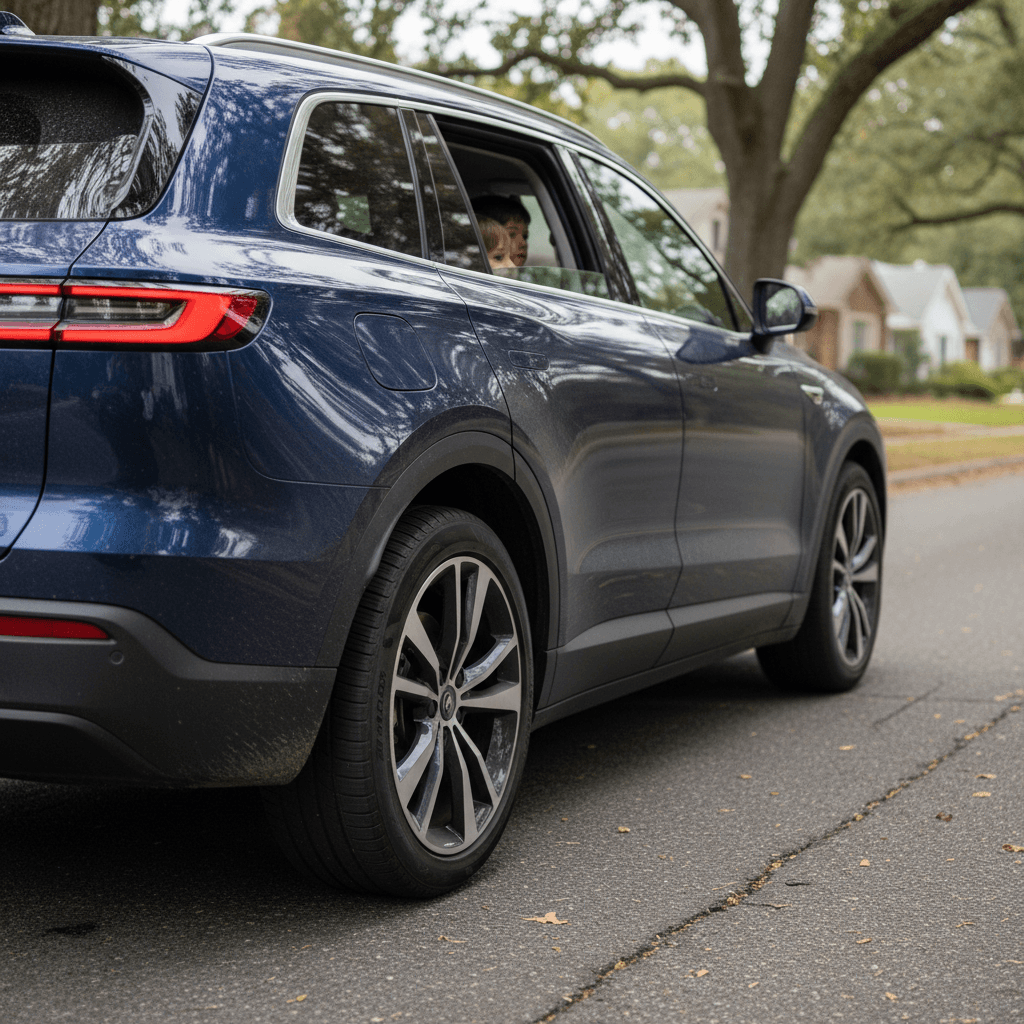
How to test‑drive an EV SUV
Three-row EV SUVs for real family duty
Three‑row EV SUVs were late to the party, but 2025 is when they get interesting. Kia’s EV9, Rivian’s R1S and Cadillac’s incoming Vistiq and Escalade IQ prove you can have an electric family bus without feeling like you’re driving an airport shuttle.
Notable 3‑row EV SUVs, 2025 and beyond
A mix of mainstream and luxury three‑row electric SUVs you’ll see on U.S. roads.
| Model | Positioning | Seating | Headline range | Character |
|---|---|---|---|---|
| Kia EV9 | Mainstream family hauler | 6–7 | ≈304 miles | Bold design, strong value, family‑friendly interior, available AWD |
| Rivian R1S | Adventure luxury | 7 | Up to ≈410 miles | Off‑road capable, huge power, outdoorsy brand image |
| Cadillac Vistiq | Premium 3‑row | 6–7 | TBA (~300+ mi expected) | Electric successor to XT6, focusing on comfort and tech |
| Cadillac Escalade IQ / IQL | Full‑size luxury | 7–8 | Up to ≈460 miles | Massive battery, long‑range cruiser, ultra‑plush cabin |
| Hyundai Ioniq 9 | Midsize 3‑row | 6–7 | TBA (~300+ mi class) | Largest Hyundai EV to date, sharing tech with EV9 and Ioniq 5 |
Most 3‑row EV SUVs are large, heavy and powerful; expect stronger acceleration and higher energy use than 2‑row models.
3‑row EV SUVs are big, heavy animals
Luxury EV SUVs: when comfort and tech are the brief
Luxury EV SUVs are where designers cut loose. Think BMW iX, Cadillac Lyriq, Rivian R1S, Mercedes EQE SUV, Volvo EX90. These are rolling tech lounges, less concerned with lap times than with massage seats, 23‑speaker stereos and animated ambient lighting themes named after Scandinavian moods.
What distinguishes a luxury EV SUV?
It’s more than just leather and a bigger touchscreen.
Cabin calm
Top luxury EV SUVs are shockingly quiet. Double‑pane glass, acoustic insulation and smooth electric drivetrains create a cocoon even at highway speed.
Screen real estate
Curved OLED clusters, full‑width displays and augmented‑reality HUDs are common. The trick is whether the interface is intuitive, or a mess of sub‑menus.
High‑end audio
Think 20‑plus‑speaker branded setups from AKG, Meridian, Bowers & Wilkins or Bang & Olufsen, often tuned specifically for the near‑silent EV cabin.
Comfort tech
Heated, ventilated and massaging seats, multi‑zone climate, radiant heating surfaces, and clever pre‑conditioning that uses shore power, not battery.
Driver assistance
Hands‑free highway systems like Super Cruise or BlueCruise shine here, paired with adaptive air suspension and precise lane‑keeping calibration.
Sustainable materials
More brands are mixing wool blends, recycled plastics and eco‑tanned leathers to make cabins feel upscale without feeling wasteful.
When a luxury EV SUV makes sense
EV SUVs under $50K that don’t feel like compromise
Not everyone is in the mood to spend like a Silicon Valley founder. The good news is the EV SUV under $50K is no longer a rare bird. Several models deliver 280–320 miles of range, respectable performance and modern tech without breaking the bank.
Illustrative EV SUVs under (or around) $50K
Pricing shifts with incentives and trims, but these nameplates anchor the value end of the EV SUV market.
| Model | Ballpark starting price | Max advertised range | Why it’s compelling |
|---|---|---|---|
| Hyundai Ioniq 5 | Low‑$40Ks | ≈318 miles | Fast charging, airy interior, strong equipment even on mid trims |
| Chevrolet Equinox EV | Mid‑$30Ks | ≈319 miles | One of the most affordable long‑range EV SUVs, with GM’s Super Cruise available. |
| Ford Mustang Mach‑E | High‑$30Ks | ≈320 miles | Still one of the most engaging EV SUVs to drive, with a healthy used supply. |
| Toyota bZ4X / Subaru Solterra | High‑$30Ks | ≈250 miles | Conservative range but familiar brands, standard safety tech and available AWD. |
| Volvo EX30 | Mid‑$30Ks | ≈260 miles | Subcompact but stylish and quick, with Scandinavian design and robust safety pedigree. |
Check local and federal incentives, transaction prices can fall thousands below MSRP, especially on leases.
Used EV SUVs: the real value play
Range, charging and road trips in an EV SUV
An EV SUV on a road trip is a different rhythm than a gas SUV, but not necessarily a worse one. You’ll stop less often than you think and slightly longer than you’re used to. For many families, that mandated pause every 2–3 hours is a blessing, not a curse.
Planning range realistically
- Assume 60–70% of rated range for winter highway driving with a full load.
- Roof boxes, bikes and trailers all punch big holes in your aero; expect another 10–25% hit.
- It’s healthiest for the battery to live between about 10–80% state of charge day to day.
For most trips, that still means 2.5–3 hours of driving between 20–80% if you start the day pre‑conditioned and pre‑charged.
Charging strategy for EV SUVs
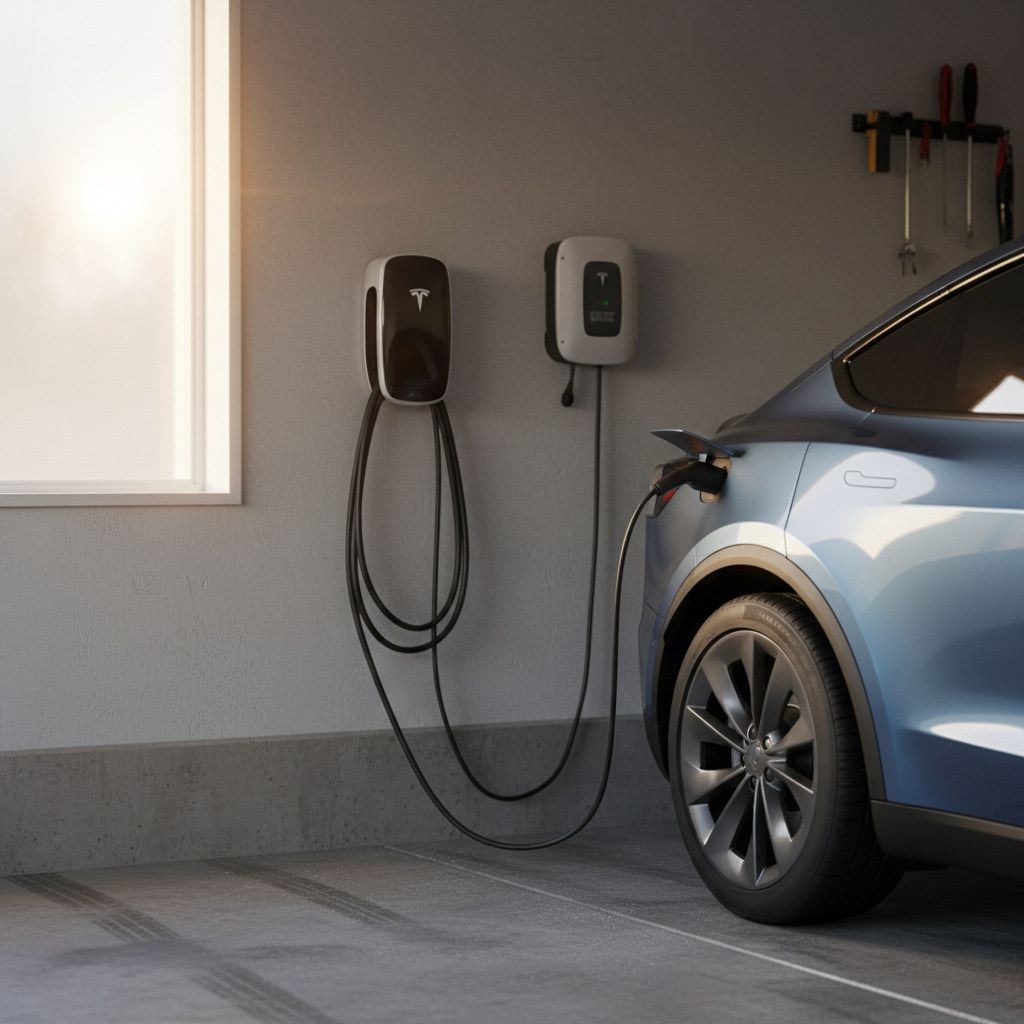
- Use home Level 2 charging for 90% of your energy, this is your new “gas station.”
- On road trips, aim to arrive at fast‑chargers around 10–20% charge for best speeds.
- Stop more often for shorter bursts; it’s usually faster than one giant 10–100% slog.
With more brands moving to the Tesla‑style NACS connector, access to high‑quality DC fast‑charging is improving quickly across the EV SUV segment.
The only EV SUV scenario that’s still painful
Buying a used EV SUV: battery health and value
Here’s the quiet revolution: the used EV SUV market is finally real. Off‑lease Teslas, Mach‑Es, Ioniq 5s, ID.4s and early Lyriqs are everywhere. Prices look tempting. The question is not whether the car is pretty; it’s whether the battery and high‑voltage hardware can deliver another decade of service without turning you into a beta tester.
6 things to check before you buy a used EV SUV
1. Verified battery health
You want more than a dashboard guess. A <strong>third‑party battery health report</strong> or something like Recharged’s <strong>Score Report</strong> uses diagnostic tools to show remaining capacity and cell balance, not just range on a good day.
2. DC fast‑charging history
Frequent max‑power fast‑charging isn’t automatically bad, but it can accelerate wear. Ask for charging history if available and prefer cars that lived mostly on home or workplace Level 2.
3. Software update status
Many EV SUVs improve, or occasionally fix issues, via over‑the‑air updates. Confirm the car is on a current software version and that all recall work has been completed.
4. Warranty timeline
Most EV batteries carry an <strong>8‑year / ~100k‑mile</strong> warranty. Check the in‑service date to know exactly how much coverage you have left on the pack and drivetrain.
5. Charging‑port standard
In North America, the market is shifting toward the Tesla‑style NACS plug. Check whether the SUV has native NACS, CCS with an adapter, or older hardware that may be less future‑proof.
6. Real‑world range test
On an extended test drive, reset a trip meter at 100% and see projected range after 20–30 miles of mixed driving. It’s a crude but useful sanity check against the original EPA number.
Where Recharged fits in
How Recharged helps you shop EV SUVs smarter
Shopping for EV SUVs used to mean piecing together range guesses from forums and hoping the previous owner knew the difference between a Level 2 charger and a cheap extension cord. Recharged exists specifically to make that chaos boringly transparent.
What you get when you shop EV SUVs through Recharged
Less guesswork, more data, and someone in your corner who actually speaks kilowatt.
Recharged Score battery report
Every EV SUV gets a detailed Recharged Score with pack health, charging performance and pricing against the broader market, so you can compare a Mach‑E and a Model Y on more than vibes.
Fair market pricing & financing
Recharged benchmarks each vehicle against current market data and offers financing options that treat an EV battery like the big asset it is, not an afterthought.
Trade‑in, instant offer or consignment
Coming out of a gas SUV? Recharged can buy your vehicle, take it on consignment, or roll it into a trade‑in toward an EV SUV, all through a digital, paperwork‑taming process.
Nationwide delivery & support
See something you love that’s not local? Recharged offers nationwide delivery and EV‑specialist support, plus an in‑person Experience Center in Richmond, VA if you want to kick the tires the old‑fashioned way.
Ready to find your next EV?
Browse VehiclesDesigned for EV first‑timers
FAQ: EV SUVs
Frequently asked questions about EV SUVs
Bottom line: Is an EV SUV right for you?
If you like the stance and practicality of an SUV but you’re tired of feeding a gas station loyalty program, an EV SUV is the logical next move. Compact and midsize models deliver all‑weather family duty with sports‑sedan punch, while 3‑row and luxury entries are finally catching up on range and refinement.
The key is to buy with your actual life, not a brochure fantasy, in mind: the trips you really take, the roads you really drive, the budget you’re actually comfortable with. Get those constraints right, and an EV SUV stops being a statement and starts being just a better everyday car.
And if you’re stepping into the used market, don’t go in blind. A verified battery‑health report, transparent pricing and EV‑savvy guidance, exactly what Recharged is built to provide, turn what used to be a gamble into a rational, data‑backed decision. That’s how the future of the SUV should feel: not risky, just clearly better.