If you own an EV in 2026, a **Level 2 home charger** isn’t a luxury anymore, it’s the difference between a car that always fits your life and a car that sometimes doesn’t. This guide walks you through the **best home EV chargers of 2026**, how they compare, what installation really costs, and how to choose the right setup for your home and your driving habits.
Home charging is where the real miles come from
Why home charging matters more than ever in 2026
Home EV charging by the numbers
Public fast charging gets the headlines, but **home Level 2 charging quietly does most of the work**. A 7–11 kW charger can easily add 25–40 miles of range per hour, which is more than enough to refill a typical commute overnight. As EV prices fall, especially in the **used EV market that Recharged focuses on**, a solid home setup is often the single best upgrade you can make to your ownership experience.
Quick picks: best home EV chargers for 2026
Best home EV chargers 2026: editor’s picks
The short list if you don’t want to overthink it.
Best overall: ChargePoint Home Flex
Why it wins: Excellent balance of power (up to 50A), smart features, and brand reliability.
- Available with J1772 or NACS connector
- 23 ft cable, app scheduling, usage tracking
- Great fit if you use ChargePoint public stations too
Best for Tesla owners: Tesla Wall Connector
Why it wins: Clean design, up to 48A, and tightly integrated into Tesla’s ecosystem.
- NACS connector, 24 ft cable
- Smart features through Tesla app
- Best if your household is all or mostly Tesla
Best value smart charger: Emporia Level 2
Why it wins: Up to 48A with excellent smart‑home features and load management at a lower price.
- Great for managing a smaller panel
- Strong app, solar integration options
- J1772 connector, NACS adapters increasingly common
Best budget workhorse: Grizzl‑E Classic 40A
Why it wins: Rock‑solid, weather‑tough hardware at a lower cost, no Wi‑Fi, no drama.
- Up to 40A with J1772 or NACS
- High weather‑resistance ratings
- Ideal if you just want reliable charging, not apps
Quick rule of thumb
How to choose the right home EV charger
Before you lock in on a brand, spend a few minutes matching the **charger’s capabilities** to your car, your panel, and your daily life. That’s how you avoid over‑spending, or buying a unit that becomes a bottleneck later.
1. Your EV and connector type
- Tesla and other NACS EVs: A NACS charger (Tesla Wall Connector, newer ChargePoint variants, or NACS‑equipped models) gives you plug‑and‑go convenience.
- Most non‑Tesla EVs 2020–2025: These use a J1772 connector for AC charging. Any J1772 Level 2 plus a simple adapter will work with newer NACS cars too.
- Mixed‑EV households: Consider a J1772 charger plus adapters, or a dual‑connector option, so you’re not locked in.
2. Amps, kW, and real‑world speed
- 30–32A (7 kW): Enough for many plug‑in hybrids and light use.
- 40A (~9.6 kW): The sweet spot for most single‑EV households today.
- 48–50A (11–12 kW): Great if you drive a lot of highway miles or have a big‑battery SUV.
- Always check your car’s **maximum AC charge rate**, if your EV tops out at 7.2 kW, a 12‑kW charger won’t make it faster.
- Electrical capacity: Do you have a 200A panel or a smaller 100A service? That affects how big a charger you can safely run.
- Smart features: App control, scheduling, energy monitoring, and load management can pay off if your utility offers time‑of‑use rates.
- Cable length and mounting: A 23–25 ft cable is ideal in most garages; consider where your EV’s charge port sits.
- Indoor vs outdoor: If the unit will live outside, prioritize weather ratings (NEMA 4/IP65 or better) and a tough enclosure.
Don’t ignore your electrical panel
Top home EV chargers for 2026: detailed reviews
ChargePoint Home Flex – Best overall for most drivers
The **ChargePoint Home Flex** consistently sits at the top of 2025–2026 lists for a reason. It supports up to 50 amps (about 12 kW), can be hardwired or plugged in, and is available with either a **J1772 or NACS connector**. The ChargePoint app ties your home charging in with their public network, so you can monitor costs and energy use in one place, schedule off‑peak charging, and get alerts if something goes wrong.
- Power: 16–50A (up to ~12 kW) adjustable
- Connector: J1772 or NACS, 23 ft cable
- Best for: Drivers who value smart features, data, and a polished app experience
- Pros: Excellent app, flexible installation, trusted brand, good resale appeal
- Cons: Higher upfront cost than some rivals; weather‑resistance is good but not best‑in‑class
Tesla Wall Connector – Best for Tesla‑focused households
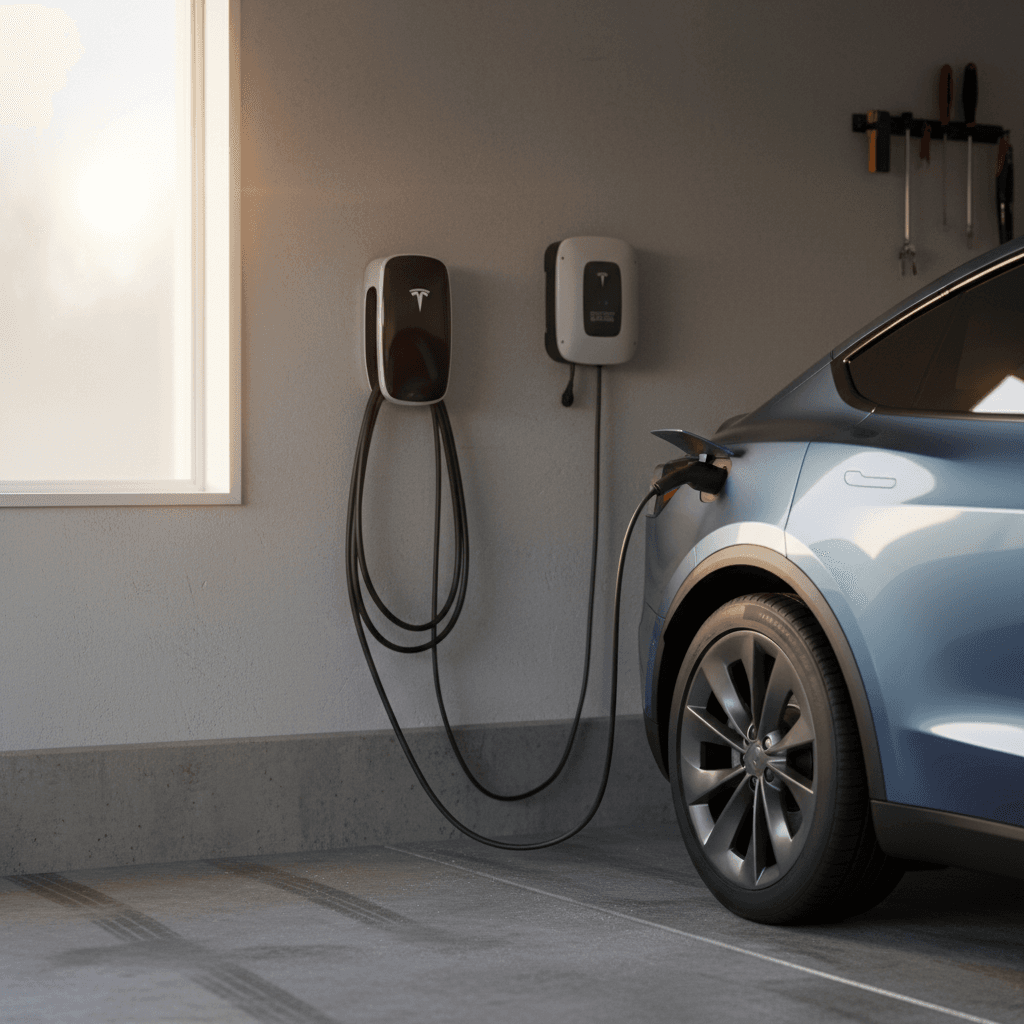
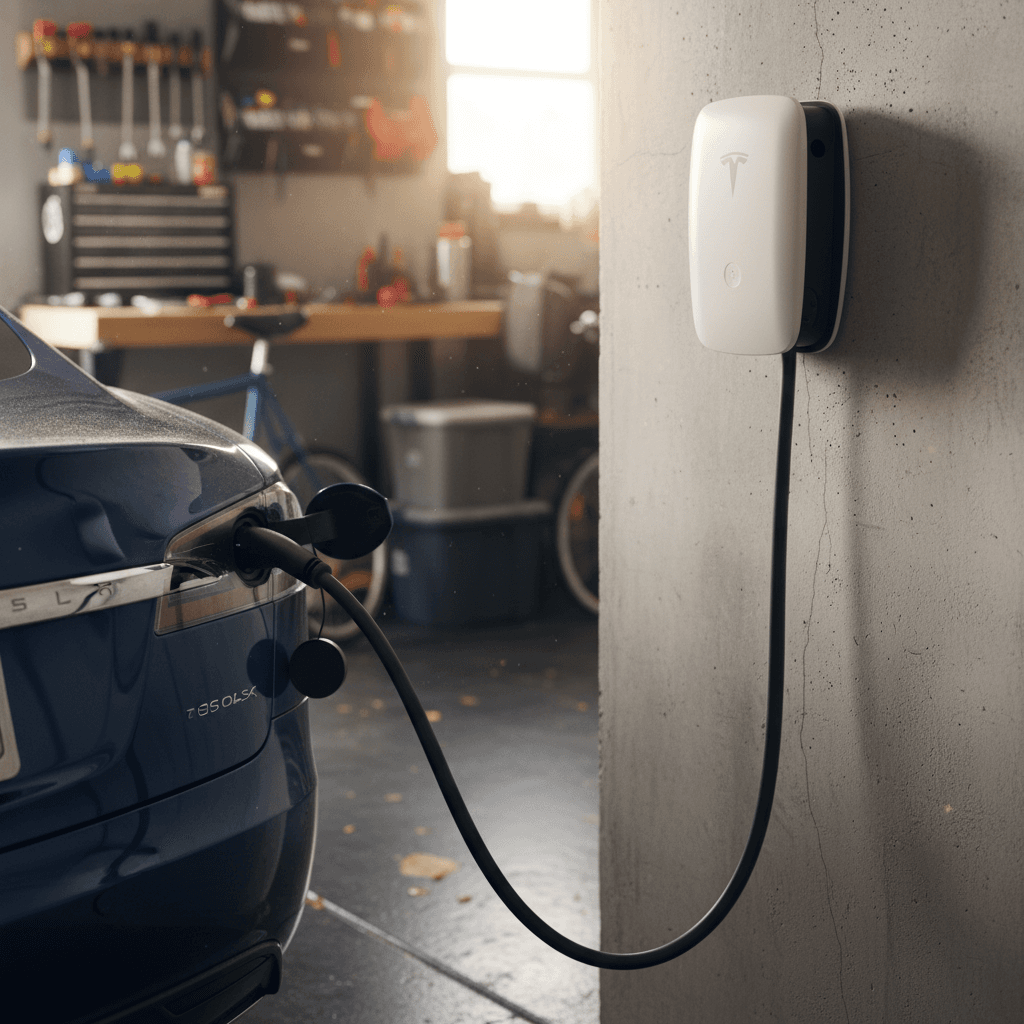
If your driveway looks like a Tesla meet‑up, the **Tesla Wall Connector** is still the most seamless option. It delivers up to 48A on a 240V circuit, feeds directly into the Tesla app for monitoring and scheduling, and comes with a 24‑foot NACS cable designed to live comfortably in all weather. It’s also competitively priced versus top third‑party units.
- Power: Up to 48A (~11.5 kW) depending on circuit
- Connector: NACS, 24 ft cable
- Best for: Households where every car is a Tesla today, or will be soon
- Pros: Clean design, strong integration into Tesla ecosystem, reliable hardware
- Cons: Less ideal if you have multiple non‑Tesla EVs unless you add separate adapters or a second charger
Emporia Level 2 – Best value smart charger
The **Emporia Level 2 charger** punches above its price class. It supports up to 48A (about 11.5 kW), includes a 24‑foot J1772 cable, and pairs with an app that plays nicely with energy monitoring, smart panels, and solar. For many homeowners, Emporia is one of the **least expensive ways to add intelligent load management**, allowing the charger to dial itself back when your house is drawing heavy power elsewhere.
- Power: 6–48A adjustable (~1.4–11.5 kW)
- Connector: J1772, 24 ft cable
- Best for: Budget‑conscious buyers who still want Wi‑Fi, scheduling, and load management
- Pros: Strong value, especially if paired with Emporia’s energy monitors; NEMA 4–class weather protection on many versions
- Cons: App experience is more utilitarian than Tesla’s or ChargePoint’s, but very capable once configured
Grizzl‑E Classic 40A – Best budget workhorse
The **Grizzl‑E Classic 40A** has built a reputation as the pickup truck of home chargers. It skips Wi‑Fi and flashy apps in favor of a chunky metal case, excellent **IP67 weather rating**, and a long cable that shrugs off snow, rain, and road salt. For many owners, especially those parking outdoors, that durability matters more than being able to start a session from the couch.
- Power: 16–40A (up to ~9.6 kW)
- Connector: J1772 or NACS options, ~24–25 ft cable
- Best for: Drivers who want simple, tough, set‑and‑forget charging
- Pros: Outstanding weather protection, proven reliability, strong price point
- Cons: No smart features; if you want time‑of‑use scheduling and data, you’ll need to rely on your car or a smart panel
Comparison table: best home EV chargers 2026
Key specs for top 2026 home EV chargers
Use this as a **cheat sheet** when you’re comparing options or talking to an electrician.
| Model | Max Amps / kW | Connector | Cable length | Smart features | Best for |
|---|---|---|---|---|---|
| ChargePoint Home Flex | 50A / ~12 kW | J1772 or NACS | 23 ft | Yes – robust app, scheduling, usage and cost tracking | Most drivers who want a refined, smart experience |
| Tesla Wall Connector | 48A / ~11.5 kW | NACS | 24 ft | Yes – via Tesla app | Tesla‑only or Tesla‑heavy households |
| Emporia Level 2 | 48A / ~11.5 kW | J1772 | 24 ft | Yes – app, energy monitoring, load management | Value‑minded buyers and homes with tight electrical capacity |
| Grizzl‑E Classic 40A | 40A / ~9.6 kW | J1772 or NACS | ~24–25 ft | No – basic on/off | Drivers who want a tough, affordable, no‑nonsense charger |
Specifications and key notes for leading Level 2 home chargers in 2026.
Installation, costs, and what to expect
The sticker price of the charger is only half the story. The other half is getting power to it safely. For a U.S. homeowner in 2026, **total installed cost** usually lands somewhere between a few hundred dollars and several thousand, depending on how far you are from an existing panel and whether the panel has room for another 240V circuit.
Biggest drivers of installation cost
Panel capacity and distance
If your main panel is close to the garage and has open breaker space, installation is typically straightforward. A long run through finished walls or a full panel upgrade can add significantly to the bill.
Indoor vs outdoor mounting
Outdoor installs often need heavier‑duty conduit, weather‑rated equipment, and sometimes trenching, all of which increase labor costs.
Permits and inspections
Many jurisdictions require an electrical permit and inspection for a new 240V circuit. Some electricians will roll this into a flat quote; others bill it separately.
Smart features and accessories
Optional add‑ons like whole‑home energy monitors or smart panels can add cost but may save you from a more expensive panel upgrade.
Don’t forget incentives
When you buy a used EV through Recharged, our specialists can help you understand whether a **simple 32–40A charger on an existing circuit** will cover your daily miles or whether it’s worth planning a more robust setup from day one. We’ve seen everything from easy plug‑in installations to complex multi‑EV garages, and a little planning up front pays off.
Smart chargers, load management, and future‑proofing
Home EV chargers are getting smarter quickly. In 2026, the question isn’t just, “How fast can it charge?” It’s also, “**How intelligently can it share power with the rest of your house?**”
Smart vs. basic chargers: what are you really buying?
Speed might be similar. Intelligence is not.
Smart Level 2 chargers
- Wi‑Fi or Ethernet connectivity with app control
- Scheduling to line up with off‑peak rates
- Energy monitoring and real‑time status alerts
- Dynamic load balancing to avoid tripping breakers
- Sometimes integrate with solar and home batteries
Basic “dumb” chargers
- No Wi‑Fi, usually no app
- Charging starts when you plug in or when the car schedules it
- Less to configure, less to go wrong
- Often cheaper and more rugged
Why load management matters now
If you expect to add **a second EV**, or you’re eyeing future features like vehicle‑to‑home backup power, it’s worth picking a charger and installation plan that can grow with you, higher‑capacity wiring, conduit sized for additional cables, and smart load management from the start.
Used EV owners: what matters most at home
If you’re buying a **used EV**, your priorities for home charging may look a bit different. Battery capacity might be slightly reduced, and you may be looking harder at total ownership cost. That’s where a right‑sized home charger really pays dividends.
1. Match the charger to real‑world range
If your used EV has, say, 220 miles of usable range and you drive 40–50 miles a day, a 32–40A Level 2 charger will easily refill your battery overnight. Overspending on a top‑spec 50A unit won’t change that experience much.
On the other hand, if you regularly run close to empty or take frequent weekend trips, the extra speed of a 48–50A unit can make a noticeable difference.
2. Protecting battery health
Most evidence suggests that **regular Level 2 charging is gentle on batteries**, especially compared with repeated DC fast charging. Pair that with smart scheduling, charging to your daily‑need level instead of 100% every night, and your used EV’s battery will age more gracefully.
Every Recharged vehicle comes with a Recharged Score battery health report, so you know exactly what you’re working with before you invest in a home charger.
Stretching your budget
Step‑by‑step home EV charger buying checklist
Your 9‑step path to the right home charger
1. Confirm your connector and max AC rate
Check your owner’s manual or manufacturer site for your EV’s connector type (NACS or J1772) and maximum AC charging power in kW. That tells you the fastest charger that makes sense.
2. Measure your daily driving
Look at a typical week. If you’re usually under 50 miles per day, a 32–40A charger is usually plenty. Heavy commuters or frequent road‑trippers may prefer 48–50A.
3. Inspect your electrical panel
Note your main breaker size (100A vs 200A), available breaker spaces, and distance to the desired charger location. Snap a clear photo; an electrician can often quote from that.
4. Decide on smart vs basic
If you have time‑of‑use electric rates, solar, or multiple large electric loads, a smart charger with scheduling and load management can pay for itself over time.
5. Choose indoor vs outdoor mounting
Garage wall? Exterior siding? Carport? Pick a charger with suitable weather ratings and cable length for your environment.
6. Get at least two installation quotes
Send the same details, panel photo, EV model, desired charger, to two or three licensed electricians. Ask whether they can handle permits and if they recommend any panel upgrades.
7. Check incentives and tax credits
Look up current federal, state, and local utility incentives for home EV charging. Factor these into your budget before you purchase hardware.
8. Plan for future EVs
If you’re likely to add a second EV within a few years, consider higher‑capacity wiring or a charger that can share load between two vehicles.
9. Coordinate with your EV purchase
If you’re buying a used EV through Recharged, time your home charger install so it’s ready shortly after delivery. Our team can help you align financing, trade‑in, and home charging so the transition feels seamless.
Home EV charger FAQ (2026)
Frequently asked questions about home EV chargers in 2026
Bottom line: which home EV charger is “best” in 2026?
In 2026, the **best home EV charger** isn’t just the one with the biggest number on the box. It’s the charger that fits your car, your panel, your driveway, and your budget without creating headaches down the road. For many households, that means a **40–50A Level 2 unit** from a proven brand like ChargePoint, Tesla, Emporia, or Grizzl‑E.
If you want full‑featured smart charging, **ChargePoint Home Flex** and **Emporia Level 2** stand out. If you’re all‑in on Tesla, the **Tesla Wall Connector** is hard to beat. And if you just want a tough, affordable workhorse, **Grizzl‑E Classic** continues to be a standout value.
As you narrow your choices, remember that your home charger and your EV are a package deal. When you’re ready for that next EV, especially a used one with known, documented battery health, Recharged is built to make the whole experience easier: from **vehicle selection and financing** to **trade‑in, nationwide delivery, and real‑world charging advice** tailored to how you actually drive.