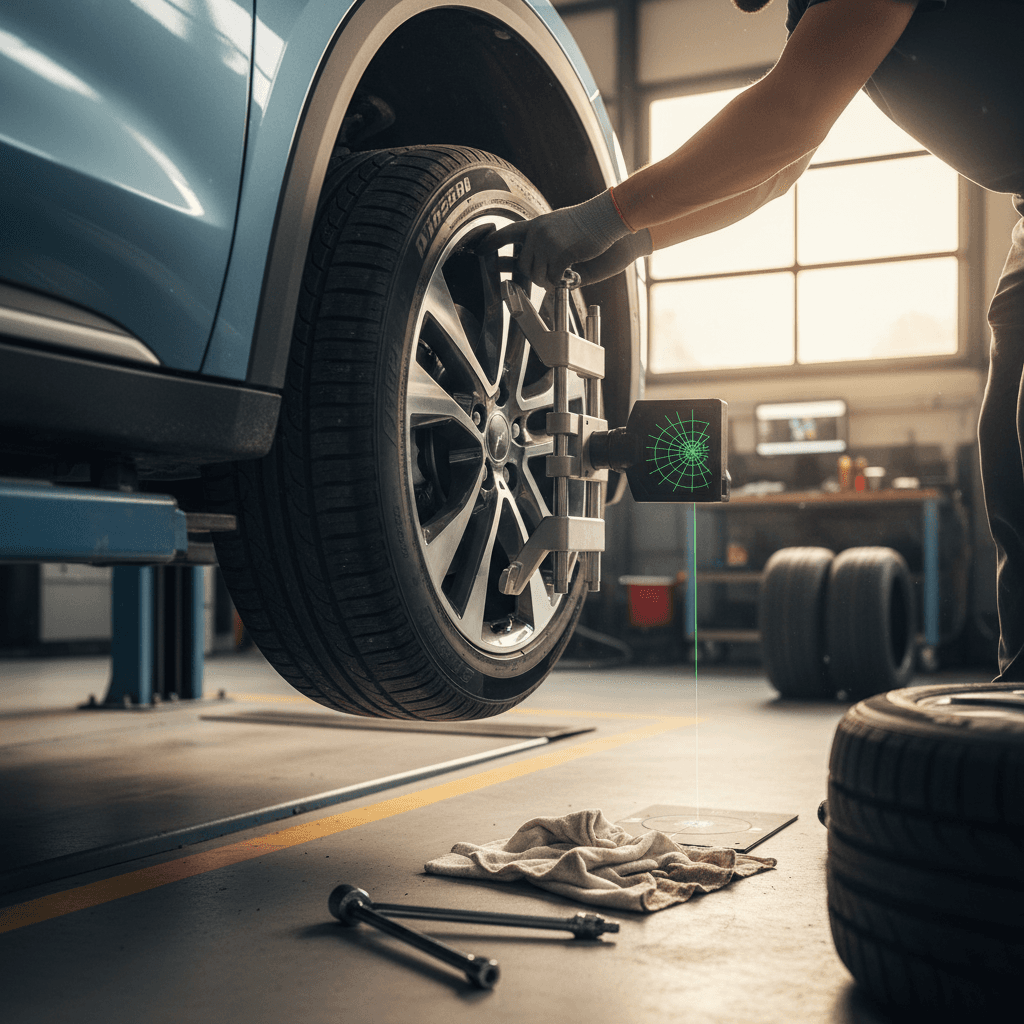
If you’re like most drivers, you think about your EV’s battery, range, and charging far more than its suspension. But the extra weight and instant torque that make electric vehicles feel planted and quick also put their suspension components under more stress than comparable gas cars. A few smart EV suspension maintenance tips can mean the difference between a quiet, confident ride and a car that feels loose, noisy, and prematurely worn out.
Quick Take
Why EV Suspension Deserves Special Attention
Under the floor of your EV is a battery pack that can weigh hundreds of pounds. In many popular models, that makes the vehicle hundreds of pounds heavier than an equivalent gas car. That extra mass has to be controlled every time you hit a pothole, take an off-ramp, or make an emergency lane change, and the suspension is what does that work.
Heavier EVs, Harder-Working Suspension
The good news is that EV suspension isn’t exotic. It’s mostly familiar components, control arms, bushings, ball joints, springs, shocks, and struts. The bad news is that those parts can wear faster if you treat your EV like a rally car over broken pavement. That’s why a light but consistent maintenance routine matters.
How EV Suspension Works (In Plain English)
1. Springs & Shocks/Struts
Springs hold the car up; shocks and struts control how it moves after a bump. Without proper damping, your EV would bounce like a pogo stick after every pothole, which is terrible for comfort and control.
On many EVs, MacPherson struts are used up front and multi-link setups in the rear for better ride and handling.
2. Bushings, Joints & Links
Rubber or polyurethane bushings act as cushions where arms and links bolt to the body and subframe. Ball joints and tie rods let wheels steer and move up and down without binding. As these wear, you start to feel clunks, looseness, and vibration.
Because EVs are heavier, these parts see higher loads every mile than they would in a lighter gas car.
Think of It Like Sneakers
EV-Specific Suspension Stress Points
Where EVs Work Their Suspension Hardest
Same parts as a gas car, but under tougher conditions
Extra Vehicle Weight
Battery packs can add 200–600+ pounds versus a comparable gas car. That extra mass loads bushings, shocks, and springs harder on every bump.
Instant Torque
Full torque from 0 RPM means hard fore‑aft loading of front suspension, control arms, and wheel hubs every time you launch or regen-brake aggressively.
Regenerative Braking
Regen saves your friction brakes, but you still have weight transfer to manage. Over time, struts and bushings can feel the repeated pitch forward and back.
Don’t Ignore the Front End
Routine EV Suspension Checks You Can Do Yourself
You don’t need a lift or a toolbox to catch early suspension problems. A simple monthly walk‑around and a quick test drive checklist can reveal a lot before things get expensive.
5-Minute DIY EV Suspension Check
1. Listen on Rough Roads
On a short drive over a bumpy street or speed bumps, turn off the radio and listen. Clunks, rattles, or knocking from one corner often point to worn bushings, sway bar links, or strut mounts.
2. Feel for Steering Pull
On a straight, flat road with a very light grip on the wheel, see if the car consistently drifts left or right. A steady pull could indicate <strong>alignment issues</strong> or a suspension part that’s out of spec.
3. Check Tire Wear Patterns
Uneven shoulder wear, cupping, or bands around the tire tread often indicate <strong>alignment, shock, or bushing issues</strong>. EVs already work their tires hard, so any odd wear is a red flag.
4. Bounce Test at Each Corner
Park, then push firmly down over each wheel and release. The car should rebound once and settle. Multiple bounces suggest the <strong>shocks or struts are getting weak</strong>.
5. Visual Peek Underneath
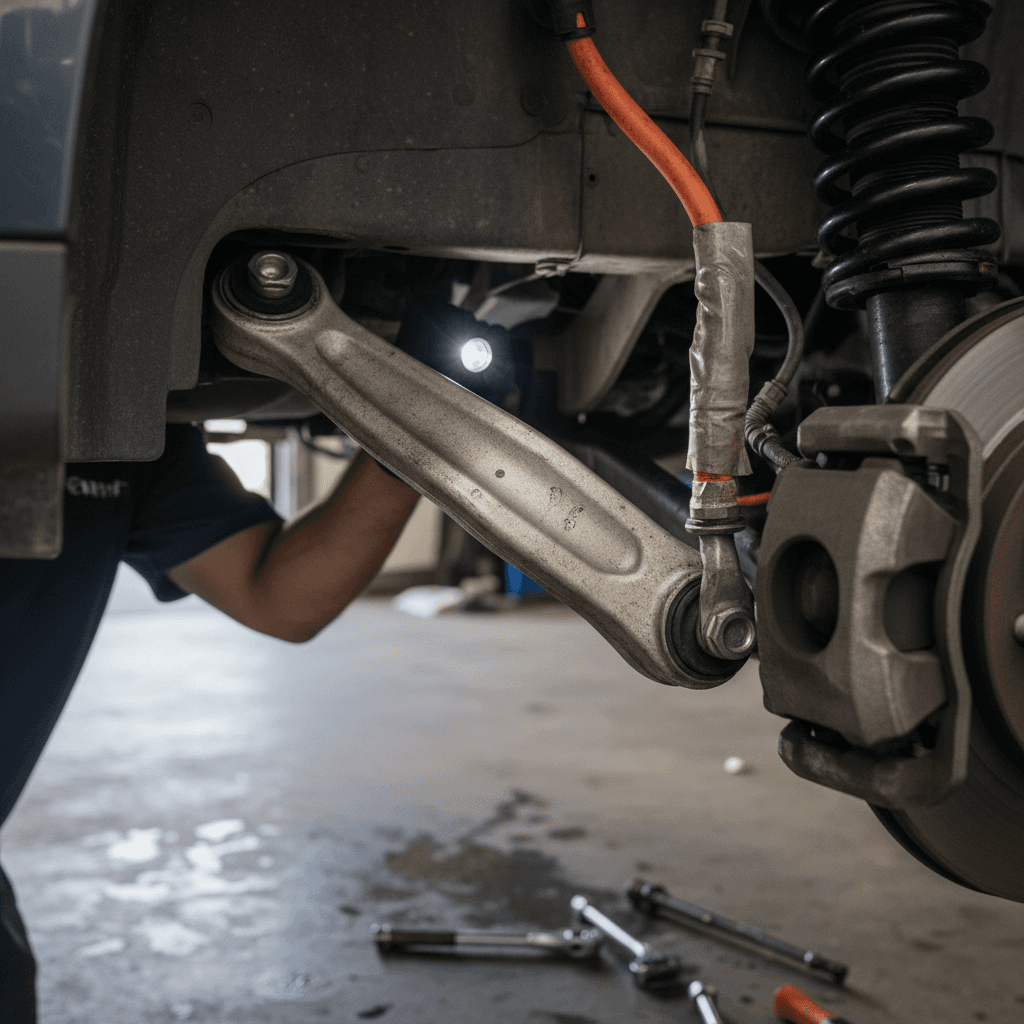
With the wheels turned, look behind the front tires for torn rubber bushings, leaking shocks/struts, or components that look shiny and freshly rubbed. Those can all flag developing issues.
Professional Inspection Intervals and What to Expect
Even if your DIY checks look good, it’s smart to have the suspension looked at on a lift on a regular cadence. Many OEMs call for a general steering and suspension inspection every 12–15,000 miles, and that’s a solid default if your owner’s manual doesn’t specify something else.
Baseline Suspension & Steering Inspection Intervals for EVs
Always defer to your EV’s maintenance schedule, but these intervals are a realistic starting point for most drivers.
| Component / Check | Recommended Interval | Why It Matters |
|---|---|---|
| Full steering & suspension inspection | Every 12–15,000 miles or annually | Catches loose joints, torn bushings, and leaking shocks before they worsen. |
| Wheel alignment check | Every 2–3 years or after big pothole/curb impact | Prevents rapid tire wear and keeps steering precise, especially on heavier EVs. |
| Tire balance | With every tire replacement or if you feel vibration | Reduces steering wheel shake and stress on suspension joints. |
| Shock/strut condition check | Every 15,000–20,000 miles | Establishes a baseline and catches early leaks or weakened damping. |
Intervals assume normal driving on mixed urban and highway roads; harsh conditions may require shorter intervals.
Choose Shops with EV Experience
Tires & Alignment: The Front Line of EV Suspension Care
If you only did one thing to protect your EV’s suspension, it would be this: stay on top of tires and alignment. The heavier the EV, the more sensitive it is to tire choice, pressure, and alignment angles.
Key Tire & Alignment Habits for EV Owners
Simple routines that prevent expensive suspension headaches
Rotate & Inspect Tires
- Rotate every 5,000–7,500 miles or per your manual.
- Check for uneven wear at each rotation.
- Ask for alignment check if you see odd wear patterns.
EVs often go through tires faster than gas cars; catching wear early saves money.
Maintain Proper Alignment
- Get an alignment check at least every 2–3 years.
- Schedule one after any major pothole or curb hit.
- Don’t “live with” a crooked steering wheel.
Driving out of alignment increases rolling resistance, kills tires, and adds stress to suspension joints.
EV Tires Aren’t an Afterthought
Driving Habits That Help Your EV Suspension Last Longer
You can’t change your battery weight, but you can change how hard you ask the suspension to work. Small adjustments to how you drive every day add up over tens of thousands of miles.
- Slow down for speed bumps and broken pavement, cutting your speed in half can more than halve the impact forces your suspension sees.
- Avoid “full send” launches on rough roads; save the instant torque for smooth pavement.
- Don’t straddle potholes with one side of the car if you can safely avoid them, that loads one corner brutally.
- Ease into driveways and parking lot ramps at an angle, not straight on, to reduce harsh suspension compression.
- Use eco or comfort drive modes in town when available; they often soften power delivery and regen, which smooths weight transfer.
Good Habits Pay Twice
Common EV Suspension Symptoms and What They Mean
Most suspension problems don’t appear overnight. They start as small changes in noise, feel, or tire wear. Spotting these early lets you fix a $200 part instead of chasing a $2,000 mess later.
EV Suspension Symptom Guide
Use this as a starting point, always have a professional confirm the root cause before replacing parts.
| What You Notice | Likely Culprits | Next Step |
|---|---|---|
| Clunk over bumps from one corner | Worn sway bar link, control arm bushing, or strut mount | Book an inspection; ask shop to check that specific corner first. |
| Steering wheel vibrates at highway speed | Tire balance, bent wheel, worn tie rod or ball joint | Get tires balanced and wheels checked; if still present, inspect steering linkage. |
| Car pulls to one side on a straight road | Wheel alignment, uneven tire pressures, sticking brake caliper | Check tire pressures first, then schedule an alignment check. |
| Rear end feels floaty or bouncy | Weak rear shocks/struts or worn bushings | Have a shop perform bounce test and inspect rear suspension on a lift. |
| Uneven tire wear (inside or outside edge) | Alignment out of spec, worn camber/toe components | Schedule alignment; ask shop to inspect suspension hardware if they can’t bring it into spec. |
Multiple symptoms can share the same root cause. Treat this as a guide, not a definitive diagnosis.
When It’s a Safety Issue, Not Just Comfort
Suspension Checklist When Buying a Used EV
Suspension is one of the easiest things for a seller to ignore and one of the most expensive for you to inherit. A quick test drive and a little observation can tell you a lot about how the car has been driven and maintained.
Used EV Suspension Checklist
1. Drive Over Imperfect Roads
Avoid judging the car only on perfect pavement. A short loop that includes patched asphalt, speed bumps, or cobblestones will reveal noises and looseness a smooth highway never will.
2. Listen for Front-End Noises
Clunks, pops, or creaks when turning into driveways or over bumps can indicate worn <strong>ball joints, tie rods, or strut mounts</strong>, all repairable, but worth factoring into price.
3. Inspect Tire Wear & Brand
Uneven wear suggests alignment or suspension issues. Ultra‑cheap, mismatched tires on a powerful EV can also hint at cost‑cutting on maintenance more broadly.
4. Check Ride Height & Stance
Look at the car from the side and rear. Sagging at one corner, or a visibly nose‑high or nose‑low stance, can mean tired springs or shocks.
5. Ask for Service Records
Look for documented alignments, tire rotations, and any suspension work. A car that’s been aligned and rotated on schedule is usually a safer bet.
6. Get a Pre‑Purchase Inspection
Always worth it on a used EV. A shop or marketplace that knows EVs can check bushings, joints, and shocks on a lift and flag anything you’ll want to repair soon.
How Recharged Evaluates Suspension on Used EVs
One challenge with used EVs is separating normal wear from neglect. That’s exactly the kind of uncertainty Recharged is built to remove. Every vehicle on our marketplace comes with a Recharged Score Report that goes well beyond a quick test drive.
What Our Suspension Review Covers
Part of every Recharged Score Report
Component Inspection
Specialists visually inspect shocks, struts, control arms, bushings, and steering linkages for leaks, damage, and excessive play.
Road-Test Evaluation
We road‑test for clunks, vibration, steering feel, and straight‑line stability, then note anything you should plan to address.
Transparent Reporting
Findings roll into the Recharged Score, alongside battery health diagnostics and fair‑market pricing, so you know exactly what you’re buying.
From Online to On-Road
EV Suspension Maintenance FAQ
Frequently Asked Questions About EV Suspension
Bottom Line: Keep Your EV Riding Like New
Electric vehicles don’t eliminate suspension maintenance; they just change the stakes. Extra weight and instant torque mean good habits pay off faster, and neglect shows up sooner in noise, vibration, and tire bills. If you listen for new sounds, keep an eye on tire wear, schedule alignment and suspension inspections on a sensible cadence, and drive with a little mechanical sympathy, your EV can stay tight, quiet, and confidence‑inspiring well past 100,000 miles.
And if you’re shopping for a used EV, you don’t have to guess what’s going on underneath. Vehicles on Recharged come with a Recharged Score Report that lays out battery health, pricing, and mechanical condition, including the suspension, so you can focus on how the car fits your life, not whether it’s hiding a big bill down the road.