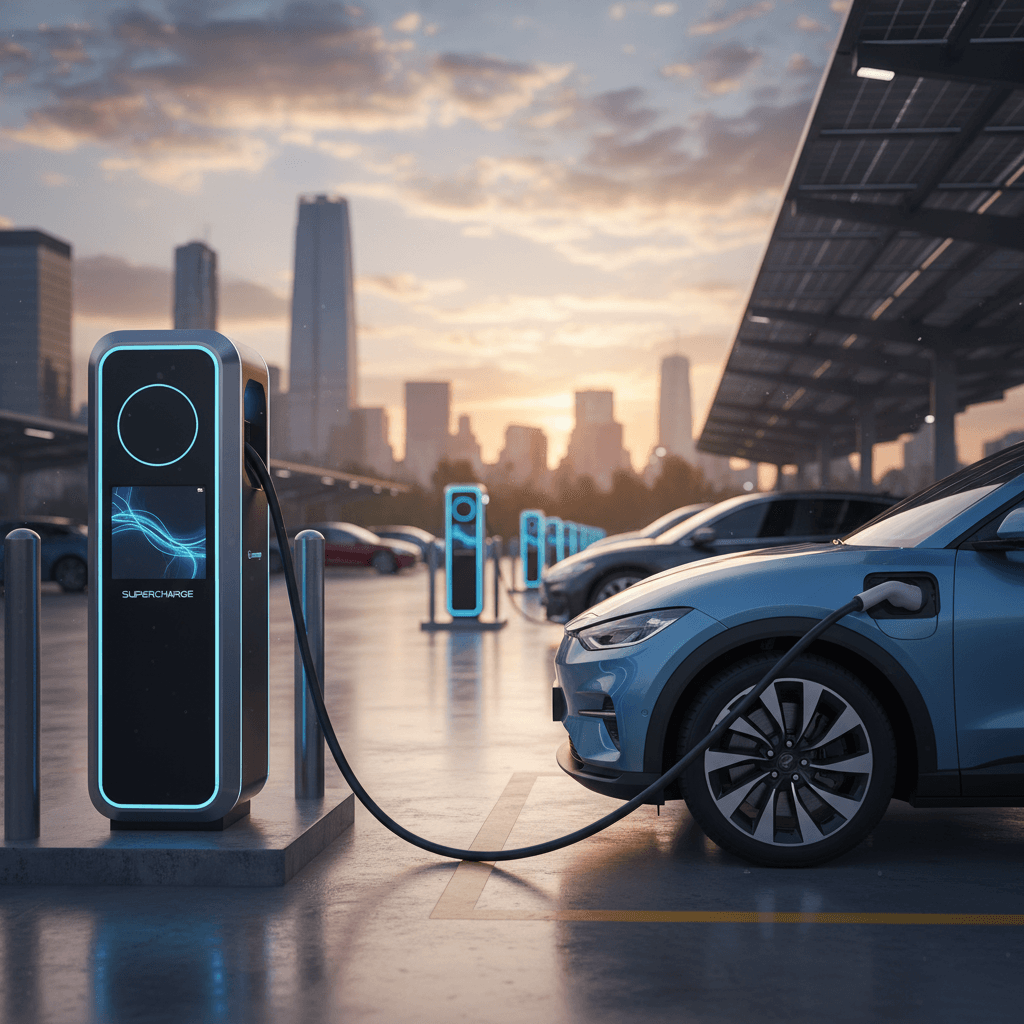
You’re searching for “EV supercharging stations near me” because you don’t want to gamble with range, whether it’s a late‑night commute home or a family road trip. The good news: as of late 2025, the U.S. has tens of thousands of public DC fast‑charging stalls, and more are coming online every week. The challenge is knowing which stations are actually fast, compatible with your EV, and worth the stop.
Fast‑charging is growing fast
Why “EV supercharging stations near me” matters in 2025
In 2025, the charging conversation has shifted. Early EV adopters worried whether they could find a charger at all. Today, the question is how to find the right fast charger, at the right time, for your route and your EV. With more than 200,000 public charging ports nationwide and fast‑charging sites growing in size and power, the bottleneck is no longer pure availability, it’s planning.
Fast‑charging in the U.S. at a glance (2025)
This expansion is a big reason many shoppers are now comfortable buying a used EV. When you can quickly locate reliable EV supercharging stations near you, the car feels less like a science project and more like a normal vehicle that just happens to run on electrons instead of gasoline.
What actually counts as “EV supercharging”?
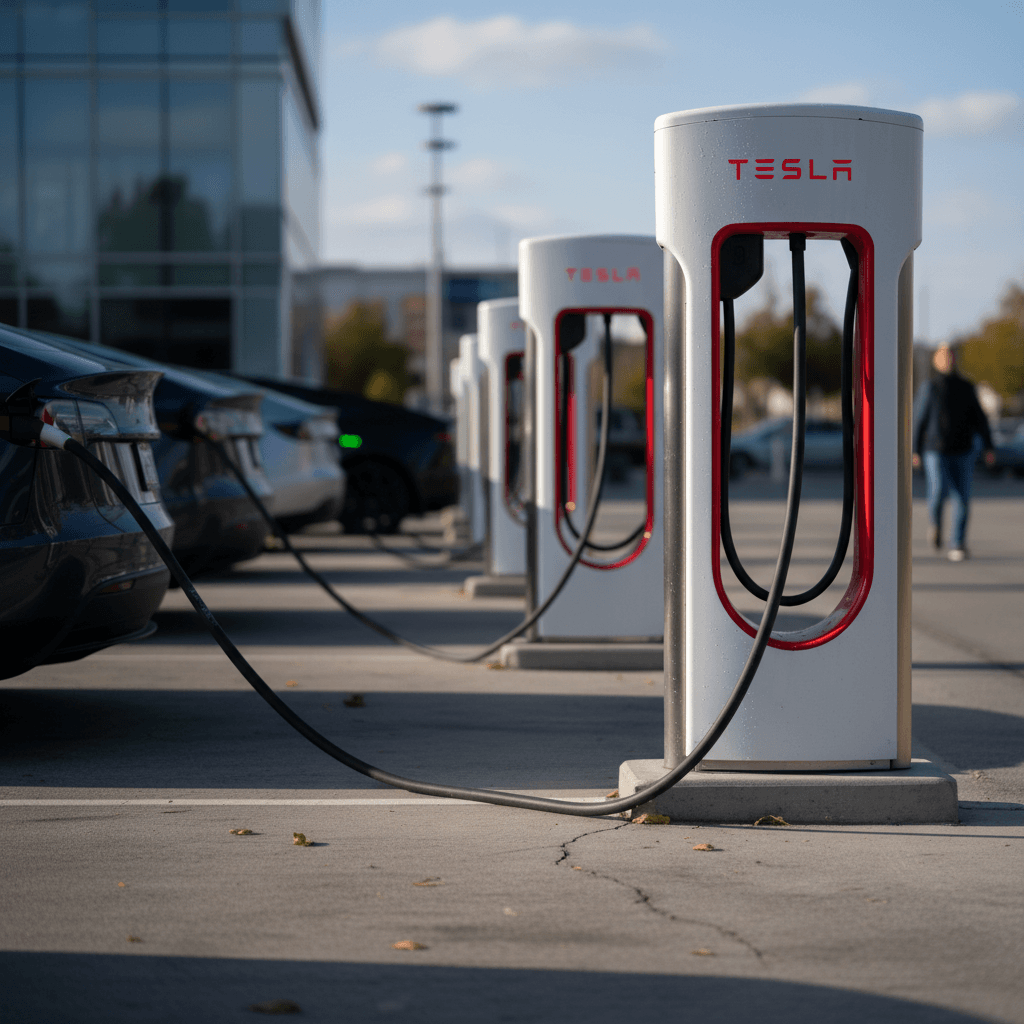
“Supercharging” started as Tesla’s brand name for its DC fast‑charging network, but most drivers now use it as shorthand for any high‑power DC fast charging. When you search for EV supercharging stations near you, you’re really looking for chargers that can add a meaningful chunk of range in 15–30 minutes, not overnight.
- Level 2 AC (L2): 6–19 kW, typically 20–40 miles of range per hour. Great for home, workplaces, and long parking stops, not what people usually mean by “supercharging.”
- DC Fast Charging (DCFC): 50–400 kW, typically 100–200+ miles of range in 20–40 minutes depending on your EV. This is what most drivers mean by “supercharging,” whether it’s Tesla or another network.
- Tesla Supercharger: Tesla’s own DC fast‑charging brand. Increasingly open to non‑Tesla EVs via NACS ports or adapters, and often what pops up first when you search for supercharging stations near you.
Know your EV’s limits
Best tools to find EV supercharging stations near you
You don’t need to bookmark twenty different maps. A handful of well‑designed apps and tools can reliably surface the best EV supercharging stations near you, filtered by speed, price, and compatibility.
Top ways to find EV supercharging stations near you
Use at least two tools so you always have a backup.
Google Maps
In 2025, Google Maps shows real‑time availability and speed info for many fast‑charging networks, including Tesla Superchargers.
- Search for “EV charging” or “supercharger near me”.
- Filter by fast chargers when available.
- Tap a station to see number of stalls, speeds, and busy times.
Network apps
Each major charging network has its own app, critical if you use them often.
- Tesla app for Superchargers.
- Electrify America, EVgo, ChargePoint, and others.
- Best for seeing real‑time stall status and pricing.
Community & planning apps
Apps like PlugShare, A Better Routeplanner (ABRP), and in‑car navigation systems add crowd‑sourced reliability info and smart route planning.
These are invaluable for long trips or in areas with sparse coverage.
Don’t rely on one app
Major fast‑charging networks you’ll see nearby
When you zoom out on a map around your home, you’ll probably see a mix of logos. Here’s what the big networks mean for you when you’re hunting for EV supercharging stations near you.
Largest DC fast‑charging networks in the U.S. (high‑level overview)
These are the brands you’re most likely to see when you search for fast charging or supercharging nearby.
| Network | Typical Power | Notable Strengths | Common Locations |
|---|---|---|---|
| Tesla Supercharger | 150–250kW (some 250kW+) | Largest fast‑charging network; increasingly open to non‑Tesla EVs via NACS or adapters. | Interstates, major highways, shopping centers. |
| Electrify America | 150–350kW | High‑power sites with 4–12+ stalls; strong coverage on major corridors. | Interstates, Walmart, travel plazas. |
| EVgo | 50–350kW | Urban focus; many city and grocery locations. | Urban cores, grocery stores, retail centers. |
| ChargePoint DC | 62.5–200kW | Large footprint; many workplace and retail fast chargers. | Shopping centers, workplaces, parking garages. |
| Ionna & OEM networks | 150–350kW | New multi‑OEM sites with modern amenities and NACS support. | Major corridors, new highway hubs. |
Exact stall counts change monthly, but these networks account for the majority of U.S. DC fast‑charging ports.
The connector transition is underway
How to read a fast‑charger listing like a pro
Tapping a charger pin on a map is just the start. To pick the best EV supercharging station near you, you’ll want to scan a few key details before you commit to the detour.
Quick checklist for evaluating a station
1. Confirm plug type and compatibility
Check whether the station offers CCS, NACS, or CHAdeMO, and confirm that matches your EV or adapter. If you’re driving a used EV, double‑check what the previous owner included for adapters.
2. Look at max power and your car’s limit
A 350 kW station doesn’t guarantee 350 kW to your battery. Verify your EV’s maximum DC charge rate and remember that the highest speeds usually happen from about 10–50% state of charge.
3. Count the number of stalls
All else equal, a 12‑stall site is much more forgiving than a 2‑stall site. Bigger sites handle traffic better, especially near metro areas or on holiday weekends.
4. Scan recent user reviews
On community apps, filter for reviews in the past 30–60 days. Look for mentions of broken connectors, blocked parking, or reduced charging speeds.
5. Check pricing and idle fees
Rates may be per kWh, per minute, or a blend, and some sites add idle fees after your charge completes. Price doesn’t have to be the lowest, but you should know if you’re stopping at a premium site.
6. Note amenities and safety
Is the station well‑lit? Near restrooms, food, or a coffee shop? Comfortable amenities turn a 25‑minute charging stop into a normal break instead of a chore.
Don’t arrive nearly empty on unfamiliar stations
Planning road trips around supercharging stations
Finding an EV supercharging station near you for daily driving is one thing. Planning a multi‑stop road trip is another. The good news? With today’s infrastructure, a bit of planning goes a long way toward making an electric road trip as straightforward as a gas‑powered one.
Use EV‑aware route planners
Start with your car’s built‑in navigation or apps like A Better Routeplanner and PlugShare. These tools can:
- Factor in your specific EV’s range and efficiency.
- Suggest optimal supercharging or fast‑charging stops along the way.
- Automatically space stops around 10–20% arrival and 60–80% departure state of charge.
Build in margin for weather and speed
Cold weather, high speeds, headwinds, and heavy loads all reduce range. To stay comfortable:
- Plan for an extra stop on winter trips.
- Keep a 10–15% buffer beyond what the planner suggests.
- Favor larger sites (8+ stalls) around mealtimes when demand is highest.
Treat charging like fuel and food combined
Common supercharging pitfalls and how to avoid them
Even in 2025, public fast charging has rough edges. Reliability is improving, but first‑time success isn’t perfect yet. Here are the most common issues drivers run into when hunting for “EV supercharging stations near me” at the last minute, and how to sidestep them.
Avoid these fast‑charging headaches
Most problems can be prevented with 30 seconds of prep.
Station appears but isn’t really public
Some chargers are behind gates or in private lots.
- Check photos and reviews for access notes.
- Avoid stations marked “restricted” or “fleet only.”
Multiple stalls out of service
Networks are getting better, but hardware still fails.
- Check status in the network app if possible.
- Have a backup station within 10–15 miles.
Underestimating dwell time
Charging from 10–80% might be fast; 80–100% is slow.
- Plan to leave around 70–80%.
- Use idle fee alerts so you’re not caught off‑guard.
Crowded holiday corridors
Fast charging vs. home charging: which do you really need?
A lot of shoppers over‑focus on supercharging and under‑estimate how useful Level 2 home charging is day to day. For most drivers, fast charging is like an airport, important to have nearby, but not where you spend most of your time.
When fast charging matters most
- You take regular road trips beyond your EV’s single‑charge range.
- You live in an apartment or condo without reliable home charging.
- Your work or lifestyle involves lots of unpredictable, long‑distance drives.
In these cases, mapping out the fast‑charging stations near you (and near your usual routes) should be part of your buying decision.
When home Level 2 dominates
- You have a garage or driveway where you can install a 240V outlet or wallbox.
- Your daily driving is mostly commuting and errands under 60–80 miles.
- You’re comfortable using fast charging only a few times a year.
Here, your focus shifts from “superchargers near me” to picking an EV with the right range, efficiency, and battery health for your daily life.
Most charging happens at home
How Recharged helps you think beyond the next plug
At Recharged, we know that a search for EV supercharging stations near me often means you’re also asking a deeper question: “Is an EV actually practical for my life?” Our job is to help you answer that with confidence before you ever sign paperwork or plug in.
How Recharged makes EV ownership simpler
We combine battery insight, fair pricing, and practical charging guidance.
Recharged Score battery health
Every vehicle on Recharged includes a Recharged Score Report with verified battery diagnostics, so you understand how fast the car is likely to charge and how much real‑world range to expect.
Financing & trade‑in support
From financing to trade‑ins, instant offers, and even consignment, we help you move into your next EV with clear numbers and transparent options.
Nationwide delivery & EV specialists
You can browse and complete your purchase fully online, get nationwide delivery, and talk with EV‑specialist advisors who will walk through home charging, fast‑charging strategy, and trip planning.
Ready to find your next EV?
Browse VehiclesIf you’d like help matching your charging reality, home, work, and fast‑charging options near you, to the right used EV, our team can walk you through candidates that fit your routes and budget, then back that up with battery health data so there are fewer surprises later.
FAQ: EV supercharging stations near me
Frequently asked questions about EV supercharging near you
As EV infrastructure matures, searching for EV supercharging stations near me is becoming less about anxiety and more about fine‑tuning convenience and cost. With the right mix of apps, a basic understanding of fast‑charging, and an EV whose battery health you trust, topping up on the road can feel as routine as pulling into a fuel station, just quieter and cleaner. If you’re ready to explore a used EV that fits your daily routes and your favorite road trips, Recharged is here to help you make that decision with clear data and expert guidance.