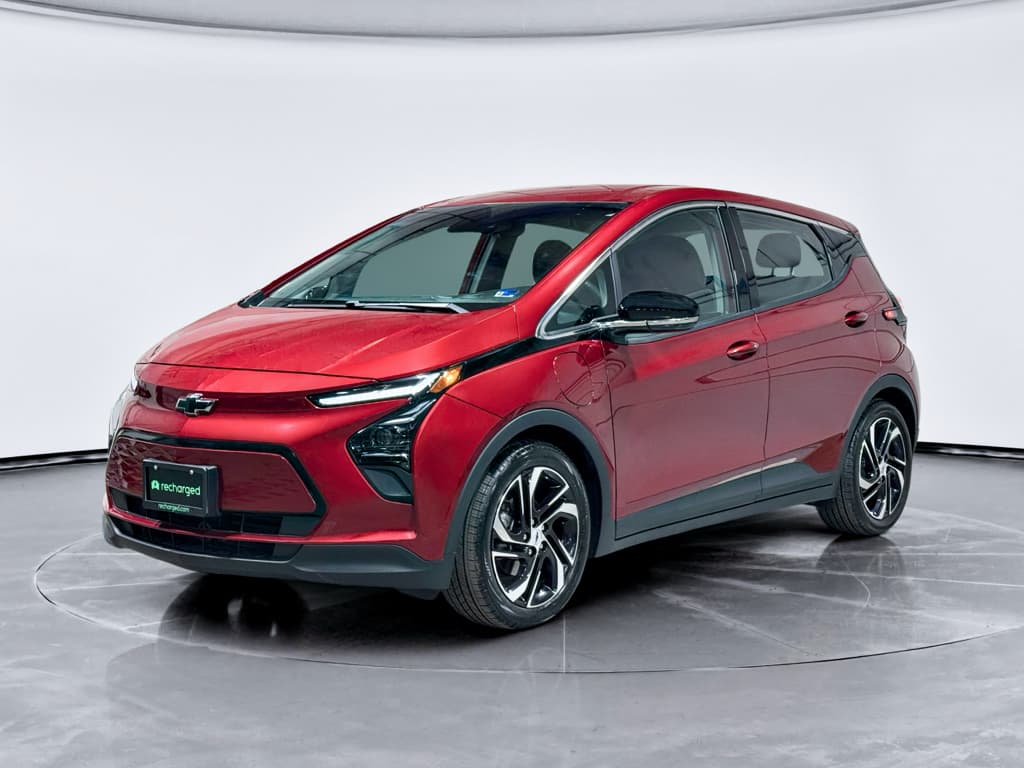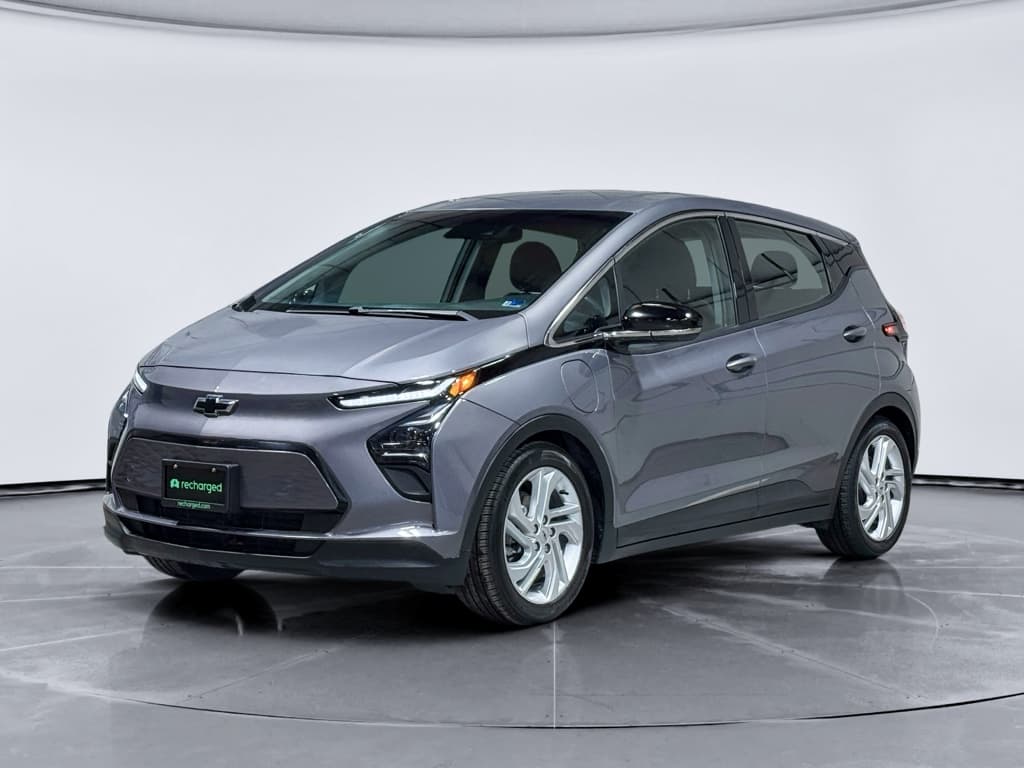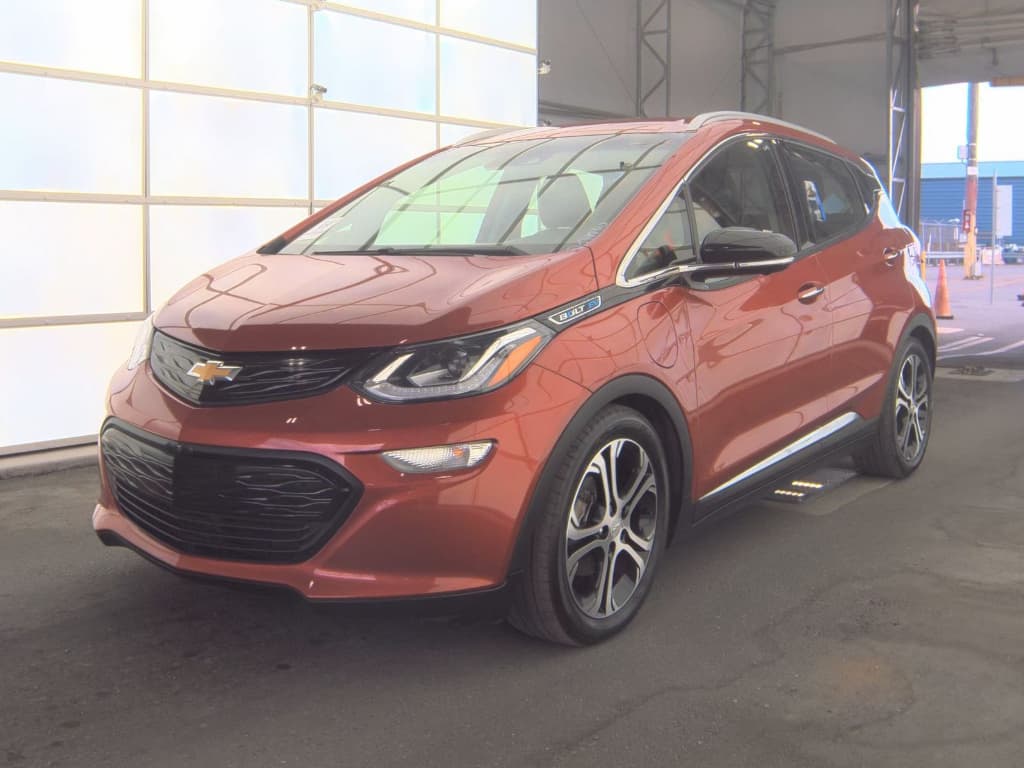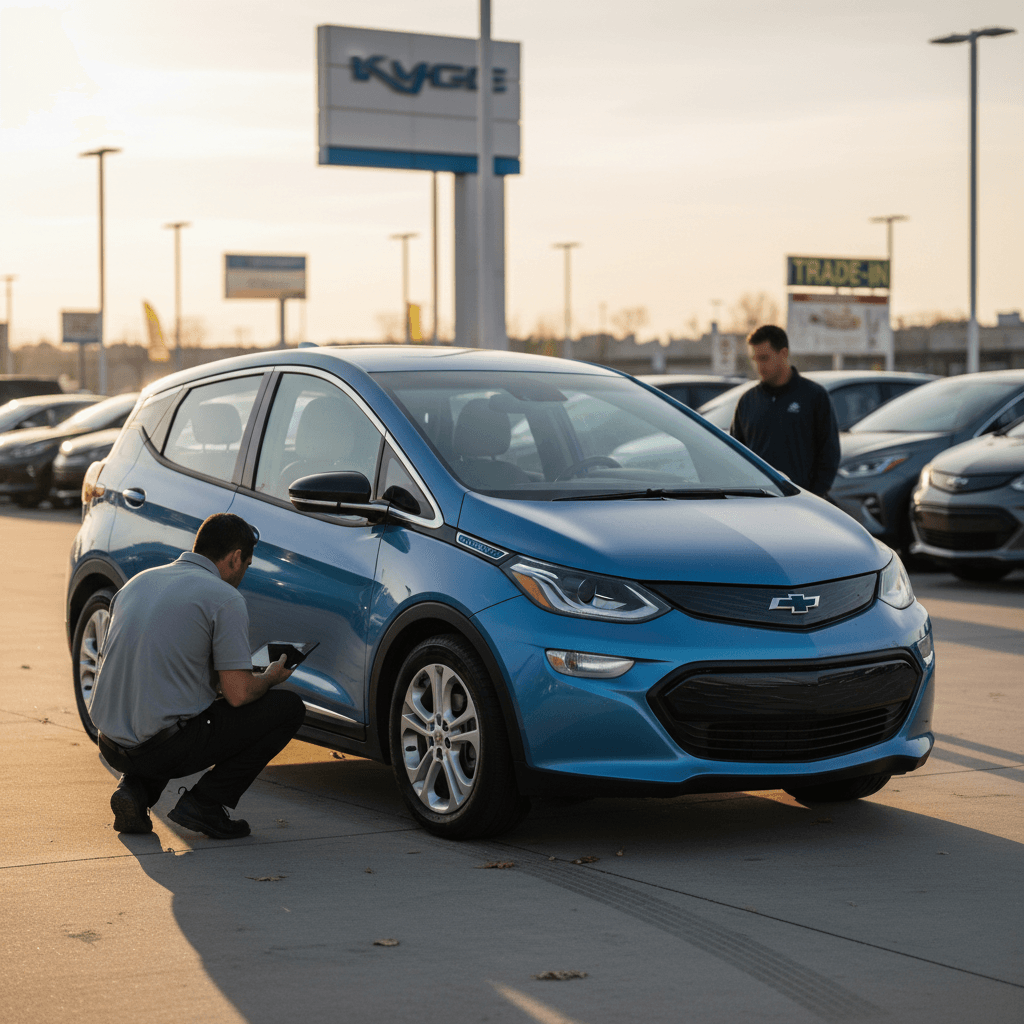
If you’re driving a Chevrolet Bolt EV and thinking about trading it in during 2026, you’re not alone. The car is discontinued (for now), a redesigned Bolt is coming, and used‑EV prices have cooled after their pandemic spike. That mix makes **Chevrolet Bolt EV trade in value in 2026** a moving target, but there is a clear pattern emerging in real‑world numbers.
2026 Bolt EV trade‑in at a glance
Chevy Bolt EV trade‑in value in 2026: the short version
Key Chevy Bolt EV value stats going into 2026
Those numbers reflect national patterns from used‑EV listings and valuation data in late 2025 and early 2026. Actual **Chevy Bolt EV trade‑in value in 2026** will swing with local demand, mileage, battery history, and whether you’re trading in against another GM product or selling to a specialist EV buyer like Recharged.
How much is my Chevrolet Bolt EV worth in 2026?
There’s no single number for any individual car, but we can pin down realistic **trade‑in bands** for a typical Bolt EV in 2026, assuming U.S. national averages, clean titles, and “good” condition (no major body damage, reasonable tires and brakes).
Trade‑in value
What a dealer, national car‑buying site, or marketplace will pay you when they plan to resell the car. It’s lower than retail because they need room for reconditioning, fees, and profit.
- Fast and convenient
- Often **60–75%** of retail ask price
- Can be boosted by incentives on the car you’re buying next
Retail value
What similar Chevy Bolt EVs are listed for on dealer lots and major shopping sites. Think of this as the price a future buyer pays after dealers mark up your car.
- Higher numbers on listing sites
- Not what you’ll receive as the seller
- Useful anchor when you negotiate trade‑in offers
Use listings as your trade‑in benchmark
Chevy Bolt EV trade‑in value ranges by model year
Here’s a simplified view of how **Chevrolet Bolt EV trade in value in 2026** tends to stack up by model year. These are directional bands for typical mileage and national averages, your local market, options, and battery history will move you up or down.
Approximate 2026 Chevy Bolt EV trade‑in value bands (U.S.)
Typical trade‑in ranges assume clean title, no major accidents, and average mileage for age. High‑mileage or rough cars can fall below these bands; low‑mileage or exceptional cars can exceed them.
| Model year | Typical 2026 mileage | Likely trade‑in range* | Notes |
|---|---|---|---|
| 2017–2018 | 70,000–110,000+ miles | $7,000–$10,000 | Oldest cars on the market; many have had recall battery replacements. Condition and battery paperwork matter a lot. |
| 2019 | 60,000–90,000 miles | $8,500–$11,500 | Mid‑cycle cars with similar range; values hinge on service history and remaining battery warranty, if any. |
| 2020–2021 | 45,000–75,000 miles | $10,000–$14,000 | Steeper early depreciation mostly behind them; often the sweet spot for value buyers, which supports trade‑in prices. |
| 2022 | 30,000–55,000 miles | $13,000–$16,000 | Post‑refresh styling and improved interior help demand. Lower miles and strong condition push offers upward. |
| 2023 | 20,000–40,000 miles | $14,000–$18,000 | Final first‑gen model year and most desirable overall. Dealers like these as late‑model EV value plays. Top‑condition examples can do even better. |
Directional guidance only, not a quote or guaranteed offer.
Important caveat on price bands
5 factors that move your Bolt EV trade‑in value up or down
What dealers and buyers look at on a used Bolt EV
Understanding these levers helps you predict, and improve, your 2026 trade‑in value.
1. Mileage vs age
EV shoppers care about miles just like gas‑car buyers. A 2019 Bolt EV with 40,000 miles will typically out‑perform a 2019 with 90,000 miles by thousands of dollars in trade‑in value.
2. Battery health & recall work
The Bolt EV’s battery recall history is baked into its market story. Documented battery replacements or clean inspection reports support higher offers. Missing paperwork can drag them down.
3. Accident and title history
Clean Carfax/AutoCheck and no structural damage keep you in the mainstream value band. Salvage, rebuilt, or airbag deployment history can cut trade‑in value sharply.
4. Condition & reconditioning costs
Dealers quickly estimate what they’ll spend to make your car front‑line ready, tires, brakes, cosmetic repairs, detailing. The more they see to fix, the lower the offer.
5. Local EV demand
Bolt EVs trade higher in markets with strong EV adoption, stable charging infrastructure, and high fuel prices. In regions where EVs are still a tough sell, offers may be softer.
6. What you’re buying next
If you’re trading in against a vehicle the dealer really wants to move, like an over‑stocked gas SUV, they may pad your Bolt EV trade‑in to make the deal work.
Battery health, recalls, and how they affect trade‑in value
Any conversation about **Chevy Bolt EV trade‑in value in 2026** has to deal with batteries head‑on. GM’s high‑profile battery recall, the long replacement campaign, and the Bolt’s otherwise strong efficiency all combine to create a market where documentation matters as much as mileage.
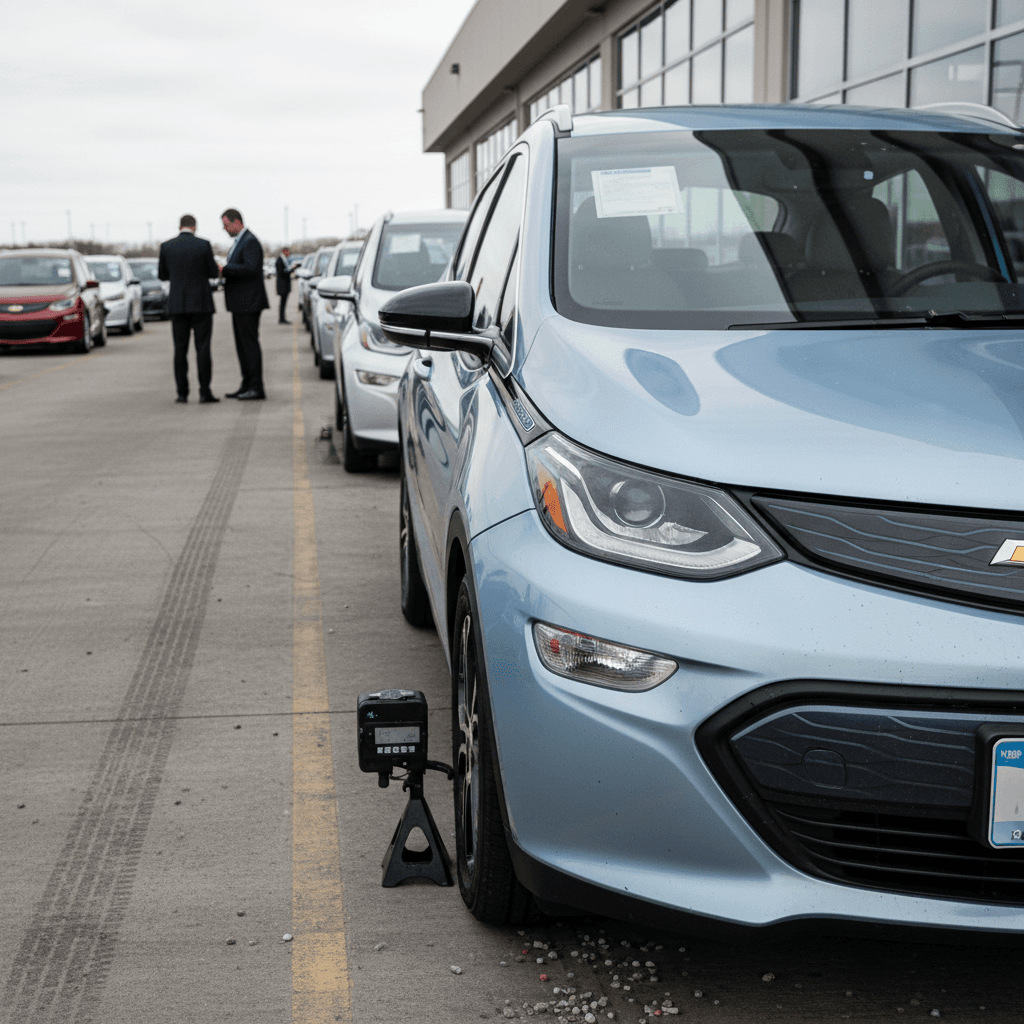
- A Bolt EV with a completed battery recall and documentation often trades more easily and closer to the top of its value band.
- Cars that still show open recall campaigns or uncertain battery history can be harder to move, which shows up as lower trade‑ins or “we’re not interested” responses from some dealers.
- Shoppers who know the Bolt platform increasingly ask for state‑of‑health (SOH) data or at least a recent range report, especially on older model years.
- Because EV range loss happens gradually, some buyers will pay more for a documented, healthy pack than for a mystery car with similar odometer miles.
How Recharged handles Bolt EV batteries
Trade‑in vs selling your Bolt EV privately vs selling to Recharged
Once you have a sense of your 2026 **Chevrolet Bolt EV trade in value**, the next question is where to sell. Your choice affects how much you walk away with, how long it takes, and how much effort you’ll invest.
Traditional dealer trade‑in
- Fastest path if you’re already buying another vehicle.
- One transaction, instant equity applied to your next car.
- Usually the **lowest dollar amount** but easiest overall.
- Dealers who don’t know EVs may lowball Bolt trade‑ins.
Private‑party sale
- Highest potential sale price if you’re patient.
- You handle photos, listings, test drives, and paperwork.
- EV buyers may want to see charging and range in person.
- Can take weeks or months depending on your market.
Specialist EV buyer or marketplace
- Companies like Recharged focus on EVs and understand Bolt quirks.
- More informed pricing around battery health and recalls.
- Options for instant offers, consignment, or trade‑in toward another used EV.
- Can strike a middle ground between dealer speed and private‑sale value.
Where Recharged fits in
Ready to find your next EV?
Browse Vehicles7 practical steps to improve your Bolt EV trade‑in offer
A quick prep list before you ask for 2026 offers
1. Gather battery and recall documentation
Print or save proof of recall completion, battery replacements, and any recent high‑voltage system service. Showing that history up front calms dealer concerns and supports better numbers.
2. Pull a vehicle history report
If you don’t already have one, consider pulling a Carfax or AutoCheck. Knowing what’s on record helps you address issues before a buyer uses them to justify a low offer.
3. Fix cheap, obvious issues
Touch‑up deep scratches, fix cracked glass, replace worn wipers, and address any warning lights. A car that looks well‑cared‑for is quicker to appraise at the top of its band.
4. Get the car professionally detailed
A full interior and exterior detail, especially on a light‑colored Bolt EV interior, can add far more than it costs in perceived value. Dealers see a car they can retail quickly.
5. Take clear, honest photos
Even if you plan to trade in, some dealers will appraise from photos first. Shoot in good light, show tread depth, screen readouts, and any cosmetic flaws so there are no surprises later.
6. Collect multiple offers in the same week
Online buyers, local dealers, and EV specialists can all bid on your car. Getting several offers in a short window gives you leverage and protects you from outlier lowball numbers.
7. Time your trade‑in strategically
Values can bump around tax‑refund season, after gas‑price spikes, or when a dealer is short on used inventory. If you can, avoid selling in the slowest parts of the year in your region.
Don’t anchor on your original sticker price
Market trends: what could happen to Bolt EV values after 2026
Used‑EV markets have been volatile, but the **Chevy Bolt EV’s resale story** is starting to settle. As we move through 2026 and toward the next‑generation Bolt that GM has previewed, a few forces will shape what your car is worth.
Three big forces shaping future Bolt EV values
If you’re deciding whether to trade in now or hold a little longer, keep these in mind.
Finite first‑gen supply
GM stopped building the first‑gen Bolt EV after the 2023 model year. That fixed supply can help stabilize values once the recall overhang fully clears and buyers treat the car as a known quantity.
Redesigned Bolt on the way
GM has announced a new‑generation Bolt, expected to arrive in the second half of the decade on a different platform. When it lands, some buyers will shift attention to the new model, which could nudge first‑gen prices down a bit.
Energy & policy environment
Gas prices, state incentives, and charging build‑out all move EV demand. If charging becomes easier and gas gets more expensive, efficient value EVs like the Bolt tend to hold up better.
If you’re on the fence about timing
Chevrolet Bolt EV trade‑in value 2026: FAQ
Frequently asked questions about Chevy Bolt EV trade‑ins in 2026
Bottom line: is 2026 a good time to trade in your Bolt EV?
For most owners, **2026 is a perfectly reasonable time to trade in a Chevrolet Bolt EV**. Early‑year recall anxiety has largely worked its way through the market, demand for efficient used EVs remains solid, and the next‑generation Bolt hasn’t yet fully arrived to pull attention away from the first‑gen car.
If your Bolt still fits your life and your finances are comfortable, keeping it a year or two longer will probably just follow a normal depreciation curve. But if you’re eyeing more space, faster DC fast charging, or a factory NACS port, locking in your **Chevy Bolt EV trade in value in 2026**, while your car is still relatively modern and fully supported, can make sense.
Either way, go into the process with your paperwork ready, your battery story documented, and multiple offers in hand. And if you want a partner that understands used EVs from bumper to battery, Recharged can help you price, market, and trade your Bolt EV with far more transparency than a traditional one‑size‑fits‑all used‑car lot.