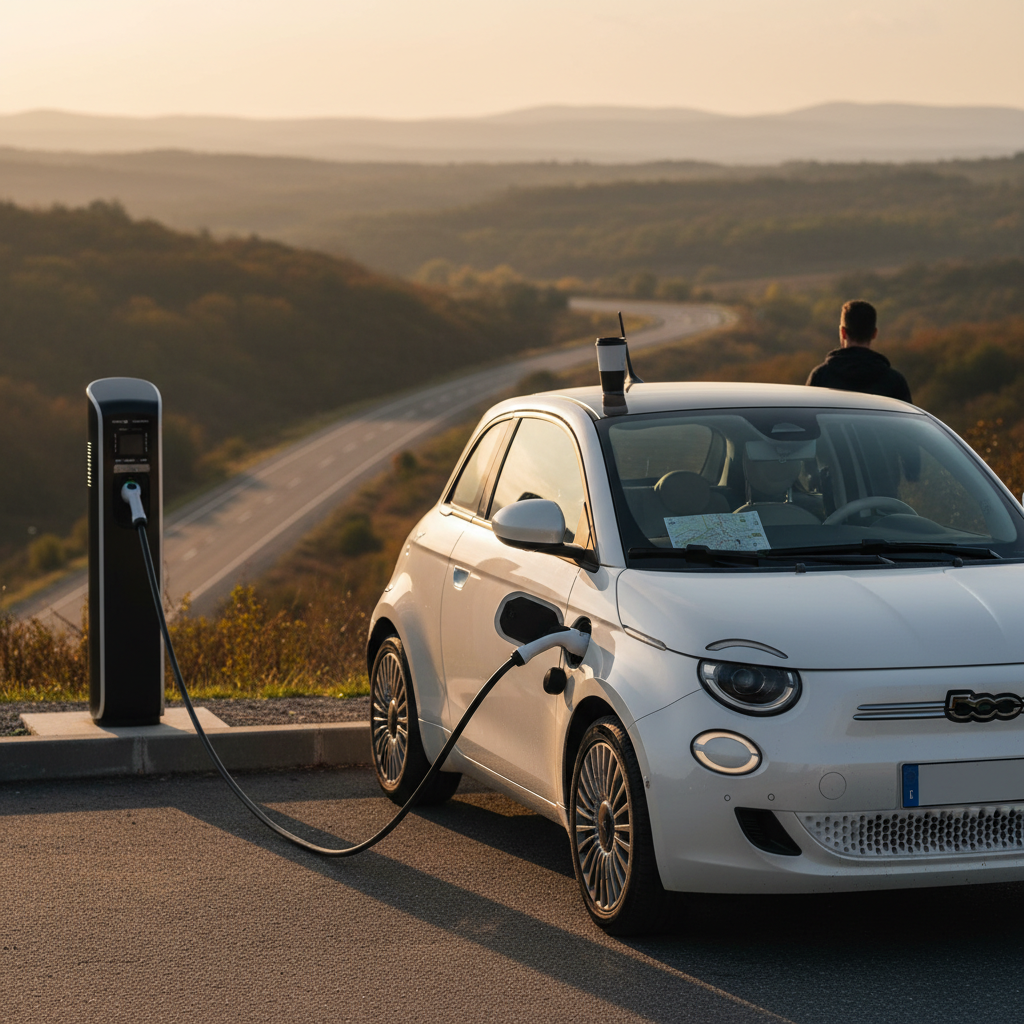
You’ve run the numbers on electricity vs. gas, maybe even test‑driven a used EV you love, then you hear about an extra EV registration fee your state charges. Is this “EV tax” going to blow up your savings, or is it more of an annoying line item than a deal‑breaker?
Quick definition
Why states charge EV registration fees
All the drama around EV registration fees really comes down to a simple tension: roads are mostly funded by fuel taxes, and electric vehicles don’t buy much fuel. States still need money for highways, plowing, and potholes, and they’re watching gas‑tax revenue flatten as more drivers plug in.
- Most states fund road maintenance largely through per‑gallon gasoline and diesel taxes.
- When you drive an EV, you don’t pay those taxes, even though you still use the roads.
- Lawmakers see an imbalance: gas drivers pay at the pump, EV drivers mostly don’t.
- To close that gap, many states add a special registration fee for EVs and sometimes plug‑in hybrids.
The politics behind the fee
How EV registration fee extra costs actually work
The mechanics are refreshingly un‑mysterious. Most states that charge extra do it in one of three ways, tacked onto your usual registration:
Common ways states structure EV fees
Same idea, slightly different math on your renewal notice
Flat annual fee
You pay a fixed amount, say $100–$225 per year, on top of normal registration.
Simple to understand, but not tied to how much you actually drive.
Per‑renewal, multi‑year
Some states register for two years at a time and add the EV fee to that total.
It looks big up front but still averages out yearly.
Tiered or differentiated
Different fee levels for battery‑electric vs. plug‑in hybrid, or light‑duty vs. heavy‑duty.
In some states, plug‑in hybrids pay less; in others, they’re treated like full EVs.
In practice, this appears on your registration paperwork as a separate line, something like “Electric Vehicle Fee”, “Alternative Fuel Vehicle Fee”, or “Road Use Recovery Fee”. It’s paid when you first title and register the car in your name, and then again at each renewal.
Where to find your state’s EV fee
What EV registration fees typically cost
Typical EV registration fee extra costs
The important thing isn’t just the sticker size of the fee, it’s how it compares to what you would have paid in gas tax in a similar gasoline car. In many states, the fee roughly approximates that amount. In a few, especially if you drive fewer miles than average, the EV fee can overshoot what your gas taxes would’ve been.
Watch for stacked charges
States with notably high or low EV fees
Because policy is moving quickly, you should always confirm current numbers, but the landscape in early 2026 looks something like this in broad strokes:
Illustrative EV fee patterns by state type
These patterns are representative, not a legal quote. Always confirm current fees with your DMV before you buy or register.
| State type | Policy stance | EV fee style | What it feels like as an owner |
|---|---|---|---|
| EV‑friendly coastal | Strong incentives, climate goals | Lower flat EV fee or none; focus on rebates and time‑of‑use electricity rates | Paperwork is simpler; the EV fee is rarely the thing that breaks your budget. |
| Revenue‑focused | High concern about gas‑tax decline | Higher flat fees, sometimes $150+ per year for BEVs | Fee can feel punitive if you drive relatively few miles. |
| Gradual adopters | Mixed politics, watching neighbors | Moderate flat fee added in last few years | Annoying line item, but still overshadowed by fuel savings for most drivers. |
| Experiments underway | Talking per‑mile road‑use charges | Pilot programs plus interim flat fees | More complexity ahead; EV owners are on the front line of new funding models. |
Examples are simplified for clarity and may not reflect recent legislative changes.
Is it actually “fair”?
How much EV registration fees really change total ownership cost
For most households, the extra EV fee is less like a second car payment and more like an unwelcome subscription, real money, but not the whole story. To see it clearly, you need to zoom out to total cost of ownership: purchase price, financing, insurance, energy, maintenance, and fees over several years.
1. Compare energy costs first
If you drive, say, 12,000 miles per year, a typical EV might use about 3 mi/kWh. At $0.14 per kWh off‑peak, that’s roughly $560 a year in electricity.
A comparable gas car getting 30 mpg at $3.50 per gallon spends about $1,400 a year on fuel. That’s an $840 annual edge for the EV before fees.
2. Then plug in the EV fee
Now add a $150 annual EV registration fee extra cost to the EV side of the ledger. You’re still about $690 ahead per year on fuel alone.
Even in higher‑fee states, the savings from electricity vs. gas usually dwarf the registration hit, especially if you can charge at home on an off‑peak plan.
Where used EVs quietly win
Used EV buyers: what to check before you sign
If you’re shopping used, especially online or across state lines, the EV registration fee is one of those boring but important details that’s easy to miss in the glow of a panoramic roof and instant torque.
Registration and fee checklist for used EV shoppers
1. Confirm how your state classifies the car
Is it a <strong>battery electric vehicle (BEV)</strong>, a <strong>plug‑in hybrid (PHEV)</strong>, or a standard hybrid? Some states only ding BEVs; others include PHEVs in the extra fee, and classification errors do happen at the DMV.
2. Look up the current EV fee on official sites
Go to your state’s DOT or DMV website for the <strong>official fee schedule</strong>. Third‑party blogs and forums get outdated quickly as legislatures tweak the numbers.
3. Ask about back fees or prorated charges
If you’re buying from out of state or registering mid‑cycle, ask whether you’ll owe a <strong>full year</strong> of the EV fee right away or a prorated amount. That first bill can surprise people.
4. Model it over 3–5 years
Don’t just look at the first registration notice. Multiply the fee by the number of years you expect to keep the car, then compare that total to your expected savings on fuel and maintenance vs. your current gas vehicle.
5. Check local incentives that offset costs
Sometimes a city rebate on home charging equipment or discounted public charging memberships can effectively <strong>cancel out</strong> the EV registration fee over a couple of years.
6. Get a handle on battery health
Registration fees are flat, but <strong>battery condition</strong> isn’t. With a used EV, a healthy pack is worth far more than the fee question. A tool like the <strong>Recharged Score</strong> gives you verified battery diagnostics before you commit.
How Recharged fits in

Ways to offset or outweigh extra EV fees
If the EV fee feels like sand in the gears of your budget, you do have levers to pull. Some are simple habit shifts; others are structural choices you make when you buy.
Practical ways to neutralize EV registration fees
Think of it as tuning the rest of the ownership equation in your favor
Charge at home, off‑peak
Home Level 2 charging on an off‑peak electricity plan is often the single biggest savings lever. Compared with daytime fast charging or gas, it can easily erase a $150 annual fee.
Drive your EV for the miles that matter
Use the EV for high‑mileage commuting and errands where it replaces the most gas. If you keep a second vehicle, save it for rare specialized trips.
Shop smart on the purchase price
The less you pay for the car, especially buying used, the less any fixed fee stings. A well‑priced used EV with a healthy battery can make even a high EV fee feel like background noise.
Avoid this common trap
EV fees, hybrids, and plug‑in hybrids
Not every electrified vehicle gets treated the same. If you’re cross‑shopping a pure EV, a plug‑in hybrid, and a traditional hybrid, the registration rules matter almost as much as trunk space.
Battery electric vehicles (BEVs)
- Run only on electricity.
- Most likely to be hit with a dedicated EV registration fee.
- Biggest fuel‑savings upside, especially at higher mileage.
Plug‑in hybrids (PHEVs)
- Have a battery you can charge plus a gas engine.
- Some states charge a reduced EV fee; others treat them like full EVs, and some exempt them.
- Fuel‑tax vs. EV‑fee tradeoff depends heavily on how often you plug in.
Conventional hybrids (HEVs)
- Cannot be plugged in; they only use gasoline.
- Generally do not pay a special EV fee.
- You still pay fuel taxes every time you fill up.
Ask this specific question at the DMV
The future of EV registration fees
The story of EV registration fee extra costs is still being written. As EVs go from novelty to normal, states are experimenting with more durable ways to fund roads, and EV drivers are the guinea pigs.
Where EV road‑use charges are likely headed
Short term (next 3–5 years)
More states add or tweak flat EV fees as adoption grows.
Some legislatures adjust fees up or down after backlash or budget pressure.
A few states continue to stack incentives (rebates, HOV access) so the net equation is still very EV‑friendly, even with a fee.
Longer term (5–15 years)
Growing interest in <strong>per‑mile road‑usage charges</strong> that apply to all vehicles, not just EVs.
Pilot programs using smartphone apps or connected‑car data to measure miles driven.
A gradual shift from taxing fuel to <strong>charging for actual road use</strong>, which could eventually make today’s flat EV fees obsolete.
We’re living through the awkward adolescence of road funding. The rules were built for gasoline; the cars are increasingly electric. The policy will eventually catch up, but in the meantime, buyers have to read the fine print.
FAQ: EV registration fee extra cost
Frequently asked questions about EV registration fees
Bottom line: will EV registration fees kill the savings?
In the grand spreadsheet of car ownership, EV registration fee extra costs are real, but they’re rarely the villain they’re made out to be. For most drivers, especially those who can charge at home and log a normal commute, the fuel and maintenance savings of an EV still outweigh the fees, by a wide margin.
Where things get uncomfortable is at the edges: low‑mileage drivers in high‑fee states, or owners who rely on pricey fast charging because they never set up home charging. If that’s you, the solution isn’t to flee EVs; it’s to choose the right vehicle, the right charging setup, and the right price up front.
That’s where a trusted used‑EV partner matters. Recharged pairs verified battery health, transparent pricing, and expert guidance on incentives and fees, so you see the EV registration line item in context, not as a last‑minute surprise. Do the math honestly, structure the deal intelligently, and an extra fee on your registration renewal becomes exactly what it should be: a footnote, not a plot twist.