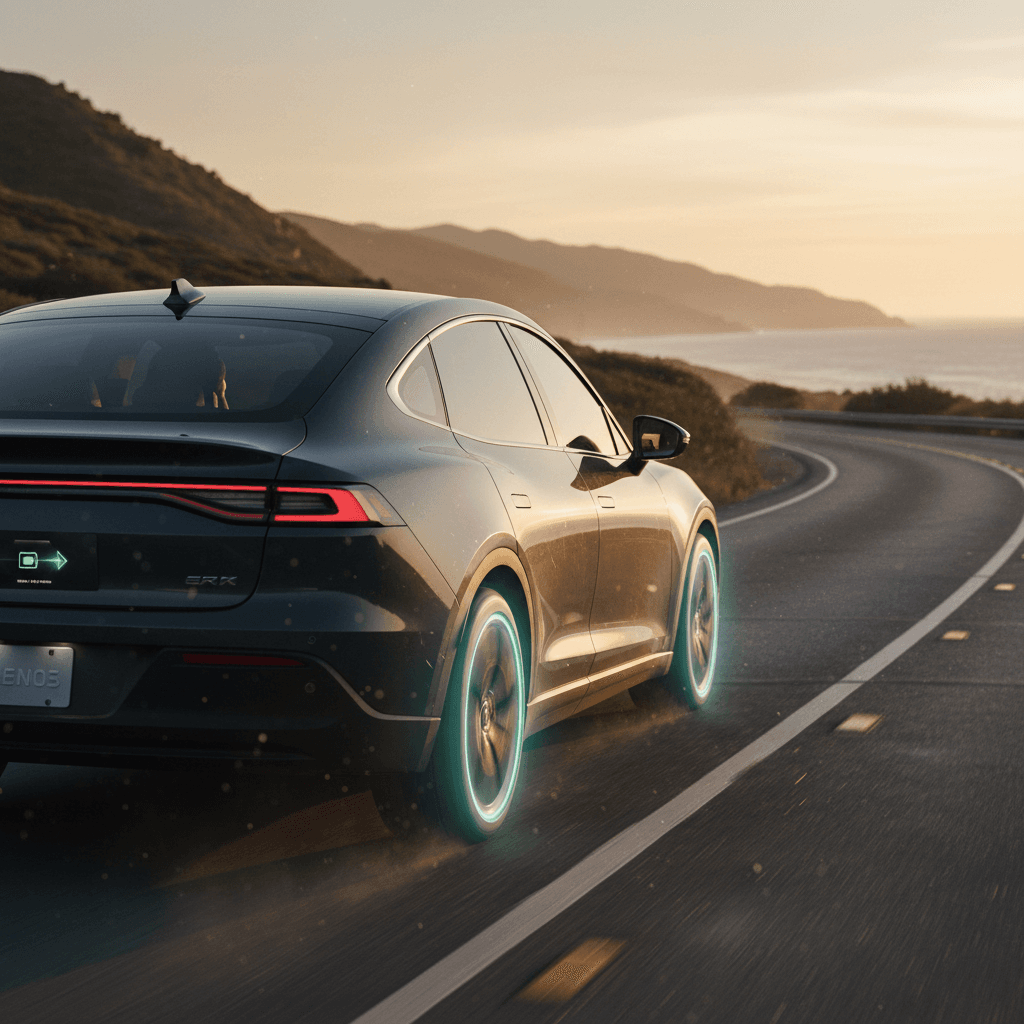
Every time you slow an electric vehicle, you’re making a choice: waste energy as heat, or put some of it back into the battery. EV regenerative braking is the software and hardware that makes the second option possible, turning deceleration into extra range and lower maintenance, if you know how to use it.
Key takeaway
What is EV regenerative braking?
In a gas car, pressing the brake pedal uses friction to clamp brake pads onto rotors. You stop, and all that kinetic energy turns into heat and disappears. In an EV or hybrid, regenerative braking uses the electric motor as a generator when you lift off the accelerator or press the brake. Instead of wasting energy, the car converts a chunk of your motion back into electricity and stores it in the battery.
- The same electric motor that pushes the car forward can also resist motion and generate power when it spins “backwards” as you slow down.
- Electronics called an inverter manage that energy flow and send it into the battery pack.
- Friction brakes are still there for hard stops or emergencies, but in everyday driving regen can handle most of your deceleration.
Why it matters for you
How regenerative braking works, step by step
Under the skin, regenerative braking is a control problem: how to turn a driver’s request to slow down into the right mix of motor drag and friction braking, without upsetting stability or comfort. Here’s the sequence in most modern EVs:
- You lift off the accelerator or touch the brake pedal. The car’s control software interprets this as a request for negative torque (slowing).
- The inverter tells the motor to switch into generator mode, creating electrical resistance at the wheels. You feel this as deceleration, often described as “engine braking,” but stronger.
- The AC power generated by the motor is converted by the inverter into DC power at the right voltage for the battery pack.
- The battery management system checks limits (temperature, state of charge, cell health). If there’s room and conditions are safe, it accepts the incoming power.
- If you ask for more deceleration than regen can safely provide, like a panic stop, the friction brakes seamlessly add extra stopping force. In a good system, you never feel the hand‑off.
What the car sees
- Wheel speeds at each corner
- Battery temperature & state of charge
- Motor and inverter temperatures
- Road grip from ABS/traction systems
What you feel
- A smooth tug when you lift off the accelerator
- Variable “coast” or “strong drag” depending on mode
- Familiar brake‑pedal feel, even though regen is doing most of the work
Not all regen systems feel the same
Regen efficiency and real-world range gains
There are two different questions you should keep straight: How efficient is the regen hardware? and How much extra range does it actually give you? They’re related, but they’re not the same thing.
Regenerative braking by the numbers
Most modern EVs can convert around 60–70% of the kinetic energy from braking back into usable battery energy. That’s the hardware side. But because you also lose energy to aero drag and rolling resistance, you don’t see a 60–70% jump in range. In day‑to‑day driving, regen typically adds something like 10–30% to your range, with city traffic at the high end and smooth highway cruising at the low end.
A simple way to picture it
Driving modes and one-pedal driving
Regenerative braking is as much a software experience as a hardware feature. Carmakers increasingly treat it as part of the “character” of the car, giving you different regen levels you can tune to your taste.
Common regenerative braking modes
How different settings change the way your EV slows down
Low or “coast”
Feels closest to a gas car. Lift off the accelerator and the car mostly coasts, with light regen when you press the brake pedal.
- Good for highway cruising
- Easier transition for new EV drivers
Standard or medium
Noticeable deceleration when you lift, but you still need the brake pedal for tighter stops.
- Balanced efficiency and comfort
- Common default in many EVs
High or one‑pedal
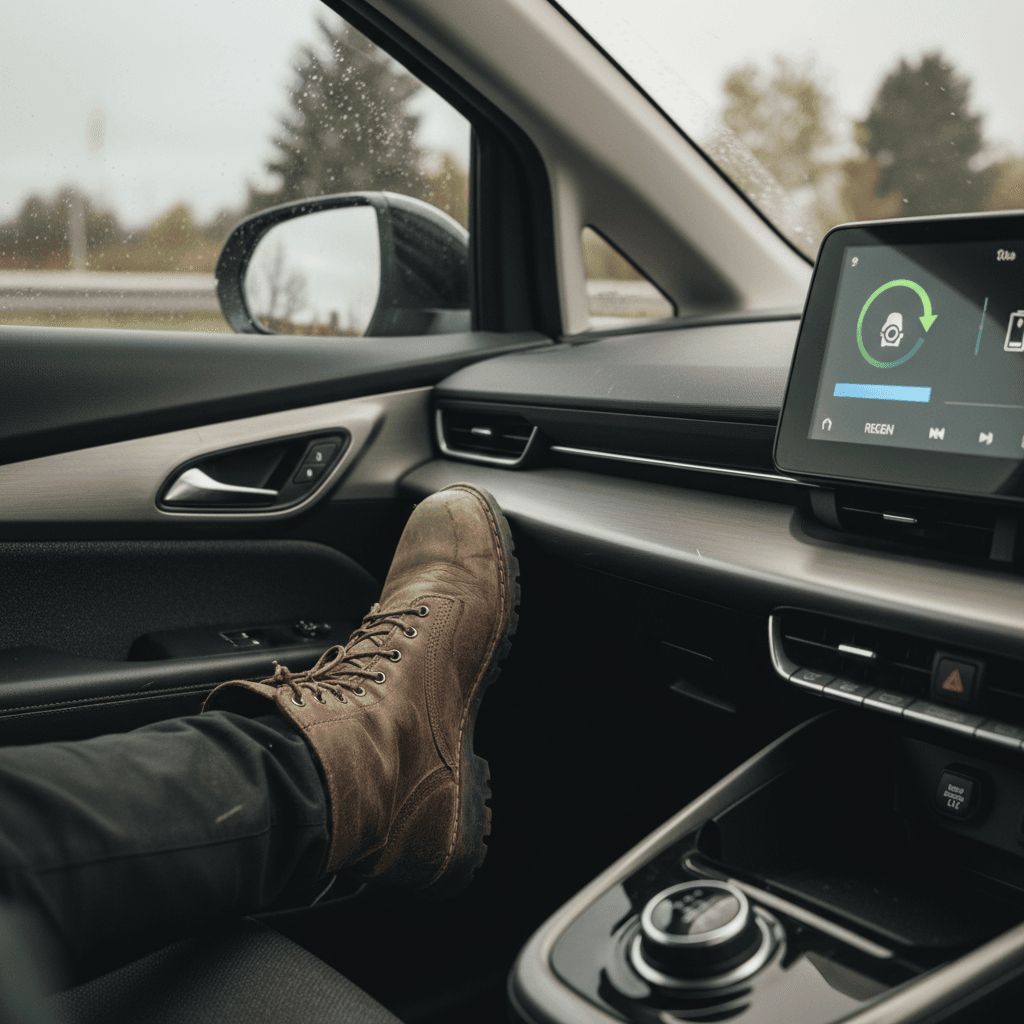
Strong regen when you lift off, often enough to bring the car down to a crawl without touching the brake.
- Maximizes energy recovery
- Great in traffic once you’re used to it
Getting comfortable with one-pedal driving
Benefits beyond range: brake wear and comfort
The headline benefit of regenerative braking is efficiency, but for daily life two side effects matter just as much: how your brakes wear and how the car feels to live with.
Key benefits of regenerative braking
Why regen matters even if you rarely drive to empty
Reduced brake wear
Because the motor does most of the slowing in normal driving, friction brakes on EVs often last much longer than on comparable gas cars.
- Less brake dust and rotor wear
- Fewer pad/rotor replacements over the car’s life
Smoother drive in traffic
Well‑tuned regen makes stop‑and‑go traffic less jerky. Instead of abrupt brake applications, you’re blending gentle deceleration with brief spurts of power.
- Passengers feel fewer head‑tosses
- Easier to drive smoothly when distracted by navigation or kids
Good news for used EV buyers
Limits of regenerative braking and when friction brakes take over
Regen is powerful, but it isn’t magic. There are hard limits rooted in physics, hardware, and safety. Understanding them makes you a better driver and a smarter shopper.
Situations where regen is limited
Battery near 100% state of charge
When the battery is full or very close, it can’t safely accept more energy. The car automatically reduces or disables regen and relies more on friction brakes until there’s headroom again.
Cold battery or drivetrain
At low temperatures, especially right after startup in winter, batteries can’t take high charge power. Many EVs show a regen‑limit indicator until the pack warms up.
Very hard or emergency braking
Regen is limited by motor torque and tire grip. In a panic stop, friction brakes do the heavy lifting, with ABS managing wheel slip.
High speed, gentle slowing
At highway speeds, you spend most of your energy pushing air out of the way. Lifting off slightly might not call for much braking torque at all, so the impact of regen on total energy use is small.
Low‑traction surfaces
On ice or loose gravel, the car’s stability systems may dial back aggressive regen to avoid upsetting the car’s balance. You’ll still stop, but mostly on friction brakes.
Don’t ignore your friction brakes
Regen and battery health: should you worry?
It’s natural to wonder whether constantly pushing energy back into the battery hurts its long‑term health. The short answer: in a modern EV, normal regenerative braking is not something you need to baby the battery over.
- Battery management systems tightly control regen power based on temperature, state of charge, and cell health.
- Regen power levels, especially in daily driving, are modest compared with DC fast charging, which is much more demanding on the pack.
- Smoother driving that uses regen instead of hard mechanical braking also tends to mean fewer full‑throttle launches, another positive for battery longevity.
When to be mindful
What to look for on a test drive or used EV
If you’re shopping for a used EV, regenerative braking is one of those subtle things that can make or break your satisfaction. It affects how the car feels, how often you need to service brakes, and how much range you see in your real driving.
Regenerative braking checklist for shoppers
1. Test different regen modes
On your test drive, cycle through low/medium/high regen if the car offers it. Make sure at least one setting feels natural to you in traffic and on deceleration off ramps.
2. Try genuine one-pedal driving
In a safe, low‑speed area, see whether the car can come almost to a stop on regen alone. Decide whether you enjoy that style or prefer more coasting.
3. Pay attention to pedal feel
In blended systems, you shouldn’t feel a sudden change in deceleration as the car transitions from regen to friction brakes. If the pedal feels grabby or inconsistent, mention it in any pre‑purchase inspection.
4. Ask for a brake inspection report
Even with regen, pads and rotors can rust or wear unevenly, especially in humid or snowy climates. A clean inspection gives you confidence you’re not inheriting a catch‑up maintenance bill.
5. Review battery health and regen limits
Some used EVs will show warnings if regen is frequently limited (for example, due to a weak pack). At Recharged, every vehicle includes a <strong>Recharged Score</strong> with verified battery health, so you’re not guessing.
6. Consider your routes
If you mostly drive in dense urban traffic, prioritize EVs with strong, adjustable regen. If you’re doing long highway commutes, regen is still helpful, but other factors like efficiency at speed may matter more.
How Recharged can help
Ready to find your next EV?
Browse VehiclesFAQ: EV regenerative braking
Frequently asked questions about regenerative braking
The bottom line on EV regenerative braking
Regenerative braking is one of those technologies that quietly rewrites the rules of driving. Instead of treating every stop as wasted energy, your EV turns it into a meaningful chunk of extra range, fewer trips to the shop for brakes, and a smoother, more controllable feel in traffic. The details matter, tuning, modes, how the car blends regen and friction, but the core idea is simple: every slowdown is an opportunity, not a penalty.
If you’re considering a used EV, pay attention to how regen feels on the road and how the car’s software lets you tailor it. And if you’d rather not decode brake reports and battery data alone, Recharged is built to make that simple, every vehicle comes with a Recharged Score and EV‑savvy specialists who can translate the tech into clear expectations for your daily drive.