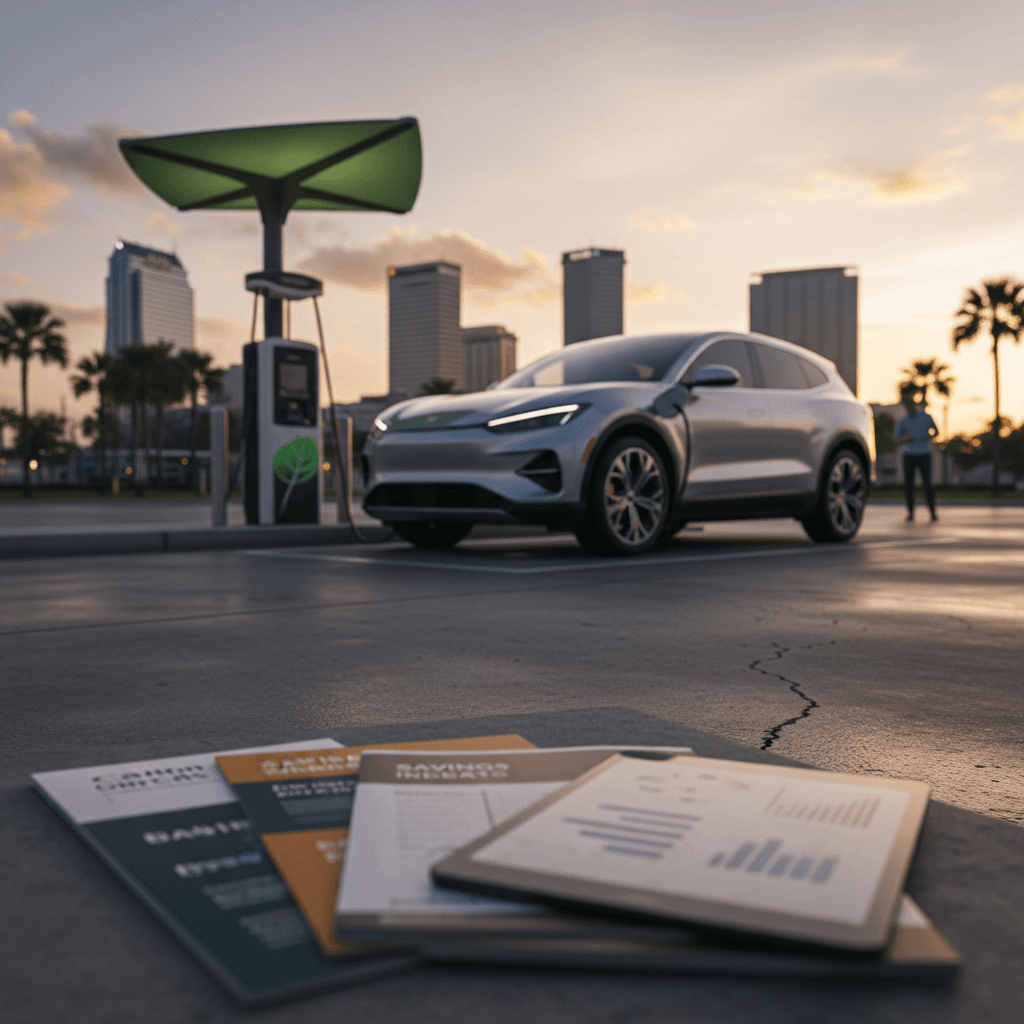
If you’re shopping for an electric vehicle in the Tampa Bay area, you’ve probably heard about **EV rebates in Tampa**, and you may be wondering what’s real in 2026 and what quietly disappeared. Between federal rule changes, rising power bills, and a patchwork of local programs, it’s easy to assume you’ve missed the boat. You haven’t. But to get the best deal, you need to know exactly where the money still is, and how to plan your purchase around it.
Quick reality check for 2026
Overview: What “EV rebates in Tampa” really means in 2026
When people say “EV rebate,” they usually mean one of three things: a **tax credit** that lowers what you owe at tax time, a **rebate** that sends you a check or bill credit after you buy, or a **discounted rate** that saves you money every month. In Tampa, you’ll mostly be dealing with tax credits and utility programs, plus the simple fact that used EV prices have come down a lot since the peak of the market.
Key EV incentive facts for Tampa drivers in 2026
Watch the expiration dates
Federal EV tax credits Tampa drivers can still use
Even though Congress has trimmed back the Inflation Reduction Act incentives, **Tampa residents can still benefit from a couple of federal programs in 2026**, especially if you’re flexible on buying used instead of new.
The two main federal incentives relevant in Tampa now
Both depend on your income, the vehicle, and timing, so treat these as starting points, not guarantees.
1. Used EV tax credit (up to $4,000)
For many Tampa drivers, the most realistic remaining federal perk is the used clean vehicle credit. In simple terms:
- Credit is up to $4,000 or 30% of the price, whichever is less.
- Vehicle must be at least two model years old and bought from a dealer.
- Sale price must be below a set cap (historically $25,000 range).
- Buyer income and vehicle eligibility rules apply.
Because this program has been revised more than once, always confirm current details with a tax pro or the IRS before assuming you’ll qualify.
2. Home charger tax credit (30%, capped at $1,000)
If you install a Level 2 charger at your home in the Tampa area, you may qualify for the Alternative Fuel Refueling Property Credit:
- Covers 30% of hardware + installation.
- Credit is capped at $1,000 per residence.
- Available for installations completed through mid‑2026, subject to federal changes.
This is one of the cleanest ways to cut your long‑term charging costs, especially if you plan to own an EV for several years.
Make the credit easier to use
Saving on a used EV in Tampa (credits, pricing & strategy)
This is where Tampa shoppers can still win. Used EV prices have softened compared with the COVID-era spike, and **a well-priced used EV plus a federal tax credit can undercut a similar gas car on total cost of ownership**, even without a big Florida rebate.
Why used EVs make sense in Tampa
- Lower up‑front price: Depreciation hits EVs hard in the first few years, which is bad for the first owner, great for you.
- Milder winters: Tampa’s climate is easier on range and batteries than northern states, which helps used EVs age more gracefully.
- No state income tax: Since you’re not juggling a state credit, you can focus on federal and utility incentives.
How Recharged helps you buy smart
- Battery health transparency: Every car we sell comes with a Recharged Score that includes verified battery diagnostics, so you’re not guessing about degradation.
- Fair‑market pricing: Our pricing reflects current Tampa‑Bay‑area values, not last year’s hype.
- Financing & tax‑credit guidance: Our team can help you understand how a used‑EV tax credit might fit with your budget, without giving formal tax advice.
Example: stacking savings on a used EV
Home charger rebates and tax credits around Tampa
Most Tampa‑area households will eventually want a **Level 2 home charger** (240V) rather than relying on a regular wall outlet. The good news: between the federal credit and utility programs, you can usually soften the blow of buying and installing a charger.
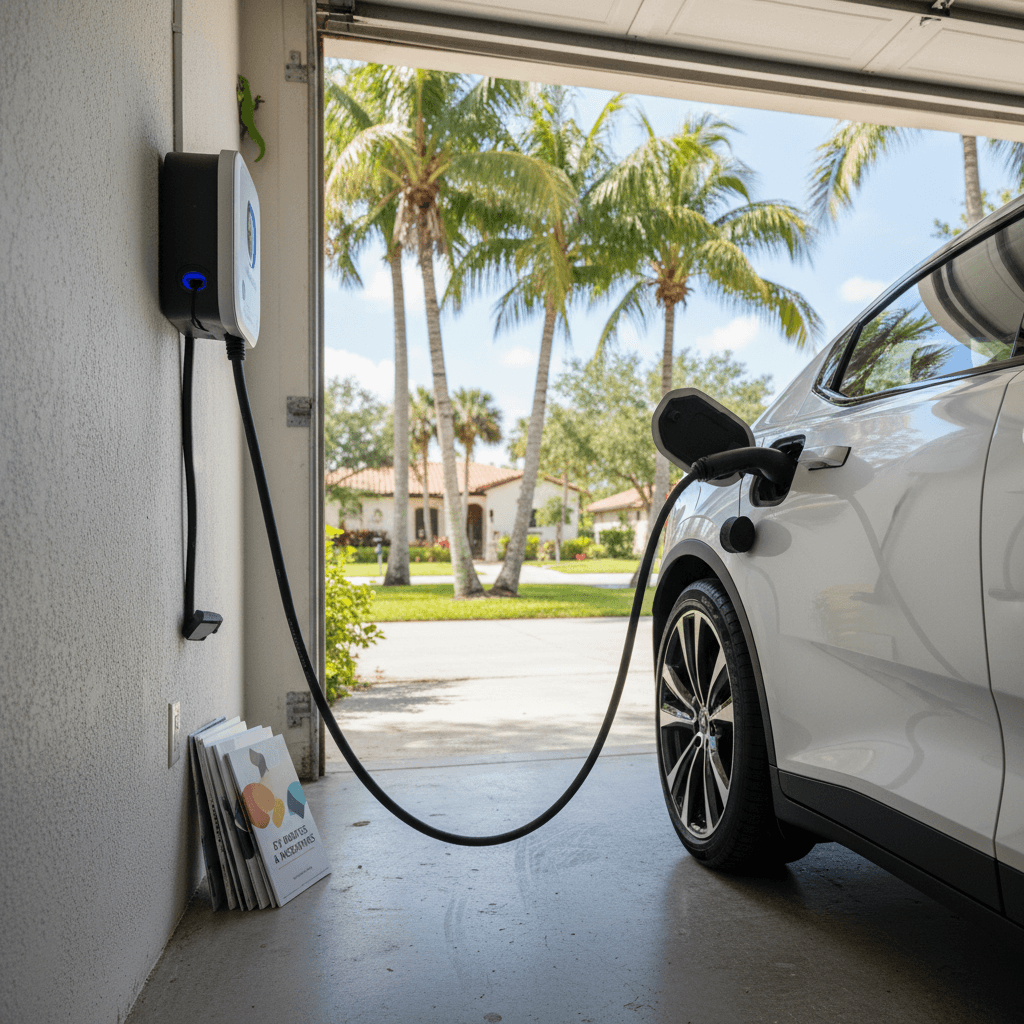
- Federal Alternative Fuel Refueling Property Credit: 30% of hardware and installation costs, up to $1,000 per residence, available for qualifying installs completed before mid‑2026 (subject to federal changes).
- Potential utility bill credits for off‑peak charging from your local electric utility (more below).
- Occasional local or employer programs that partially reimburse charger or installation costs, always ask your HR department and HOA or building manager.
Permits and panel upgrades still matter
TECO, Duke & other utility incentives in the Tampa area
Utility programs change more often than federal law, and that’s especially true in Florida, where power companies are juggling new load from EVs and higher fuel costs. If you live in Tampa, you’re most likely served by **Tampa Electric (TECO)**, but some customers in the broader metro area may fall under **Duke Energy Florida** or municipal/co‑op utilities.
Typical Tampa-area utility options that affect EV ownership
These aren’t always marketed as “EV rebates,” but they can still save you money on charging and ownership. Always confirm current details with your specific utility.
| Utility | What to Ask For | How It Helps EV Owners | What to Watch For |
|---|---|---|---|
| Tampa Electric (TECO) | Time-of-use or off-peak rates | Cheaper electricity when you charge overnight instead of late afternoon. | May require a special meter or rate plan; ask how it affects your whole bill, not just the car. |
| Tampa Electric (TECO) | Load management / smart thermostat credits | Bill credits for letting TECO cycle your AC or other loads during peaks, freeing budget for EV charging. | Not EV-specific, but helps offset higher bills from adding an EV. |
| Duke Energy Florida | EV charger or "charger prep" credits | In some Florida territories, Duke offers bill credits or rebates for EV charger-ready wiring or participation in managed-charging programs. | Availability depends on your exact service area; programs may have enrollment caps. |
| Any utility | Paperless billing, budget billing, efficiency rebates | Small monthly savings and home-efficiency upgrades that reduce overall kWh use so EV charging doesn’t push your bill over the edge. | Rebates for HVAC, insulation, or smart thermostats often have firm end dates, read the fine print. |
Programs can change quickly, treat this table as a roadmap of what to ask your utility about, not a guarantee of availability.
Why TECO and Duke matter for EV owners
Local Tampa programs and perks to know about
Unlike some West Coast cities, **Tampa doesn’t currently offer a city-run rebate just for buying an electric car**, and Florida isn’t waiving sales tax on vehicles. But the city and county are quietly building a web of programs that make life with an EV, or with car‑free options, cheaper.
Three Tampa-area programs that indirectly help EV shoppers
None of these are traditional “buy an EV, get a check” deals, but they all reduce your total transportation costs.
City of Tampa eBike Voucher Program
The city runs an eBike voucher program that offers standard and income-qualified vouchers toward electric bike purchases. It’s not an EV rebate, but if you’re comparing going car‑light versus buying a second EV, this can be a powerful alternative.
Free HART Route 1 bus service
Tampa has funded fare‑free rides on HART’s Route 1 for an extended period using parking revenues originally earmarked for EV chargers. If you can pair an EV with occasional bus use, you can downsize your vehicle or stretch your range anxiety on busy days.
Downtown parking & charging build‑out
As city garages and private lots add more Level 2 and DC fast chargers, the value of buying an EV in Tampa improves even without a direct purchase rebate. Watch for discounted or reserved EV spaces as the network grows.
Don’t assume every public charger is free
How to stack EV savings if you live in Tampa
You won’t find a single, giant “EV rebate Tampa” button to push. Instead, you assemble your savings from several smaller pieces: a used‑EV tax credit, a home‑charger credit, smart financing, and the right utility rate plan.
A realistic path for a Tampa household
- Choose a used EV that likely qualifies for the federal used clean vehicle credit.
- Buy from a dealer who understands the credit and can provide documentation.
- Finance smartly: Look for competitive used‑EV rates and consider pre‑qualification so the monthly payment leaves room for a home charger.
- Install a Level 2 charger with a licensed electrician and keep every receipt.
- Enroll in time‑of‑use or off‑peak rates with TECO or your local utility to charge overnight.
Where Recharged fits into that puzzle
- We specialize in used EVs with transparent battery health, so you’re not trading rebates for unknown battery risk.
- Our team in Richmond, VA, and online can guide Tampa buyers remotely, from vehicle selection to home‑charging basics.
- You can shop, finance, and arrange delivery entirely online, then work with your own tax professional to capture any credits you’re eligible for.
- If you have a gas trade‑in, we can give you an instant offer or consignment option, helping you unlock equity for your down payment.
Checklist: Before you count on an EV rebate
Tampa EV rebate & incentive prep checklist
1. Confirm your utility and its EV programs
Look at your power bill to see whether you’re with TECO, Duke Energy Florida, or another provider. Visit their website or call customer service and ask specifically about EV rates, off‑peak plans, and any charger-related rebates or bill credits.
2. Verify current federal credit rules
Before you pencil a $4,000 credit into your spreadsheet, check the latest IRS guidance or talk with a tax professional. Rules and income limits for used‑EV and home‑charger credits have changed more than once.
3. Check vehicle eligibility with the seller
Not every used EV qualifies for a federal credit. Ask the dealer to clearly explain which credits might apply, and to provide the VIN and purchase documentation you’ll need at tax time.
4. Get a written charger quote
Have a licensed electrician visit your Tampa home, confirm your panel capacity, and give you a detailed written quote for a Level 2 charger install, parts, labor, permits, and any required upgrades.
5. Run the total cost, not just the rebate
Compare fuel, maintenance, insurance, and financing costs against your current gas car. Even without a giant rebate, a fairly priced used EV in Tampa can come out ahead once you add everything up.
6. Plan your charging routine
Identify where you’ll charge most, home, work, or public, and what it will cost. A smart charging plan can save more over time than a one‑time rebate you never actually qualify for.
FAQ: EV rebates and incentives in Tampa
Frequently asked questions about EV rebates in Tampa
Bottom line for Tampa EV rebates
If you’re hunting for **EV rebates in Tampa**, the story in 2026 is less about one giant check and more about smart stacking: a possible used‑EV tax credit, a home‑charger credit, the right utility rate plan, and a realistic purchase price on a car with a proven battery. Florida isn’t showering drivers with EV money, but that doesn’t mean you’re on your own.
Give yourself an honest look at your budget, commute, and charging options. Talk to your utility before you buy, and talk to a tax professional before you count on any credit. If you want a partner who lives and breathes used EVs, Recharged can help you compare models, understand battery health, line up financing, and even deliver the right car to your driveway, so you’re not just chasing rebates, you’re building a smart long‑term ownership plan.