“EV range anxiety is it real?” If you’re asking that, you’re not alone. Surveys in 2025 still show range and charging worries as the top barrier keeping many Americans from going electric, even ahead of price. At the same time, the typical new EV now offers around 300 miles of rated range, and public charging is expanding fast. So what’s actually true, and what’s leftover fear from the early days of electric cars?
Key Takeaway Up Front
What Is EV Range Anxiety, Really?
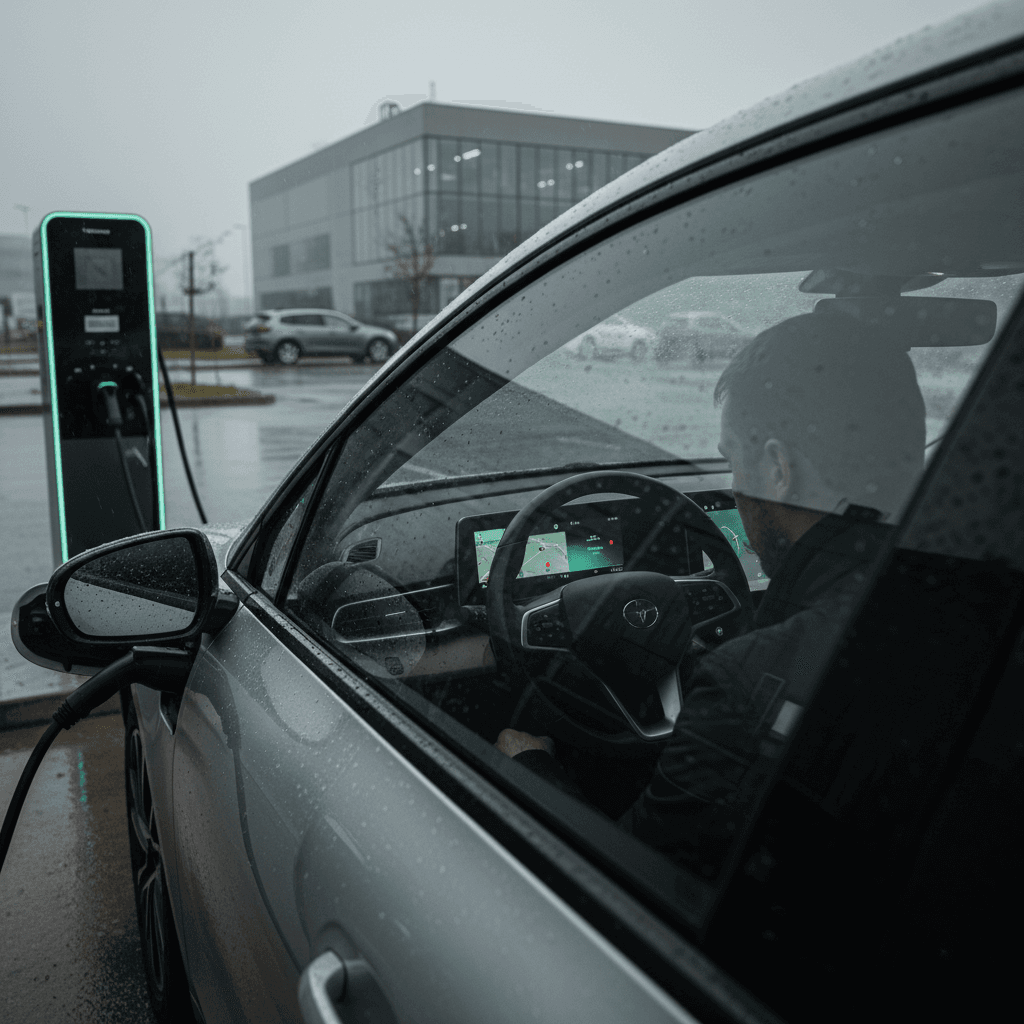
EV range anxiety is the fear that your electric car will run out of charge before you reach a charger or your destination. It’s not just about the battery; it’s about confidence. Drivers worry about three things in particular:
- “Will I make it home tonight without running out?”
- “What if the charger I’m counting on is broken or busy?”
- “What happens if traffic, weather or a detour kills my range?”
Those questions feel especially heavy if you’ve spent decades driving gas cars where fuel stations are everywhere and fill‑ups take five minutes. Early EVs with 80–100 miles of range and patchy charging networks reinforced that fear. But the hardware, software, and infrastructure have changed dramatically since then.
Is EV Range Anxiety Still Real in 2026? The Data View
Range Anxiety: Feelings vs. Facts in 2024–2026
The picture is clear: concern is high, but capability is higher than ever. Many shoppers are still working from a mental model of EVs that’s 8–10 years out of date. Today’s technology and infrastructure have quietly caught up to how most people actually drive.
Why the Mismatch?
How Far Do Modern EVs Really Go on a Charge?
Let’s separate stories from statistics. Across 2024–2025, data from the Department of Energy and independent testers paints a consistent picture: most mainstream EVs now land comfortably in the 230–320‑mile range band on the EPA cycle, with some trucks and premium models stretching beyond that.
Typical EPA‑Rated Range in 2024–2025
Approximate range bands for common EV types you’ll see new or lightly used on the U.S. market.
| Vehicle type | Typical battery size | Typical EPA range | Notes |
|---|---|---|---|
| Compact hatchbacks (e.g., Nissan Leaf, Chevy Bolt EUV) | 50–65 kWh | 190–260 mi | Often the most affordable EVs; slightly shorter range but efficient. |
| Mainstream crossovers (e.g., Hyundai Ioniq 5, Kia EV6, Tesla Model Y) | 70–82 kWh | 250–310 mi | The heart of the EV market; balance of range and price. |
| Sedans & liftbacks (e.g., Tesla Model 3, Hyundai Ioniq 6) | 60–77 kWh | 260–330 mi | Aerodynamic shapes tend to stretch highway range. |
| Electric trucks & large SUVs (e.g., Silverado EV, Rivian R1T/R1S) | 105–200+ kWh | 280–450 mi | Huge batteries; energy use can swing with towing and payload. |
Real‑world range will vary based on speed, weather, cargo and driving style, but these bands reflect what you’ll see on window stickers and spec sheets.
Independent range testing often finds that some EVs meet or even beat their EPA numbers in mild weather at reasonable highway speeds. In tougher conditions (winter, high speeds, towing), you might see 20–35% less than the sticker, still enough for a couple of hours of driving before you need a break.
Think in Hours, Not Just Miles
What Actually Causes Drivers to Run Low on Charge
1. Human behavior
- Pushing too far on a low battery “to save time.”
- Skipping an easy top‑up stop early in the trip.
- Underestimating winter or high‑speed impact on range.
These are the same habits that lead people to run out of gas. EVs just make the math more visible.
2. Information gaps
- Not using a built‑in EV trip planner or a third‑party app.
- Relying on outdated POI data, so a charger no longer exists or is offline.
- Not checking whether a charger is Level 2 or DC fast.
Modern EVs and apps reduce these risks, but only if you actually use them.
In other words, drivers rarely get stranded because the car’s range was too short on paper. It’s almost always a combination of poor planning, unexpected conditions, and bad charger information. Those are real problems, but they’re solvable with the tools you likely already have in your pocket.
Daily Driving vs. Road Trips: Very Different Stories
How Often Range Actually Matters
Most Americans dramatically overestimate how much range they need for daily life.
Daily commuting & errands
The average U.S. driver covers well under 40 miles per day. Even if you double that, a 250‑mile EV easily handles multiple days between charges.
- Overnight home charging turns every morning into a “full tank.”
- Even a short‑range used EV can feel effortless for city and suburban driving.
Long‑distance road trips
This is where most of the emotional range anxiety lives. You’re far from home, plans are tight, and charger reliability matters more.
- Here, battery size and charging speed matter a lot.
- Good route planning apps essentially erase guesswork.
Reality Check for Most Drivers
6 Big Factors That Shrink (or Boost) EV Range
To understand whether EV range anxiety is real for you, you need to know what actually changes range. Here are the big levers:
- Speed: Driving 80 mph instead of 65 mph can chop 15–25% off your range because wind resistance climbs fast.
- Temperature: Very cold or very hot weather forces the battery and cabin to use more energy, especially in the first few miles.
- Elevation and terrain: Long climbs use a lot of energy; long descents give some of it back through regen braking, but not all.
- Weight and towing: Roof boxes, bikes, cargo and trailers all add drag or weight and cut efficiency, especially in trucks and SUVs.
- Driving style: Smooth, anticipatory driving preserves range. Constant hard acceleration and late braking burn through it.
- Battery health: Over time, usable capacity slowly declines, especially in older fast‑charged or high‑mileage EVs. That’s where real‑world battery diagnostics matter.
About Winter Range Drops
Range Anxiety and Used EVs: How Worried Should You Be?
Used EV shoppers often feel a second layer of range anxiety: not just “is the range enough for me?” but “has this battery already lost too much range?” That’s a fair question, early EVs did have smaller packs, and battery health varies from car to car.
The encouraging news: research on modern EVs shows modest degradation in the first several years of normal use, often in the single‑digit percentage range. But the key word is "average." A rideshare‑driven crossover that’s fast‑charged multiple times per day will age differently than a gently‑used commuter that’s mostly charged at home.
Where Recharged Fits In
When a used EV still feels carefree
- You drive under ~50 miles most days.
- The car still offers 150–200+ miles of usable range.
- You have home or dependable workplace charging.
In this scenario, even an older Leaf or Bolt can feel like overkill for daily life.
When to prioritize maximum range
- You frequently drive 150+ miles in a day.
- You rely heavily on public charging or DC fast charging.
- You live in a region with harsh winters and sparse infrastructure.
Here, a long‑range crossover or sedan with strong DC fast‑charging capability will keep anxiety low for years.
How to Plan Trips So Range Anxiety Doesn’t Win
Planning an EV trip in 2026 is far less experimental than it used to be, especially with today’s trip planners and charging networks. The trick is to plan like a pilot, not like a gambler: build in comfortable margins and assume conditions won’t be perfect.
Smart Planning Strategies vs. Risky Habits
Swap a few old gas‑car habits for EV‑friendly routines and range anxiety drops fast.
| Smart EV habit | What it looks like in practice | Why it calms anxiety |
|---|---|---|
| Aim to arrive with 10–20% battery, not 1–2%. | Stop when you hit 20–30% instead of racing to single digits. | Gives you a buffer for traffic, weather, or a busy charger. |
| Use EV‑aware navigation. | Use your car’s built‑in planner or apps like A Better Routeplanner, PlugShare or Chargeway. | They factor in elevation, weather and charging speeds automatically. |
| Prioritize reliable networks on key routes. | For road trips, favor corridors with multiple fast‑charging brands and stations. | Reduces the impact if one location is busy or offline. |
| Know your car’s charging curve. | Learn where your EV charges fastest (often 10–60%). | You’ll time stops better and avoid wasting time charging to 100% unnecessarily. |
| Pre‑condition before fast charging in winter. | Warm the battery on the way to a DC fast charger if your car supports it. | Improves charging speed and preserves range in cold weather. |
You don’t have to micromanage every mile, just avoid the handful of risky behaviors that create stressful close calls.
The 0% Myth
Tech and Infrastructure That Quiet Range Anxiety
Alongside bigger batteries, a quiet revolution in software and infrastructure is attacking range anxiety from multiple angles. If you’re driving a 2020s‑era EV, you’re benefiting from changes early owners never had.
Four Modern Tools Fighting Range Anxiety
Most of them run silently in the background, if you let them.
Smarter navigation
Route planners that know your charging curve, elevation, weather and available stations, and adjust mid‑trip as conditions change.
Real‑time charger status
Increasingly, apps show whether a charger is in use or offline before you arrive, avoiding nasty surprises.
Faster DC charging
Many new EVs add 150–200 miles of range in roughly 20–30 minutes at high‑power chargers.
More networks & plugs
By 2025, the U.S. had over 70,000 public DC fast‑charging ports and more than 200k total public charge ports, with record growth continuing.
"Public charging improved in multiple ways last year, with networks adding more than 18,000 new DC fast‑charging ports in 2025 alone."
On top of that, North American automakers are rapidly standardizing around the NACS connector and gaining broader access to Tesla’s Supercharger network. The net effect: more places to charge, at higher speeds, with fewer adapters and less guesswork.
Practical Checklist to Cure EV Range Anxiety
Range Anxiety Reset: 8 Steps
1. Compare your real daily miles to EV range
Track your driving for a week. Most people are surprised by how low the number is compared to even a modest‑range EV.
2. Define your toughest use case
Is it a 220‑mile ski trip in winter, a 160‑mile work route, or towing on weekends? Pick an EV, and battery size, that covers that case with a safety margin.
3. Learn your car’s “sweet spot” charge window
Many EVs charge fastest between roughly 10–60%. Plan your fast‑charge stops in that range instead of chasing 100% each time.
4. Set up trusted charging apps before you need them
Install and log into key apps (for your car brand and major networks) at home on Wi‑Fi so you’re not scrambling roadside.
5. Do a low‑stakes practice trip
Take a 100–150‑mile weekend drive with one planned charging stop. Treat it as a rehearsal to build confidence before a big vacation.
6. Factor in winter or heavy loads
If you live in a cold climate or tow, mentally apply a 20–30% buffer to the rated range when planning long drives.
7. Pay attention to battery health on used EVs
Look for sellers that provide real battery diagnostics, not just a guess based on the dash gauge. Recharged’s Score Report is one example.
8. Give yourself permission to stop early
If you’re feeling anxious at 35% state of charge, just stop and top up. Your stress level matters more than shaving five minutes off the trip.
EV Range Anxiety FAQ
Frequently Asked Questions About EV Range Anxiety
Bottom Line: Range Anxiety Is Real, But Manageable
So, EV range anxiety is it real? Yes, people genuinely worry about running out of charge. But the numbers show that today’s EVs, with roughly 250–300+ miles of range and rapidly expanding public charging, already cover how most Americans drive. What keeps the fear alive is outdated perceptions, a few visible horror stories, and the natural nerves that come with any new technology.
If you choose an EV whose range matches your toughest regular days, learn a few basic planning habits, and lean on modern navigation and charging tools, range anxiety fades into the background. And if you’re shopping used, working with a partner like Recharged, with verified battery health reports, expert EV guidance, financing, and nationwide delivery, lets you focus less on “what if I run out?” and more on which electric car actually fits your life.