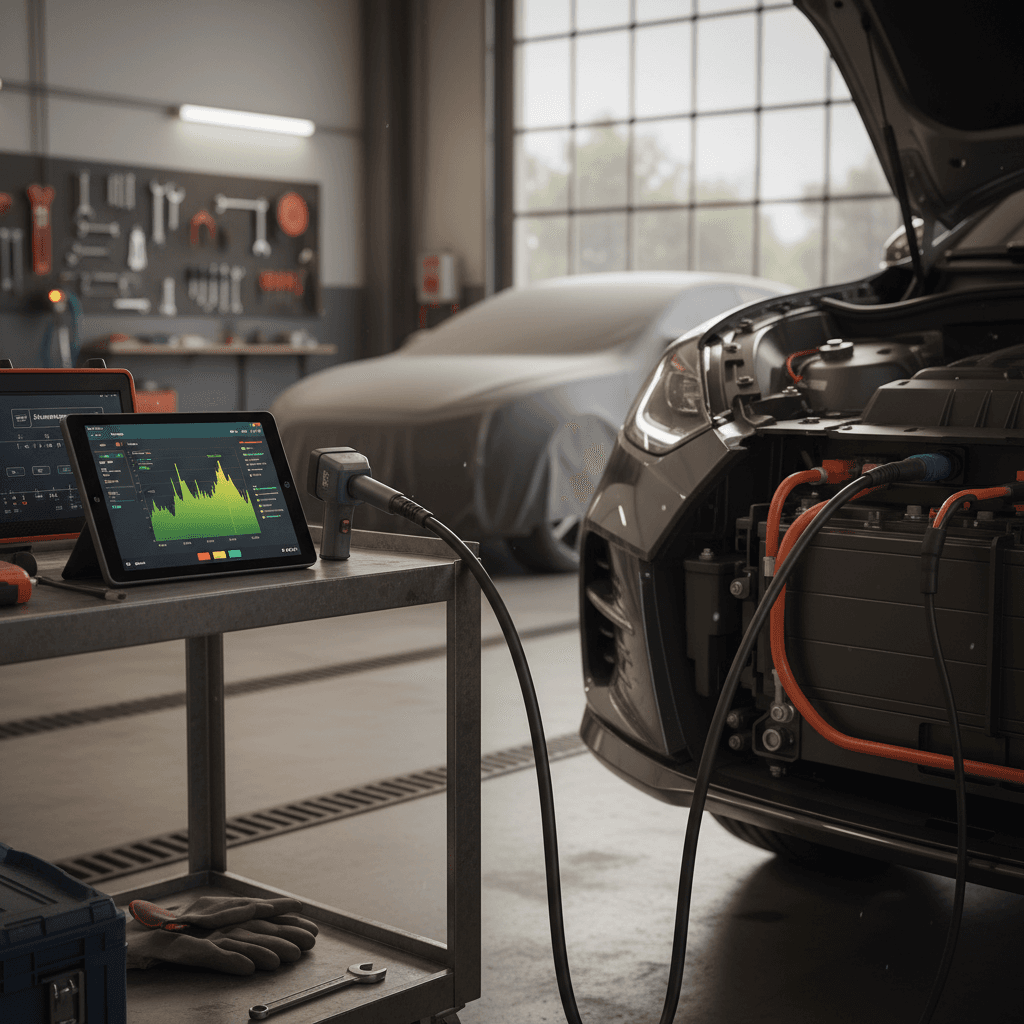
If you’re considering a used electric car, you’ve probably heard you should get an EV pre‑purchase inspection. But what does that actually include? With EVs, the checklist looks very different from a traditional gas‑car inspection, battery health and software matter more than oil leaks and exhaust smoke.
Quick definition
Why EV pre‑purchase inspections are different
On a gasoline car, inspectors spend most of their time looking for leaks, worn gaskets, transmission issues, and emissions problems. On an EV, there’s no engine, no transmission, and no exhaust. Instead, the main risk is the high‑voltage battery: it’s the most expensive component on the car, and its condition will make or break the deal.
How EV inspections differ from gas‑car inspections
Same idea, very different failure modes
EV‑specific focus
- Battery health & degradation
- Charging ports, cables, and communication
- High‑voltage safety & cooling systems
- Software, firmware, and OTA history
Shared checks with gas cars
- Brakes, tires, suspension, steering
- Body, paint, accident and rust checks
- Lights, HVAC, windshield, interior wear
- Test drive for noises and drivability
Why you shouldn’t trust a generic inspection
Overview: what a pro EV inspection actually covers
Typical professional EV inspection at a glance
Every provider structures their report a little differently, but most thorough EV pre‑purchase inspections look at the same major areas:
- High‑voltage battery health and remaining capacity
- Charging hardware and communication (AC and DC fast charging)
- High‑voltage cabling, contactors, and safety interlocks
- Thermal management and cooling systems
- On‑board electronics and driver‑assistance functions
- Structural integrity, body, and underbody condition
- Suspension, steering, brakes, and tires
- Road‑test behavior and noise/ride quality
Battery health: the heart of any EV inspection
Battery condition is where an EV inspection lives or dies. A car with cosmetic flaws and worn tires can still be a smart buy; a car with a heavily degraded pack usually isn’t, unless the price reflects it. A good inspector will go deeper than a simple “range estimate” on the dashboard.
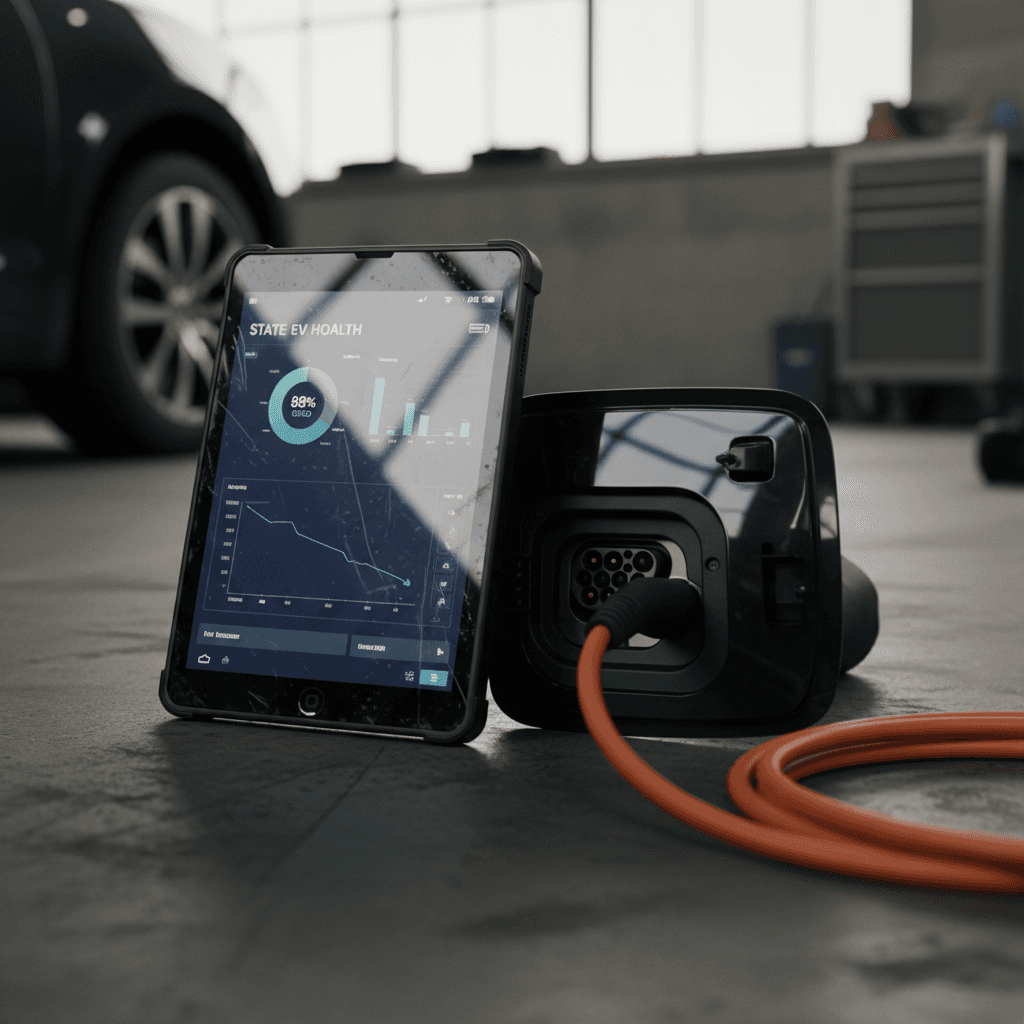
Key battery checks in an EV pre‑purchase inspection
What a serious EV inspection should examine on the traction battery and related systems.
| Battery check | What they do | Why it matters | What you want to see |
|---|---|---|---|
| State of Health (SoH) | Read battery health data from the car’s battery‑management system or a manufacturer/third‑party tool. | Shows remaining usable capacity versus new, critical for range and resale value. | SoH typically above 80% is considered healthy for a used EV of normal age and mileage; higher is better. |
| State of Charge (SoC) at test | Note charge level when the test is run and, ideally, test between ~20–80% SoC. | Some diagnostics are inaccurate at 0–10% or 90–100% SoC; context matters for interpreting results. | Battery tested at a reasonable mid‑range SoC, not right after a DC fast‑charge or from 100%. |
| Cell balance & temperatures | Scan for out‑of‑balance cells or modules, hot spots, or repeated over‑temperature events. | Big imbalances or heat issues can foreshadow early battery failure or severe capacity loss. | Even cell voltages, no chronic over‑temp warnings, and normal coolant temps. |
| Fast‑charge behavior (if tested) | Monitor charge rate and temperature response at a DC fast charger. | Reveals hidden degradation and if the car is throttling fast‑charge speeds aggressively. | Charge curve that roughly matches what other owners report for this model and conditions. |
| Warranty status | Confirm remaining battery warranty by VIN and mileage. | Battery warranties are often 8 years/100,000 miles or more in the U.S. | Clear documentation on years and miles of coverage left, and whether the warranty transfers. |
You want more than “seems fine”, look for specific numbers and evidence.
Ask for the actual number
The most common pain point we see in used‑EV shopping isn’t some exotic hardware failure. It’s simply buyers having no idea how much battery they’re actually getting for their money.
Charging system, connectors, and real‑world charging tests
Once battery health looks reasonable, a smart inspector will turn to how the car actually takes a charge. You don’t want to discover after purchase that your new‑to‑you EV won’t talk to your home charger or refuses to fast‑charge on road trips.
What a good EV inspection checks on charging
Physical hardware
- Condition of charge ports and pins
- Port doors and actuators
- Cables, adapters, and OEM portable charger
AC home/public charging
- Level 1/Level 2 charging behavior
- Charge rate vs. spec
- Communication errors or interruptions
DC fast charging
- Connector type (CCS, NACS, CHAdeMO)
- Ability to start and sustain a fast charge
- Unexpected throttling or overheating
Don’t skip a live charging test
High‑voltage safety and thermal management
EVs route hundreds of volts through bright‑orange cables under the floor and into the battery pack, inverter, and motor. That system is designed to be extremely safe, but poor repairs, crash damage, or corrosion can compromise it. A proper inspection treats the high‑voltage (HV) and cooling systems as first‑class items, not an afterthought.
- Visual check of HV cabling, connectors, and pack enclosure where accessible
- Scan for high‑voltage isolation faults or logged safety events
- Inspection of battery coolant level, leaks, and pump operation
- Verification that fans and pumps run as expected during charging and driving
- Corrosion checks on underbody components and pack mounting points, especially in rust‑belt states
Why DIY isn’t enough here
Software, features, and digital history checks
In a modern EV, software controls everything from charging behavior to driver‑assist systems. A thorough inspection doesn’t just flick the headlights on and off, it verifies that the car’s software, options, and digital history line up with the listing and your expectations.
What inspectors usually verify
- Current software/firmware version and any pending updates
- Functionality of major screens, cameras, and sensors
- Operation of ADAS features like lane centering and adaptive cruise on a test drive
- Presence and behavior of connected‑services (navigation, app access, remote climate)
What you should cross‑check as a buyer
- That any paid software options (e.g. premium audio, advanced driver assist) are actually active
- If features are subscription‑based and whether the subscription transfers
- Whether OTA updates and app access are working or blocked (common on some salvage‑title vehicles)
Pro tip for Teslas and other connected EVs
“Traditional” inspection items that still matter on an EV
While EVs eliminate oil changes and exhaust systems, they don’t magically stop wearing out tires, brakes, and suspension. In fact, the extra weight and instant torque of an EV can be harder on those components. Any serious EV pre‑purchase inspection should still cover the familiar mechanical items in detail.
Legacy checks you still need on an EV
Brakes and regenerative blending
Inspect pads, rotors, calipers, and brake fluid, but also evaluate how <strong>regenerative braking</strong> hands off to friction brakes on the test drive. Pulsing, grabbing, or warning lights can be costly fixes.
Tires, wheels, and alignment
EVs eat tires if alignment is off. Check tread depth, age, and even wear patterns. Uneven wear or mismatched tires is both a safety issue and a negotiating lever.
Suspension and steering
Look for clunks over bumps, loose steering, or excessive body motion. Heavy EVs can stress bushings, control arms, and shocks more than similar‑size gas cars.
Body, structure, and rust
Inspect for prior accident repairs, panel gaps, repainting, and corrosion, especially around battery pack mounting points and underbody shields.
HVAC and heat pump
Cabin heating and cooling draw off the high‑voltage pack. Weak HVAC can hurt comfort and range, especially in winter climates.
Road test: what a good EV drive should reveal
A test drive in an EV is quieter than in a gas car, which makes it easier to pick up subtle noises, but only if you’re listening for the right things. A professional inspector will drive long enough, and under varied conditions, to surface problems you might miss on a five‑minute loop around the block.
- Smooth, linear acceleration with no shuddering or surging from the motor or gearbox
- Predictable regenerative braking with no unexpected cut‑outs or warning lights
- No whining, grinding, or clunking from wheel bearings, CV joints, or the reduction gear
- Stable tracking on the highway without constant steering correction
- No excessive wind noise from poor door seal alignment or prior collision repair
Insist on highway speeds
Sample EV pre‑purchase inspection checklist
To make all of this more concrete, here’s a simplified checklist you can use to vet any inspection service, and to sanity‑check their report once you have it. A good EV pre‑purchase inspection doesn’t have to match this word‑for‑word, but it should hit the same themes.
Buyer’s quick checklist: what should be in the inspection?
1. Documented battery health
Report includes a <strong>numerical SoH figure</strong> or clear battery‑health assessment, not just “OK.” Any limitations or test conditions are explained.
2. Charging verified in the real world
Inspector confirms AC charging works and, where practical, has tested DC fast charging or at least reviewed logs for errors.
3. High‑voltage and cooling systems checked
Report covers HV wiring, pack enclosure, isolation faults (if any), coolant levels, and evidence of leaks or overheating.
4. Full scan for trouble codes
OBD‑II or manufacturer‑specific diagnostic scan performed, with EV‑specific modules (battery, inverter, thermal, ADAS) included.
5. Mechanical and structural health noted
Tires, brakes, suspension, steering, and body are all graded, with photos of any damage or rust.
6. Software, options, and keys verified
Inspector confirms the number of keys/fobs, major software options, and that there are no serious connectivity or OTA‑update issues.
How much EV inspections cost, and how to use results
In most U.S. markets, a standalone EV pre‑purchase inspection lands somewhere between the cost of a traditional PPI and a dealer battery‑health visit. Independent mobile services that specialize in hybrids and EVs often charge in the $200–$400 range for a full inspection with photos and a written report, while dealer battery checks alone are frequently billed in the $150–$300 range.
When the report is mostly clean
You’re looking at a car with healthy battery metrics, normal wear items, and only minor cosmetic issues. Use the small flaws the inspector documents, like worn tires or curb‑rashed wheels, as specific negotiation points, but don’t get hung up on perfection. Good used EVs tend to move quickly.
When the report shows problems
If SoH is low, fast‑charge performance is poor, or the report lists crash damage or HV‑system warnings, you have leverage. You can either walk away or stay in the deal at a meaningfully lower price that reflects the risk. What you shouldn’t do is shrug and pay retail as if the car were flawless.
Inspections pay for themselves
How Recharged handles inspections and battery health reporting
At Recharged, inspections aren’t an optional upsell, they’re built into how we buy and sell used EVs. Every vehicle on the platform comes with a Recharged Score Report that includes verified battery health, transparent pricing data, and a clear view of wear items so you’re not guessing from a listing description.
What you get with a Recharged‑vetted EV
Our goal is to make the pre‑purchase process the default, not an exception.
Battery health diagnostics
Condition & pricing transparency
Support from search to delivery
Ready to find your next EV?
Browse VehiclesAlready found a used EV elsewhere?
EV pre‑purchase inspection FAQ
Frequently asked questions about EV pre‑purchase inspections
Bottom line: don’t skip the EV inspection
A used EV can be an extraordinary value, quiet, quick, cheap to run, and cleaner than a comparable gas car. But the same technology that makes EVs compelling also changes where the risk lives. Instead of worrying about engine noise, you’re worrying about battery health, charging behavior, and software.
A proper EV pre‑purchase inspection pulls those questions out of the shadows. It tells you what the battery has left to give, whether the car plays nicely with the chargers you’ll rely on, and whether any past damage or neglect is hiding beneath the sheet metal. Whether you’re buying from a private seller, a franchise dealer, or a digital‑first marketplace like Recharged, going in with that information is the difference between a confident purchase and an expensive experiment you regret.