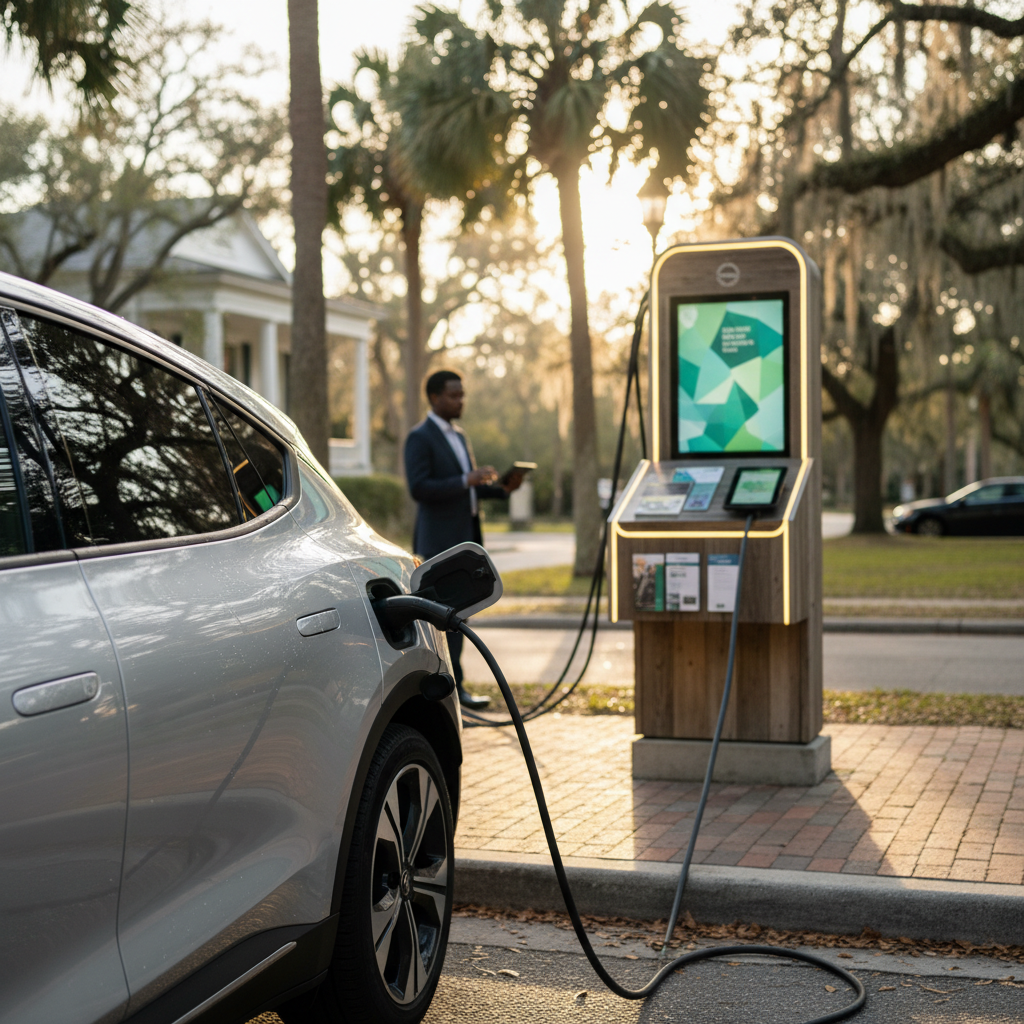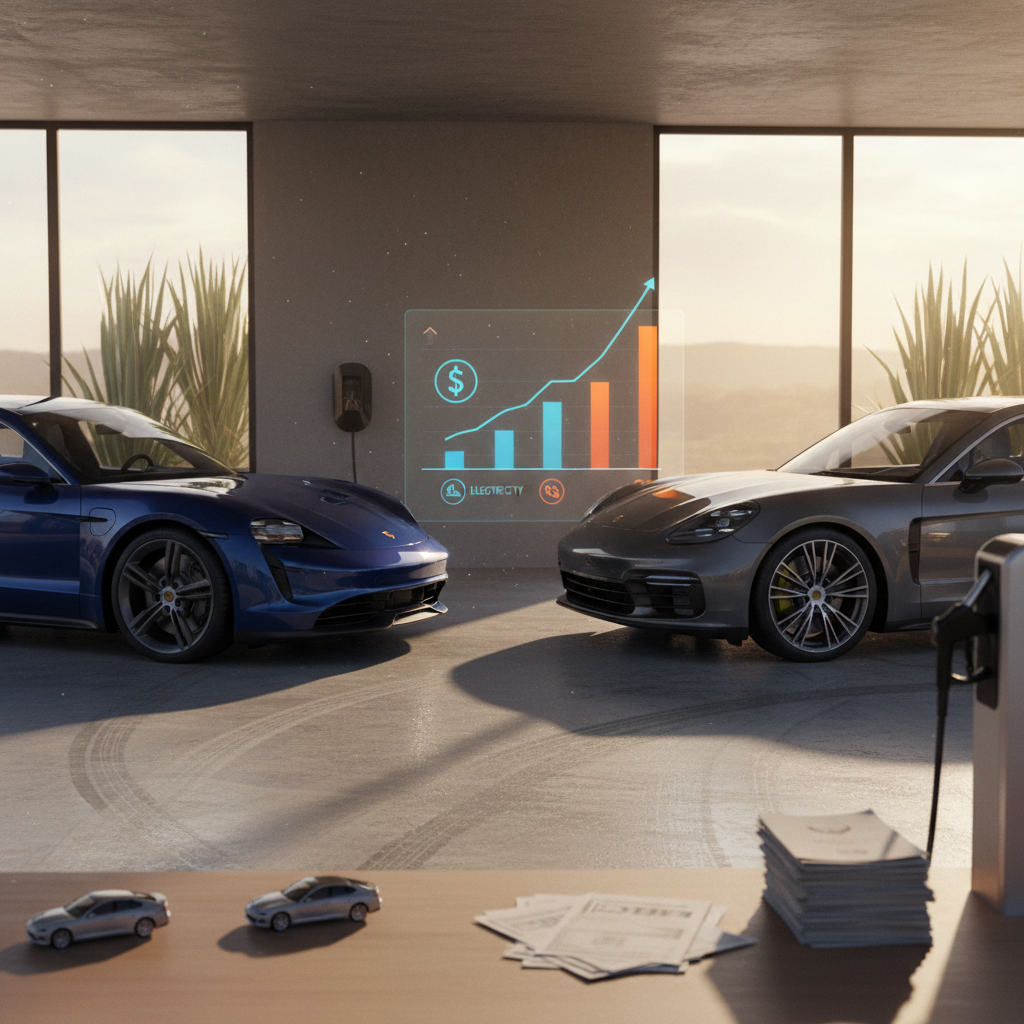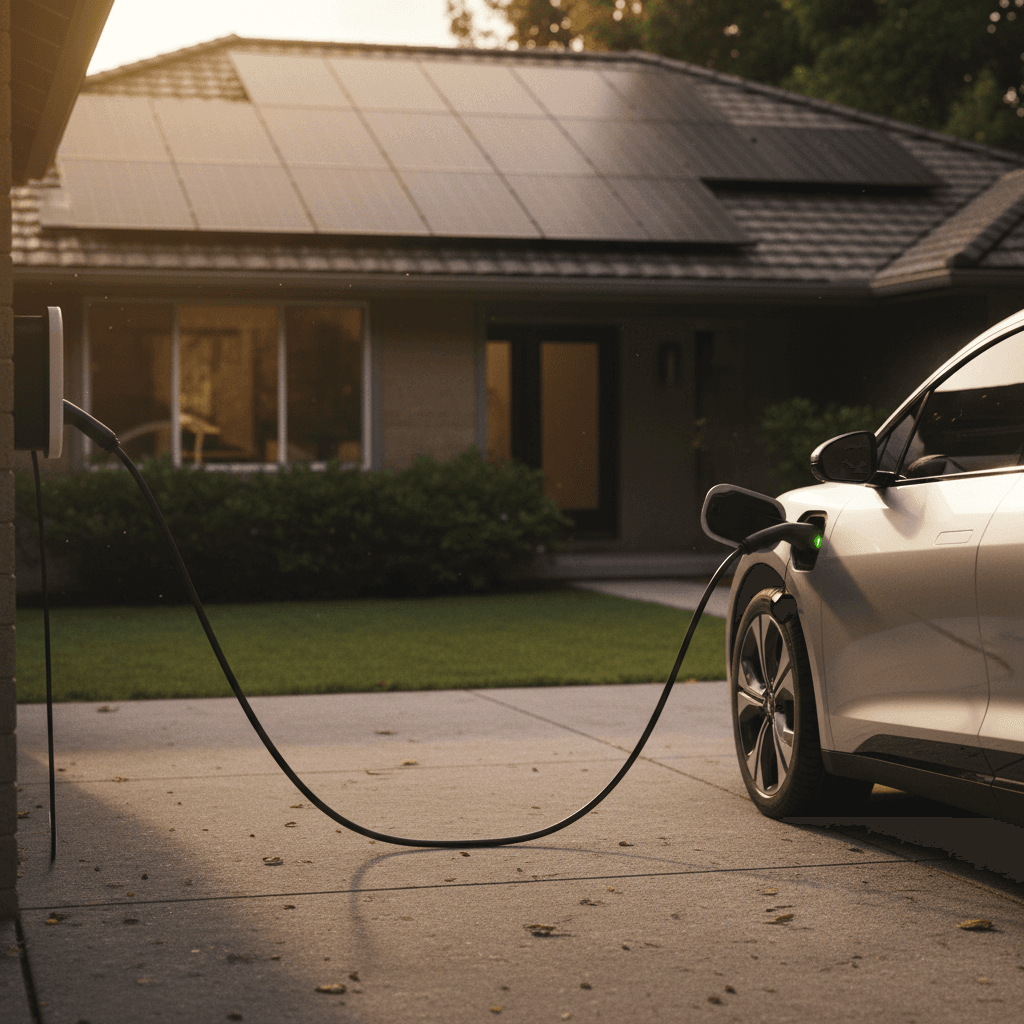
If you already own an EV, or you’re shopping for one, the idea of an EV powered by solar panels at home is incredibly appealing. Low running costs, clean energy, and a little independence from utility rate hikes can all come from the right solar-plus-charging setup. But to make good decisions, you need to understand how it works in the real world, not in marketing brochures.
Big picture
Why pairing solar panels and an EV makes sense
Solar + EV adoption snapshot
Home solar is a natural match for EV ownership for a few reasons. First, EV charging shifts a big chunk of your household energy use into your garage. Many U.S. drivers add 2,000–3,000 kWh of electricity use per year when they switch from gas to electric. Second, solar produces its maximum output during the day, when many EVs are parked at home or can be scheduled to charge. Finally, once you’ve paid for the solar system, each kilowatt‑hour your roof generates is one you don’t have to buy from the grid, which helps stabilize your long‑term cost of driving.
Think in energy, not just miles
How an EV powered by solar panels at home actually works
Daytime: Solar generation & charging
Rooftop solar panels produce DC electricity when the sun is shining. An inverter converts that DC into AC power that your home and EV can use. When your EV is plugged into a Level 1 or Level 2 charger during sunny hours, some or all of that electricity can flow directly from your solar array through your home’s panel to the car.
If your solar output exceeds your home’s current usage, the extra power either:
- Flows into your EV if it’s charging, or
- Exports to the grid (often for bill credits under net metering), or
- Charges a home battery if you have one.
Night & cloudy days: Grid and/or battery help
At night, your panels don’t produce power. You can still have an EV powered by solar panels at home in the big‑picture sense, but the electrons in your battery might be coming from:
- The grid (with solar credits from earlier in the day offsetting the cost), or
- A home battery that stored surplus solar from earlier, or
- A mix of both, depending on your setup.
Think of solar as reducing what you buy from the grid across the month, not necessarily matching your EV charging minute‑by‑minute.
Rooftop solar ≠ off‑grid
How many solar panels do you need to power your EV?
There’s no one‑size‑fits‑all answer, but we can get close with some simple math. The goal is to estimate how much energy your EV uses in a year, then size your solar system so its annual production covers that amount (plus some margin if you want to offset house usage too).
Example: Solar needed to cover EV charging
Approximate solar system sizes to offset EV energy use in a reasonably sunny U.S. climate (about 4.5–5 peak sun hours per day).
| Driving pattern | Miles/year | EV efficiency (mi/kWh) | Annual kWh for EV | Approx. solar system size | Approx. 400W panel count |
|---|---|---|---|---|---|
| Light commuter | 6,000 | 4.0 | 1,500 | ~3.5 kW | 9 |
| Typical driver | 12,000 | 3.5 | ~3,400 | ~5.5–6 kW | 14–15 |
| Heavy driver | 18,000 | 3.0 | ~6,000 | ~9–10 kW | 23–25 |
These are ballpark planning numbers. A local solar installer should run detailed production estimates for your roof and climate.
Why estimates vary
- Start with your annual mileage, not your battery size.
- Use 3–4 miles per kWh as a realistic efficiency range.
- Remember: You don’t have to cover 100% of your EV charging with solar for the investment to make sense. Even covering 50–70% can dramatically cut fuel costs.
Equipment you need for home solar EV charging
Key components of an EV powered by solar panels at home
Most homes use some version of this stack.
1. Rooftop solar array
Your solar panels convert sunlight into DC electricity. For many EV owners, a 5–8 kW system is the sweet spot to meaningfully offset both home and charging use.
Prioritize roof orientation, shading analysis, and panel warranty (25 years is now common).
2. Inverter & electrical panel
An inverter turns DC from the panels into AC for your home. Many modern systems use a hybrid inverter that can also manage a battery.
You may need a panel upgrade if your existing service is heavily loaded.
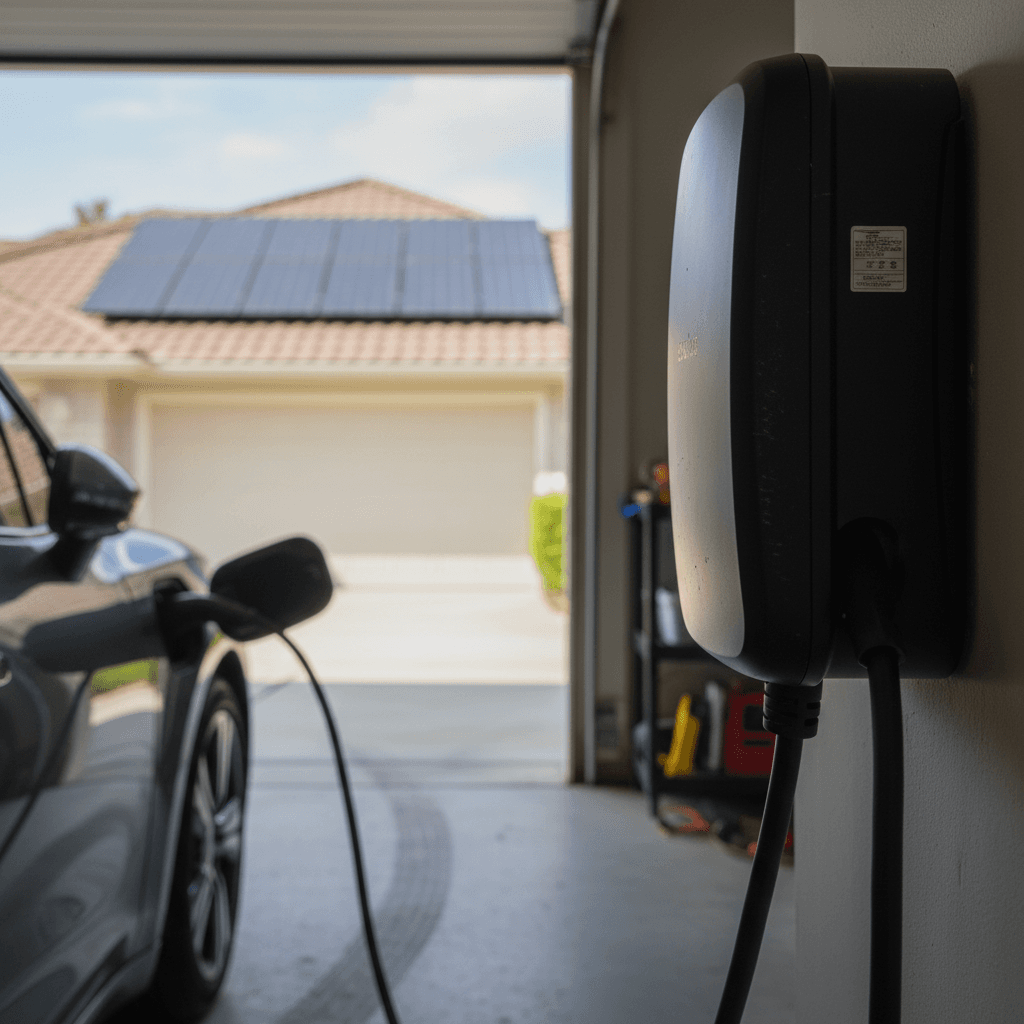
3. Home EV charger (Level 2)
A Level 2 charger (240V) is the backbone of a practical home setup. Typical units deliver 7–11 kW and can add 25–40 miles of range per hour.
Smart chargers can sync with solar output or off‑peak utility rates.
Optional: Home battery storage
A 10–15 kWh home battery lets you store solar energy produced midday and use it later, at night, during outages, or to charge your EV when utility rates spike. Expect installed costs in the $10,000–$15,000 range for this piece alone.
For many households, a hybrid system (solar + battery + EV) offers the most flexibility, but it’s not mandatory to get good value from solar EV charging.
Optional: Smart controls & apps
Most modern chargers and inverters include apps that let you:
- Schedule EV charging for daytime solar peaks or low‑rate hours.
- Limit charging current so you don’t exceed solar output.
- Monitor how much of your EV charging is covered by solar vs. grid power.
These tools are the secret sauce that make an EV truly feel “powered by your roof.”
Costs, incentives, and payback
So what does it really cost to run an EV powered by solar panels at home? You’re combining three investments: the solar array, the home EV charger, and, optionally, a home battery. There’s a wide price range depending on size and equipment quality, but we can map out realistic bands.
Typical cost ranges for a home solar EV setup
Ballpark pre‑ and post‑incentive costs for common configurations in the U.S. Your local quotes may vary.
| Component | Typical range (before incentives) | What’s included |
|---|---|---|
| Solar installation (5–8 kW) | $15,000–$24,000 | Panels, inverter, racking, labor, permits |
| Level 2 EV charger + install | $800–$1,500 | Hardware, wiring, 240V circuit |
| Battery storage (10–15 kWh) | $10,000–$15,000 | Battery, hybrid inverter or gateway, labor |
| Full package (solar + Level 2 + battery) | $25,000–$40,000 | Turnkey system, before tax credits |
Estimates assume installed pricing and the current 30% federal solar tax credit; many states and utilities offer additional incentives.
Federal incentives matter
On the savings side, the average U.S. household with solar trims about $1,300 per year from its electricity bill. If you’re also replacing gasoline with electricity, you might save another $800–$1,500 annually, depending on fuel prices and how much you drive. Put together, it’s not unusual for a well‑used solar‑plus‑EV setup to pay for itself in 8–12 years, with equipment that’s warrantied for 20–25 years.
Pros and cons of powering your EV with solar
Key advantages and trade‑offs
Solar‑powered EV charging is powerful, but not perfect.
Advantages
- Very low fuel cost once your solar is paid for.
- Protection from rate hikes and volatile gas prices.
- Lower emissions, especially in regions with fossil‑heavy grids.
- Convenient overnight or daytime home charging.
- Potential backup power if you add a home battery or bidirectional EV in the future.
Drawbacks
- High upfront cost, especially with a battery.
- Not every roof is suitable for solar (orientation, shading, structure).
- Requires professional design and permits.
- Daytime solar output doesn’t always align perfectly with your driving schedule.
- Policies like net metering and tax credits can change over time.
Compare against “do nothing”
Real-world solar EV charging scenarios
1. Suburban commuter
You drive 40 miles a day round‑trip and already have a south‑facing roof. A 6 kW solar system plus a 40‑amp Level 2 charger easily covers your EV energy plus a chunk of your household load. You rarely public‑charge except on road trips.
2. Two‑EV household
Your family runs two EVs, logging 20,000+ miles per year combined. An 8–10 kW solar array with a smart charger (or two) can offset a large portion of your driving energy, but you may still lean on the grid during winter or busy weeks.
3. Remote or outage‑prone area
You live in a region with frequent outages or high time‑of‑use rates. Solar plus a 10–20 kWh battery gives you resilience and lets you time‑shift solar to charge the car when rates spike or the grid is down.
What about solar roofs on cars?
Common mistakes and safety issues to avoid
Pitfalls to watch out for
Oversizing or undersizing based on guesswork
Don’t size your solar array off a rough rule of thumb alone. Use your actual or expected mileage and utility bills, and have a reputable installer model your production.
Ignoring panel and roof constraints
A shaded or structurally weak roof can erase projected savings. Make sure your installer checks roof condition, load limits, and shading with proper tools, not just a quick eyeball.
DIY high‑voltage work
Solar and EV chargers involve 240V circuits and, in some cases, high‑capacity batteries. Always use licensed electricians and installers. Cutting corners here is a safety and insurance nightmare.
Forgetting about future loads
If you plan to add a second EV, heat pump, or electric appliances later, discuss that now. It’s often cheaper to oversize conduit and leave panel space than to redo everything in three years.
Not leveraging EV‑specific utility rates
Many utilities offer special EV or time‑of‑use rates. Even with solar, aligning your charging schedule with these rates can dramatically cut your residual grid costs.
Net metering is not guaranteed
Step-by-step checklist to plan your setup
From idea to EV powered by solar at home
1. Clarify your driving and home energy use
Pull 6–12 months of utility bills and estimate your yearly miles for each vehicle. This defines how much energy your system needs to cover.
2. Decide your goal coverage
Are you trying to offset just your EV, your home plus EV, or go as close to net‑zero as possible? Your answer drives system size and budget.
3. Get multiple solar quotes
Request at least two or three bids from reputable installers. Ask each to model a system that covers your chosen percentage of EV + home energy and to show savings under different utility rate scenarios.
4. Plan your charging hardware
Choose a Level 2 charger that matches your EV’s max AC charging rate and your home’s electrical capacity. If you’re buying a used EV, confirm connector type and onboard charger limits.
5. Confirm incentives and financing
Ask installers how they handle the 30% federal tax credit and any local incentives. Compare cash purchase, loans, and leases/PPAs, and don’t forget to factor in EV fuel and maintenance savings.
6. Think ahead about bidirectional charging
More EVs now support bidirectional (vehicle‑to‑home) power. Even if your current car doesn’t, you may want your wiring and panel configured so you can add that capability later.
Where a used EV fits into your solar plan
You don’t need a brand‑new car to enjoy an EV powered by solar panels at home. In fact, a well‑chosen used EV can make the economics even more attractive: you’re saving on both the vehicle purchase and the long‑term fuel. The key is understanding the car’s battery health and charging capability so your solar and charger are a good match.
How Recharged can help
Match the charger to the car
Some older or budget‑oriented EVs have onboard AC chargers limited to 6.6 kW or even 3.3 kW. There’s no benefit to installing an 11 kW wallbox if your car can only accept 6.6 kW. When you shop used, check this spec so you don’t overspend on hardware or wiring.
Battery health and solar sizing
A slightly degraded battery isn’t necessarily a deal‑breaker. If a used EV has, say, 90% of its original capacity, your solar system sizing doesn’t change much, you’re still replacing gasoline with electricity. But having a clear, third‑party battery report helps you avoid surprises and plan your long‑term energy use more accurately.
FAQ: Solar panels and EV charging at home
Frequently asked questions
Bottom line: Is an EV powered by home solar right for you?
An EV powered by solar panels at home isn’t just a feel‑good idea anymore, it’s a practical way to lock in low, predictable driving costs for years to come. If you have a suitable roof, expect to drive an EV for the long haul, and can take advantage of current incentives, a well‑designed solar‑plus‑charging setup can pay off financially while cutting your carbon footprint.
The smartest approach is to run the numbers for your specific situation: your roof, your miles, your rates, and your budget. Get solid quotes from reputable solar installers, choose an EV whose battery health and charging speed you understand, and make sure your home wiring is future‑ready. When you’re ready to pair the right used EV with your solar plan, Recharged can help you evaluate options, understand battery health with the Recharged Score, and complete the purchase entirely online, so your next car is ready to sip sunlight from your rooftop as soon as you bring it home.