If you only followed headlines, you’d think electric vehicles are simultaneously the future of transportation and a failed experiment. In 2026, EV myths are louder than ever, especially about range, charging, batteries, fires, and cost. This guide puts the noise aside and looks at what the data actually says, so you can see EV myths debunked for 2026 before you decide whether a new or used EV fits your life.
What this article covers
Why EV myths are so sticky in 2026
1. Fast tech, slow narratives
EV technology and infrastructure have changed dramatically even in the last three years. Public charging ports in the U.S. have roughly doubled since 2020, and fast‑charging growth accelerated again in 2024–2025. Yet many people’s mental image of EVs still comes from early Nissan LEAFs and scattered chargers.
2. Real concerns + online outrage
There are legitimate pain points, like inconsistent fast‑charging reliability and higher upfront prices, that get blended with half‑truths into viral stories. Surveys in 2024 and 2025 show that around half of U.S. adults say they’re skeptical of buying an EV, often citing charging, range, and battery life. Those concerns are understandable, but the factual picture is more nuanced.
EV reality check heading into 2026
Myth 1: “There’s nowhere to charge an EV”
You still hear this constantly, even though it hasn’t matched reality for years. The truth is that most charging happens at home or work, and public infrastructure has been playing rapid catch‑up.
Where EV drivers actually charge
Home is the default, public fast charging is the safety net
Home & workplace
Owners who can plug in at home or work do 70–90% of their charging there. Even a basic 120V outlet can add 3–5 miles of range per hour overnight; a 240V Level 2 setup is plenty for typical daily driving.
Public Level 2
As of late 2024, the U.S. had roughly 200,000+ public Level 2 and DC fast ports, and that number has continued to rise in 2025–2026. These are the destination chargers at stores, parking garages, hotels and workplaces.
DC fast charging
Fast‑charging ports have been one of the fastest‑growing segments, with industry data showing ~30% year‑over‑year growth in 2025. Multiple networks plus new joint‑venture networks are adding 150–350 kW sites on highways and in cities.
But infrastructure isn’t finished
If you’re shopping for an EV in 2026, the key question isn’t “Are there any chargers?”, it’s “Where will I do most of my charging?” If the answer is home or work, public chargers are mainly for road trips. If not, you’ll want to map fast‑charging sites you’ll actually use and maybe favor models that charge quickly and support multiple networks.
Myth 2: “EVs don’t have enough range for real life”
Range anxiety is still the number‑one fear, but it’s increasingly disconnected from how people actually drive. The average U.S. driver covers about 30–40 miles per day. Meanwhile, most mainstream EVs sold for 2024–2026 deliver 230–320 miles of EPA‑rated range, often more in premium trims.
How modern EV range compares to daily driving
EPA‑rated range for common EV classes vs typical U.S. daily mileage
| Vehicle type | Typical 2024–2026 EV EPA range | Miles of average daily driving | Days of driving per full charge |
|---|---|---|---|
| Compact hatchback | 200–250 miles | 30–40 miles | 5–7 days |
| Family crossover | 230–320 miles | 30–40 miles | 6–9 days |
| Long‑range models | 330–400+ miles | 30–40 miles | 8–12+ days |
Today’s EVs easily cover typical daily driving on a single charge, even accounting for weather and degradation.
Plan for 70–80% of rated range
On road trips, modern DC fast‑charging lets you add 100–200 miles in 15–30 minutes in many newer EVs. That’s not as quick as a gas fill‑up, but it’s close enough that the dominant constraint becomes your need to stop rather than the car’s.
Myth 3: “EV batteries wear out in just a few years”
Early‑generation EVs did suffer more noticeable range loss, and horror stories about out‑of‑warranty battery replacements linger online. But large‑sample, real‑world data from fleets, taxis and long‑term owners now shows that modern EV packs are holding up much better than feared.
What long‑term data actually shows about EV batteries
Slow, predictable loss
Many modern EVs lose most of their capacity decline in the first few years (often 5–10%), then degradation tapers. It’s common to see well‑cared‑for packs retain 80–90% of capacity after 100,000 miles or more.
Warranty backstop
Most automakers cover the battery for 8 years or around 100,000–150,000 miles with a minimum capacity guarantee, often around 70%. That sets a floor under worst‑case outcomes for the first owner and often for the second.
Better chemistries
Newer chemistries like LFP (lithium iron phosphate) in some Teslas and other models are more tolerant of frequent fast‑charging and full charges, which is why you’re seeing more high‑mileage EVs with modest degradation.
What actually hurts batteries
If you’re looking at a used EV, the smart move is to measure the battery’s actual health instead of guessing. That’s why every vehicle on Recharged comes with a Recharged Score Report that includes verified battery diagnostics, so you know how the pack is performing before you commit.
Myth 4: “EVs catch fire more than gas cars”
EV fire videos get millions of views, so it feels like batteries are constantly combusting. But when you look at per‑vehicle fire rates, most independent analyses find that EVs catch fire less often than gasoline vehicles. Gasoline is highly flammable; we’re just desensitized to those fires because they’ve been happening for a century.
- EV fires are rarer but often more newsworthy, so each one gets amplified.
- Battery thermal runaway is serious and requires specialized firefighting, which adds to the drama.
- Most EV fires trace back to severe crashes, flooding, or improper repairs, similar to why gas cars burn.
What this means for you
Myth 5: “EVs are worse for the environment overall”
This myth usually hinges on two points: emissions from electricity generation and the footprint of battery production and mining. Both are real issues, but lifecycle analyses from governments and independent researchers consistently find that EVs emit substantially less CO₂ than comparable gas cars over their lifetime, even on relatively dirty grids.
Upfront manufacturing emissions
Building an EV and especially its battery does create more emissions upfront than building a traditional car. That’s the “carbon debt” critics focus on. But EVs then operate far more efficiently, DOE data puts typical EV efficiency around 87–91% vs ~30% for gasoline, and electricity is getting cleaner every year.
Operating emissions over time
Because EVs waste far less energy as heat, they repay that manufacturing “carbon debt” after a relatively modest amount of driving, often within 1–3 years of average U.S. use, depending on the local grid. After that, they keep delivering lower emissions mile after mile, and the gap widens as more renewables come online.
How to make your EV even cleaner
Myth 6: “EVs are more expensive to own than gas cars”
Sticker price is only one part of the story. New EVs can still be pricier than comparable gas cars, but total cost of ownership, what you actually spend over several years, often tilts the other way once you account for fuel, maintenance, tax credits and depreciation.
Where EVs tend to save you money
Costs vary by model and location, but these patterns show up again and again
Energy vs gasoline
On a cost‑per‑mile basis, home charging is usually equivalent to buying gasoline at well under $2 per gallon, especially if you can use off‑peak rates. Public DC fast charging is more expensive, but still competitive with highway gas prices in many regions.
Less maintenance
EVs don’t need oil changes, timing belts, spark plugs, or exhaust repairs. You’ll still pay for tires, brakes (less often thanks to regen), cabin filters and the usual wear‑and‑tear, but scheduled maintenance is typically simpler and cheaper.
Incentives & financing
Federal and state incentives, plus utility rebates for home chargers, can knock thousands off upfront costs. On the financing side, some lenders, including partners that work with Recharged, offer EV‑friendly terms that recognize lower operating costs.
Where EVs can still cost more
One advantage of shopping the used market is that you let the first owner absorb the steepest part of depreciation. A 2–4‑year‑old EV with strong battery health can deliver most of the tech and range at a significantly lower total cost of ownership, something Recharged’s pricing tools are designed to make transparent.
Myth 7: “Used EVs are a ticking time bomb”
This myth is understandable: if the battery is the most expensive component in the car, buying a used EV can feel like playing roulette. But again, real‑world data and tools have changed the picture. Used EVs are not inherently risky; uninspected EVs are.
How to evaluate a used EV in 2026
1. Verify battery health, don’t guess
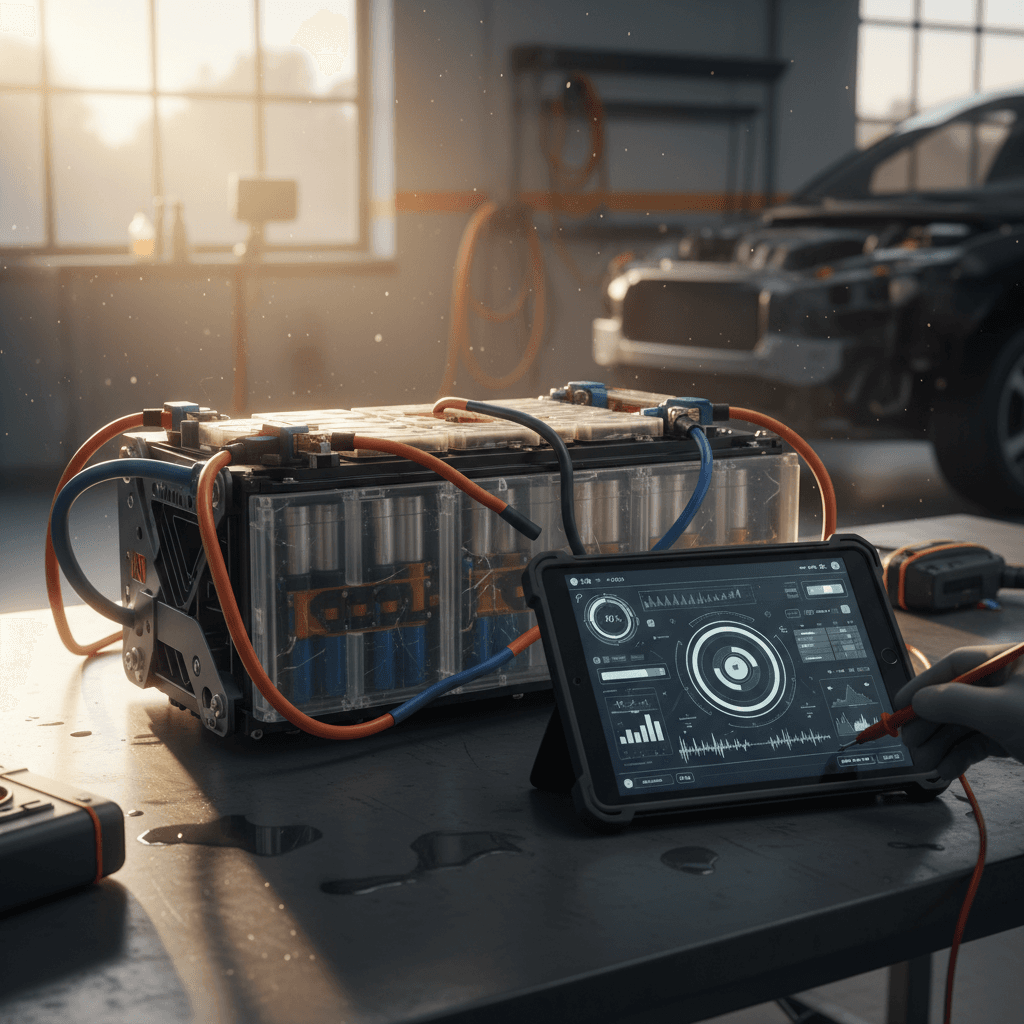
Use a proper diagnostic scan, either via the manufacturer’s tools or third‑party hardware, to measure usable capacity and cell balance. Every vehicle sold on Recharged includes a Recharged Score Report with quantified battery health so you’re not relying on dashboard guesswork.
2. Check fast‑charging behavior
A pack that has been abused or is actively managing thermal issues may charge unusually slowly. Look for real‑world fast‑charging curves from owners of the same model year, then test the car at a public charger if possible.
3. Understand remaining warranty
Battery and drivetrain warranties often extend long after the basic bumper‑to‑bumper coverage ends. Know the in‑service date, mileage limits, and whether coverage transfers to subsequent owners.
4. Inspect for flood or crash history
Just as with gas cars, flood damage and poor collision repairs can turn any vehicle into a nightmare. Run a history report and inspect underbody, wiring harnesses and high‑voltage components where possible.
5. Compare price to battery condition
A car with slightly more degradation but a much lower price might still be a better deal than a pristine, top‑dollar example. Value the <em>usable</em> range and remaining warranty, not just the odometer.
Where Recharged fits in
Ready to find your next EV?
Browse VehiclesMyth 8: “Charging is too slow and too complicated”
Charging feels foreign because you’ve had a lifetime of 5‑minute gas stops. But the right way to think about EV fueling isn’t “gas station, but slower”, it’s “phone charging, but for your car.” You mostly charge while you’re doing something else.
Home Level 1 (120V)
Think of this as a “trickle charger.” It adds roughly 3–5 miles of range per hour, fine for plug‑in hybrids or low‑mileage drivers. If you drive 30 miles a day and plug in for 10–12 hours overnight, you’re covered.
Home Level 2 (240V)
This is the sweet spot for most EV owners. Depending on amperage and the car, you can often add 20–40 miles of range per hour, easily refilling a large battery overnight. Installation ranges from using an existing dryer outlet to a dedicated 240V circuit installed by an electrician.
Public DC fast charging
On road trips or heavy‑use days, DC fast chargers can add 100–200+ miles in 15–30 minutes in many newer EVs. It’s more expensive per kWh than home charging, so you treat it like highway gas stations: occasional but essential.
Simplify your charging setup
Myth 9: “EVs aren’t safe in crashes or bad weather”
This myth usually comes from high‑profile crashes or winter range stories. But structurally, EVs have some built‑in safety advantages: a low center of gravity from the battery pack, large crumple zones without an engine up front, and rigid battery enclosures designed to withstand severe impacts.
- Many EVs earn top scores from U.S. and European crash‑testing agencies.
- The heavy battery pack between the axles lowers rollover risk vs taller ICE SUVs.
- Software‑centric designs often mean more advanced driver‑assist systems come standard, not as costly options.
Cold weather reality check
Myth 10: “EVs are a fad that’s already fading”
News about “EV slowdowns” in 2024 and 2025 has been real, but it’s about the rate of growth, not whether EVs have a future. U.S. surveys show interest dipping from earlier highs, and some automakers have delayed or adjusted roll‑outs. Yet EV sales are still rising from a much larger base, and infrastructure investment is accelerating, not retreating.
Is the EV transition really stalling?
What’s actually happening
How to reality‑check any EV claim
Because EV debates are so politicized, treating every dramatic claim, pro or anti, as suspect is healthy. Here’s a simple framework you can use, whether you’re reading a social post or talking to a salesperson.
Your 5‑step EV claim filter
1. Ask: Is this about a specific model or “EVs” in general?
An owner complaining about a 2013 EV with a small battery is very different from data on 2024 models. Always separate first‑generation quirks from current tech.
2. Look for per‑vehicle or per‑mile comparisons
Raw numbers (“EV fires doubled!”) are meaningless without context. Compare rates per registered vehicle or per mile driven to see the real risk.
3. Check the date on the data
Infrastructure, incentives and model lineups are changing year by year. A 2020 charging map tells you very little about 2026 reality.
4. Follow the money and the incentives
Is the source trying to sell you something, or scare you away from something? Industry PR, political campaigns and short‑sellers all spin the same facts differently.
5. Use multiple sources, not single anecdotes
A video of one broken charger or one proud high‑mileage owner isn’t a data set. Look for large‑sample studies, government data and fleet reports wherever possible.
EV myths debunked 2026: FAQ
Frequently asked questions about 2026 EV myths
Key takeaways if you’re considering an EV
Myths thrive where information is outdated or incomplete. In 2026, the reality is that EVs aren’t perfect, and they aren’t for everyone, but the loudest criticisms either describe yesterday’s technology or ignore the full data picture. Charging infrastructure is growing quickly, modern batteries are proving durable, fires are rarer than with gas vehicles on a per‑car basis, and total ownership costs can be very compelling if you drive enough miles and can charge cheaply.
- Start with your driving pattern and home situation, not with pundit takes.
- Plan around 70–80% of rated range and the chargers you’ll actually use.
- Treat battery health as a measurable condition, not a mystery.
- Run full cost‑of‑ownership math over several years, not just monthly payments.
If you decide an EV makes sense, the used market is one of the most efficient ways to benefit from the technology without paying early‑adopter prices, as long as you have transparent data. That’s the gap Recharged exists to fill: from Recharged Score battery diagnostics to fair market pricing, trade‑in options, and nationwide delivery, the goal is to make EV ownership simple and grounded in facts, not myths.