Electric vehicles have moved from niche to normal. In the United States, EVs and hybrids together grabbed roughly one in five new light‑duty vehicle sales in 2024, and fully electric models alone reached about 10% of the new‑car market. At the same time, more than 1.5 million EVs were sold in 2024, and automakers are rewriting their factory playbooks to prepare for true EV mass production over the next decade.
Context: A “reset year” for EVs
Why EV mass production matters right now
EV adoption and production at a glance
Mass production matters for you because it’s what ultimately drives price, availability, and reliability. Once a platform goes genuinely high‑volume, automakers can spread R&D and tooling costs over hundreds of thousands of vehicles instead of tens of thousands. That’s how we move from $60,000 halo crossovers to $30,000–$40,000 mainstream EVs, and eventually see those vehicles filtering into the used market at far lower prices.
What this means for shoppers
What “EV mass production” actually means
The auto industry’s language around volume can be confusing. A model can generate headlines with 10,000 units sold, but that’s not mass production. In industry terms, mass production usually means a vehicle platform designed for hundreds of thousands of units per year globally, with standardized parts, shared architectures, and highly automated assembly.
- Dedicated EV platforms (skateboard chassis shared across multiple models) instead of one‑off conversions of gas vehicles.
- High‑throughput final assembly lines where EVs run down the same line as, or parallel lines to, gas and hybrid models.
- Battery pack designs that can be built at scale in multiple plants from standardized modules.
- Supplier contracts sized for sustained volume, not short, experimental runs.
Think of the Tesla Model Y, or the next‑generation EV pickups Ford is planning out of Kentucky. These aren’t science projects. They’re designed from day one to achieve scale in a way that justifies retooling entire plants and committing billions of dollars in capex.
How automakers are retooling factories for EVs
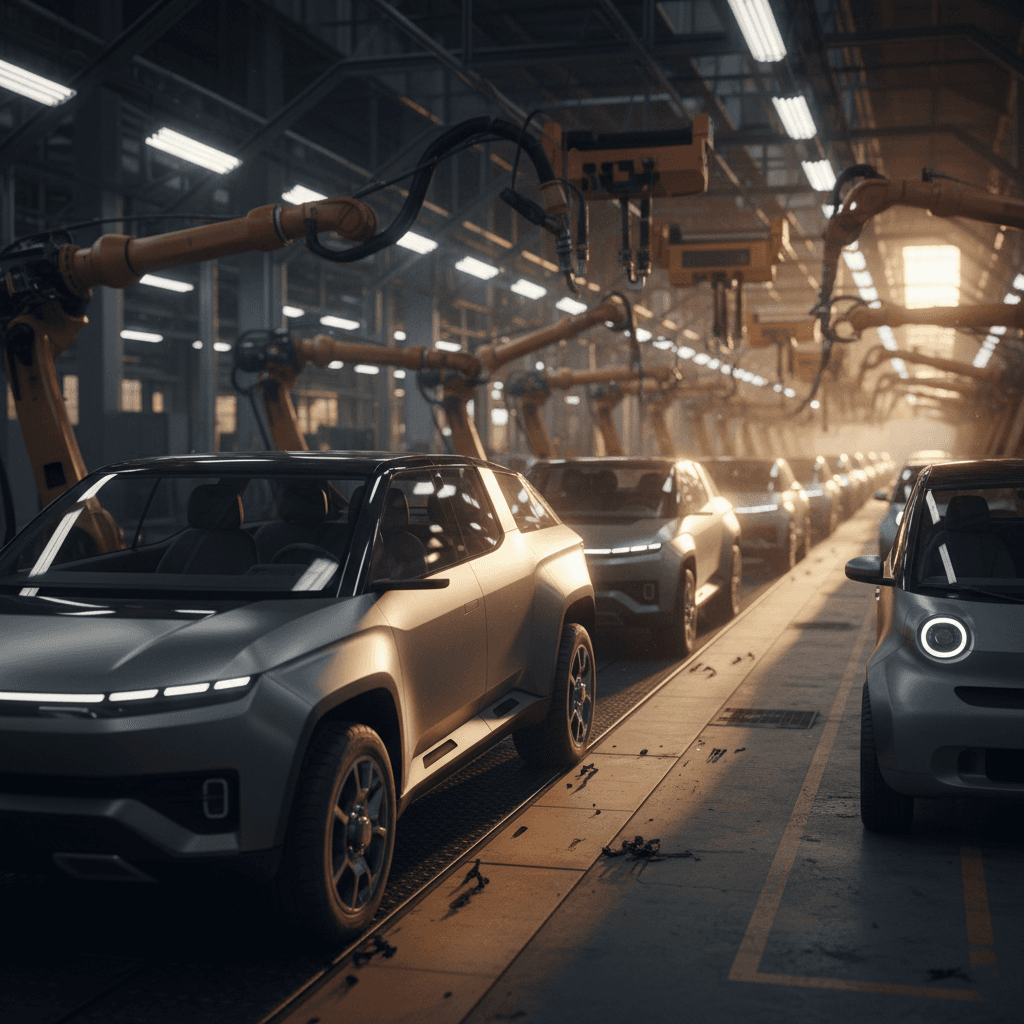
Legacy automakers are now deep into the messy middle: turning 70‑year‑old plants that once stamped gasoline SUVs into flexible factories that can spit out profitable EVs. That means new body shops, battery lines, and final assembly strategies, often while they’re still building gas vehicles in the same buildings.
Three key factory shifts powering EV mass production
From low‑volume experiments to high‑throughput EV lines
Flexible platforms
New EV architectures let automakers build multiple body styles, SUV, pickup, crossover, on the same underpinnings. That keeps tooling and engineering costs under control.
Retooled plants
Plants in Kentucky, Michigan, Mexico, and Canada are being overhauled for EVs, with high‑automation body shops and revised paint and trim lines built around battery‑electric packaging.
Lean assembly systems
Automakers are borrowing lessons from Tesla and Chinese competitors, simplifying wiring harnesses, cutting parts count, and reorganizing stations to reduce labor hours per vehicle.
Case study: a 70‑year plant goes electric
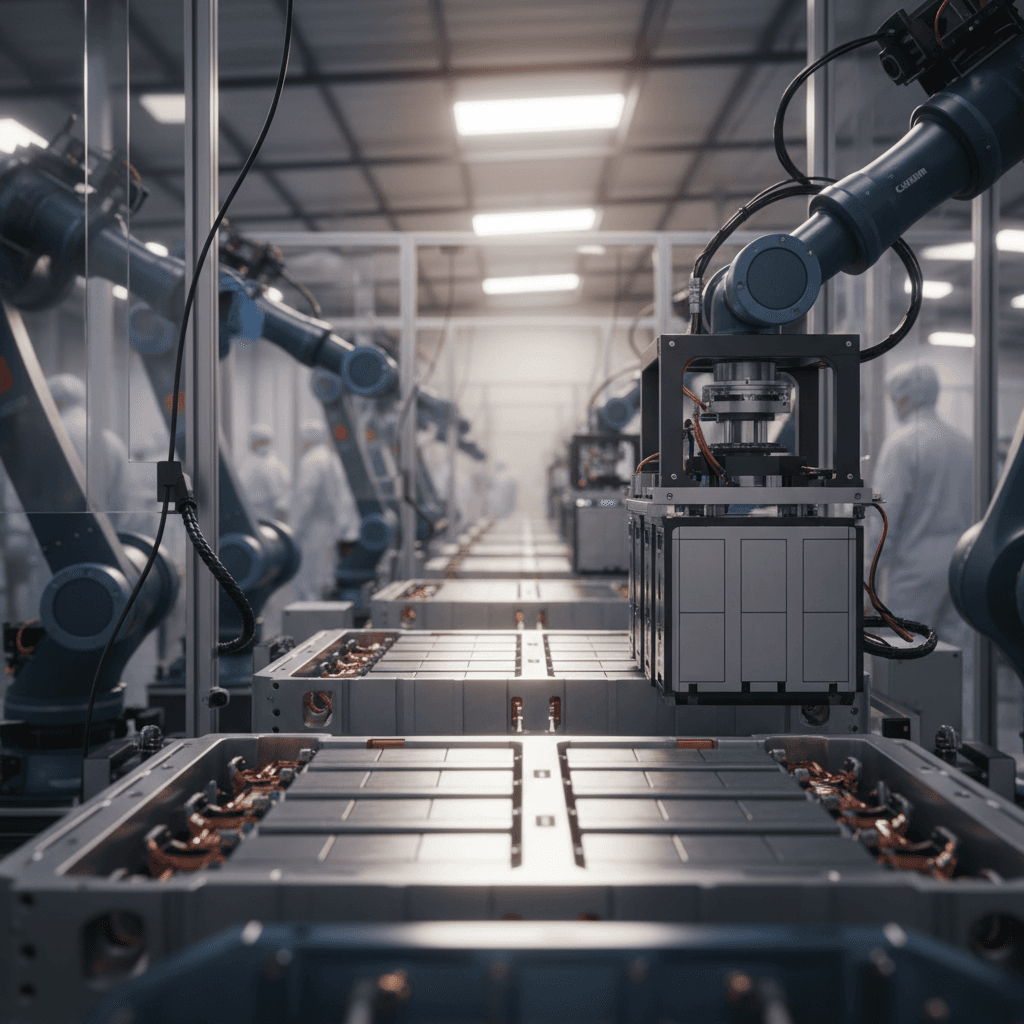
Battery gigafactories: the heart of EV mass production
You can’t do EV mass production without mass‑produced batteries. Cells and packs are the single most expensive component in an electric vehicle, and they require a completely different supply chain than engine blocks and fuel systems. That’s why the past few years have been dominated by announcements of new gigafactories in the U.S., Canada, and Mexico, often joint ventures between automakers and cell suppliers.
- U.S. plants in states like Nevada, Kansas, Michigan, Georgia, and Tennessee designed to produce tens of gigawatt‑hours (GWh) of cells annually.
- Joint ventures (for example, between Detroit‑based automakers and Korean cell suppliers) that lock in volume and technology roadmaps.
- A shift from nickel‑heavy chemistries to more affordable LFP (lithium iron phosphate) cells for mass‑market vehicles.
- Experimentation with structural battery packs and cell‑to‑pack designs that cut materials and assembly steps.
Not all capacity arrives on time
Supply chain bottlenecks, and how they’re easing
EV mass production has been limited as much by supply chain friction as by consumer demand. Early in the ramp, shortages of chips, battery materials, and even basic components like connectors slowed factories and forced automakers to prioritize high‑margin trims.
Where bottlenecks hit hardest
- Semiconductors: EVs use far more chips than ICE vehicles. When chip supplies tightened, EV launches slipped.
- Critical minerals: Nickel, cobalt, lithium, and graphite sourcing created cost volatility that showed up in MSRP and lease rates.
- Battery components: Cathode and anode production capacity lagged cell assembly in some regions.
How the industry is responding
- Long‑term offtake agreements with mining and refining companies.
- More regionalized supply chains in North America to reduce geopolitical risk.
- Designing vehicles to work with multiple cell chemistries and suppliers.
Good news for consumers
Pricing, affordability, and the end of the EV tax credit
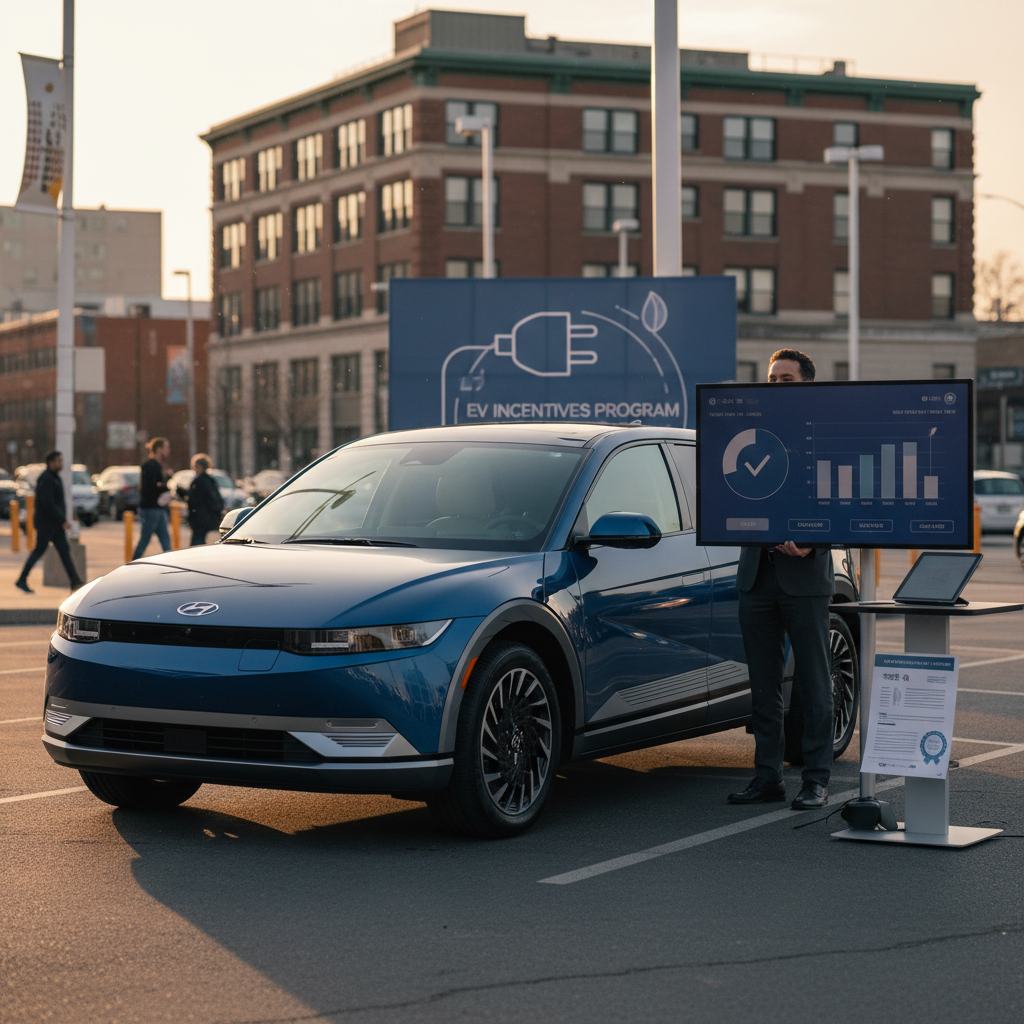
For years, federal incentives did a lot of heavy lifting to make EVs pencil out for mainstream buyers. That era just changed. As of October 1, 2025, the long‑standing $7,500 federal EV tax credit expired, and the market is still digesting what comes next.
In the short term, that likely means a squeeze: fewer subsidized deals, wary shoppers, and a reset in sales expectations. But in a mass‑production world, automakers don’t have the luxury of treating EVs as niche products forever. They have enormous factory investments to support, and that pushes them toward lower costs and sharper pricing.
Key forces shaping EV pricing in a mass‑production era
How factory decisions and policies show up on your monthly payment
| Factor | Effect on new EV prices | Effect on used EV prices |
|---|---|---|
| Battery costs | Gradual decline as gigafactories scale up and chemistries improve. | Lower pack replacement anxiety supports values; older chemistries may lag. |
| Factory utilization | Higher volume spreads fixed costs, enabling lower MSRPs and more discounts. | Big fleets of off‑lease EVs create more supply, usually lowering prices. |
| End of federal tax credit | Fewer subsidized new deals; automakers may boost rebates to compensate. | More off‑lease vehicles whose original buyers used incentives can weigh on used prices. |
| Competition | Pressure from hybrids and efficient gas models caps EV price ceilings. | Aggressive new‑vehicle incentives often pull used prices down. |
Pricing is no longer just about battery costs; it reflects factory utilization, incentives, and competition from both gas vehicles and Chinese imports.
Watch the fine print on “cheap” EVs
How EV mass production is reshaping the used EV market
Mass production doesn’t just transform new‑car showrooms. It fundamentally reshapes the used EV market. When tens of thousands of identical EVs roll off the line each year, lease returns and trade‑ins arrive in much larger, more predictable waves. That’s exactly what’s happening now as early‑generation crossovers and pickups return to market.
Three big changes in the used EV landscape
What shoppers are seeing on lots in 2025
More inventory
Instead of one or two EVs tucked in the back corner, many dealers now have multiple trims, model years, and brands, especially off‑lease crossovers and sedans.
Heavier depreciation
Faster technological change and past incentives mean some first‑ and second‑generation EVs lose value quicker than comparable gas cars, creating opportunity for value‑focused buyers.
Battery health as a differentiator
As fleets age, differences in charging habits, climate, and mileage show up clearly in battery health. Two identical EVs on paper can have very different real‑world range.
Where Recharged fits in
What to look for when buying a used EV in a mass‑market era
As EV mass production ramps up, your used‑EV choices will only grow. That’s good news, but it also makes shopping more complex. The fundamentals haven’t changed, but the stakes are higher because there are more vehicles, more trims, and more variation in how they were used.
Used EV buying checklist in the age of mass production
1. Focus on battery health, not just mileage
Battery condition is the single most important value driver. Look for third‑party diagnostics or tools like the Recharged Score, which measure real‑world capacity instead of relying on a dash estimate.
2. Understand the charging architecture
Check which connector the vehicle uses (CCS, NACS, J1772) and how fast it can charge on both AC and DC. Fast‑charging speeds vary widely between generations and trims.
3. Match range to your daily use
Thanks to mass production, you may find older models with shorter range at bargain prices. That can be a smart buy if your daily commute is modest and you have reliable home charging.
4. Check software and warranty status
Many EVs receive critical updates over the air. Confirm that software is current and find out how much battery and powertrain warranty coverage remains.
5. Compare total cost of ownership
Look beyond price. Factor in electricity costs, maintenance, potential battery replacement, insurance, and any local incentives on used EVs or home chargers.
6. Lean on EV‑savvy experts
Work with retailers or marketplaces that specialize in EVs. At Recharged, EV‑trained specialists can walk you through charging, range, and battery reports so you’re not flying blind.
Roadmap: what’s next for EV mass production
How EV mass production could evolve over the next decade
2025–2027: Reset and re‑tool
Automakers pause or delay some capacity expansions while they digest early investments and adjust to the end of federal tax credits.
Factory overhauls continue, but with more emphasis on flexible platforms and cost‑reduction than on flashy halo products.
Used EV inventories swell as first big waves of leases and early adopters’ trade‑ins hit the market.
2028–2030: True scale and price convergence
High‑volume EV platforms reach full utilization, driving down per‑unit costs.
More mainstream EVs land closer to $30,000–$35,000 before incentives, particularly in compact and midsize segments.
Charging connector fragmentation eases as more models ship with NACS ports and DC fast‑charging reliability improves.
2030 and beyond: EVs as the default new car
In many segments, EVs become the default for new‑vehicle buyers, with gas and diesel increasingly niche or fleet‑focused.
The used market becomes rich with choices across price bands, and battery health reporting becomes standard, not a bonus feature.
Manufacturing and supply chains settle into a more mature phase, with incremental improvements rather than big swings in technology every model year.
Remember: forecasts aren’t guarantees
FAQ: EV mass production and your next car
Frequently asked questions about EV mass production
Bottom line: what EV mass production means for you
EV mass production is no longer a future concept, it’s here, and it’s reshaping everything from how factories are laid out to what you see on the used‑car lot down the street. The industry is moving from splashy prototype launches to hard‑nosed factory economics: higher volume, lower per‑unit costs, and a relentless focus on making EVs work as everyday transportation.
For shoppers, that means more choice, more aggressive pricing cycles, and a flood of used EVs over the next several years. It also means you’ll need better tools to tell one EV from another, especially when it comes to battery health. That’s where partners like Recharged come in, using data, diagnostics, and expert guidance to turn a complicated, fast‑moving market into a straightforward decision about which EV fits your life and your budget.