If you live in Queens and you’re thinking about an electric car, the alphabet soup of EV rebates in Queens can feel confusing, and time‑sensitive. Between New York State’s Drive Clean Rebate, remaining federal tax credits, and Con Edison’s SmartCharge rewards, you can still knock thousands of dollars off the cost of owning an EV… if you know how the pieces fit together and what’s expiring when.
Queens-specific context
Why EV rebates matter in Queens right now
1. EV incentives are shifting fast
Federal clean vehicle credits created by the Inflation Reduction Act started tightening in 2024 and several are scheduled to disappear or change after September 30, 2025. New York’s programs are still strong, but the mix of incentives you can stack today may not look the same a year from now.
2. Queens has big daily costs you can cut
Between tolls, gas prices, and parking, driving in Queens and across NYC isn’t cheap. An EV, especially a used one bought at the right price, can dramatically lower your per‑mile cost when you pair it with state rebates and Con Edison’s off‑peak charging rewards.
What a typical Queens EV driver can still save
Quick overview of EV incentives in Queens, NY
Main types of EV savings available in Queens
New, used, and charging incentives can often be combined
1. New EV purchase/lease
- NYS Drive Clean Rebate at the dealer (up to $2,000).
- Federal clean vehicle credit (up to $7,500) on a shrinking list of models.
- Occasional OEM/ dealer cash or lease incentives.
2. Used EV purchase
- Federal used EV tax credit of up to $4,000 for qualifying purchases through Sept 30, 2025.
- Often lower starting price than new, especially via marketplaces like Recharged that verify battery health.
3. Charging & home setup
- Con Edison SmartCharge New York cash rewards for off‑peak charging.
- State charger rebates (Charge Ready NY 2.0) for multifamily/workplace sites.
- Remaining federal home EVSE tax credit for certain installs.
How to think about incentives
New York State Drive Clean Rebate in Queens
The Drive Clean Rebate, run by NYSERDA, is New York’s flagship state incentive for new EVs. It’s a point‑of‑sale rebate, meaning it comes right off your purchase or lease price at a participating dealership, including those in Queens.
How much is the Drive Clean Rebate worth?
Rebate amounts depend on electric range and price. These tiers are current as of 2025.
| Vehicle type / criteria | Example use case | Rebate amount |
|---|---|---|
| All‑electric EV with >200‑mile range | Typical long‑range Tesla, Hyundai, Kia, GM, etc. | $2,000 |
| 40–199 miles of electric range | Shorter‑range EVs and many plug‑in hybrids | $1,000 |
| <40 miles of electric range | Short‑range PHEVs used mostly as city commuters | $500 |
| MSRP over $42,000 | Higher‑end trims over the price cap | $500 |
Drive Clean Rebate tiers for new EVs bought or leased in New York State.
Watch the MSRP and options
- You choose a qualifying new EV at a participating New York dealer (including Queens).
- The dealer applies for the Drive Clean Rebate on your behalf through NYSERDA.
- They reduce your sale or lease price by the rebate amount right on the buyer’s order.
- You sign; the dealer gets reimbursed later, but you’ve already pocketed the savings.
Stacking with federal credits
Federal EV tax credits and key 2025 deadlines
From a Queens buyer’s perspective, the key thing to understand is timing. The Inflation Reduction Act’s new ($7,500) and used ($4,000) clean vehicle credits remain available in 2025, but major changes in federal tax law mean that September 30, 2025 is effectively the last day to lock in most of those credits under current rules.
New clean vehicle credit (30D)
- Worth up to $7,500 on qualifying new EVs that meet final assembly, battery content, and price caps.
- Income limits apply (AGI thresholds vary by filing status).
- Since 2024 you can choose to transfer the credit to the dealer at purchase, turning it into an up‑front discount instead of waiting for tax season.
- Federal incentives are scheduled to phase out after Sept 30, 2025 under the latest tax law, with only narrow exceptions based on binding contracts and certain lease structures.
Previously owned clean vehicle credit (25E)
- Worth up to $4,000 or 30% of the sale price (whichever is lower).
- Applies only to qualifying used EVs from a dealer, priced under a federal cap, with income limits for the buyer.
- Like the new EV credit, it’s subject to the same Sept 30, 2025 sunset, though some dealers may still structure leases to pass through remaining value.
Don’t assume every EV qualifies
Checklist: Making sure you actually get the federal credit
1. Confirm the vehicle is listed as eligible
Use official eligibility tools to verify that the exact year, trim, and battery of the EV you’re buying qualifies for a federal credit as of your purchase date.
2. Check your income and filing status
Make sure your Adjusted Gross Income for the relevant tax year is under the federal limit for your filing status. If not, you may get <strong>zero</strong> federal benefit.
3. Verify purchase timing vs. Sept 30, 2025
Because EV credits are scheduled to sunset after <strong>September 30, 2025</strong>, understand whether your purchase or lease falls before or after that date and whether any binding contract rules apply.
4. Decide whether to transfer the credit to the dealer
If your vehicle is eligible, you can transfer the credit to the dealer so it reduces the purchase price right away, rather than waiting for your tax refund.
5. Keep every document
Save your purchase agreement, IRS form numbers, eligibility printouts, and any dealer certification. If the IRS asks questions later, you’ll want that paper trail.
Con Edison SmartCharge NY rewards for Queens drivers
If you charge in Queens, you’re in Con Edison territory, and that unlocks one of the most underrated EV incentives: SmartCharge New York. Instead of a one‑time rebate, this program pays you cash every year for charging your EV during off‑peak hours.
Con Edison SmartCharge NY: key incentives for Queens drivers
SmartCharge pays you to shift your charging away from peak times.
| Incentive | How it works | Typical value |
|---|---|---|
| 3‑month participation bonus | Charge in the Con Edison area for 3 months after enrolling. | $25 per vehicle or charger. |
| Off‑peak charging incentive | Charge between midnight and 8 a.m. daily in the Con Edison service area. | $0.10 per kWh charged off‑peak. |
| Summer peak avoidance bonus | Avoid charging on weekdays 2–6 p.m. from June 1 to Sept 30. | $35 per month in summer months if you comply. |
| Refer‑a‑friend bonus | Invite others to enroll with your code and complete one charge. | $25 per successful referral. |
Incentives are subject to change; always confirm the latest details when you enroll.
Real‑world earnings
- You sign up online for SmartCharge NY and connect your EV or smart charger so Con Edison can read charging data.
- You keep charging as usual, but shift most of your sessions to off‑peak hours.
- SmartCharge tracks your charging and deposits rewards through services like Venmo or PayPal.
- You can combine SmartCharge with virtually any EV, new or used, and with other rebates and credits.
Charger and installation incentives for Queens apartments and homes
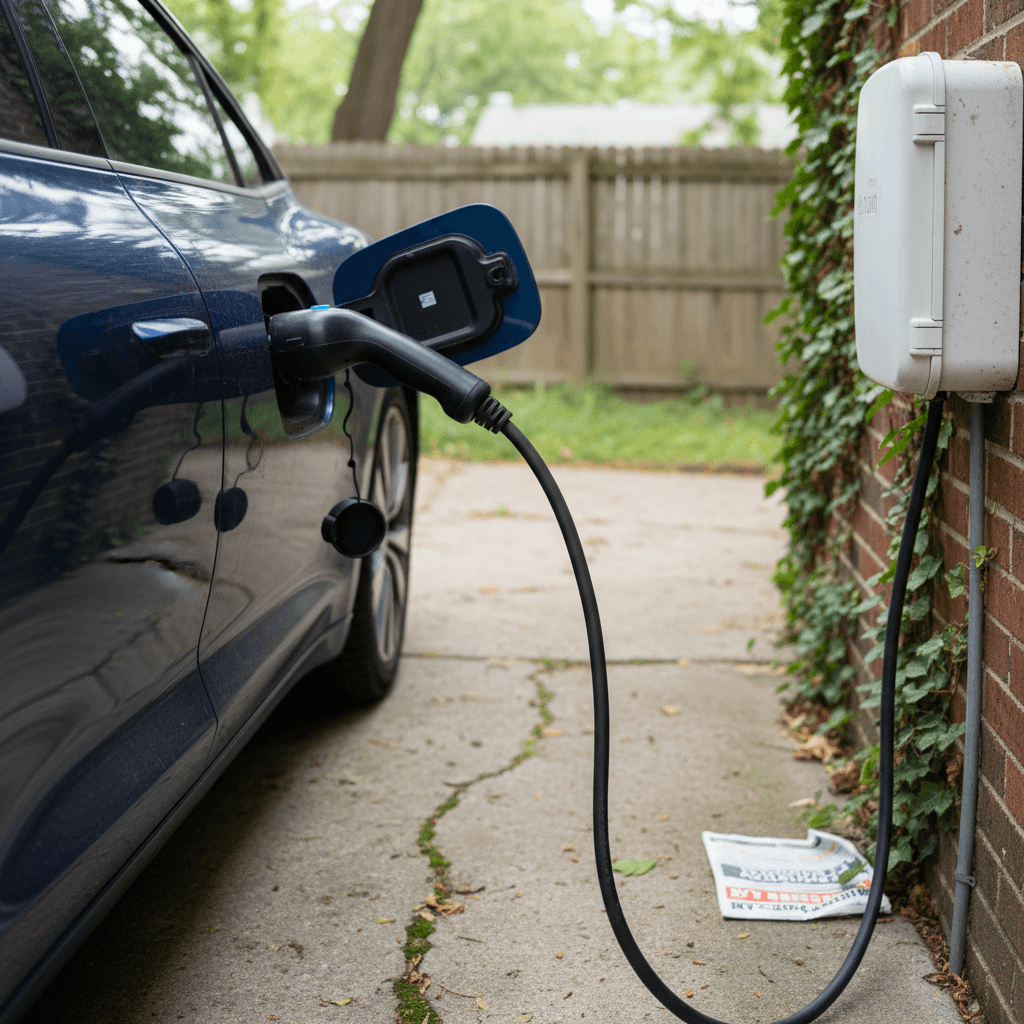
For many Queens residents, where and how you park matters as much as which EV you buy. If you live in a multifamily building or own a small rental property, New York’s Charge Ready NY 2.0 program and a federal home charger credit can help pay for Level 2 charging infrastructure.
Key charger incentives that affect Queens
Most programs are technology‑neutral, you can use them with nearly any EV brand.
Charge Ready NY 2.0 (NYSERDA)
- Incentives for Level 2 chargers at multifamily buildings, workplaces, and similar sites.
- Standard incentives increased from $2,000 to $3,000 per port; disadvantaged community sites can receive up to $4,000 per port.
- Perfect if your Queens co‑op, condo, or landlord is considering shared or assigned parking chargers.
Federal home EVSE tax credit
- Tax credit for 30% of eligible EV charger hardware and installation costs, up to $1,000, currently available through mid‑2026 for qualifying locations.
- Best used when you’re installing a 240V circuit and a permanent wall‑mounted Level 2 charger at home.
If you rent or live in a co‑op
Can you get rebates on a used EV in Queens?
Used EVs are where the math often looks best for Queens drivers, especially if you don’t need 300+ miles of range. While New York’s Drive Clean Rebate is new‑vehicle only, the federal government created a separate used clean vehicle credit worth up to $4,000 for qualifying purchases through September 30, 2025.
Used federal credit basics
- Credit of 30% of the sale price, up to $4,000.
- Vehicle must be bought from a dealer (not private party) and meet federal price caps.
- Income caps for buyers, plus limits on how often you can claim the credit.
- Available to Queens residents just like anywhere else in the U.S.
Why Recharged focuses on total cost
Because incentives are changing, the safer strategy is to start with a used EV that’s fairly priced and has verified battery health. Every EV on Recharged comes with a Recharged Score Report that measures real‑world battery condition, range, and market pricing, so you’re not guessing about the most expensive component in the car. If you’re still eligible for the federal used credit, that’s extra upside.
Don’t chase a dying credit
How to stack EV rebates in Queens (step-by-step)
Step‑by‑step: Maximizing EV savings in Queens
1. Decide new vs. used based on your commute
If you’re mostly doing Queens/Brooklyn/Manhattan trips under 70 miles a day, a used EV with 180–220 miles of real‑world range may be more than enough and far cheaper up front. If you road‑trip upstate regularly, a newer long‑range EV might justify the higher price.
2. Price out vehicles before counting incentives
Look at actual selling prices (not just MSRPs) for a few candidate EVs. For used EVs, focus on battery health and depreciation history. Marketplaces like <strong>Recharged</strong> surface fair‑market pricing alongside detailed battery diagnostics.
3. Map out which incentives apply to you
For each candidate EV, list out: (a) Drive Clean Rebate (new only), (b) federal clean or used vehicle credit eligibility, (c) Con Edison SmartCharge rewards, and (d) any building/charger incentives you can realistically access.
4. Check timing vs. federal deadlines
If you’re planning to rely on federal credits, work backwards from <strong>September 30, 2025</strong>. Include time for test drives, financing approval, and delivery. Consider whether a lease structure can still capture value if you’re close to the cutoff.
5. Line up financing before you shop
Pre‑qualify for financing so you know your monthly payment window before you talk numbers. Recharged offers <strong>EV‑friendly financing</strong> that can be pre‑qualified online with no impact to your credit, and it plays nicely with both state and federal incentives.
6. Set up your charging strategy
Decide whether you’ll install Level 2 at home, rely on workplace/multifamily charging, or lean on public fast charging. Enroll in <strong>SmartCharge NY</strong> as soon as you have an EV and start shifting your charging to off‑peak hours to capture those ongoing rewards.
Common pitfalls for Queens EV buyers
Avoid these costly EV rebate mistakes in Queens
Most involve either timing or making assumptions about eligibility.
Assuming “every EV gets $7,500”
Budgeting around a credit you may not get
Ignoring parking and charging reality
Be careful with dealer claims
“Incentives are a powerful tool, but they’re not a substitute for doing the math. The smartest EV buyers in Queens treat rebates and credits as a bonus layered onto a car that already makes sense on its own economics.”
FAQ: EV rebates in Queens, NY
Frequently asked questions about EV rebates in Queens
Bottom line: Queens EV rebates are changing, don’t wait
The EV incentive landscape in Queens is still generous, but it’s also in motion. New York’s Drive Clean Rebate, Con Edison’s SmartCharge New York, and remaining federal credits can meaningfully lower the cost of going electric, especially if you’re open to a used EV with verified battery health. The catch is that federal programs in particular have hard dates and complex fine print, so it’s risky to assume they’ll be there indefinitely or apply automatically.
If you’re seriously considering an EV in the next 12 months, start by clarifying your daily driving pattern, parking situation, and budget. From there, compare a handful of specific vehicles, new and used, and map exactly which incentives you can claim. A platform like Recharged can help you find a used EV with transparent battery health, fair market pricing, and EV‑savvy financing so that rebates are the cherry on top, not the whole dessert. In a borough where every dollar and every parking spot counts, that kind of disciplined approach is the surest path to a smart electric upgrade.