EV market share growth in 2025 looks very different from the breakneck surge we saw earlier in the decade. Global electric vehicle sales are still climbing, but the mix is changing, the pace is uneven, and the real action is shifting toward the used EV market. If you’re trying to decide whether to buy, sell, or sit tight, understanding how market share is moving in 2025 is the best place to start.
The short version
EV market share growth 2025 at a glance
Key 2025 EV market share snapshots
Behind these numbers is a market that’s maturing fast. Automakers have pulled back on some new‑vehicle EV plans, dealers are recalibrating how aggressively they stock EVs, and shoppers are becoming more price‑sensitive. Yet EV penetration keeps rising globally, and in the US the used EV channel is picking up momentum even as some new‑EV metrics soften.
Global EV market share: where 2025 growth is coming from
Globally, 2025 isn’t a step back for EVs, it’s a consolidation year. After EVs reached about 45 million on the road by 2023, long‑range forecasts from international agencies point to the fleet more than doubling by 2030 and continuing to expand through 2035. That implies annual growth in the low‑20% range, which is fast by any automotive standard, even if it’s slower than the initial surge.
- China remains the engine of EV market share growth, accounting for well over half of global EV sales and pushing well past 30% EV share of new light‑vehicle sales in many segments.
- Europe’s EV share has plateaued in some countries but is still supported by emissions regulations, company‑car policies, and urban clean‑air zones that favor zero‑emission vehicles.
- North America trails both regions on pure market share but continues to add EV volume each year, driven by more models, falling battery costs, and expanding charging infrastructure.
Think in share, not just volume
US EV market share in 2025: cooling off, not collapsing
In the United States, the headline for 2025 is a **slower climb**, not a reversal. After years of double‑digit growth, new EV sales have hit what many automakers describe as an “EV winter”, a period where early adopters are already in, mainstream shoppers are more cautious, and high interest rates and patchy charging access create friction.
New EVs: a bump in the road
- Some brands are trimming EV production targets or delaying launches as inventories build.
- Monthly US EV market share has bounced in a range instead of moving straight up, especially in higher‑priced segments.
- Franchise dealers are getting more selective about which EVs they stock and how aggressively they price them.
Used EVs: underlying demand building
- Large used‑vehicle retailers report that EV‑specific searches on their platforms have nearly doubled in the last three years.
- As new‑EV prices and incentives move around, many buyers are discovering that a late‑model used EV fits their budget far better than a new one.
- Brands with strong fast‑charging access, especially Tesla, continue to dominate used‑EV consideration lists.
Don’t confuse slower growth with falling share
The silent winner: used EV market share in 2025
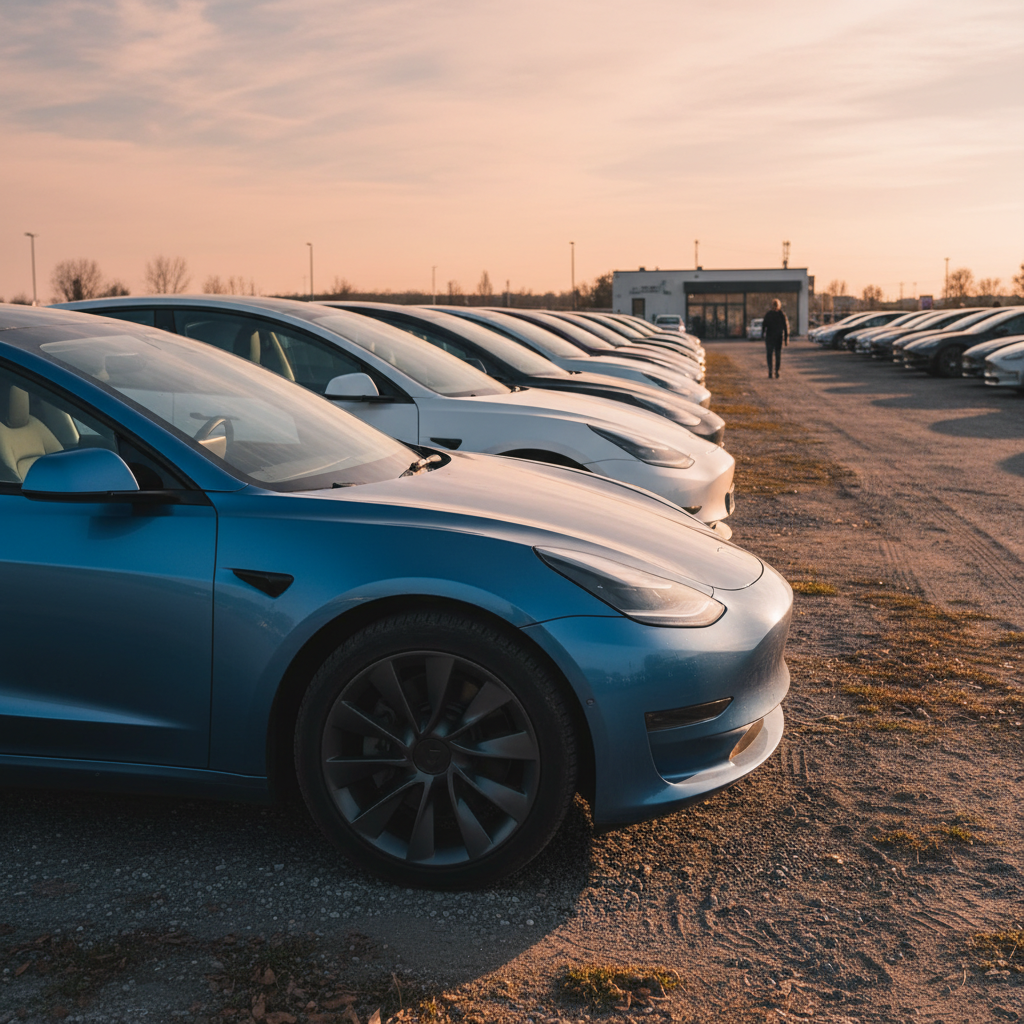
If you want to understand where EV momentum is hiding in 2025, look at the used side of the ledger. As prices for many late‑model EVs corrected from their 2021–2022 highs, affordability improved and interest followed. Major used‑vehicle retailers report that EV‑filtered searches on their sites have nearly doubled since early 2022, even as average used EV prices dropped more than 40% over the same period.
Why used EV interest is growing even as new EVs wobble
Three forces reshaping EV market share from the bottom up
1. Price resets
Steep price cuts on some new EVs pulled used values down, putting many 1–5‑year‑old EVs into the same payment range as comparable gas cars, sometimes lower once fuel and maintenance are factored in.
2. Better tech at lower prices
Vehicles coming off their first owners now carry longer‑range batteries, more efficient drivetrains, and robust driver‑assist and infotainment systems, making used EVs feel far from “old tech.”
3. Infrastructure catch‑up
Charging networks have expanded significantly since early adopters took delivery. For a 2025 used‑EV buyer, many of the anxiety‑inducing gaps of 2018–2020 have shrunk or disappeared along key corridors.
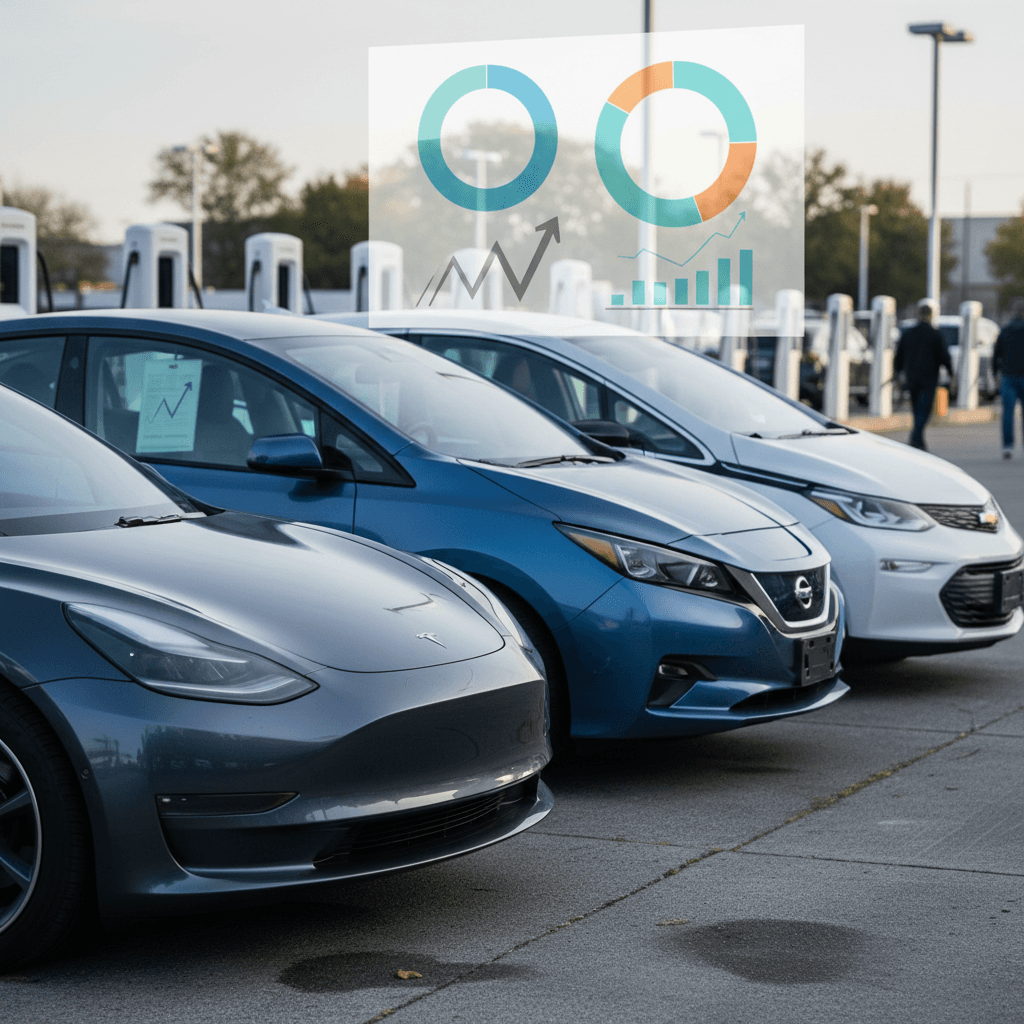
That shift is already visible in the sales mix. In 2025, Tesla models still account for a large share of 1‑ to 5‑year‑old used EV sales, but mainstream nameplates like the Ford Mustang Mach‑E, Volkswagen ID.4, Chevrolet Bolt and Hyundai Ioniq 5 are moving up the charts. For buyers, that means a broader selection of body styles and price points; for sellers, it means more competition and more pressure to price correctly.
Price and incentive dynamics: how 2025 changed the story
Market share is ultimately a pricing story. In 2025, three price‑related trends are steering EV adoption and reshaping who buys new versus used.
- New‑EV sticker shock meets higher interest rates. Even as some automakers cut MSRPs, monthly payments stayed stubbornly high for buyers facing steep borrowing costs. That pushed budget‑sensitive shoppers to consider used EVs or to delay a purchase.
- Incentives are more complex, and more targeted. Federal and state programs, plus captive‑finance incentives, increasingly favor leasing or certain vehicles built in specific locations. That can make a new EV surprisingly affordable for one buyer and out of reach for another, depending on income, tax situation, and where the vehicle was assembled.
- Used EV pricing is finally acting like a real market. After an early period of thin inventory and volatile resale values, used EVs are now behaving more like other used vehicles, depreciating quickly in the early years, then settling into a more predictable curve that savvy buyers can take advantage of.
Why some used Teslas are bucking the trend
Lease returns, 2026 and beyond: why 2025 is a pivot year
One reason 2025 feels like a breather in EV market share growth is what’s coming next. Industry forecasts show EV lease volumes surged in 2023 and 2024 as automakers used aggressive lease programs to keep monthly payments in line. That creates a lagging effect: those vehicles don’t hit the used market immediately, but they do come back, often all at once.
The coming wave of returning EV leases
For shoppers, that means 2025 is a transitional year: good selection in certain models, but the really broad wave of lease‑return inventory doesn’t crest until 2026. For dealers and marketplaces, it’s a planning year, building the tools, pricing discipline, and EV‑specific expertise they’ll need when that volume arrives.
Risk: mis‑pricing the lease‑return wave
What EV market share growth in 2025 means if you’re buying used
When EV market share is growing but volatile, the used market becomes the gateway for many first‑time EV owners. Here’s how to use 2025’s dynamics to your advantage if you’re shopping for a pre‑owned EV.
Smart moves for 2025 used EV buyers
1. Target models in expanding segments
Look at vehicles that are gaining share in the used market, compact crossovers, practical hatchbacks, and mainstream brands where new‑vehicle incentives have already filtered into used pricing. These often deliver the best value per mile of range.
2. Make battery health a first‑order question
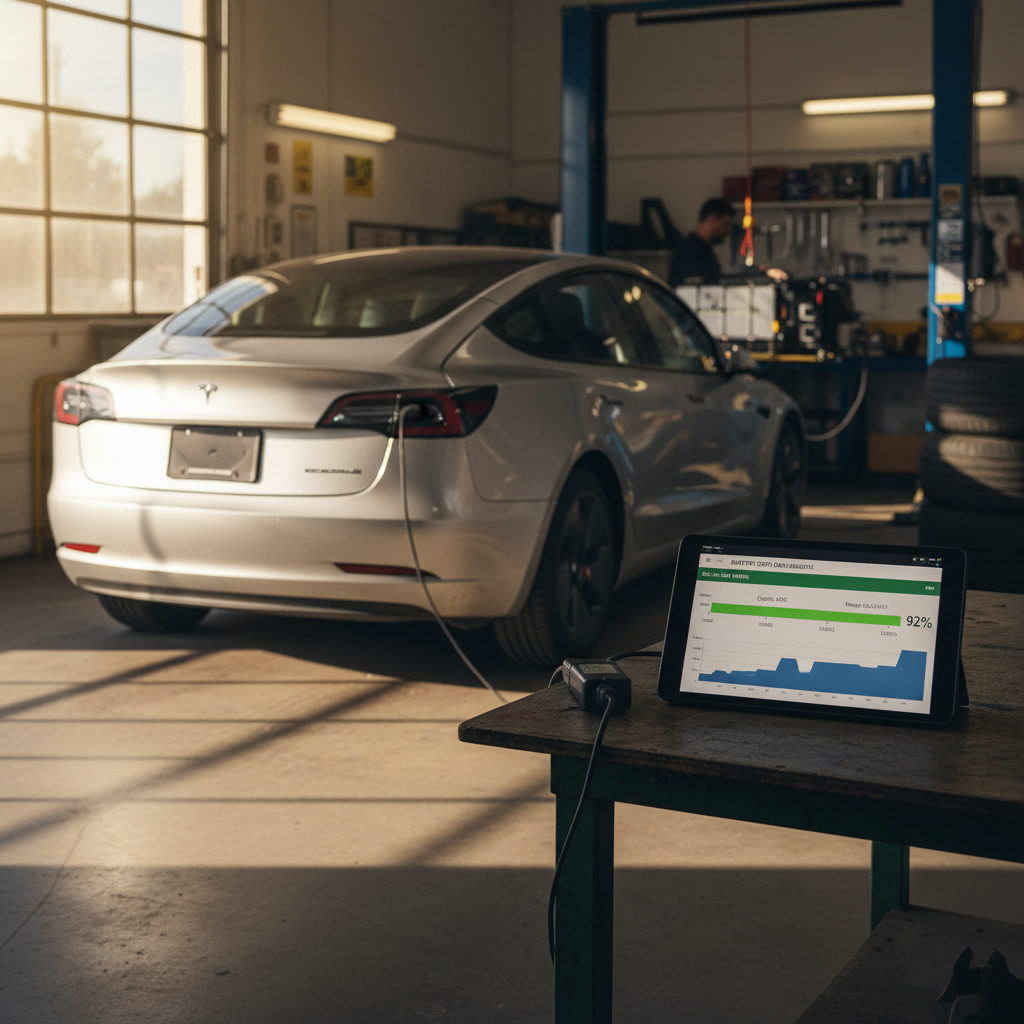
Range is the new odometer. Instead of guessing, ask for <strong>verified battery diagnostics</strong> so you know current usable capacity, not just the original EPA rating.
3. Compare total cost of ownership, not just price
Factor in fuel savings, lower maintenance, and potential home‑charging efficiency. A used EV with a slightly higher payment can still cost you less per month than a cheaper gas car once operating costs are included.
4. Pay attention to charging access and connector type
As more brands adopt NACS and open access to large fast‑charging networks, some models may become more attractive. Think about where and how you’ll charge before you fall in love with a specific vehicle.
5. Use marketplace data, not just gut feel
Leverage platforms that benchmark each vehicle against the broader market, on price, mileage, equipment, and battery condition, so you can see quickly if you’re getting a fair deal.
Where Recharged fits in for buyers
What it means if you’re selling or trading an EV
EV market share growth in 2025 cuts both ways for current owners. On one hand, more buyers are actively searching for used EVs, especially in metro areas where charging access has improved. On the other, more inventory is coming, and shoppers are getting savvier about range, software support, and charging.
If you plan to sell in 2025
- Expect strong interest in well‑spec’d vehicles with healthy batteries, clean histories, and popular colors or trims.
- Be prepared to document charging habits and software status (updates, connectivity features, warranties).
- Consider getting a third‑party battery health report before listing; it can support your asking price and speed up the sale.
If you can wait until 2026+
- You’ll be selling into a larger, more mature used EV ecosystem, with more educated buyers and more pricing benchmarks.
- But you’ll also be competing with a higher volume of returning leases and trade‑ins, which could pressure values on some models.
- Use 2025 to track how your model’s resale values are trending so you’re not surprised when it’s time to move.
Use multiple exit options
How Recharged helps you navigate a fast‑changing EV market
As EV market share grows and the used segment matures, the gap between “just another used‑car listing” and a truly EV‑ready experience gets wider. That’s where Recharged comes in.
Why Recharged is built for the 2025 EV market
Tools and services designed around EV‑specific questions
Recharged Score battery health diagnostics
Every vehicle gets a Recharged Score Report with verified battery health, range insights, and degradation data, giving buyers and sellers a shared, trusted baseline instead of guesswork.
Transparent, fair‑market pricing
Recharged benchmarks each EV against the wider market, factoring in mileage, equipment, incentives and battery condition so pricing reflects how the vehicle will actually perform for the next owner.
EV‑focused retail experience
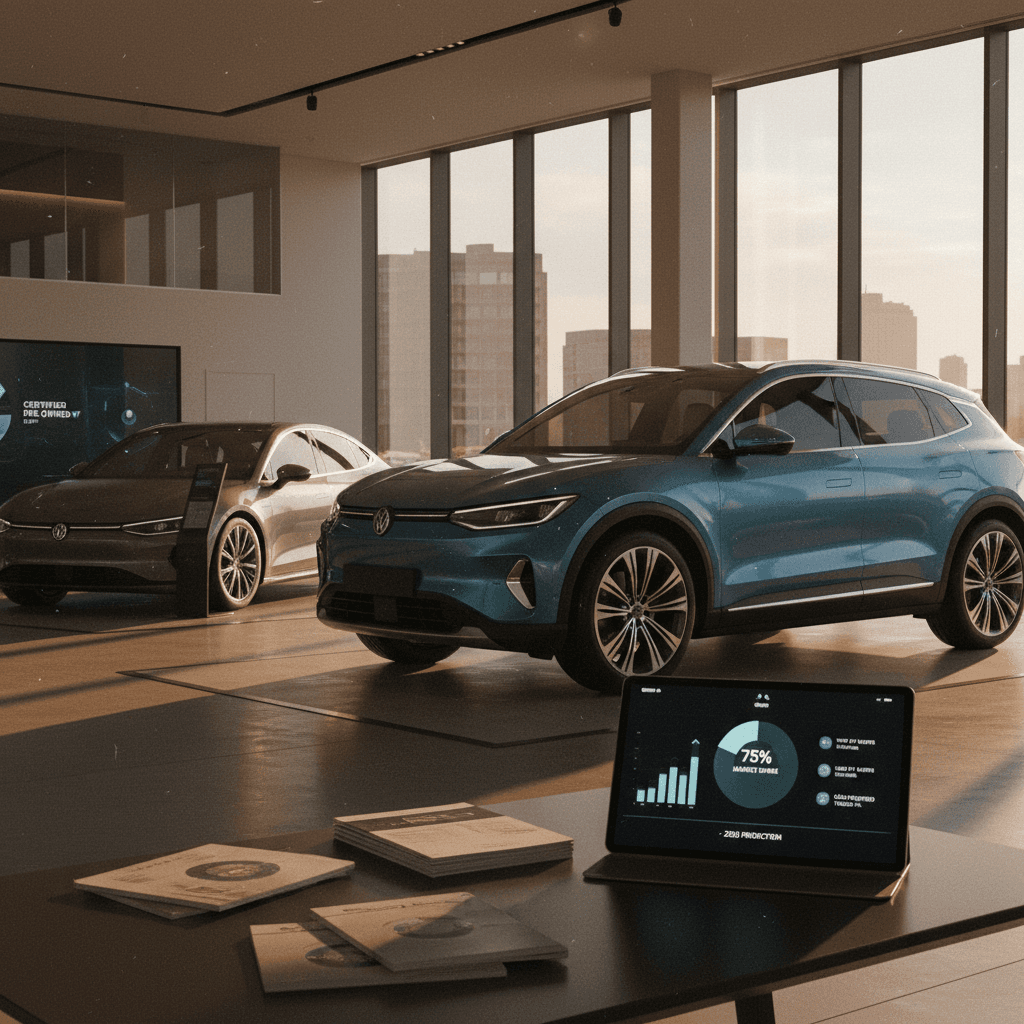
From nationwide delivery and digital paperwork to EV‑specialist support and an Experience Center in Richmond, VA, Recharged is structured around making electric ownership simple, especially for first‑time EV buyers.
On the selling side, Recharged offers financing, trade‑in, instant offers and consignment options tailored to late‑model EVs. On the buying side, you get a curated inventory of used EVs, backed by diagnostics that highlight the single most important asset in an electric car: the battery.
EV market share growth 2025: FAQ
Frequently asked questions about EV market share growth in 2025
Bottom line on EV market share growth in 2025
EV market share growth in 2025 isn’t a straight line, but it is still a growth story. Globally, EVs are marching toward the mainstream. In the US, the spotlight has shifted from headline‑grabbing new‑EV launches to quieter but meaningful gains in the used EV market, where more shoppers are discovering that electric fits their budget and lifestyle.
If you’re buying, this environment rewards careful homework on battery health, charging access, and total cost of ownership. If you’re selling, it rewards accurate diagnostics and smart channel selection as competition rises. Recharged was built for exactly this moment, combining verified battery data, fair‑market pricing and EV‑specialist support so you can move confidently, no matter which side of the transaction you’re on.