One of the underrated perks of electric vehicles is a lighter maintenance load, no oil changes, spark plugs, timing belts, or exhaust systems to worry about. But that doesn’t mean you can ignore an EV maintenance schedule. Tires, brakes, fluids, filters, and software still need attention if you want predictable costs and reliable range, especially as your EV gets older or if you’re shopping used.
Big picture
Why EVs still need a maintenance schedule
Modern EVs are engineered to go years between shop visits under normal driving, and several brands, including Tesla, frame maintenance as “as needed” rather than every 12 months. Still, the core wear items haven’t disappeared: rubber components age, fluids absorb moisture, and hardware corrodes, especially in colder, road‑salt states. A simple, repeatable schedule helps you catch small issues before they turn into range loss, noisy brakes, or a surprise repair bill.
How EV maintenance compares to gas cars
What actually needs servicing on an EV
Core systems in your EV maintenance schedule
Fewer items than a gas car, but they still matter
High-voltage battery & charging
Your main pack is sealed and largely maintenance-free, but it depends on healthy coolant, software, and charge habits. Some OEMs call for battery coolant checks or replacement at long intervals (often around 8–10 years).
12-volt (or low-voltage) system
Even EVs use a separate low-voltage battery to power accessories and computers. It can fail just like in a gas car and may need replacement every few years.
Tires & alignment
Instant torque and higher curb weight make EVs tough on tires. Regular rotation, pressure checks, and alignments are key to range and safety.
Brakes & brake fluid
Regenerative braking means pads often last much longer, but the hydraulic fluid and calipers still age, especially in salty climates.
Cabin air & HVAC system
Cabin filters and, on some models, HEPA or carbon filters keep air clean and protect the HVAC system. Desiccant bags in the A/C circuit may need periodic replacement.
Suspension, steering & hardware
Bushings, ball joints, tie rods and wheel bearings wear at similar rates to gas cars. Listen for clunks or looseness and inspect on a schedule.
Use your owner app
EV maintenance schedule by time and mileage
Every automaker publishes its own schedule, but the patterns are very similar. Below is a generic EV maintenance schedule for mainstream models in the U.S. Use it as a planning tool, then confirm specifics in your owner’s manual or app.
Typical EV maintenance schedule (time and mileage)
Approximate time- and mileage-based intervals for common EV maintenance tasks under normal driving in moderate climates. Always defer to your specific vehicle’s manual.
| Interval | Mileage Range | What to do | Notes |
|---|---|---|---|
| Every month | N/A | Check tire pressures, inspect tread, top washer fluid | Do a quick walk-around; look for uneven wear or sidewall damage. |
| Every 6,000–7,500 miles | ~6,250 miles is common | Rotate tires; inspect brakes and suspension | Many EV brands, including Tesla, recommend tire rotation around 6,250 miles. |
| Every 12 months | Varies | General inspection; alignment check if needed | Especially important if you’ve hit potholes or notice pull/vibration. |
| Every 2 years | ~24,000–30,000 miles | Replace cabin air filter; test brake fluid | High-pollution or dusty regions may need cabin filters sooner. |
| Every 3–4 years | ~36,000–50,000 miles | Brake fluid change if contaminated; HEPA/carbon filters (if equipped) | Some brands specify a 4‑year brake fluid check interval with replacement as needed. |
| Every 5–6 years | ~60,000–75,000 miles | Deeper suspension/brake inspection; possible 12V battery replacement | Look for play in ball joints and control arms; test low-voltage battery health. |
| Every 8–10 years | High mileage or age based | Battery coolant service (if specified); HV system inspection | Only some OEMs require coolant changes; interval is usually very long. |
Use this as a starting point, then adjust for your climate, driving style, and brand-specific guidance.
Adjust for harsh conditions
Tesla-style intervals as a reference point
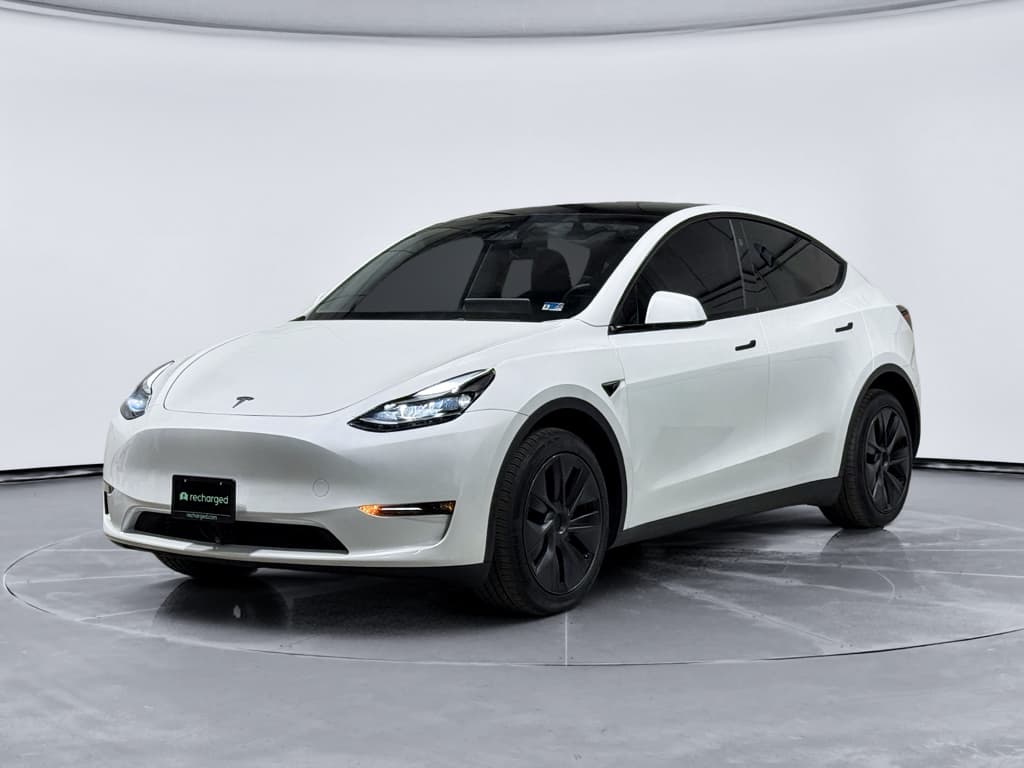
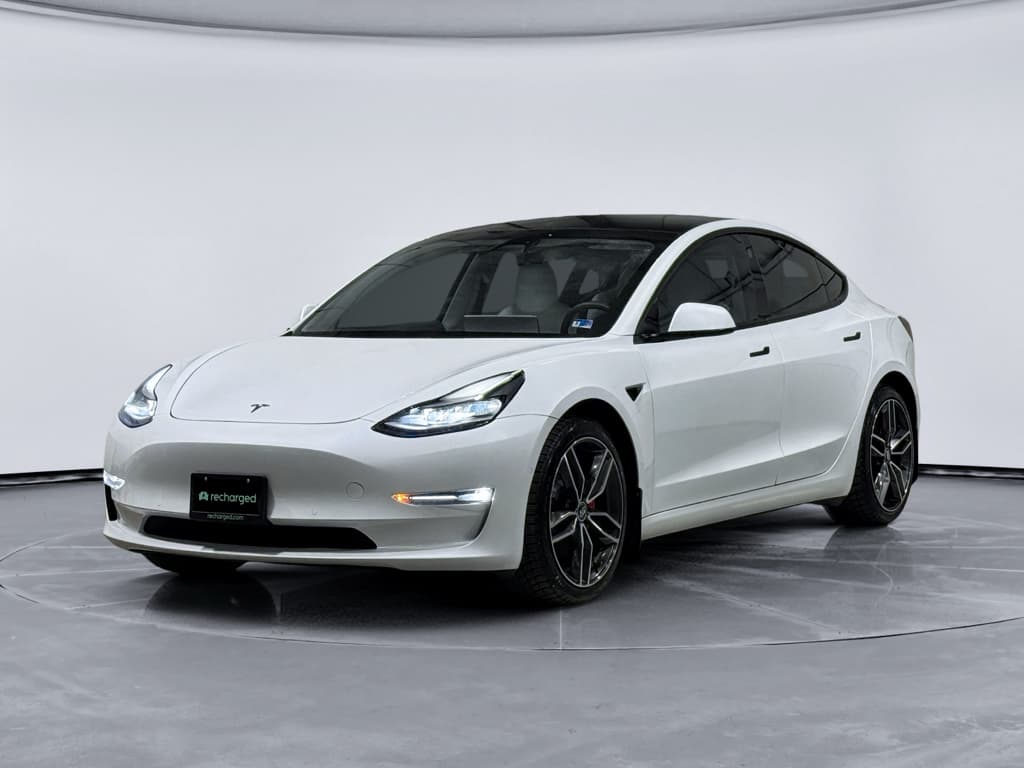
Tesla’s published maintenance guidance is a useful benchmark because it reflects a mature EV platform and is updated frequently. For vehicles like the Model 3 and Model Y, Tesla currently recommends items such as a brake fluid health check every 4 years, cabin air filters about every 2 years, tire rotation around every 6,250 miles, and brake caliper cleaning and lubrication annually in salty regions.
- Tire rotation: around every 6,250 miles or when tread wear is uneven
- Cabin air filter: about every 2 years on compact models, 3 years on larger SUVs and sedans
- Brake fluid: test roughly every 4 years, replace if contaminated
- Brake caliper cleaning/lube: about every 12 months or 12,500 miles in cold/salty climates
- A/C desiccant bag or HVAC service: multi‑year intervals depending on model and build year
Why this matters if you don’t own a Tesla
Special considerations for used EVs
If you’re buying used, the right EV maintenance schedule starts before you sign anything. You’re inheriting someone else’s charging habits, road conditions, and maintenance discipline. That makes documentation and inspection more important than on a new car.
Maintenance checklist when you buy a used EV
1. Verify service records
Look for proof of tire rotations, brake fluid checks, cabin filter replacement, and any brake or suspension work. Gaps aren’t a deal-breaker, but they’re a negotiating point.
2. Ask about charging habits
Frequent DC fast charging, always charging to 100%, or consistently running the pack very low can affect long-term battery health. Occasional fast charging is normal; daily DC fast charging isn’t ideal.
3. Inspect tires and brakes closely
Uneven tire wear can signal alignment issues or aggressive driving. Rusty or dragging brake calipers are more common on EVs that sit a lot because regen braking reduces pad use.
4. Check for software and recall updates
Confirm the car is on current software and that open recalls or service campaigns have been completed. Many updates improve range predictions, charging behavior, and safety features.
5. Get a battery health report
For high‑mileage cars, a professional battery health report can show usable capacity and highlight unusual degradation. On Recharged vehicles, the <strong>Recharged Score Report</strong> includes verified battery diagnostics so you’re not guessing.
6. Set a “baseline” service visit
Soon after purchase, schedule a once‑over: tire rotation, brake inspection, fluid checks, and filter replacement if needed. It establishes a clear starting point for your maintenance history.
How Recharged helps
Ready to find your next EV?
Browse VehiclesHow much does EV maintenance cost?
Because there’s no engine oil, timing belt, or exhaust system, most EV owners spend noticeably less on routine maintenance than they would on a comparable gas car. The tradeoff: you may buy tires a bit more often. Costs vary by region and brand, but you can sketch out a realistic budget.
Typical EV maintenance cost ranges (U.S.)
Approximate out-of-pocket costs for common EV maintenance items at independent shops or dealers under normal conditions.
| Service item | Typical interval | Estimated cost (USD) | Notes |
|---|---|---|---|
| Tire rotation & balance | ~6,000–7,500 miles | $40–$100 | Often discounted or bundled with alignment checks. |
| Wheel alignment | As needed; check annually | $125–$275 | Worth doing if you see inside-edge wear or the car pulls. |
| Cabin air filter | Every ~2 years | $60–$200 | DIY is often possible and much cheaper than dealer labor. |
| HEPA / carbon filters (if equipped) | Every ~3 years | $100–$250 | Common on higher‑end trims with advanced filtration. |
| Brake fluid test & change | Check ~every 3–4 years | $150–$300 | Moisture contamination is more likely in humid or cold regions. |
| Brake caliper cleaning/lube | Annually in salty climates | $100–$200 | Prevents sticking calipers on vehicles that use regen heavily. |
| 12V / low-voltage battery | Every 4–6 years | $150–$400 | Some modern EVs use lithium low‑voltage batteries, which can cost more. |
| Battery coolant service (if required) | Around 8–10 years | $300–$500+ | Only certain OEMs specify this; interval is long and sometimes lifetime. |
Actual pricing varies by vehicle, region, and shop, treat these as planning numbers, not quotes.
Budgeting rule of thumb
What you can DIY vs. when to call a pro
Realistic DIY items for many owners
- Tire pressure checks with a quality gauge or in-app readout.
- Cabin air filter replacement on models with easy glovebox or under-hood access.
- Wiper blades and washer fluid changes.
- Visual inspections for fluid leaks, torn boots, or obvious hardware damage.
- Software restarts and settings (drive modes, charge limits, scheduled charging).
If you’re buying a used EV and are comfortable with tools, DIYing early basics can help you quickly establish your baseline maintenance without a big bill.
Jobs better left to professionals
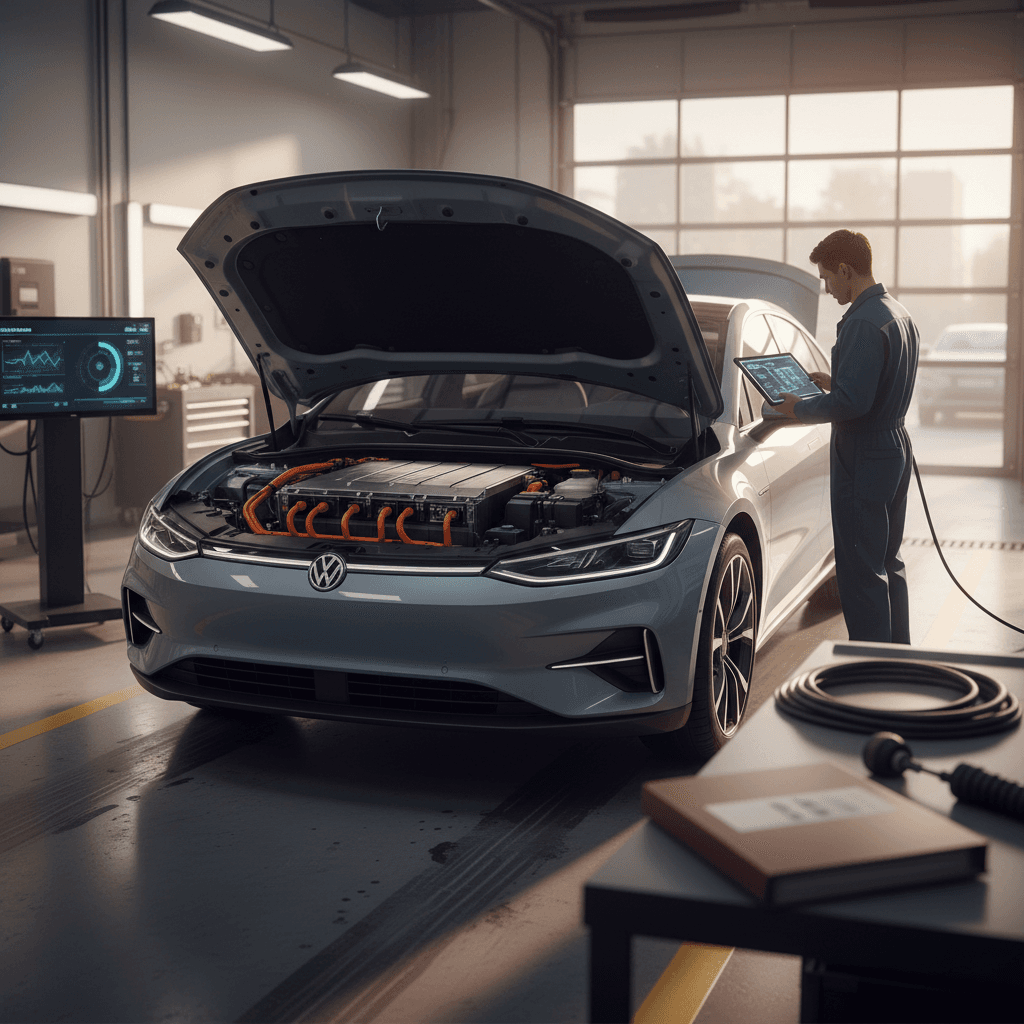
- High-voltage battery or inverter work, never open orange‑cabled components.
- Brake fluid changes and caliper teardown if you don’t already have experience and the right tools.
- Suspension and steering repairs like control arms, tie rods, and wheel bearings.
- Battery coolant service on models that require it, incorrect work can void warranties.
- Advanced diagnostics for charging faults, warning lights, or major range drops.
For complex jobs, a dealer or independent shop that specializes in EVs will save you time and reduce the risk of an expensive mistake.
Common EV maintenance mistakes to avoid
- Assuming “no oil changes” means “no maintenance” and skipping inspections for years.
- Ignoring abnormal tire wear, pulling, or vibration, often the first sign of alignment issues.
- Letting brake hardware rust in salty climates because pads still look thick.
- Running on a dirty cabin filter that stresses the HVAC fan and causes fogged windows.
- Charging habits that keep the battery at 100% for long periods, especially in hot weather.
- Delaying small software or hardware fixes until they cascade into bigger issues.
Don’t poke at high-voltage components
EV maintenance schedule FAQ
Frequently asked questions about EV maintenance schedules
Bottom line on EV maintenance schedules
A smart EV maintenance schedule is less about visiting the service bay every 12 months and more about hitting a handful of key checkpoints on time: rotate tires around 6,000–7,500 miles, inspect brakes and suspension annually, refresh cabin filters every couple of years, and test brake fluid and coolant at the long intervals your brand recommends. Do that, and you’re likely to enjoy years of quiet, low‑drama ownership.
If you’re shopping for a used EV, pairing this schedule with transparent diagnostics is even more powerful. That’s why every vehicle at Recharged includes a Recharged Score battery health report and expert support, so you can buy confidently, then maintain your EV on your terms, not on a mystery timeline someone else left behind.