If you’re shopping for an electric vehicle, an EV loan calculator is one of the most powerful tools you can use before you ever talk to a lender. It turns sticker prices into real monthly payments, helps you compare gas vs. electric costs, and shows whether that shiny new or used EV actually fits your budget.
EV prices and payments are under pressure
Why EV loans are a little different from gas-car loans
On the surface, an EV loan looks just like any other auto loan: you borrow a set amount, pay interest, and make monthly payments over a fixed term. Under the hood, though, EV financing often involves a few extra variables, tax incentives, rapidly changing used values, and big differences in fuel and maintenance costs.
- Tax incentives and rebates: Depending on when you bought or will buy, federal and state programs can reduce the effective cost of the car, which changes how much you really need to finance.
- Rapid price movement: EV prices, especially used EVs, have moved faster than traditional cars over the last few years. That can make older online advice about values and payments feel outdated.
- Fuel and maintenance savings: Gas savings don’t change your loan payment, but they absolutely affect what you can comfortably afford each month.
- Battery health: On a used EV, battery condition affects both price and financing confidence. A car with a healthier pack is usually worth more and easier to live with for the term of your loan.
Think in terms of net monthly cost
How an EV loan calculator works (and what you need to input)
An EV loan calculator takes the same core inputs as any auto loan calculator, but you’ll want to think about them through an EV lens. Here are the key fields you’ll usually see and how to approach each one.
Key EV loan calculator inputs
Get these right, and the payment estimate will be very close to what a lender offers.
Vehicle price
For a used EV, use the actual asking price, not the original MSRP. If you’re shopping on Recharged, use the listed price that already reflects market conditions and battery health.
Down payment & trade-in
Enter cash you’ll put down plus the net value of any trade-in (after paying off your current loan). Many shoppers underestimate how much a solid trade-in can lower their EV payment.
APR (interest rate)
This is the annual interest rate on your loan. If you don’t have offers yet, start with a conservative estimate based on your credit tier, then re-run the calculator when you have real quotes.
Loan term (months)
Common terms are 36, 48, 60, and 72 months. Longer terms lower the monthly payment but increase total interest paid and can leave you upside down longer.
Taxes & fees
Most EV loan calculators let you enter sales tax and estimated fees or roll them into price. Don’t forget these, they can easily add thousands to the amount you’re financing.
Incentives & credits
If you’re eligible for any remaining incentives or dealer discounts, reflect them as a reduction in price or extra down payment. For used EVs, that might include local rebates or utility incentives.
Don’t count on expired federal credits
Step-by-step: Using an EV loan calculator to set your budget
Most shoppers start with a price and then discover the payment. You’re better off flipping that. Start with the payment you can truly live with each month, then work backwards using the EV loan calculator.
7 steps to smarter EV loan calculations
1. Decide your comfortable monthly payment
Look at your current budget. Be honest about how much room you have each month after housing, insurance, and savings. Remember that fuel and maintenance savings from an EV may allow a slightly higher payment than your last gas car, but don’t stretch to the breaking point.
2. Estimate your interest rate
If you know your credit score, check typical auto loan APRs for your tier from banks, credit unions, or online lenders. If you’re not sure, use a slightly higher rate in the calculator. It’s better to be pleasantly surprised than squeezed later.
3. Choose a realistic loan term
Start with 60 months for a used EV; it’s a common balance between payment and total interest. Try 48 months to see how much you’d save in interest, and 72 months only if you absolutely need the lower payment and expect to keep the car a long time.
4. Plug in price, down payment, and trade-in
Enter the price of the EV you’re considering, your cash down, and any trade-in equity. If you’re using Recharged’s <strong>instant offer or consignment</strong> services, use the estimated value we provide as your trade-in amount.
5. Iterate until payment matches your target
Adjust vehicle price, down payment, and term until the calculated payment matches your comfort zone. This gives you a concrete price range to shop in instead of just guessing on the lot or online.
6. Add insurance and charging costs
An auto loan calculator doesn’t include insurance or electricity. Get a quick insurance quote and estimate your monthly charging cost, then add them to the payment to see the real impact on your budget.
7. Stress-test the numbers
Run a few “what if” scenarios: What if rates are 1% higher? What if you put $2,000 less down? If those scenarios break your budget, look for a lower-priced EV or plan to bring more cash to the table.
Real-world EV loan calculator examples
Let’s turn theory into something tangible. Here are simplified examples of how an EV loan calculator might shape your decision, especially when you’re comparing prices and terms on used EVs.
Sample EV loan calculator scenarios
These simplified examples assume 6.5% APR, typical taxes/fees already included in the price, and good, but not perfect, credit. Your numbers will vary based on your exact rate, taxes, and incentives.
| Scenario | EV price | Down payment | Term | Estimated monthly payment |
|---|---|---|---|---|
| Budget-friendly used EV commuter | $22,000 | $2,500 | 60 months | ~$380/month |
| Newer used crossover EV | $30,000 | $4,000 | 72 months | ~$420/month |
| Higher-priced performance EV | $40,000 | $5,000 | 72 months | ~$570/month |
Use these as rough guardrails, not guarantees. Always re-run the calculator with your actual lender offers.
Why your payment may look different
Beyond the payment: Total cost of EV ownership
A loan calculator focuses on principal and interest, but the smarter way to evaluate an electric vehicle is to look at total cost of ownership, your all-in monthly cost to drive the car. For EVs, this can look very different from a comparable gas car, even if the loan payment is higher.
1. Energy cost: electricity vs. gas
Start by comparing your current fuel bill to projected electricity costs.
- Gather your last 2–3 months of gas spending.
- Estimate your annual miles and your EV’s efficiency (mi/kWh).
- Multiply by your local electricity rate, ideally using off-peak rates if you can charge at night.
Many drivers find they save $50–$150 per month on fuel alone when switching from a traditional gas car to an EV, depending on mileage and electricity prices.
2. Maintenance and repairs
EVs typically skip oil changes, transmission service, and many wear items. You’re mostly looking at tires, cabin filters, and brake fluid.
- Compare your current maintenance spend to estimated EV maintenance.
- Factor in warranty coverage on the battery and drivetrain.
- For used EVs, check whether major coverage is still in effect.
Those lower maintenance costs may not show up in your loan calculator, but they can offset a higher payment versus an older gas car that needs regular repairs.
When a higher payment can still make sense
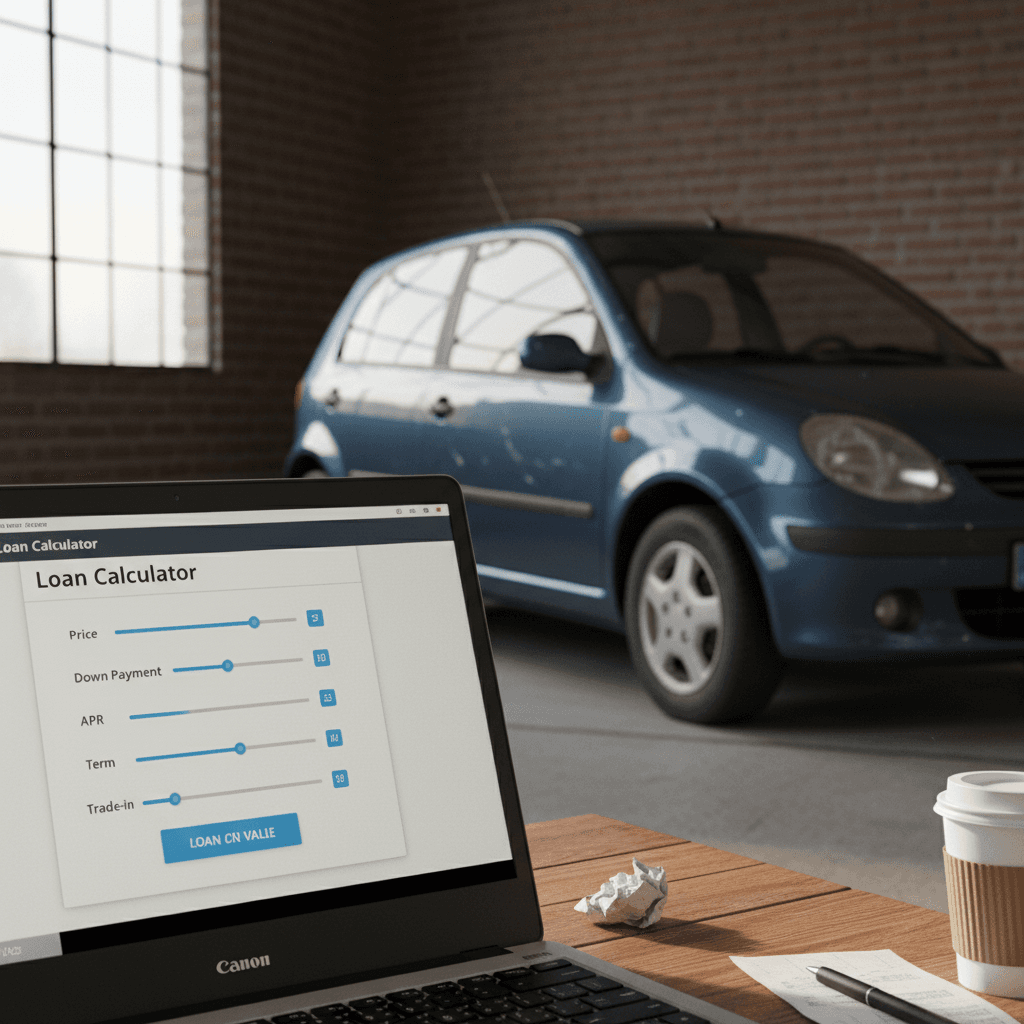
Using an EV loan calculator for used EVs at Recharged
Used EVs can be some of the best values on the road, but only if you’re confident in the battery and the pricing. That’s exactly where Recharged and an EV loan calculator work well together.
How Recharged simplifies your EV loan math
Transparent pricing, verified battery health, and flexible ways to buy or sell.
Recharged Score battery report
Every vehicle on Recharged comes with a Recharged Score Report that verifies battery health and range. That helps you understand what you’re paying for, and gives lenders more confidence in the collateral.
Fair market pricing
We analyze real EV market data so our pricing reflects current conditions, not last year’s hype. That makes your calculator inputs more accurate and reduces surprises when you apply for financing.
Flexible ways to trade or sell
Use Recharged’s instant offer or consignment options to maximize your trade-in value. A stronger trade means a smaller loan amount and a more comfortable monthly payment.
Nationwide delivery & digital process
Shop, finance, and finalize your used EV online. With nationwide delivery and an Experience Center in Richmond, VA, you can complete your purchase with clear numbers from your loan calculator in hand.
Financing support
Our EV specialists can help you understand loan terms, compare offers, and align your budget with the vehicles that fit, without the usual dealership pressure.
Plan for long-term value
Because we focus solely on EVs, we understand depreciation, incentives, and battery warranties. That knowledge helps you choose a loan term that matches how long you plan to keep the car.
Common EV loan mistakes to avoid
Even savvy shoppers can trip up when they’re excited about an EV. Here are some of the most common pitfalls I’ve seen over the years, and how your EV loan calculator can help you steer clear of them.
- Focusing only on the monthly payment instead of the total amount financed and total interest paid.
- Overestimating future tax credits or assuming expired incentives still apply to your purchase year.
- Stretching to 72–84 months just to “make the numbers work,” leaving you upside down for most of the loan.
- Ignoring insurance and charging costs when deciding how much payment you can truly handle.
- Not stress-testing the deal for rate changes or unexpected expenses.
- Skipping battery health verification on a used EV, which can impact both value and your long-term satisfaction.
Don’t finance longer than the EV’s useful life to you
EV loan calculator checklist before you apply
Before you hit “apply” on any loan, run through this quick checklist with your EV loan calculator open in another tab. It’s the closest thing you’ll find to a pre-flight checklist for your finances.
Pre-application EV loan checklist
Confirm your target price range
Based on your comfortable monthly payment, interest rate estimate, and preferred term, what price range does the calculator say you should shop in? Stay disciplined when you browse vehicles.
Know your minimum down payment
Set a personal floor for how much cash or trade equity you want to put down. More down lowers your payment and interest cost, but don’t drain your emergency fund to chase a slightly lower payment.
Verify current incentives and fees
Double-check any state or local EV incentives, utility rebates, and the latest registration or documentation fees in your area. Update the calculator with accurate figures.
Check your credit and pre-qualify
Review your credit report for errors and consider pre-qualification with a lender or marketplace. At Recharged, you can explore financing options alongside vehicles so you’re not guessing about APRs.
Compare at least two loan offers
Once you’ve run the numbers, get quotes from at least two sources, such as a credit union and the financing options available through Recharged. Plug both APRs and terms into the calculator to see the true difference.
Plan your exit strategy
Think about how long you realistically plan to keep the EV. Choose a loan term that lines up with that horizon so you’re not trapped or upside down when it’s time to move on.
EV loan calculator & financing FAQs
Frequently asked questions about EV loan calculators
An EV loan calculator won’t tell you which electric car to buy, but it will tell you whether buying it is a smart move for your finances. Use it to test different prices, down payments, and terms, then layer in fuel and maintenance savings to see the full picture. When you’re ready to put those numbers to work on a real vehicle, Recharged is here with transparent used EV pricing, verified battery health, expert guidance, and financing support to help you make a confident, well-informed decision.