If you’re eyeing a used Rivian R1T or R1S, the question that hangs in the air, right behind “how quick is this thing?”, is what Rivian warranty coverage do I actually get on a used car? Between early adopters, changing policy language, and a still‑young brand, the rules aren’t as obvious as with a mainstream SUV. Let’s slow this down and walk through how Rivian’s warranty really works when you’re the second (or third) owner.
Quick answer
Why Rivian warranty coverage matters when you buy used
Rivian builds charismatic, overachieving trucks and SUVs that live hard lives, towing, off‑roading, high‑speed DC fast charging. That’s the fantasy they sell in the ads, and owners tend to live up to it. On a used Rivian, warranty coverage is your financial roll cage against the expensive bits: high‑voltage batteries, inverters, drive units, air suspension, software‑heavy driver‑assist hardware, and so on.
- Major EV components can cost five figures out of warranty.
- Rivian is still iterating hardware and software; early builds have had recalls and updates.
- The brand is young enough that independent repair ecosystems are limited compared with Tesla or Ford.
- Warranty status can be murky if the truck has changed hands or has a complicated history (auction, fleet, salvage).
Used EV rule of thumb
Rivian factory warranty basics (for context)
First, let’s anchor on what a new Rivian gets. Exact terms can vary slightly by model year and battery pack, but for recent R1T/R1S builds the coverage looks roughly like this (for U.S. buyers):
Typical Rivian warranty coverage on new vehicles
Approximate coverage for recent model‑year R1T/R1S in the U.S. Always confirm for a specific VIN and build year.
| Coverage type | Typical term | What it generally covers |
|---|---|---|
| New Vehicle Limited ("bumper-to-bumper") | 4 years / 50,000 miles (some early Launch Editions 5yr/60k) | Most components other than normal wear items and exclusions in the warranty guide. |
| Battery & high-voltage components | 8 years / 150,000–175,000 miles, depending on pack | Traction battery pack and related high‑voltage components, against defects and excessive capacity loss per Rivian’s terms. |
| Drivetrain | 8 years / 150,000–175,000 miles | Drive units, e‑axles and related components. |
| Corrosion perforation | 8 years / unlimited miles | Rust‑through (not surface rust) of body panels. |
| Roadside assistance | 5 years from in‑service date | Towing, flat tire help, lockout, certain no‑start situations. |
Rivian’s high‑voltage battery and drivetrain are covered much longer than the basic bumper‑to‑bumper warranty.
Model-year nuance
Does Rivian warranty transfer when you buy used?
For most shoppers, this is the big one. The short version: yes, Rivian’s New Vehicle Limited Warranty (including battery and drivetrain coverage) is designed to be transferable to subsequent owners, provided the vehicle hasn’t had its warranty voided and is still within time and mileage limits.
What typically happens when a Rivian changes hands
Assuming a clean title and normal history
Factory warranty follows the truck
Rivian confirms and updates records
Where things get fuzzy is in the edge cases, launch‑edition trucks that pre‑date newer warranty language, vehicles with salvage titles, or those that have had heavy modifications. These can affect whether coverage is limited or voided, which is why you want written confirmation from Rivian before you sign anything.
When Rivian warranty may not transfer
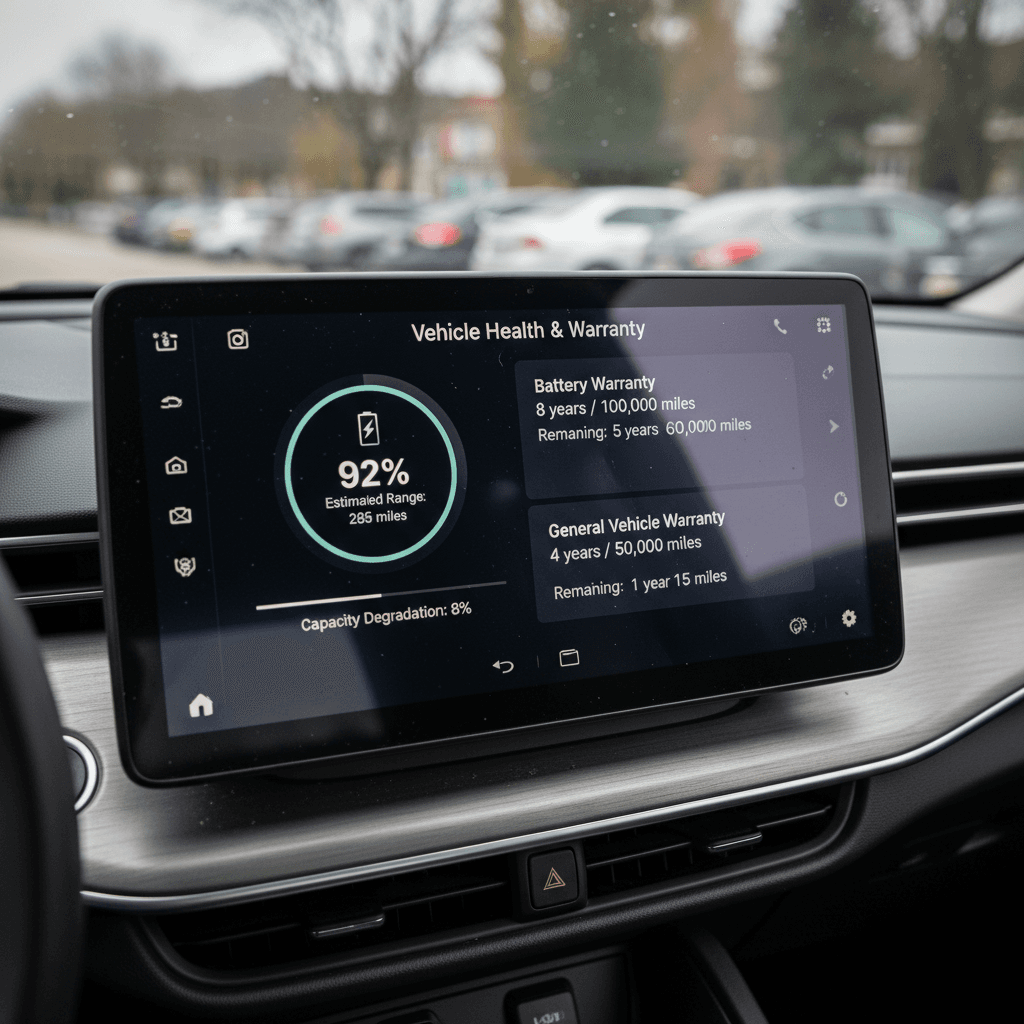
What coverage a used Rivian typically has left
Because Rivian only started delivering in late 2021, the used market is still young. Most trucks and SUVs changing hands in 2026 are only 1–4 years old, which is good news for warranty coverage.
Typical used Rivian warranty runway in 2026
The main variables you need to check for each VIN are:
- In‑service date (when the original owner took delivery).
- Actual mileage today.
- Whether it’s a Launch Edition with slightly different basic warranty term.
- Whether there’s any indication of warranty restriction or void (salvage, major modifications, buyback, etc.).
Rivian Certified Pre-Owned vs regular used
Rivian now sells a growing number of pre‑owned R1T and R1S trucks directly through its own online shop in select states. These are effectively Rivian’s version of Certified Pre‑Owned (CPO), with extra screening compared with a random dealer used lot.
Rivian CPO vs a standard used Rivian
What you get, and what you still need to check
Rivian Pre‑Owned (CPO‑style)
- 132‑point inspection carried out by Rivian technicians.
- Only clean‑title vehicles eligible.
- Factory warranty status confirmed and clearly disclosed.
- Access to Rivian service history through your account once transferred.
Think of it as the closest thing to buying new, with fewer unknowns.
Regular used (dealer or private party)
- Condition varies widely; no guaranteed Rivian inspection.
- Title issues or voided warranty are easier to miss.
- Service history can be patchy or incomplete.
- You must do your own warranty verification with Rivian.
The truck might be great, but you’re responsible for due diligence.
Where Recharged fits in
How to verify Rivian warranty coverage before you buy
Rivian’s system is digital‑first and a bit more centralized than legacy brands. That’s good for you, because it means you can usually verify warranty status before you wire a dime, as long as you have the VIN.
Step‑by‑step: Verify a used Rivian’s warranty
1. Get the full VIN and current mileage
Ask the seller for the <strong>17‑digit VIN and an odometer photo</strong>. If they hesitate, that’s its own warning light.
2. Ask for the in‑service date
The original owner (or a conscientious dealer) should know when the vehicle was first delivered. This date starts every Rivian warranty clock.
3. Contact Rivian with the VIN
Before you buy, open a Rivian account (free) and contact Rivian Support via chat, phone, or email with the VIN. Ask them to <strong>confirm remaining New Vehicle Limited and battery/drivetrain coverage</strong>, and whether there are any restrictions on that VIN.
4. Confirm title status
Run the VIN through a title‑history service and make sure there’s no <strong>salvage, rebuilt, or lemon‑law buyback</strong> branding. Any of those can sharply limit or void coverage.
5. Check for outstanding recalls and campaigns
Ask Rivian (or check NHTSA’s recall lookup) for <strong>open recalls or service campaigns</strong>. These should be handled at no cost, but they also give you a sense of the truck’s service history.
6. Get it in writing
When Rivian confirms warranty details, save the email or chat transcript. If you’re buying from a dealer or marketplace like <strong>Recharged</strong>, make sure the <strong>disclosed coverage matches Rivian’s confirmation</strong> before you sign.
Ask the right question
Common pitfalls and fine print to watch for
Rivian’s warranty is generous, but not infinite. A few repeating patterns show up when used buyers run into trouble, and they’re worth knowing before you commit.
- Salvage and branded titles – Like most OEMs, Rivian can severely limit or void coverage once a vehicle is declared a total loss or has a branded title.
- Abuse, racing, or extreme modifications – Lift kits, non‑approved wheels/tires, hacked software, or aftermarket power mods can give Rivian grounds to deny related claims.
- NVH and “adjustment” coverage changes – More recent warranty booklets explicitly exclude some noise, vibration and harshness complaints from basic coverage, and add a shorter 12‑month adjustment period for certain issues.
- Commercial or fleet use – If an R1T has lived a hard commercial life (fleet, rentals, heavy towing every day), expect closer scrutiny on big claims, even if the clock says you’re still inside the warranty window.
Don’t rely on a salesperson’s memory
How Recharged handles Rivian battery health and warranty
Used EVs live or die on two things: battery health and warranty reality. At Recharged, we treat both as first‑class citizens, not fine print in the last paragraph of the listing.
Buying a used Rivian through Recharged
How we de‑risk the experience for you
Recharged Score battery health
Verified warranty + pricing
Nationwide, EV‑first support
If you’re coming out of a traditional pickup or SUV, having someone translate Rivian‑speak, battery degradation curves, OTA recalls, transfer timelines, into plain English is worth as much as the warranty itself.
Used Rivian warranty checklist before you sign
One-page checklist: Rivian warranty on a used car
Confirm clean title status
Verify there’s <strong>no salvage, rebuilt, or lemon‑law brand</strong> on the title. If there is, assume reduced or voided warranty unless Rivian explicitly says otherwise.
Get in‑service date & mileage
These two numbers tell you how much of the <strong>basic and high‑voltage coverage</strong> is realistically left.
Have Rivian confirm coverage
Contact Rivian with the VIN and request a <strong>written confirmation</strong> of remaining New Vehicle Limited and battery/drivetrain warranty, and any limitations.
Ask for service and recall history
Look for evidence that <strong>prior recalls and campaigns were completed</strong>, and that the truck got software updates on a regular basis.
Assess battery health independently
Use a marketplace like <strong>Recharged</strong> that provides <strong>third‑party battery health diagnostics</strong> so you’re not just guessing from estimated range.
Plan for the end of coverage
Decide now whether you’ll <strong>sell before the warranty expires</strong>, budget for repairs, or shop for a reputable extended EV warranty product. Don’t wait until year 7 to think this through.
FAQ: Rivian warranty coverage on used cars
Frequently asked questions about used Rivian warranty coverage
Bottom line: Is a used Rivian a safe bet?
If you understand how Rivian warranty coverage works on a used car, a pre‑owned R1T or R1S can be a smart way to get maximum adventure per dollar. The 8‑year battery and drivetrain coverage means many used trucks still have years of protection left; the risk lies in the gray areas, title issues, policy changes, and the occasional hard‑lived example.
Go in with eyes open: verify the VIN with Rivian, insist on real battery‑health data, and match remaining coverage to how long you plan to keep the truck. Whether you buy from Rivian’s own pre‑owned program, a private seller, or a marketplace like Recharged, treating warranty and battery as primary buying criteria, not afterthoughts, will make the difference between a great used EV story and a very expensive lesson.