When people talk about an EV lithium battery, they’re almost always talking about a modern lithium‑ion pack that can move thousands of pounds of car for years with little maintenance. If you’re thinking about buying a new or used EV, understanding how these batteries work, how long they last, and what’s coming next will help you make a smarter decision, and avoid a lot of anxiety.
EV batteries today are nothing like your phone
What is an EV lithium battery?
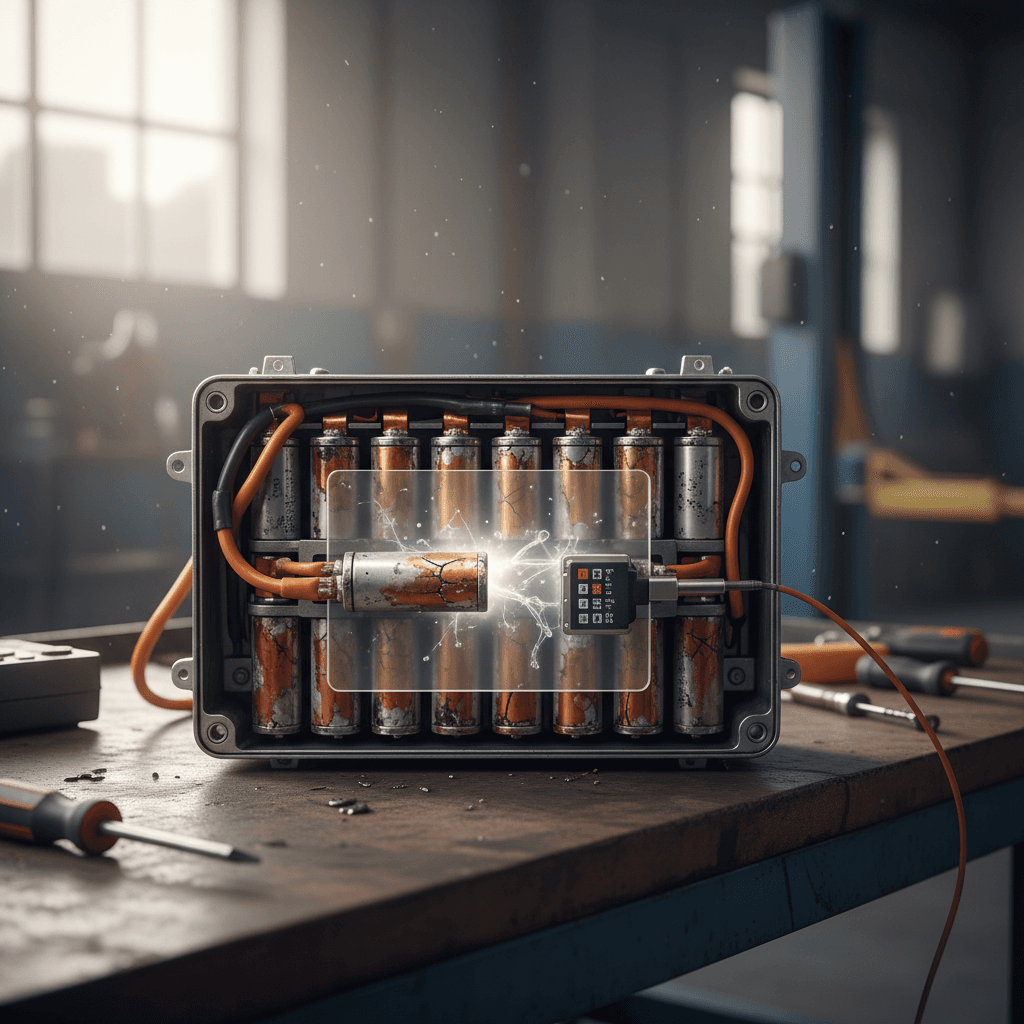
An EV lithium battery is a large pack of lithium‑ion cells that stores electrical energy and delivers it to the motor. Inside the pack are hundreds or thousands of individual cells, grouped into modules, all monitored and managed by a battery management system (BMS) that controls charging, discharging, and temperature.
1. The chemistry
Most EVs on the road today use some variant of lithium‑ion chemistry. Lithium ions shuttle between a cathode (positive electrode) and an anode (negative electrode) through an electrolyte. Different cathode materials, like nickel‑manganese‑cobalt (NMC) or lithium‑iron‑phosphate (LFP), change how the battery behaves in terms of range, cost, and durability.
2. The pack as a system
The pack isn’t just cells in a box. It includes cooling channels, sensors, contactors, fuses, and a BMS that keeps everything in a safe operating window. That system‑level design is why EV batteries can survive years of road salt, potholes, and fast charging with very little attention from you.
Think of it like a gas tank plus engine
Key EV lithium battery chemistries: NMC, LFP, and more
Not all EV lithium batteries behave the same. Automakers choose different chemistries based on cost, range targets, and how they expect you to use the vehicle. The two big families you’ll hear about are NMC/NCA and LFP.
The main EV lithium chemistries you’ll encounter
Knowing which chemistry your EV uses helps you set realistic expectations for range, charging, and longevity.
NMC / NCA
Where you see it: Many long‑range and performance EVs.
- High energy density → more range per pound
- Great for large packs and fast highway cruising
- Somewhat more sensitive to heat and fast charging
LFP (Lithium‑iron‑phosphate)
Where you see it: Many newer base‑range models and some Chinese brands.
- Lower cost per kWh
- Very long cycle life, often thousands of charge cycles
- Can usually be charged to 100% more often with less concern
Emerging chemistries
Examples: high‑nickel cells, sodium‑ion, semi‑solid.
- Target even higher energy density or lower cost
- Still rolling out at limited scale
- You’ll mostly encounter these in newer, niche models for now
NMC vs LFP EV lithium batteries at a glance
This is a high‑level comparison, exact specs vary by manufacturer and pack design.
| Attribute | NMC / NCA | LFP |
|---|---|---|
| Typical use | Long‑range, performance EVs | Base trims, cost‑focused EVs, some fleet vehicles |
| Energy density | Higher → more range | Lower → slightly less range for same size pack |
| Cost per kWh | Higher today | Lower today |
| Cycle life | Good | Very high |
| Cold weather | Generally better | Can lose more power until warmed up |
| Charging to 100% daily | Best to avoid | Generally more tolerant |
| Safety behavior | Requires robust management | Very stable; lower fire risk profile |
NMC and LFP are both lithium‑ion chemistries, but with different trade‑offs that matter when you’re choosing an EV.
Don’t obsess over chemistry labels
How long do EV lithium batteries really last?
If you’re coming from phones or laptops, it’s natural to worry that an EV lithium battery will be a ticking time bomb. The data we have in 2024–2025 tells a very different story.
What real‑world data says about EV lithium battery life
In practical terms, that means a 250‑mile EV might still deliver around 225–230 miles of real‑world range after a decade, assuming normal use. That’s very different from the horror‑story scenarios that floated around a decade ago.
Good news for used EV shoppers
Ready to find your next EV?
Browse VehiclesWhat actually causes EV battery degradation?
Lithium‑ion cells don’t suddenly “wear out” one day; they slowly lose usable capacity and power. The chemistry is complex, but the main drivers of degradation are straightforward and, crucially, most are under your control.
- Time at high state‑of‑charge (SoC) – Parking at 100% for days on end is harder on many chemistries than simply charging to 80–90% for daily driving.
- High temperatures – Heat accelerates chemical reactions that age cells. That’s why pack cooling design matters so much, and why you’ll see more degradation in very hot climates if the pack isn’t well managed.
- Frequent, hard fast‑charging – DC fast charging is safe when the pack and BMS are designed for it, but hammering a pack from low to 100% at peak rates every single day will accelerate wear.
- Deep cycles – Regularly going from near‑empty to near‑full strains cells more than cycling within a moderate band (for example 20–80%).
- Manufacturing and design choices – Cell quality, pack cooling architecture, and how conservative the software is all influence how fast a given EV’s battery ages.
Simple habits that help your EV lithium battery last longer
1. Avoid sitting at 100% for no reason
Charge to full before a trip, not days in advance. For daily commuting, 70–90% is plenty for most drivers unless you have a very long route.
2. Park in the shade or a garage when possible
Heat is the enemy. Even small changes, like using covered parking at work, add up over years.
3. Use fast charging strategically
Fast chargers are great tools, especially for road trips. Just don’t treat them as your everyday fuel pump if you have home or workplace charging options.
4. Let the car manage preconditioning
Most modern EVs will warm or cool the pack before fast charging if you navigate to a charger in the built‑in nav. Take advantage of that; it reduces stress on the cells.
5. Keep software up to date
Automakers continually refine battery management via over‑the‑air updates. Staying current can improve longevity, charging behavior, or both.
Don’t panic about every fast charge
EV lithium battery safety and fire risk
Lithium‑ion fires make dramatic headlines, and no battery chemistry is completely risk‑free. But context matters: per mile traveled, EV fire risk compares favorably with gasoline vehicles, which carry gallons of highly flammable liquid.
How packs are engineered for safety
- Robust enclosures: Packs are bolted into the vehicle structure, designed to survive serious crashes.
- Cell isolation: Internal separators and cooling channels help limit any thermal issue to a small area.
- Battery management system: The BMS constantly watches voltage, temperature, and current, and will shut things down if something looks abnormal.
- Chemistry choices: LFP packs, in particular, have a more stable chemistry with a lower tendency toward thermal runaway.
What you can do as an owner
- Avoid physical damage: Don’t ignore underbody impacts or collision warnings, have the pack inspected.
- Use approved charging equipment: Stick to properly installed outlets and certified EVSEs.
- Follow recall notices: If your automaker issues a battery‑related recall or software update, take it seriously and respond quickly.
- Watch for warning messages: If the car flags a high‑voltage system issue, don’t keep driving for days hoping it goes away.
Why pack damage matters
Recycling and second-life uses for EV lithium batteries
EV critics used to argue that we’d hit a wall of dead packs with no place to go. In reality, the industry is building out both second‑life uses and recycling capacity as EV adoption grows.
- Second‑life stationary storage: A pack that’s down to 70–80% of its original capacity may not be ideal for a long‑range highway EV anymore, but it can still deliver huge value in stationary applications, buffering solar power, supporting the grid, or backing up buildings.
- Recycling for materials: Modern hydrometallurgical and pyrometallurgical processes can recover a large share of key materials, lithium, nickel, cobalt, copper, and more, for use in new batteries.
- Policy momentum: The U.S., EU, and China are all tightening rules around battery traceability and recycling, pushing the industry toward higher recovery rates and more closed‑loop supply chains.
- Lower future dependence on mining: As more EV lithium batteries reach end‑of‑life, recycled material becomes a more meaningful part of the supply for new packs. That’s a critical long‑term sustainability lever.
What this means for used EV buyers
Solid-state and next‑gen EV batteries: Hype vs reality
If you follow EV news, you’ve seen bold claims about solid‑state EV lithium batteries: ultra‑fast charging, massive range, and dramatically improved safety. There’s real substance behind the hype, but timelines matter if you’re deciding whether to buy an EV now or wait.
Where next‑generation EV lithium batteries are headed
Solid‑state and other advanced designs are coming, but they won’t make today’s EVs obsolete overnight.
Solid‑state prototypes
Major players, including Toyota, Nissan, Mercedes partners, BYD, and others, plan pilot or early production solid‑state batteries between 2025 and 2028, often in limited‑run or high‑end vehicles first.
Gradual ramp, not a cliff
Even optimistic roadmaps point to late‑2020s demonstration fleets and early 2030s mass adoption. Conventional lithium‑ion packs will dominate new EV sales for years.
Cost and complexity hurdles
Solid‑state production is expensive and technically challenging. Automakers are also improving today’s liquid‑electrolyte lithium‑ion, especially lower‑cost LFP, alongside solid‑state R&D.
Buy the EV you need, not the press release
"The real revolution isn’t a single miracle chemistry, it’s the steady, boring progress in cost, durability, and supply chains that make EV lithium batteries a safe bet for everyday drivers."
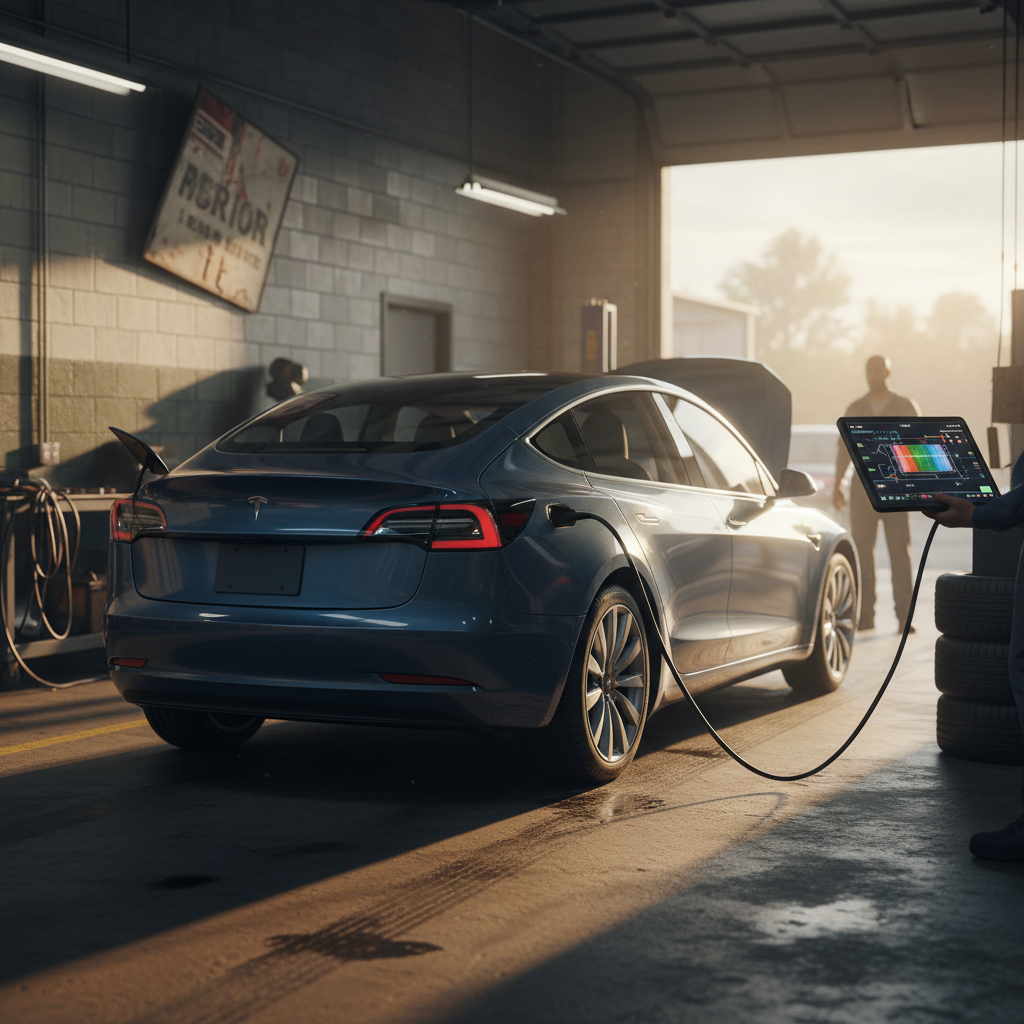
Checking EV battery health when you buy used
For most shoppers, the biggest question around an EV lithium battery is simple: “Am I about to inherit someone else’s problem?” The good news is that with modern diagnostics, you don’t have to guess.
Battery‑focused checklist for used EV buyers
1. Look for a quantified battery health report
A generic “looks fine” from a seller isn’t enough. You want a state‑of‑health estimate based on actual pack data. Recharged includes a Recharged Score Report with verified battery health on every vehicle we sell.
2. Check remaining factory battery warranty
Many OEMs warranty their main traction battery for 8 years and a set mileage (often 100,000+ miles). Knowing what’s left can give you a baseline safety net.
3. Review charging and usage history if available
Fleet or lease vehicles with heavy fast‑charging use aren’t automatically bad, but patterns matter. Consistent abuse in hot climates is more concerning than mixed use in moderate conditions.
4. Inspect for physical damage or high‑water events
Look for evidence of underbody impacts, flood damage, or major structural repairs that might have affected the pack. This is where a trusted inspection, or buying from a specialized EV marketplace, really matters.
5. Take a range‑focused test drive
Reset a trip meter, drive a known route, and see whether the energy use and remaining range feel consistent with the pack size and EPA rating. It won’t give you lab‑grade data, but it will reveal obvious outliers.
6. Consider your own usage realistically
A pack that’s lost 10–15% of its original capacity might be a non‑issue if you mostly do short commutes, but a deal‑breaker if you’re replacing a long‑range road‑trip vehicle.
How Recharged fits in
FAQ: EV lithium batteries
Frequently asked questions about EV lithium batteries
The bottom line on EV lithium batteries
EV lithium batteries have moved from experimental technology to mature industrial product. The dominant chemistries, NMC, NCA, and LFP, each have their trade‑offs, but they all support hundreds of thousands of miles of real‑world driving with modest, predictable degradation. Safety is managed at the system level, recycling and second‑life markets are growing, and next‑gen designs like solid‑state are on the horizon without making today’s cars obsolete.
If you’re considering a used EV, your focus shouldn’t be on theoretical horror stories, it should be on the specific battery in the specific car you’re buying. That’s exactly why Recharged pairs every vehicle with a Recharged Score Report, battery health diagnostics, and EV‑savvy support from start to finish. When you treat the battery as a long‑lived asset instead of a mystery box, an electric vehicle becomes one of the most transparent, predictable purchases you can make.