If you’ve heard that EV insurance cost vs gas car isn’t pretty, you’re not imagining it. On average in the U.S., insuring an electric car still costs more than insuring a comparable gas vehicle, but that headline hides a lot of nuance, especially if you’re looking at safer mainstream EVs or buying used.
Key context for 2026
EV insurance vs gas: the 2026 bottom line
At-a-glance: EV vs gas insurance and ownership
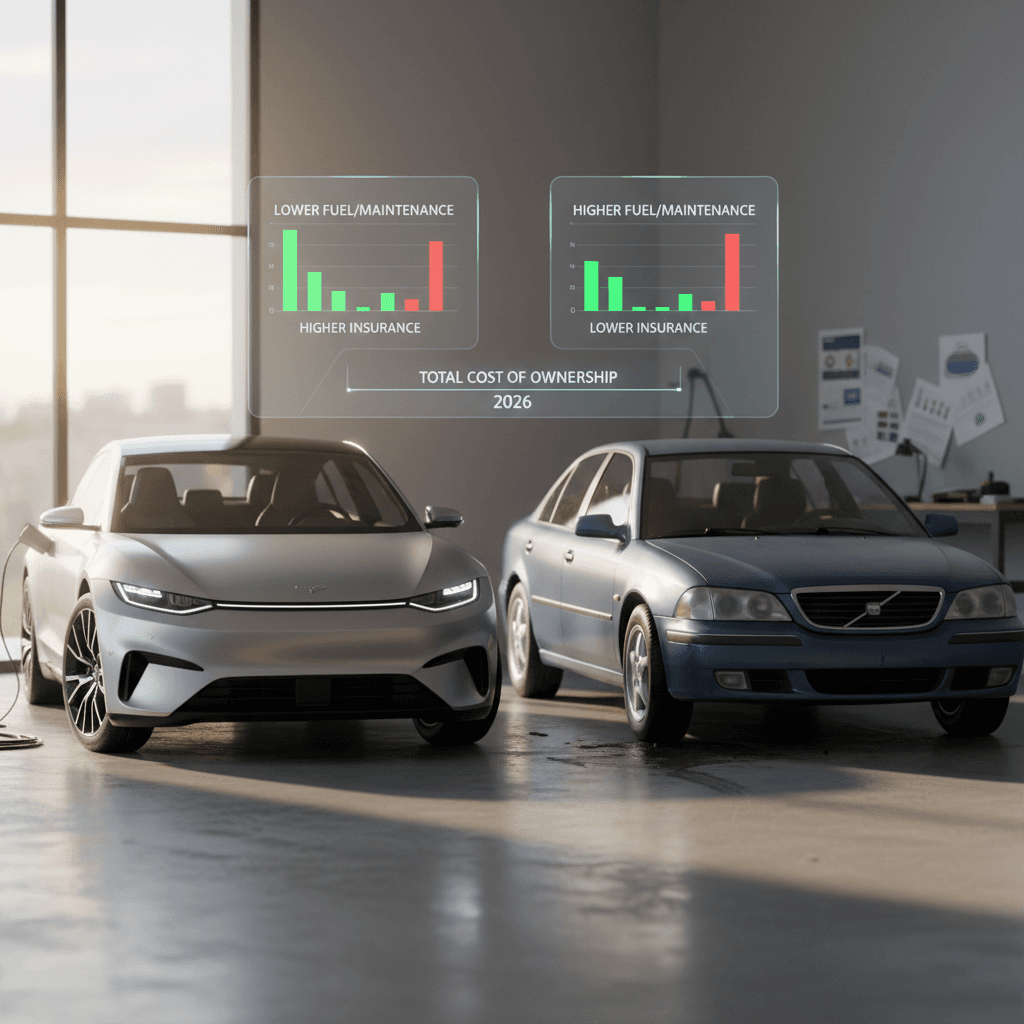
So yes, insuring an EV usually costs more today, but fuel and maintenance savings are large enough that total ownership costs often still favor the EV, especially if you’re not buying a six‑figure luxury model. The trick is understanding why insurance looks the way it does, and which levers you can pull to shrink that gap.
How much do EVs cost to insure today?
Exact numbers vary by driver, state, and carrier. But looking at recent nationwide data sets, you can sketch a realistic range for full‑coverage policies in 2024–2026 for a typical 30‑ to 40‑year‑old driver with a clean record in the U.S.
Beware of scary national averages
In other words, the spread is wide. A new, high‑performance EV in a high‑cost state can be dramatically more expensive to insure than a basic gas sedan. A used mainstream EV in a low‑cost state might only be a few dollars a month more, or even less, if the gas comparison car is theft‑prone or crash‑prone.
Why are EV insurance costs often higher?
Total loss vs. battery replacement
When EV insurance can match or beat gas
The averages are only half the story. Once you look at specific models and trims, you start seeing pockets where EV insurance is at or near parity with gas cars, and a few cases where it’s actually cheaper.
Safer, mainstream EVs vs thirsty gas crossovers
Compare a well‑rated compact EV crossover to an equivalent gas model:
- The EV may have better crash scores and more standard active safety features.
- Owners often drive fewer annual miles, lowering exposure.
- Gas crossovers are some of the most‑crashed and most‑stolen segments in the market.
The result? Premiums that are only slightly higher for the EV, or, in some insurer datasets, actually a bit lower.
Model twins where data favors the EV
Several studies have compared EVs directly with their gas siblings (for example, electric vs gas versions of the same nameplate). In a few cases, like some electric pickups and crossovers, the EV version is similar or even cheaper to insure because:
- Driver demographics skew older and more cautious.
- Safety tech bundles differ between trims.
- Claim severity hasn’t spiked the way actuaries feared.
These aren’t universal truths, but they’re a reminder that model‑level details matter more than the powertrain label.
Good news for used EV shoppers
Case study: 10‑year cost EV vs gas (including insurance)
To understand whether higher EV insurance is a deal‑breaker, you need to zoom out to total cost of ownership (TCO): purchase price, depreciation, fuel, maintenance, and insurance over time. Let’s walk through a simplified 10‑year example for a U.S. driver doing 15,000 miles per year.
Illustrative 10‑year cost comparison: mainstream EV vs gas car
Rough, rounded numbers based on recent TCO fact sheets and market data. Actual costs vary by model, state, energy prices, and financing.
| Category (10 years, 15k mi/yr) | EV estimate | Gas car estimate | EV vs gas |
|---|---|---|---|
| Fuel/energy | $8,000 | $15,000 | EV saves ≈$7,000 |
| Maintenance & repairs | $4,600 | $12,000 | EV saves ≈$7,400 |
| Insurance | $16,000 | $14,000 | EV pays ≈$2,000 more |
| Other ownership costs (taxes, fees, finance, etc.) | Similar range | Similar range | Depends on incentives & financing |
| Total (fuel + maintenance + insurance only) | ≈$28,600 | ≈$41,000 | EV still ≈$12,000 ahead |
Even with higher insurance, fuel and maintenance savings can leave the EV ahead or close to even over 10 years.
How to interpret this math
Used EVs, insurance, and total cost of ownership
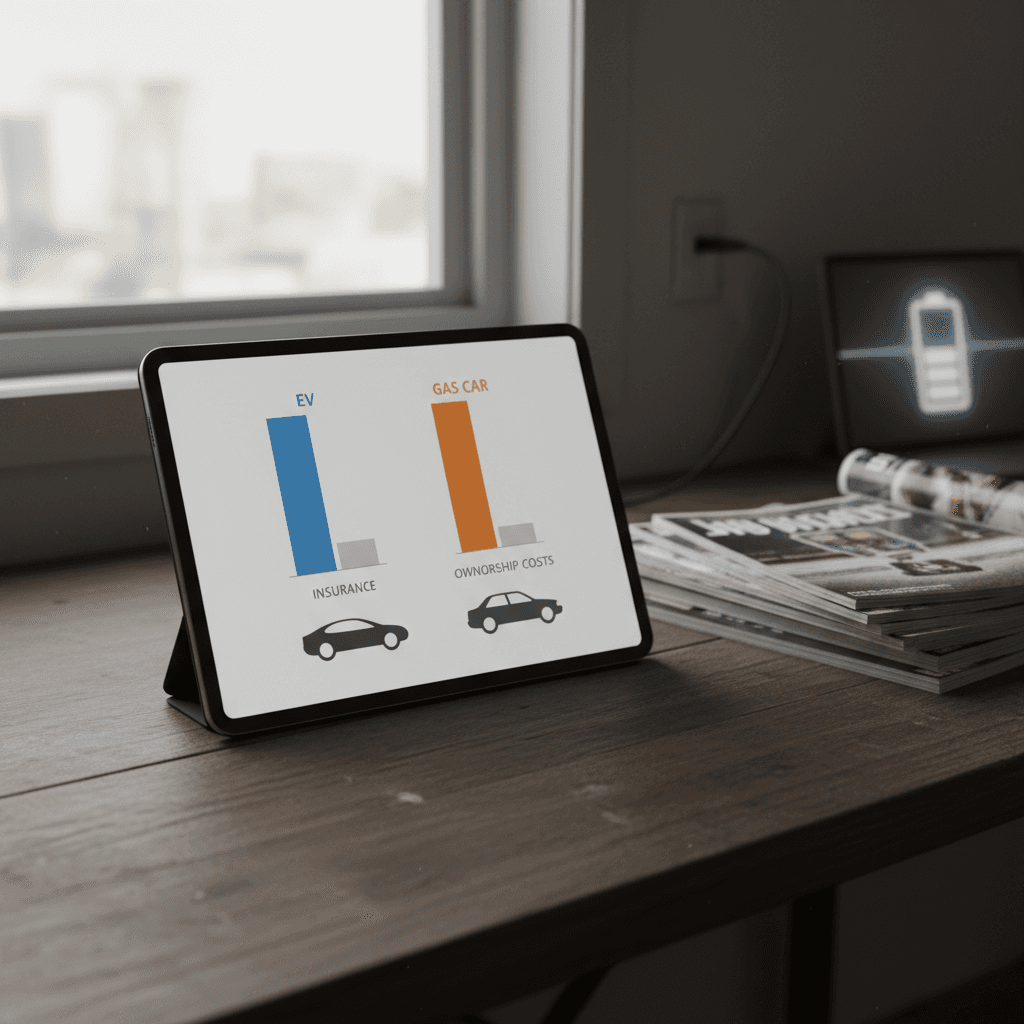
If you’re looking at a used EV, the equation changes again, and usually in your favor. Used purchase prices have fallen significantly relative to new EVs and to late‑model gas cars, which reduces both your financing burden and the maximum claim size insurers are on the hook for.
Why used EVs can be easier on insurance
- Lower vehicle value than a new EV, which caps many claim payouts.
- Early depreciation is already baked in, so you’re not insuring a rapidly falling asset.
- Insurers have more real‑world loss data for popular used EVs (like Chevy Bolt, Nissan Leaf, Model 3), which can tamp down “unknown risk” surcharges.
Things to watch on used EVs
- Battery health: A degraded pack can lower the car’s value (and thus premiums), but an unanticipated failure out of warranty is a big repair risk for you.
- Out‑of‑network repairs: Some older EVs are supported by fewer dealer or independent shops.
- Prior damage: Poor repairs to the battery structure or high‑voltage system can make a car harder to insure or more likely to be totaled.
Where Recharged fits in
How to lower EV insurance costs
Practical steps to bring EV premiums down
1. Choose the right EV model
Insurance is model‑specific. Before you buy, get quotes on two or three EVs and their gas equivalents. Safer, mainstream models with moderate repair costs tend to insure much better than low‑volume, high‑performance EVs.
2. Right‑size your coverage
Full coverage is wise on a newer or financed EV, but you can adjust deductibles, rental coverage, and optional add‑ons. Make sure your limits are responsible, then <strong>tune the extras</strong> instead of blindly mirroring your last gas policy.
3. Shop multiple carriers
Some insurers are still wary of EVs; others actively court them and price more aggressively. Always compare at least three quotes, and re‑shop after your first policy term, once there’s clean EV driving history on file.
4. Leverage safety & telematics programs
Many EV drivers are tech‑savvy and drive predictable commute patterns, which can be perfect for <strong>usage‑based insurance</strong>. Safe‑driver programs or mileage‑based plans can materially narrow the EV–gas premium gap.
5. Improve your overall risk profile
The fundamentals still matter more than the badge: clean driving record, good credit (where allowed), secure garaging, and avoiding high‑risk usage like delivery work will all do more for your premium than the fuel you put in the car.
6. Think total monthly cost, not just premium
When you compare a used EV from Recharged against a similar gas car, account for <strong>payment + insurance + energy</strong>. A slightly higher premium can be a smart trade if your monthly fuel spend drops sharply.
Bundle and timing hacks
EV insurance myths vs reality
Common EV insurance myths, checked against reality
The truth is more boring, and more manageable, than the headlines.
Myth: EVs are "uninsurable" or always double the cost
Myth: It’s all about battery fire risk
Myth: An at‑fault crash means your EV will be totaled
Myth: Higher insurance wipes out EV savings
Is an EV still worth it financially?
From a pure cost‑of‑ownership standpoint, the question isn’t “Are EVs more expensive to insure than gas cars?”, we know the answer is usually yes. The real question is whether higher EV insurance cost vs a gas car outweighs the EV’s fuel and maintenance advantages in your specific situation.
EV likely wins
- You drive 10,000–15,000+ miles per year.
- You can charge affordably at home or work.
- You choose a mainstream, safe EV rather than a halo performance car.
- Your local electricity prices are reasonable and gas prices are volatile.
Too close to call
- You drive relatively few miles per year.
- You rely mostly on public DC fast charging at retail rates.
- Your state has very high EV premiums or limited repair options.
- You’re cross‑shopping a discounted gas car with cheap parts and a long reliability record.
Gas may still be cheaper
- You drive very little and live where electricity is expensive and gas is cheap.
- The only EVs that fit your needs are high‑priced, low‑volume models.
- Your insurer quotes unusually high EV premiums even after shopping around.
If you’re leaning toward a used EV, the economics have never been more interesting: falling used prices, lower running costs, and slowly normalizing insurance all work in your favor. With Recharged, you get transparent battery health data, fair pricing, and expert support to compare total monthly cost, payment, energy, and yes, insurance, against a comparable gas car so you can decide with your head, not just your gut.