If you’re trying to make sense of EV incentives in Texas in 2026, you’re not alone. After a flurry of policy changes in late 2025, many of the headline federal EV tax credits are gone or heavily constrained, but there’s still real money on the table if you know where to look, especially for Texans considering a used EV and home charging.
First, a quick reality check
Texas EV incentives in 2026 at a glance
Key incentive numbers Texas EV shoppers should know (2026)
The details vary by where you live and what you’re buying, but if you play your cards right in Texas in 2026 you can still knock thousands of dollars off the true cost of going electric, especially when you combine incentives with depreciation savings on a high-quality used EV.
What changed after 2025? The federal credit reset
Most of the online advice you’ll find about EV incentives still assumes the full Inflation Reduction Act (IRA) credit structure, but that picture changed dramatically in late 2025 and early 2026. For Texans shopping today, it’s crucial to separate what used to be true from what’s still available.
- The broad federal new EV tax credit (up to $7,500) effectively ended for vehicles acquired after September 30, 2025, except for a very narrow set of low-volume models that still qualify under a manufacturer cap in 2026.
- The federal used EV tax credit (up to $4,000) also ended for vehicles acquired after September 30, 2025, so there is no general used-vehicle federal credit for 2026 purchases.
- The so‑called “lease loophole” that let leasing companies claim the commercial EV credit and pass the value through to lessees closed after September 30, 2025.
- However, the federal home charging equipment tax credit survived the changes and remains available through June 30, 2026 for qualifying installations.
Don’t assume your friend’s 2024 deal still exists
Statewide Texas EV incentives in 2026
Unlike some states, Texas doesn’t shower EV buyers with dozens of programs. Instead, it runs a single, relatively straightforward program at the state level: the Light-Duty Motor Vehicle Purchase or Lease Incentive Program (LDPLIP) under the Texas Emissions Reduction Plan (TERP). In 2026, this is the main state-level EV incentive to know.
Texas state EV program snapshot (2026)
Active statewide programs that can support EV adoption in 2026.
| Program | Type | Who it’s for | Benefit (typical) | Key dates / notes |
|---|---|---|---|---|
| TERP Light-Duty Motor Vehicle Purchase or Lease Incentive Program (LDPLIP) | Rebate (after purchase) | Texas residents and fleets buying or leasing a new qualifying light-duty alternative fuel vehicle, including battery electric | Up to about $2,500 per eligible EV (exact amount and caps set by rulemaking) | Applies to qualifying vehicles first titled in Texas on or after Sept 1, 2025; applications accepted while funding lasts, with final CNG/LPG deadlines running into 2026 |
| Other TERP programs (e.g., for fleets, charging infrastructure pilots) | Grants, credits | Mainly commercial fleets, public entities, and infrastructure operators | Varies by program; can be substantial but not usually for individual retail buyers | Programs open and close on their own timelines, relevant if you’re installing public or workplace charging, not just buying a personal EV |
Always confirm current funding and rule changes on official Texas state websites before you buy, programs can close early when money runs out.
How to approach the Texas TERP incentive
At a practical level, if you’re a Texas retail buyer in 2026, the TERP LDPLIP program is most likely to help if you’re purchasing or leasing a new EV from a dealer that’s familiar with the process and can help you assemble the right documentation. For used EVs, you’ll be leaning more on utility programs and home charging incentives, plus the natural price advantage of buying used.
Local utility EV rebates and programs in Texas
Where Texas really starts to look more generous is at the utility level. Many electric utilities in the state, especially municipal utilities and co‑ops, offer rebates or special rates to encourage EV adoption and off‑peak charging. These don’t always make headlines, but they can be worth as much as (or more than) the old federal credits over the life of the car.
Examples of utility EV programs in Texas (2025–2026)
Exact terms vary and can change, always check your local utility before you buy.
Austin Energy
For customers in the Austin Energy service area:
- Home Level 2 charger rebate that typically covers around 50% of purchase and installation costs, up to a program cap (often in the ~$1,200 range).
- Plug-In EVerywhere network pass for affordable public Level 2 charging across the city.
- Power Partner EV managed charging program that pays you to let the utility shape your charging schedule.
In 2026, these programs make it dramatically cheaper to install a fast home charger and charge off‑peak.
El Paso Electric (Take Charge TX)
In El Paso Electric’s Texas territory, the approved EV-Ready pilot includes:
- Take Charge TX – a charging-as-a-service offer that helps with on-site infrastructure for public charging.
- EV Smart Rewards – a managed charging program with monthly bill credits for overnight charging.
These help if you’re in West Texas and want predictable charging costs.
Other municipal & co‑op utilities
Scattered across Texas, you’ll see smaller programs such as:
- One‑time rebates for purchasing a home Level 2 charger.
- Time‑of‑use (TOU) rates that make overnight charging much cheaper than daytime energy use.
- Occasional pilot programs offering bill credits for enrolling your charger in managed charging.
Ask your local provider directly, programs change more often than state or federal incentives.
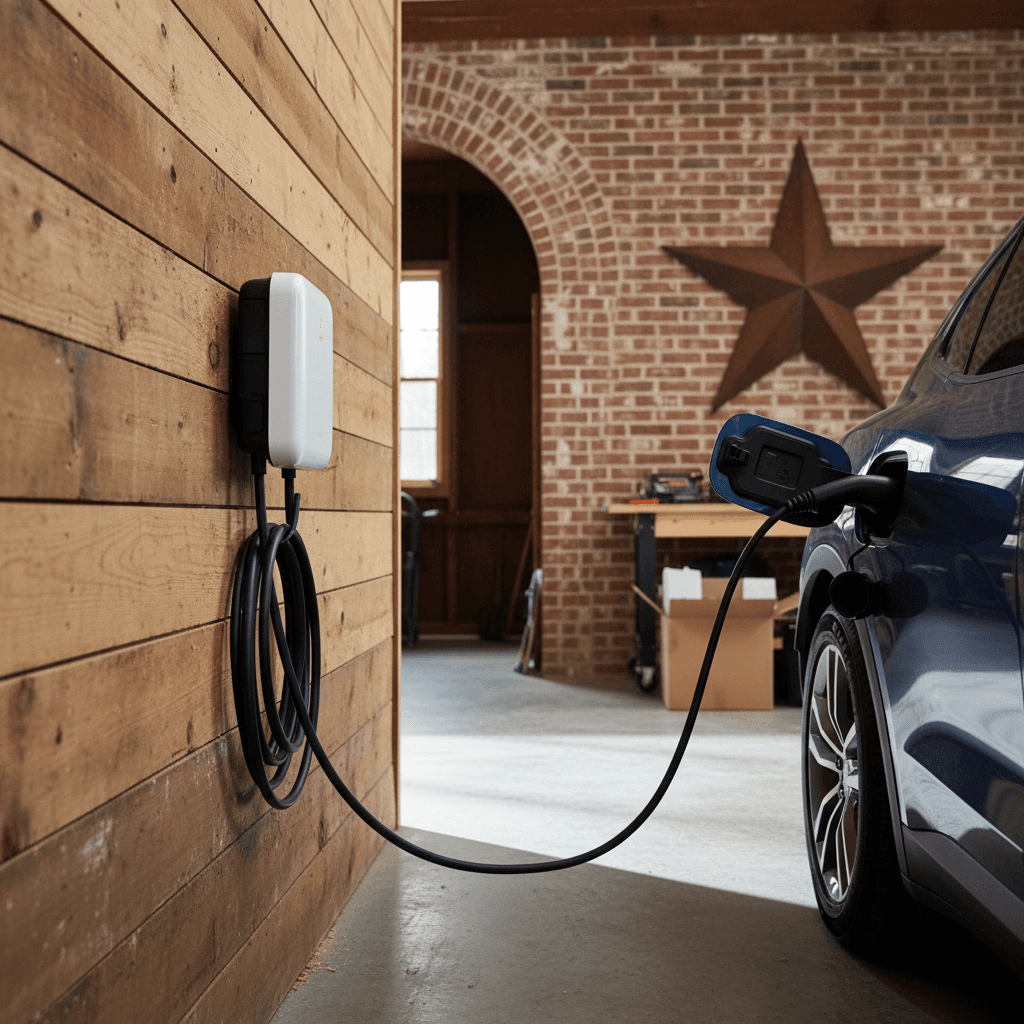
Why home charger incentives matter more than you think
Federal incentives you can still use in 2026
For 2026, think of federal incentives in two buckets: what’s gone for most people, and what you can still realistically capture as a Texas driver.
Mostly gone in 2026
- New EV credit: Generally unavailable for vehicles acquired after Sept 30, 2025, except for a tiny handful of low‑volume models that still fall under an annual cap.
- Used EV credit: Ended for vehicles acquired after Sept 30, 2025, so 2026 used purchases don’t qualify.
- Lease pass‑through deals: Lessors can no longer routinely claim commercial credits and pass them through as discount on consumer leases.
Still in play for Texans
- Home EV charger tax credit: A 30% federal credit on the cost of qualified charging equipment and installation, up to a dollar cap, for property placed in service through June 30, 2026.
- Some commercial and fleet incentives: Still relevant if you run a business, a fleet, or install public chargers.
- Carryover of 2025 purchases: If you bought an EV before Sept 30, 2025 and didn’t claim the credit at purchase, you may still be able to claim it on your 2025 return, but that’s about last year’s car, not a 2026 deal.
Steps to use the federal home charger tax credit in 2026
1. Confirm your timeline
Make sure your charger and related electrical work will be <strong>completed and placed in service</strong> no later than June 30, 2026. If your contractor is booking months out, you don’t want to cut this close.
2. Choose qualifying equipment
Stick to a mainstream Level 2 charger from a recognized brand with clear documentation that it qualifies for the federal EVSE credit. Many models market this explicitly in their product descriptions.
3. Keep every invoice
Save itemized invoices for hardware and installation, including panel upgrades and wiring that are strictly necessary for the charger. You’ll need these totals to calculate your 30% credit amount, subject to caps.
4. Coordinate with your utility rebate
If your utility offers a home charger rebate, you’ll typically calculate the federal credit based on your <strong>out‑of‑pocket cost</strong> after rebates. Clarify this with your tax professional to avoid double-counting.
5. File the right IRS form
At tax time, you’ll report the charger credit on the IRS form designated for residential clean energy and EVSE property (this has shifted over the years, check current IRS instructions or work with a professional).
How EV incentives work for used EV buyers in Texas
By 2026, the center of gravity in the EV market has shifted toward used EVs, particularly in states like Texas where direct purchase subsidies have pulled back. The good news is that this shift actually plays to the strengths of a used-focused retailer like Recharged.
- There is no broad federal used EV tax credit for vehicles you buy in 2026, but used prices on many models have fallen far enough that market depreciation is now more valuable than the old credit for a lot of shoppers.
- You can still pair a used EV with a new home charger and capture both utility rebates and the federal home charger tax credit through June 30, 2026.
- Some local utilities treat used and new EVs the same for enrollment in off‑peak rates and managed charging programs, so you still get long‑term savings on your fuel bill.
- Because there’s no federal purchase credit, it’s more important than ever to understand battery health, fair market value, and true cost of ownership when you’re cross-shopping used EVs. That’s exactly what the Recharged Score is designed to unpack for you.
Why used EVs + incentives can still beat new gas cars
How to stack incentives in Texas: 3 sample scenarios
Example savings stacks for Texas EV drivers in 2026
These are simplified examples, actual amounts depend on your income, utility, installer quotes, and tax situation.
1. Austin homeowner buying a used EV
- Vehicle: Used EV bought through Recharged with a strong Recharged Score and verified battery health.
- Utility rebate: Austin Energy Level 2 home charger rebate covering ~50% of hardware + install (often up to around $1,200).
- Federal credit: 30% federal home charger tax credit on the remaining out‑of‑pocket cost, if installed before June 30, 2026.
- Ongoing savings: Plug‑In EVerywhere public charging pass + off‑peak home rates.
Net effect: Home charging infrastructure for a fraction of the sticker price and dramatically lower fuel cost versus gasoline.
2. Apartment dweller in a TOU‑rate territory
- Vehicle: Used or new EV, charging mostly at work or public stations.
- Utility incentive: Time‑of‑use (TOU) rate from local utility with very cheap overnight kWh pricing.
- Workplace charging: Employer-subsidized Level 2 charging or discounted DC fast charging.
- State incentive: Possible TERP rebate if buying a new qualifying EV (subject to funding and rules).
Net effect: Even without a home charger, careful charging choices can keep your per‑mile energy cost far below a gas car.
3. Small business adding an EV to the fleet
- Vehicle: New or used EV for local deliveries or service calls.
- State / TERP: Potential access to specific TERP fleet or infrastructure grants if you qualify and apply promptly.
- Utility programs: Demand‑response or commercial EV rate pilots from utilities like El Paso Electric or others.
- Federal: Remaining commercial EVSE and clean vehicle incentives may still apply for certain business use cases.
Net effect: Lower operating cost per mile and potential marketing value as a low‑emissions fleet.
How to actually claim EV incentives in Texas
The fine print of EV incentives can feel intentionally confusing. In reality, most programs follow the same basic playbook: you prove you’re eligible, you submit your paperwork on time, and you keep good records in case anyone asks questions later.
Checklist: claiming EV incentives smoothly in Texas
1. Map your incentives before you shop
Before you fall in love with a specific EV, verify which <strong>state, federal, and utility programs</strong> you can realistically use based on your address, income, and timing. This avoids surprises and lets you compare vehicles apples‑to‑apples.
2. Confirm program status and funds
Especially with Texas TERP and utility rebates, <strong>funding can run out</strong> or programs can close early. Check official program pages for current status and application windows before you sign anything.
3. Keep every document, digitally
Scan or photograph your purchase agreement, title/registration, charger invoices, utility rebate confirmations, and any program forms. Store them in a folder you can share with your tax preparer or reference when submitting rebate applications.
4. Know who files what
State and utility programs often require <strong>direct online applications</strong> from you or your installer. Federal tax credits are claimed on your federal return. Clarify whether your utility or contractor will file anything on your behalf or just provide documentation.
5. Get help where it counts
Talk to a <strong>tax professional</strong> about how the federal home charger credit and any state rebates apply to your specific situation. If you buy through Recharged, lean on our EV specialists to help you understand which incentives commonly apply to the cars you’re considering.
Common EV incentive pitfalls to avoid in Texas
- Waiting too long on the charger install. With the federal EVSE credit ending for equipment placed in service after June 30, 2026, you don’t want your contractor delayed into July.
- Assuming any EV qualifies for a state rebate. TERP programs have specific vehicle eligibility lists and timelines. If a dealer can’t clearly explain how your car qualifies, dig deeper.
- Double-counting incentives. In many cases, your federal credit is calculated after subtracting out utility rebates. Treat this as a coordination problem between your installer, your utility, and your tax preparer, not something to guess at solo.
- Ignoring total cost of ownership. Chasing a rebate on the wrong car, say, one with poor battery health or high depreciation risk, can cost you far more than the incentive saves.
- Not checking utility changes annually. Utility programs are often renewed or tweaked every year. What existed in 2024 may be improved, reduced, or gone altogether in 2026.
Avoid DIY high‑voltage work
FAQ: EV incentives in Texas for 2026
Frequently asked questions about Texas EV incentives in 2026
Should you rush to buy an EV in 2026?
If your only reason to buy an EV was to capture a massive federal purchase credit, 2026 isn’t the year you were hoping for. But if your goal is to cut your total cost of ownership and enjoy a better driving experience, the incentives that remain in Texas can still tip the scales, especially when combined with the maturing used EV market.
The smartest strategy for Texans in 2026 is to treat incentives as amplifiers, not the main event. Start with the fundamentals: pick a used EV with strong battery health and sensible pricing, verify utility programs and the federal home charger credit you can still use, and build a home or workplace charging plan that lets you take full advantage of cheap off‑peak electricity. That’s exactly where a platform like Recharged helps, by giving you transparent Recharged Score battery diagnostics, fair market pricing, and expert guidance from first search through financing, trade‑in, and delivery.
In other words: don’t let the disappearance of the big headline credits fool you. For Texas drivers willing to do a bit of homework and shop carefully, 2026 can still be an excellent year to move into a used EV, you just need to navigate a new incentive landscape that’s shifted from Washington to your utility bill and your garage wall.