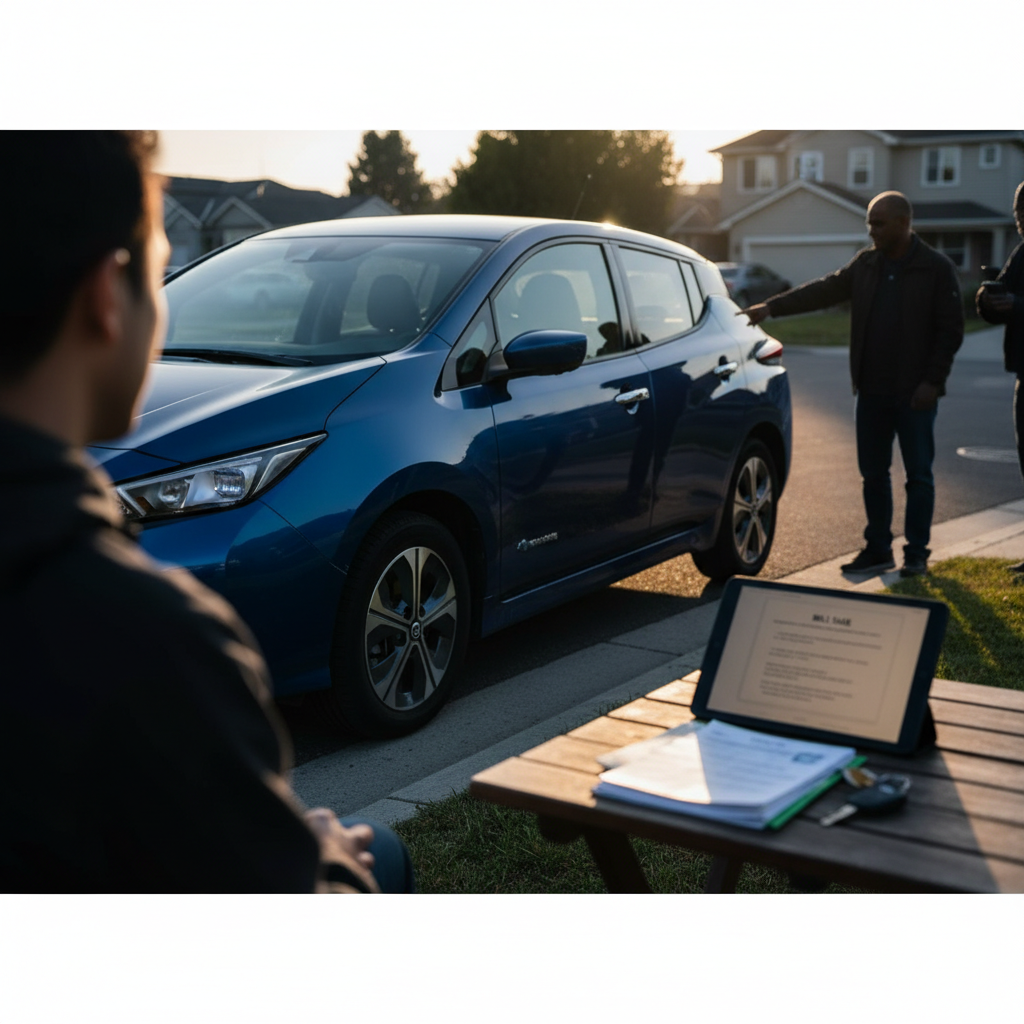
If you’re shopping EV incentives in Georgia in 2026, you’ve probably run into a wall of half-updated articles, old federal rules, and confusing fine print. The bad news first: the big federal EV tax credits for new and used vehicles ended for purchases after September 30, 2025. The good news is that Georgia drivers still have real ways to cut costs with utility rebates, charger incentives, and smart used-EV shopping, especially if you know where to look.
A new landscape for 2026
Overview: EV incentives in Georgia for 2026
Let’s set the stage. In 2015, Georgia scrapped its generous state EV tax credit and replaced it with one of the highest EV registration fees in the country. Today, there’s still **no state income-tax credit for buying an EV**, and you’ll pay an extra annual fee to register one. But that’s not the whole story. Georgia businesses can tap a state tax credit for installing chargers, and utilities like Georgia Power offer **cash rebates for home and workplace charging** starting in 2026. Add in dramatically lower fuel and maintenance costs, and a used EV can pencil out far better than you’d expect, even without a headline-grabbing tax credit.
Quick facts: Georgia EV incentives and costs in 2026
Quick facts: Georgia EV incentives and fees in 2026
- No **Georgia state income-tax credit** for purchasing a new or used EV in 2026.
- Federal **Clean Vehicle Credits for buying EVs ended for vehicles acquired after September 30, 2025**. The federal credit for installing home chargers is still available through June 30, 2026.
- Georgia charges an **extra annual registration fee for EVs** to replace lost gas-tax revenue.
- Businesses can claim a **Georgia income-tax credit for installing EV chargers** at commercial locations.
- Utilities, especially **Georgia Power, offer rebates for residential Level 2 chargers** and sometimes discounted EV rates.
- The most powerful savings in 2026 often come from **buying a fairly priced used EV**, stacking charger rebates, and driving on cheap electricity instead of gasoline.
What happened to the federal EV tax credit?
Until late 2025, most of the conversation around EV incentives centered on the federal Clean Vehicle Credit: up to **$7,500 off a new EV** and **$4,000 off a qualifying used EV** if you and the vehicle met fairly strict rules. That changed when Congress passed major tax legislation in 2025 that sunset the vehicle credits.
Before September 30, 2025
- Up to $7,500 credit for qualifying new EVs.
- Up to $4,000 credit for qualifying used EVs bought from dealers.
- Income, MSRP, battery-content, and assembly rules applied.
- Credit could be transferred to the dealer at the point of sale.
After September 30, 2025 (where we are in 2026)
- No federal income-tax credit for buying a new or used EV for personal use.
- **Commercial and fleet credits** still exist in narrower cases.
- The **Alternative Fuel Refueling Property Credit** for chargers continues for a time (generally through June 30, 2026).
- Bottom line: in 2026, you don’t get a federal rebate on the car itself, but you may for the charger.
If you bought before the deadline
State-level EV incentives (and fees) in Georgia
Georgia’s state-level approach to EVs is a mix of carrots and sticks. The big carrot, a rich state income-tax credit for buying EVs, disappeared years ago. The stick, an extra annual registration fee, is very much alive. But if you’re a business owner, or you’re thinking about workplace charging, there’s still meaningful help on the table.
What Georgia itself offers (and charges) in 2026
Know the rules before you sign for an EV
No state EV purchase credit
Georgia does not offer a state income-tax credit or rebate for buying a new or used EV in 2026. Any purchase incentive will come from the dealer, manufacturer, or (if you bought before October 1, 2025) older federal rules, not from the state.
Extra registration fee
To make up for lost gas-tax revenue, Georgia charges an additional registration fee for all-electric vehicles. This is on top of standard registration costs and can easily top $200 per year, depending on the latest rate.
You’ll see it itemized on your registration as an electric vehicle or alternative-fuel fee.
Business EV charger credit
Georgia’s **Electric Vehicle Charger Credit** lets qualifying business enterprises claim a state income-tax credit for purchasing and installing chargers in Georgia. It’s aimed at workplaces, fleets, multifamily properties, and retail locations, not individual homeowners.
Expect caps, eligibility rules, and documentation requirements. Talk with a tax professional before counting on this money.
Property & local considerations
Some counties and cities may offer zoning breaks, expedited permitting or utility-side incentives for installing EV infrastructure, particularly in commercial or multifamily projects.
Always check with your local government or utility before you pour concrete for a new charging row.
Don’t count on a surprise state rebate
Utility and local EV rebates in Georgia for 2026
Where Georgia really shows up for EV drivers in 2026 is at the utility level. The details vary by service territory, but the tone is clear: utilities would much rather you plug in at home at night than keep filling up at the gas station.
Sample 2026 EV incentives from Georgia utilities
Program details change often; always confirm current terms before you buy or install equipment.
| Utility / Area | Incentive Type (2026) | Typical Amount | Key Fine Print |
|---|---|---|---|
| Georgia Power (most of state) | Residential Level 2 charger rebate | Around $150 per qualifying charger | Applies to hardwired or wall-mounted Level 2 EVSE installed between Jan 1 and Dec 31, 2026; must be on a residential account and meet equipment/installation rules. |
| Georgia Power | Commercial / workplace charger rebates or make-ready support | Varies by program, often hundreds per port | Aimed at businesses, fleets, multifamily housing; pre-approval and post-install documentation usually required. |
| Local EMCs (e.g., Jackson EMC, Cobb EMC) | Time-of-use EV rates or small charger rebates | Varies, often off-peak kWh discounts | Programs change quickly; some offer off-peak pricing, others provide modest rebates for Level 2 chargers. |
| Municipal utilities (city systems) | Case-by-case pilots or grants | Varies widely | Occasional pilot programs for public or workplace charging, ask your local utility’s EV or efficiency team. |
Examples of how utilities, not the state income-tax code, help cut EV costs in Georgia.
Start with your electric bill
Home charging incentives and how to claim them
In 2026, the sweet spot for incentives in Georgia is not the car, it’s the charger. Between Georgia Power’s rebate and the federal refueling-property credit, you can take a healthy slice off the cost of installing a **Level 2 home charger**.

How a Georgia homeowner can stack charger incentives in 2026
1. Confirm your electrical panel and parking setup
Before you apply for any rebate, make sure you have a safe spot to charge, ideally a dedicated parking space within reach of a wall where a Level 2 charger can be mounted. If you’re in a condo or apartment, you may need HOA or landlord approval.
2. Pick a qualifying Level 2 charger
Georgia Power’s 2026 rebate excludes some portable/mobile cables and may require a wall-mounted or hardwired unit. Look for a **UL-listed Level 2 EVSE** that meets your utility’s list of approved models.
3. Hire a licensed electrician
Most rebates, and your homeowner’s insurance, expect a permitted installation by a licensed electrician, especially if you’re adding a new 240V circuit. Keep copies of the permit, invoice, and any inspection sign-offs.
4. Apply for the Georgia Power rebate
Once your charger is installed, submit your **rebate form, proof of purchase, and installation documentation** within the required window (often within 6 months). Expect a check or bill credit if approved and funds remain.
5. Claim the federal charger credit on your taxes
If your charger qualifies under the federal Alternative Fuel Refueling Property Credit, you can generally claim **30% of the installed cost** (hardware plus labor) as a nonrefundable tax credit for equipment placed in service by June 30, 2026. Talk with a tax pro and keep all receipts.
6. Enroll in any EV or off-peak rate plan
Some Georgia utilities offer **time-of-use EV rates**, with cheaper overnight electricity. Pairing lower fuel costs with your new charger is where the long-term savings really show up.
The federal charger credit has a clock on it
How EV fees and incentives change your real costs
The big question every Georgian asks is simple: “Without that $7,500 tax credit, is an EV still worth it?” The answer depends on your driving, your electricity rates, and whether you buy new or used, but for many households, the math still favors electrons over gasoline.
Costs that go up with an EV in Georgia
- Annual registration fee: You’ll pay more each year to register an EV than a comparable gas car.
- Home charging installation: A proper Level 2 setup with electrician labor can run hundreds to a few thousand dollars before rebates and credits.
- Insurance (for some drivers): Depending on the model, premiums can be higher than a similar gas car, especially for newer EVs.
Costs that go down with an EV
- Fuel: Home charging can cut your "fuel" cost per mile by half or more compared with gasoline, especially on off-peak rates.
- Maintenance: No oil changes, far fewer moving parts, and less brake wear thanks to regeneration.
- Used pricing: The end of federal credits has pushed some EV prices down, making **used models particularly compelling**.
- Charger rebates: Utility and federal incentives soften the upfront hit for home charging.
Where many Georgia households come out ahead
Saving more by buying a used EV in Georgia
With new-vehicle credits gone, used EVs have moved from supporting role to center stage. Instead of waiting for a tax refund, you’re looking for **upfront savings in the purchase price**, and protection against battery surprises down the line.
Why a used EV can be the sweet spot in 2026
Especially when you buy with verified battery health
Lower upfront price
Used EVs in Georgia often list thousands less than new ones, and sellers can’t lean on a federal rebate to prop up high MSRPs anymore. In a market like this, **cash price matters more than paperwork credits**.
Battery health transparency
Battery condition is everything with a used EV. At Recharged, every vehicle comes with a Recharged Score Report, including a verified battery-health diagnostic so you know how much real-world range to expect before you buy.
Easier budgeting
No waiting for a tax credit to land next spring. Your savings are locked in at signing: the price you negotiate, the EV’s efficiency, and the lower cost of electricity vs. gas.
Let the data do the talking
Step-by-step: how to claim EV incentives in Georgia
Even in the post-credit world, there’s still a small stack of paperwork waiting if you want every dollar you’re entitled to. Here’s how to work through it without missing something important.
Your 2026 Georgia EV incentive checklist
1. Confirm there’s no state purchase credit for your EV
Start by assuming **no Georgia state income-tax credit** for buying the vehicle itself. This keeps you from overestimating your budget or overpaying because you’re counting on a rebate that doesn’t exist.
2. Ask your dealer about any remaining federal quirks
If a salesperson mentions a federal incentive, push for details: purchase date, program name, and how it shows up on the buyer’s order. For a 2026 purchase for personal use, there should **not** be a Clean Vehicle Credit on the deal sheet.
3. Check your utility’s EV programs before installing a charger
Visit your utility’s website or call customer service to find their current **EV rebates, rate plans, and approved equipment list**. Print or save the terms; programs can change, and you want proof of what was offered when you installed.
4. Keep every charger-related receipt and permit
For both utility rebates and the federal charger credit you may need:<ul class="list-disc pl-5"><li>Charger invoice showing model and serial,</li><li>Electrician invoice with labor itemized,</li><li>Permit and inspection sign-off, if required.</li></ul>
5. Submit your utility rebate as soon as work is done
Most programs require you to apply within a set window, such as **within 6 months of installation**. Don’t let the rebate slip away because the paperwork sat in a drawer.
6. Work with a tax professional on the federal charger credit
By the time you file your 2026 return in early 2027, rules or forms could have shifted again. A tax pro can help you properly claim the **Alternative Fuel Refueling Property Credit** if you’re eligible.
Common pitfalls to avoid with EV incentives
- Believing a salesperson who insists you’ll get a **current Georgia state EV tax credit**, ask for the credit name, code number, and an official link or document.
- Assuming the **old federal $7,500 credit** still applies to a 2026 purchase; the cutoff for personal-use vehicle credits was September 30, 2025.
- Installing a home charger that doesn’t meet your utility’s rebate requirements, especially portable cables that look like Level 2 but don’t qualify.
- Missing the rebate deadline because you waited too long to submit proof of installation.
- Skipping a **battery-health report** on a used EV and discovering your real-world range is far below what you expected in Georgia’s heat and highway traffic.
The incentives may have changed, but the math hasn’t: if you drive enough, charge smart, and buy the right used EV at the right price, you can still come out ahead in Georgia without a giant tax credit doing the work for you.
FAQ: EV incentives in Georgia for 2026
Frequently asked questions about Georgia EV incentives in 2026
Bottom line: Are EVs still worth it in Georgia in 2026?
EV incentives in Georgia in 2026 don’t look anything like the glossy headlines from a few years ago. There’s no state income-tax credit waiting for you, and the federal vehicle credits have come and gone. But the real decision has always been about **total cost of ownership**, not just tax forms. If you drive enough miles, can plug in at home, and choose a used EV with verified battery health and fair pricing, Georgia’s mix of **utility rebates, charger incentives, and low running costs** can still tilt the scales in your favor.
If you’re ready to run the numbers on a used EV that fits your life, Recharged can help. We combine **battery diagnostics, transparent pricing, financing, trade-in options, and expert EV-specialist support** so you can shop the Georgia market with confidence, even in a post-tax-credit world.