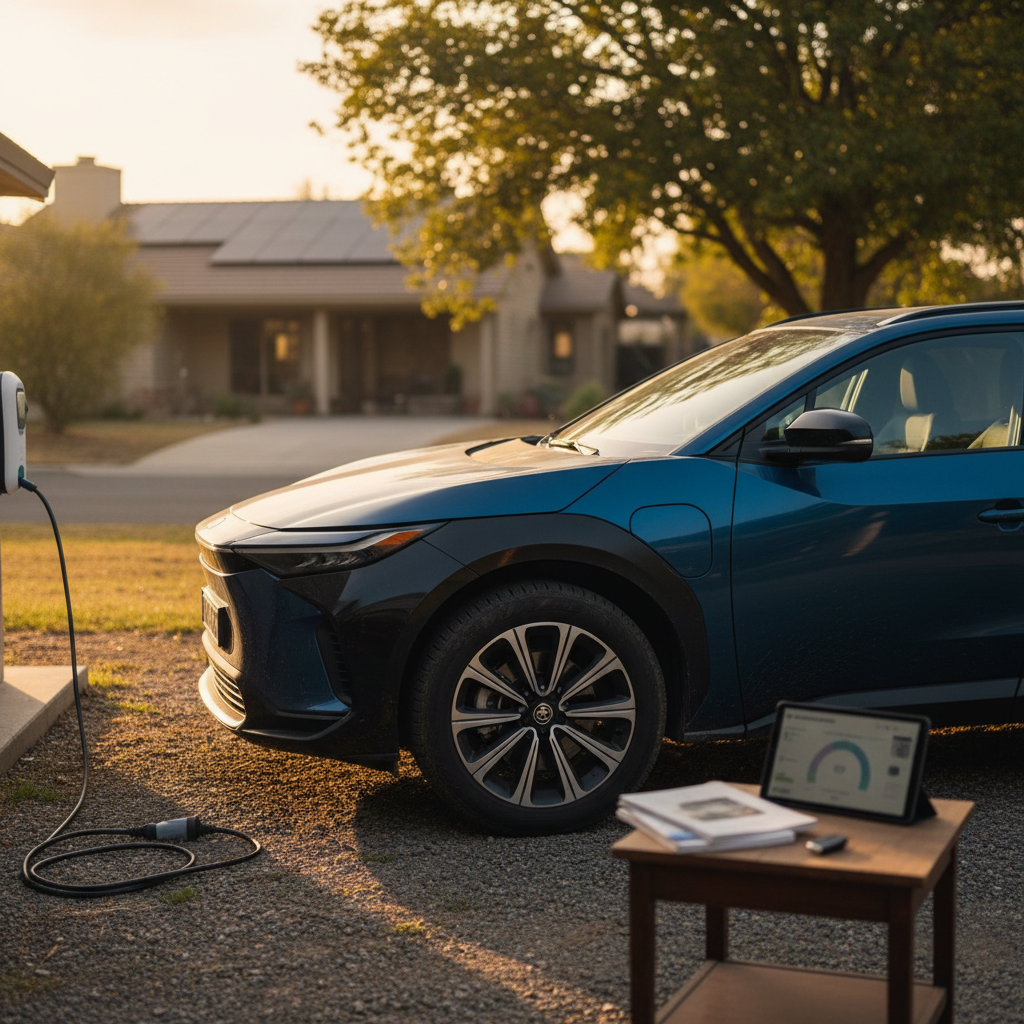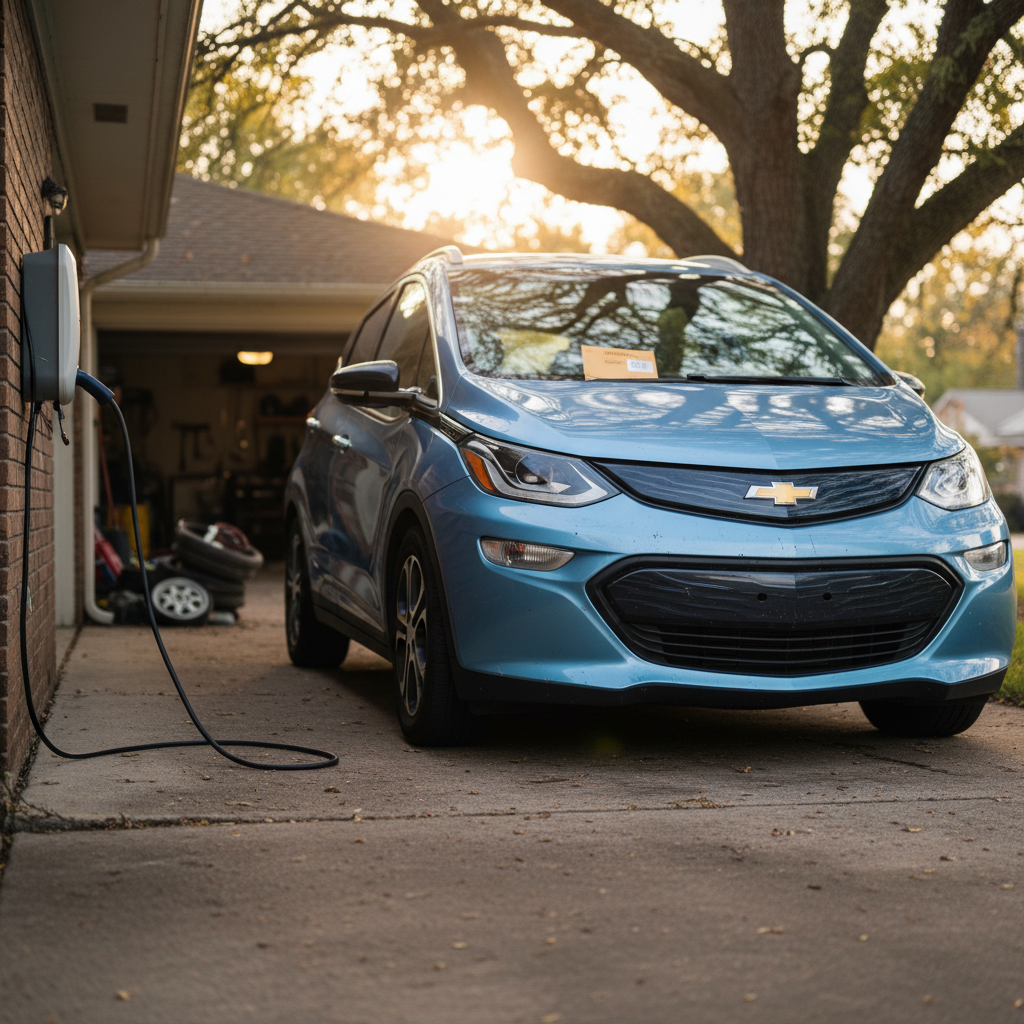
If you’ve ever googled “EV engine,” you’re not alone. A lot of drivers still talk about the “engine” in a Tesla or a Hyundai IONIQ 5 the same way they would in a Honda Civic. But electric vehicles don’t play by old rules. Under the floor and between the axles, the machinery doing the work is a very different animal, and understanding it makes you a much smarter EV shopper.
Quick takeaway
What People Really Mean by an “EV Engine”
When people say EV engine, they’re usually pointing at one of three things: the electric motor, the whole drivetrain, or just the idea of “whatever makes it go.” In a gas car, that’s the internal combustion engine bolted to a multi‑gear transmission. In a modern EV, it’s a much simpler stack: battery → inverter → motor → reduction gear → wheels.
- In a gas car, “engine” = pistons, valves, fuel injectors, oil system, exhaust, and a multi-gear transmission.
- In an EV, the closest equivalent is the electric drive unit (motor + inverter + reduction gear).
- In casual speech, using “EV engine” is fine, as long as you know there’s no gasoline or cylinders involved.
How to talk about it
Do Electric Cars Actually Have Engines?
Strictly speaking, no. A battery electric vehicle (BEV) doesn’t have a combustion engine at all. There’s no fuel tank, no spark plugs, no timing chains. Instead, you get a high‑voltage battery pack feeding one or more electric motors that turn the wheels directly.
- BEVs (like Tesla Model 3, Hyundai IONIQ 5, Chevy Blazer EV) have motors, not engines.
- Hybrids and plug‑in hybrids do have engines plus small electric motors, which is why they still need oil changes.
- If you’re buying a used EV, “no engine” usually means less maintenance, fewer failure points, and a simpler service schedule.
Don’t confuse hybrids with EVs
Inside an EV Motor: The Real “Engine” of an Electric Car
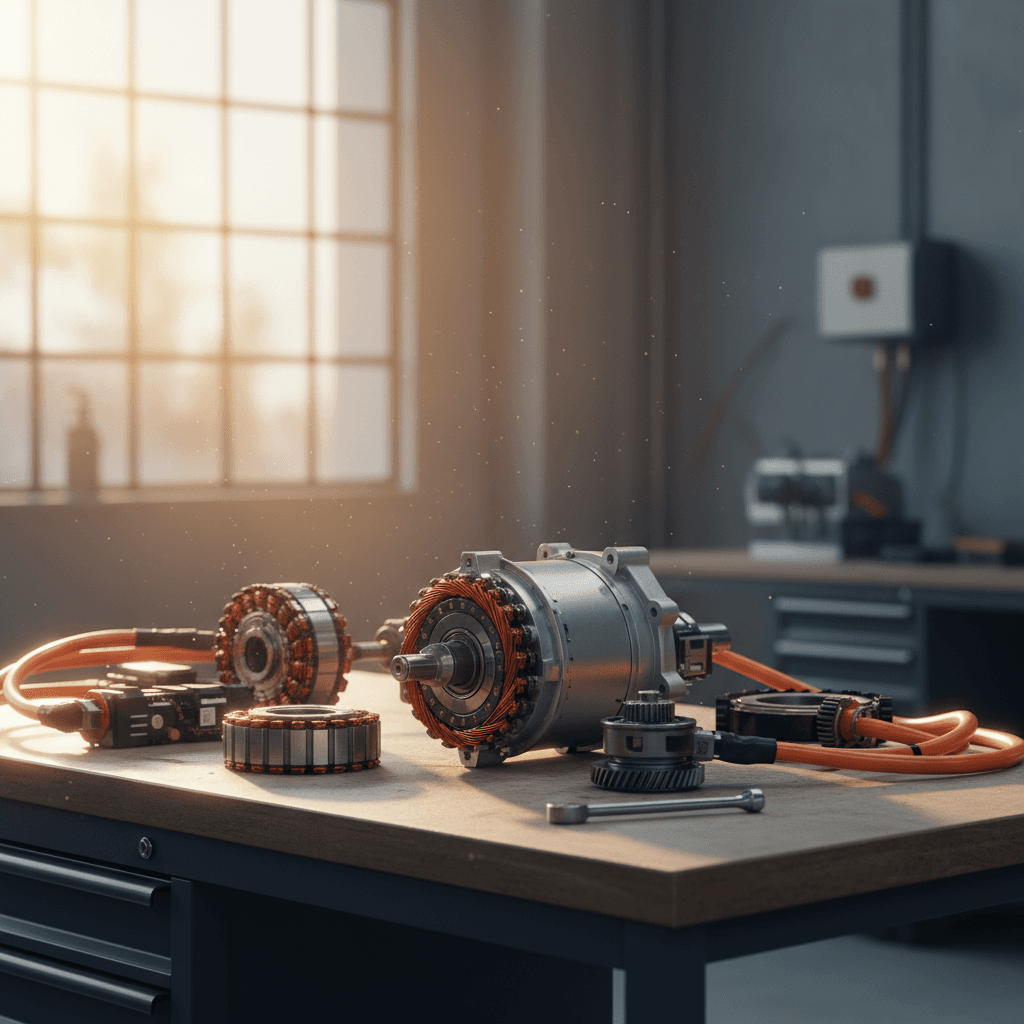
The typical EV motor is an electric machine that converts electrical energy into rotational motion. Most modern EVs use some flavor of AC motor with a permanent magnet or induction design. They all share a similar anatomy:
- Stator: The fixed outer ring packed with copper windings that create a rotating magnetic field when energized.
- Rotor: The spinning inner core attached to the driveshaft. The magnetic field tugs it around, producing torque.
- Inverter: Solid‑state electronics that turn the battery’s DC power into AC waveforms the motor can use and precisely control.
- Single‑speed reduction gear: A compact gearset that trades the motor’s high RPM for wheel‑friendly speed and big torque.
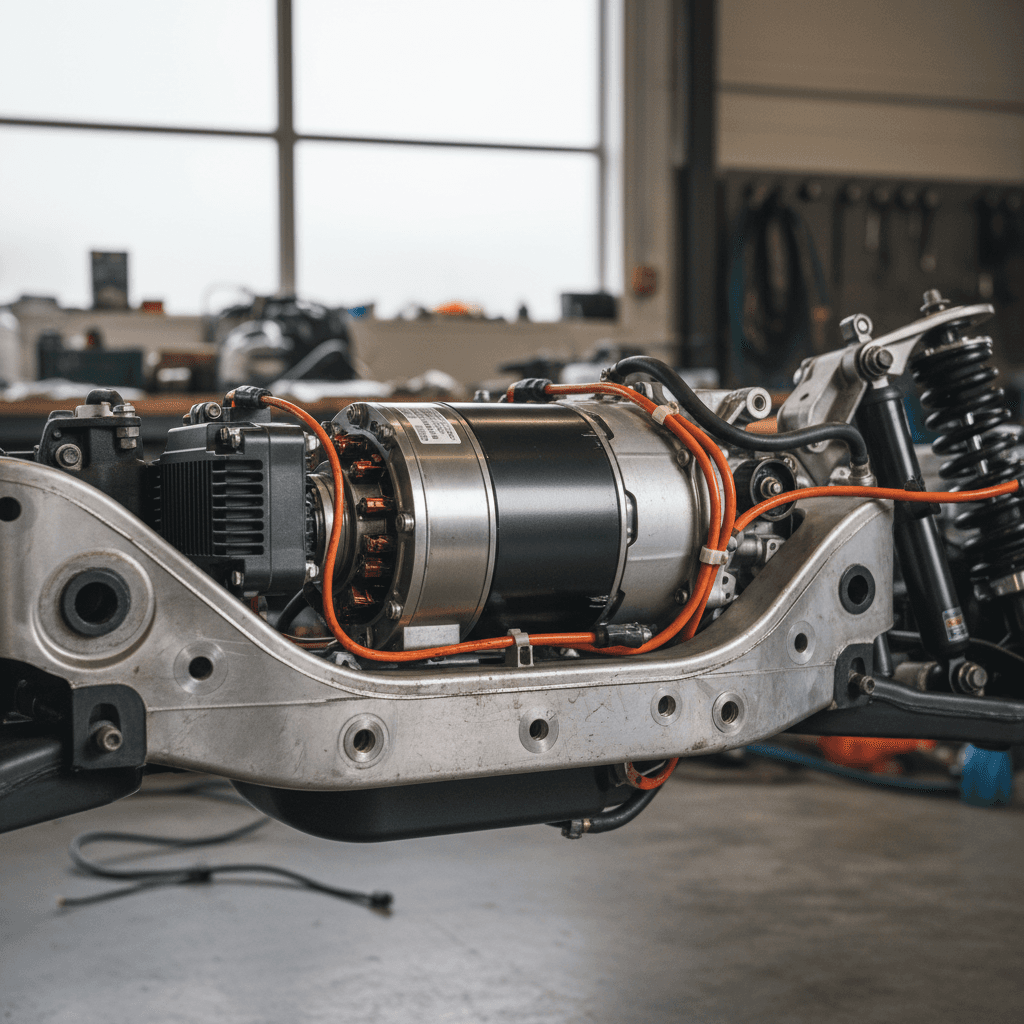
Unlike a gas engine, there’s no idle, no revs building through a rev range, no intake or exhaust stroke. The motor’s torque curve is basically a cliff: huge twist right off zero RPM, tapering slowly as speed rises. That’s why a family crossover with a baby seat and a Spotify subscription can outsprint yesterday’s sports cars.
From Battery to Wheels: How Power Flows in an EV
Think of the EV drivetrain as an electrical loop rather than a mechanical Rube Goldberg machine. Here’s the basic life story of a kilowatt‑hour in your battery, turning into forward motion, and then coming back again when you brake.
The EV Power Path, Step by Step
From electrons to acceleration and back again
1. Battery Pack
Energy is stored in a large high‑voltage battery pack, usually 300–800V. This is the EV’s fuel tank and part of its structure.
2. Inverter & Controls
The inverter and control electronics modulate voltage and current, turning DC into precisely timed AC waveforms.
3. Motor & Gears
The motor converts electrical energy into torque, sent through a single‑speed reduction gear to the drive wheels.
Why this feels so smooth
EV “Engine” vs Gas Engine: Key Differences You’ll Feel
EV Motor vs Gas Engine: At-a-Glance
How an EV “engine” compares to the internal combustion hardware you’re used to.
| Feature | EV (Motor + Drive Unit) | Gas Car (Engine + Transmission) |
|---|---|---|
| Main energy source | High‑voltage battery pack | Gasoline or diesel fuel |
| Primary mover | Electric motor | Internal combustion engine |
| Moving parts (approx.) | Dozens | Hundreds to thousands |
| Torque delivery | Instant from 0 RPM | Builds with revs |
| Gears | Usually single‑speed | Multi‑speed transmission (6–10 gears typical) |
| Routine fluids | Coolant, brake fluid, gear oil | Engine oil, coolant, transmission fluid, etc. |
| Noise & vibration | Very low | Noticeable vibration, gear shifts, exhaust noise |
Fewer moving parts, more instant torque, that’s the EV story in one chart.
Test drive this difference
Maintenance, Reliability, and the Myth of the Missing Engine
One of the quiet revolutions of the EV era is what disappears from your maintenance schedule when there’s no conventional engine. You lose a whole constellation of parts that wear, leak, or age out on gas cars.
- No oil changes, valve adjustments, spark plugs, fuel injectors, or timing belts.
- No exhaust system, catalytic converters, or mufflers to rust out.
- Far simpler cooling and lubrication needs for the motor and gearbox.
What replaces engine worries
Electric motors themselves are generally robust: fewer moving parts and no combustion means far less mechanical stress. Most issues in aging EVs come down to batteries, cooling systems, or software, not the motor suddenly giving up the ghost.
Types of EV Motors and Why They Matter
Not all EV “engines” are created equal. Under the bodywork, manufacturers mix and match motor designs for cost, efficiency, and character, yes, character. Some setups feel like a silent locomotive; others like a hyper‑caffeinated roller coaster.
Common EV Motor Types
You don’t have to be an engineer, but these labels are worth knowing when you shop.
Permanent Magnet Motors
Found in many modern EVs. Use strong permanent magnets in the rotor for high efficiency and strong low‑speed torque. Great for range and performance, but rely on rare‑earth materials.
Induction Motors
Famously used in early Teslas. No permanent magnets; the rotor is energized by the stator’s magnetic field. Tough and simple, good for high power, but a bit less efficient at low loads.
Axial‑Flux Motors
Think pancake‑shaped motors. Emerging in high‑performance EVs because they’re lighter and more compact for the same power, freeing up space for more battery or cabin room.
Switched Reluctance & Others
More experimental designs that offer high efficiency and low cost, but can be noisier or trickier to control. You’ll see these more on spec sheets and engineering blogs than window stickers, for now.
Dual‑motor and tri‑motor EVs
What the EV Drivetrain Means When You Buy Used
Here’s where understanding the so‑called EV engine stops being trivia and starts saving you money. In the used market, a simpler drivetrain changes what you should worry about and what you can safely ignore.
Used EV “Engine” Checklist
1. Focus on battery health first
Range is king. Ask for battery health data, degradation estimates, or a third‑party report. On Recharged, every car comes with a Recharged Score that puts this in plain English instead of cryptic percentages.
2. Ask about motor & inverter repairs
True motor failures are rare, but replacement is expensive. Check for any history of inverter replacements or drive‑unit noise; this is the EV equivalent of listening for rod knock.
3. Look for cooling system service
The battery and motor share a thermal management system. Coolant changes or cooling‑related recalls should be documented. Overheating is the enemy of both performance and longevity.
4. Check software and drive modes
Because the motor is software‑defined, updates can change how the car feels. Make sure all recall or campaign updates are applied and that test‑drive behavior matches your expectations.
5. Think about where you drive
If you live in a hilly area or tow occasionally, dual‑motor setups offer better traction and thermal headroom. For flat, urban commuting, a single‑motor car is usually more than enough.
Buying through Recharged
Because EVs don’t have engines in the traditional sense, back‑of‑the‑napkin used‑car wisdom doesn’t quite apply. Recharged was built specifically for used EVs, with technicians and advisors who live in this world every day.
- Every car gets a Recharged Score report with verified battery health.
- Fair market pricing that reflects real‑world range and condition.
- Financing, trade‑in, and nationwide delivery, all handled digitally.
What you get as a shopper
Instead of squinting at an odometer and guessing what’s happening inside a sealed battery pack, you get a clear, data‑driven story. That’s the difference between buying a used EV as a gamble and buying it as a smart upgrade.
If you’re cross‑shopping multiple models and want help understanding their motors, ranges, and charging needs, an EV specialist at Recharged can walk you through the trade‑offs in plain language.
FAQ: Common EV Engine Questions
EV Engine Questions, Answered
The Bottom Line on EV Engines and Motors
The phrase EV engine is a linguistic leftover from the gasoline age. Underneath it, the hardware is quietly radical: compact electric motors, smart inverters, and simple gearsets that turn electrons into effortless acceleration. That simplicity pays off in everyday life, less routine maintenance, smoother driving, and performance that used to require something loud, thirsty, and expensive.
If you’re shopping for a used EV, the smart move is to stop worrying about camshafts and compression ratios and start caring about battery health, charging behavior, and how the drivetrain has been treated. That’s exactly the story Recharged’s battery‑centric reports are built to tell. Understand the motor, respect the battery, and the right used EV will feel less like a science experiment and more like a very refined step into the future.