When people ask about EV cost, they’re usually not just asking about the sticker price. They want to know what it really costs to live with an electric car: the payment, the power bill, the maintenance, the insurance, and whether it actually saves money compared with a gas car. In 2025, the answer is more nuanced than ever, especially if you’re considering a used EV.
Quick takeaway
EV cost in 2025: the basics
Key EV cost numbers for 2025
To understand EV cost, it helps to think in terms of total cost of ownership, all the money that leaves your pocket over the years you own the car. That includes:
- Upfront price (minus any rebates or tax credits)
- Financing costs (interest on your loan)
- Charging or fuel costs
- Maintenance and repairs
- Insurance, taxes, and registration
- Depreciation, the value your car loses over time
How to compare EV cost fairly
Upfront EV cost: new vs used in 2025
In 2025, new EVs still carry a higher sticker price than comparable gas cars, but the gap is shrinking, and the used market is where things get interesting.
New EV cost in 2025
- Average new EV price hovers around $53,000, versus mid‑$30Ks for new gas vehicles.
- Higher cost comes from big battery packs, newer tech, and often more standard features.
- Federal tax credits of up to $7,500 for eligible new EVs run through September 30, 2025, plus some state incentives.
- Even with incentives, many new EVs will still cost a bit more per month than similar gas cars, unless you drive a lot and charge cheaply at home.
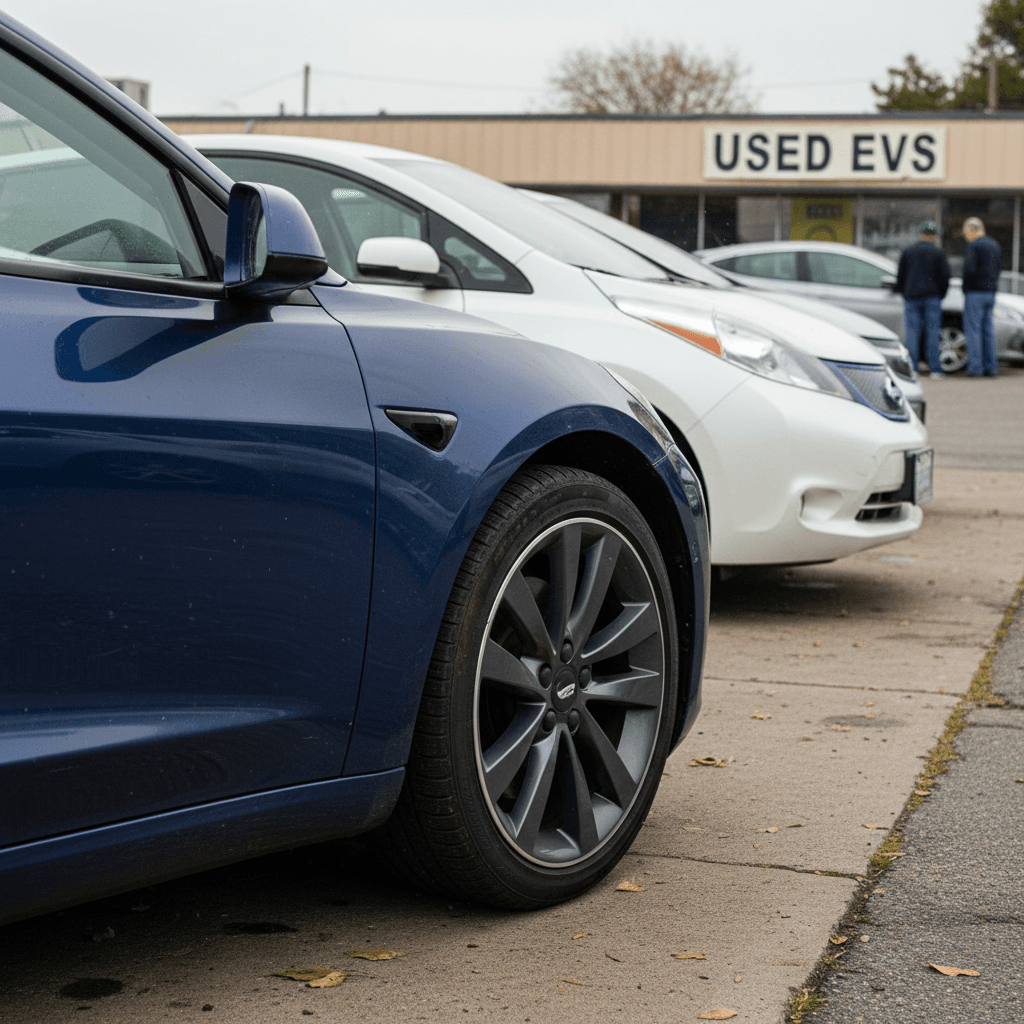
Used EV cost in 2025
- Used EV prices dropped roughly 30%+ in 2024, much faster than used gas cars.
- That means you’ll often find 2–4‑year‑old EVs priced like economy sedans, but with far lower running costs.
- Previously available federal credits for used EVs (up to $4,000) also run through September 30, 2025, if the car and your income qualify.
- Because someone else already took the steep early depreciation, a well‑chosen used EV can be the sweet spot for budget‑conscious buyers.
Don’t ignore battery health
How much does it cost to charge an EV?
Charging is where EV cost can swing from “wow, this is cheap” to “wait, this feels like gas money.” The difference comes down to where you charge and how often you use fast chargers.
Typical EV charging costs in 2025
Numbers assume a mid‑size EV and average U.S. energy prices
Mostly home charging
Best case for low EV cost.
- Average residential electricity around 16–17¢/kWh.
- Many EVs travel 3–4 miles per kWh.
- That’s roughly 4–6¢ per mile.
- At 12,000 miles/year, expect around $500–$700 annually in electricity.
Mixed home + public
Most common for apartment dwellers.
- Home Level 2 for some charging, plus paid public Level 2.
- Blended cost often around 7–10¢ per mile.
- That’s $850–$1,200/year at 12,000 miles.
Mostly DC fast charging
Convenient, but can erode savings.
- Public fast charging can average the equivalent of 30–40+¢/kWh.
- Costs per mile can approach or match a fuel‑efficient gas car.
- Great for road trips, expensive for daily driving.
Think in cents per mile
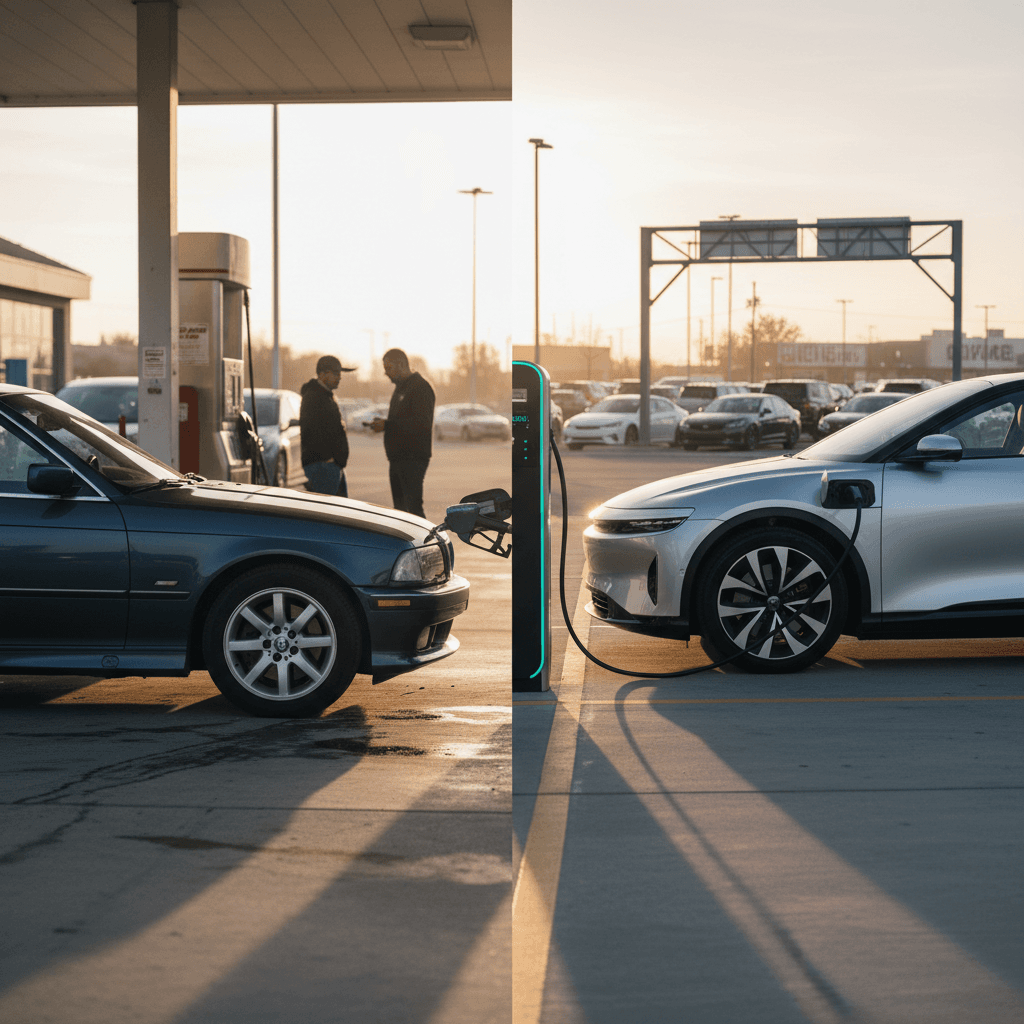
Typical energy cost: EV vs gas (2025 snapshot)
Illustrative comparison for a mid‑size vehicle driven 12,000 miles per year.
| Vehicle type / fueling | Cost per mile (energy) | Annual energy cost (12,000 miles) | What it assumes |
|---|---|---|---|
| Gas car (30 mpg, $3.15/gal) | ≈10.5¢ | ≈$1,260 | Average U.S. gas price and a reasonably efficient sedan |
| EV, mostly home charging | ≈5¢ | ≈$600 | Home electricity around 16–17¢/kWh, 3.5 mi/kWh |
| EV, heavy public fast charging | ≈10–15¢ | ≈$1,200–$1,800 | Frequent paid DC fast charging at highway networks |
Actual costs vary by state, electricity plan, and your driving and charging habits.
Maintenance: where EVs really save you money
EVs simply have fewer parts that wear out. No engine oil, no spark plugs, no multi‑gear transmission, no exhaust system. Over time, that translates into substantially lower maintenance bills.
Typical annual maintenance
- Gas car: often $900–$1,800 per year once you factor in oil changes, fluid services, tune‑ups, exhaust work, and so on.
- EV: many owners see routine costs in the $150–$300 per year range, mostly tires, alignment, and occasional cabin filters.
- Studies and real‑world data consistently show 35–50% lower maintenance cost for EVs over the long term.
Where EVs still cost money
- Tires can wear faster on some EVs because of higher weight and instant torque.
- Out‑of‑warranty repairs on advanced electronics or battery components can be pricey, choosing the right car and warranty matters.
- Some EV‑specific parts (e.g., heat pumps, onboard chargers) may cost more than familiar gas‑car components.
The long‑term maintenance win
Insurance, taxes, and fees for EVs
Insurance is one of the few line items where EVs often cost more than gas cars today. The reasons are simple: newer technology, pricier battery packs, and fewer repair shops that specialize in EVs.
What to expect beyond the purchase price
Insurance
- Many drivers see higher premiums for EVs versus comparable gas models.
- The gap varies widely by state and by model.
- Shop around, some insurers now price EVs more competitively as data improves.
Taxes & registration
- Some states add an EV registration fee to make up for lost gas taxes.
- Others reduce or waive certain fees or offer HOV‑lane perks.
- Always check your state’s EV‑specific costs and incentives before buying.
Incentives vs extras
- Through September 30, 2025, federal tax credits can offset higher purchase price for qualifying new and used EVs.
- After credits sunset, the math changes, especially on new EVs.
- State incentives, utility rebates, and lower running costs still help balance the picture.
Battery replacement cost and warranties
Battery packs are the biggest wild card in EV cost. They’re also the part most people worry about, and for good reason, because full pack replacements aren’t cheap. The good news: most drivers will never pay for one out of pocket during typical ownership.
- Most EV batteries carry 8‑year / 100,000‑mile (or more) warranties against excessive degradation.
- A full pack replacement on a modern EV can easily run into the $10,000+ range before labor, though prices vary widely by model and are slowly trending down.
- Many EVs retain 70–80%+ of their original capacity well past 100,000 miles when treated decently.
- Partial repairs (replacing a module or high‑voltage component) can be far cheaper than a full pack swap.
Why battery health matters most on a used EV
This is exactly why Recharged puts battery health at the center of every vehicle we list. Every EV comes with a Recharged Score Report, which includes independent battery diagnostics, verified range, and an explanation of what it means for long‑term cost of ownership. Instead of hoping the range is “fine,” you can see exactly what you’re buying.
Depreciation: why used EVs are suddenly a deal
Depreciation, the gradual loss of value, is the largest single cost of owning most modern vehicles, gas or electric. EVs saw especially steep depreciation in the early years, which hurt original owners but now creates opportunity for used‑EV shoppers.
What changed with EV depreciation
- A much lower monthly payment than buying new.
- Most of the fuel and maintenance savings of a brand‑new EV.
- Less exposure to future price drops, because the steepest depreciation is often in the first 2–3 years.
EV cost vs gas car cost: total ownership picture
Let’s pull the pieces together with a simple, big‑picture comparison for an average driver in the U.S. in 2025. We’ll assume 12,000 miles per year and a 5‑year ownership window.
Illustrative 5‑year cost: EV vs gas car (12,000 miles/year)
Simplified example for a mid‑size vehicle. Actual numbers vary by model, location, and how you charge.
| Category | New gas car | New EV | Used EV (3 years old) |
|---|---|---|---|
| Purchase price (before incentives) | $35,000 | $45,000 | $28,000 |
| Federal/state incentives | N/A | –$7,500 (if eligible) | –$4,000 (if eligible) |
| Net financed amount | $35,000 | $37,500 | $24,000 |
| Fuel / charging (5 years) | ≈$6,300 | ≈$3,000 (home‑heavy) | ≈$3,000 (home‑heavy) |
| Maintenance (5 years) | ≈$5,000 | ≈$2,000 | ≈$2,000 |
| Insurance, fees (5 years) | Baseline | +≈$1,500 vs gas | Similar to new EV |
| Estimated depreciation (5 years) | Moderate | Higher from a higher starting price | Lower, steep drop already taken |
| Total cost picture | Baseline | Higher payment, lower running cost | Often lowest monthly out‑of‑pocket |
These are ballpark figures, not quotes. Use them as a framework to think about your own situation.
The real‑world pattern
7 ways to lower your real EV costs
Practical ways to keep EV costs down
1. Prioritize home charging
If possible, install or share a Level 2 charger at home. Paying residential electricity rates instead of public fast‑charging prices is one of the biggest levers you have to cut EV cost per mile.
2. Choose range you’ll actually use
Extra range costs money. If you rarely drive more than 150–200 miles in a day, you may not need a huge battery. A slightly shorter‑range EV with healthy battery diagnostics can drastically lower your purchase price.
3. Time your purchase around incentives
Through September 30, 2025, qualifying new and used EVs may be eligible for federal tax credits, on top of state and utility rebates. Build those into your math, but don’t rely on them lasting forever.
4. Shop used where depreciation is your friend
Let the first owner pay for the steepest value drop. A 2‑ to 4‑year‑old EV with verified battery health can deliver the same daily experience at a much lower cost.
5. Compare insurance quotes before you commit
Get quotes on specific VINs or at least specific models. Insurance cost can swing your monthly budget by hundreds of dollars a year, especially on newer EVs.
6. Drive gently to protect your battery
Fast‑charging constantly, storing the car at 100% for long periods, or heavy abuse in extreme temperatures can accelerate degradation. Being kind to the battery preserves both range and resale value.
7. Use data, not guesses, on battery health
Look for vehicles with professional battery diagnostics, like the Recharged Score Report, so you know how much usable capacity you’re actually getting and what that means for your long‑term costs.
Using Recharged to control your EV costs
If you’ve decided an EV makes financial sense but you’re wary of surprises, the way you buy matters almost as much as what you buy. That’s where Recharged is built to help.
How Recharged helps you manage EV cost
Transparent battery health
Every vehicle on Recharged includes a Recharged Score Report with independent battery diagnostics, verified range, and clear explanations. You see the battery’s condition before you buy, not after.
Fair market pricing
Recharged benchmarks every EV against the broader market, factoring in battery health, options, and mileage. That helps you avoid overpaying, and understand when a deal is genuinely good.
End‑to‑end EV support
From financing and trade‑ins to nationwide delivery and EV‑specialist guidance, Recharged is set up to make EV ownership simpler and more predictable, including the dollars and cents.
Ready to find your next EV?
Browse VehiclesTurn EV questions into a clear monthly number
EV cost FAQ
Frequently asked questions about EV cost
EV cost in 2025 is not a simple “cheaper or more expensive” story, it’s about how you drive, where you charge, and whether you buy new or used. New EVs still demand a premium but reward you with lower energy and maintenance costs, especially if you qualify for incentives and charge at home. Used EVs, meanwhile, have become some of the best‑value vehicles on the road thanks to falling prices and strong everyday performance. If you want the benefits of electric driving without gambling on the most expensive component, the battery, your smartest move is to combine a carefully chosen used EV with clear, data‑backed battery information. That’s exactly what Recharged was built to provide: transparent pricing, verified battery health, and EV‑savvy support so you can see the true cost of ownership before you ever hit “buy.”